By application
Each case shows which Pisonics product fits the workflow, what makes it work in that medium, and what to expect on installation.
21 applications
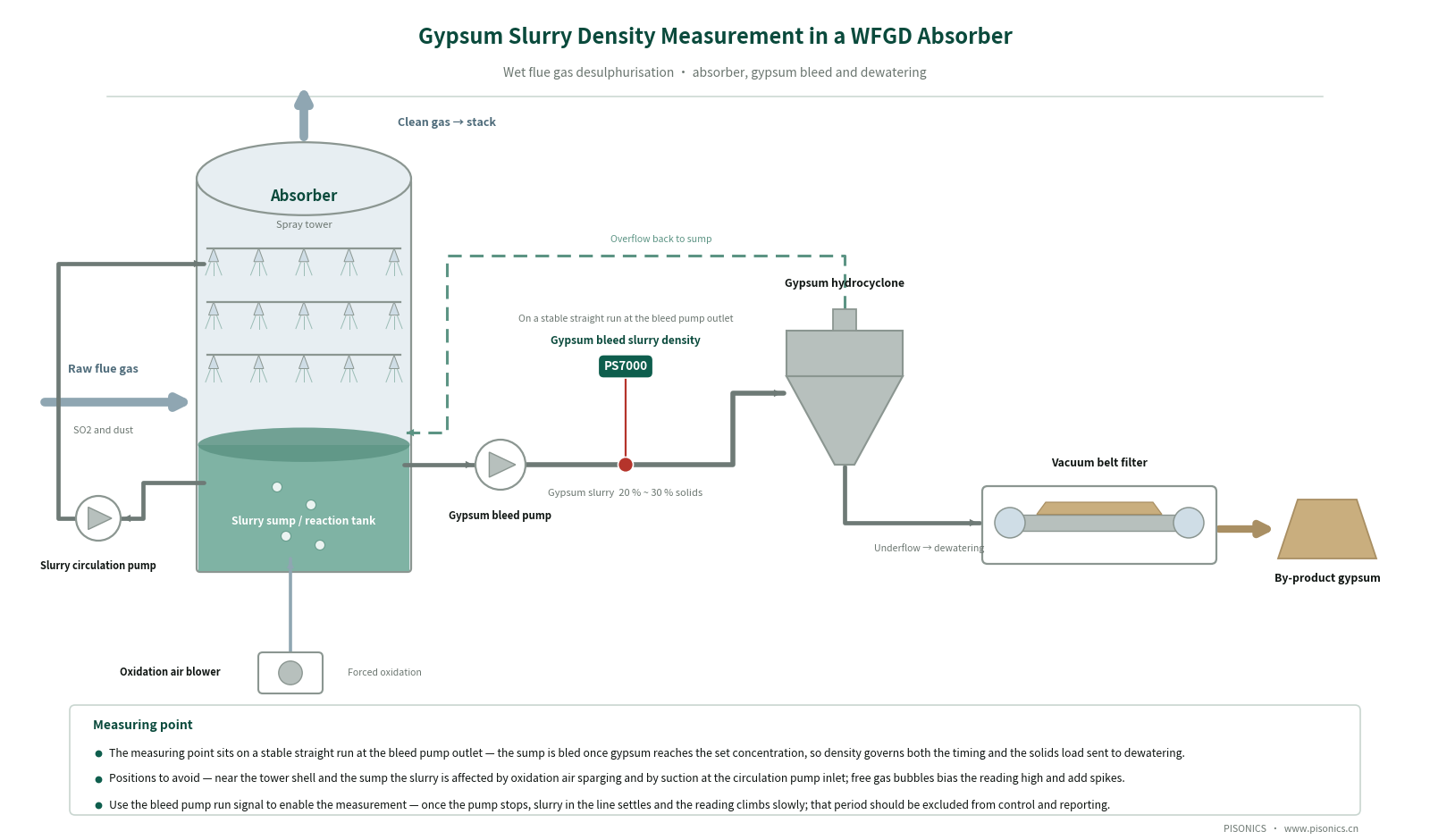
Online Measurement of Gypsum Slurry Density in Absorption Towers
In the wet flue-gas desulfurization process, real-time monitoring of gypsum slurry concentration is crucial for ensuring the quality of the by-product gypsum and the proper operation of equipment. However, the absorber discharge slurry is heavily aerated and prone to scaling: conventional instruments give jumpy readings and need frequent cleaning, while radiometric gauges bring a radiation-licensing burden. Pisonics’ PS7000 employs ultrasonic technology for non-contact measurement, can penetrate bubble layers to deliver stable and reliable concentration data, and requires no maintenance, with a service life exceeding five years.
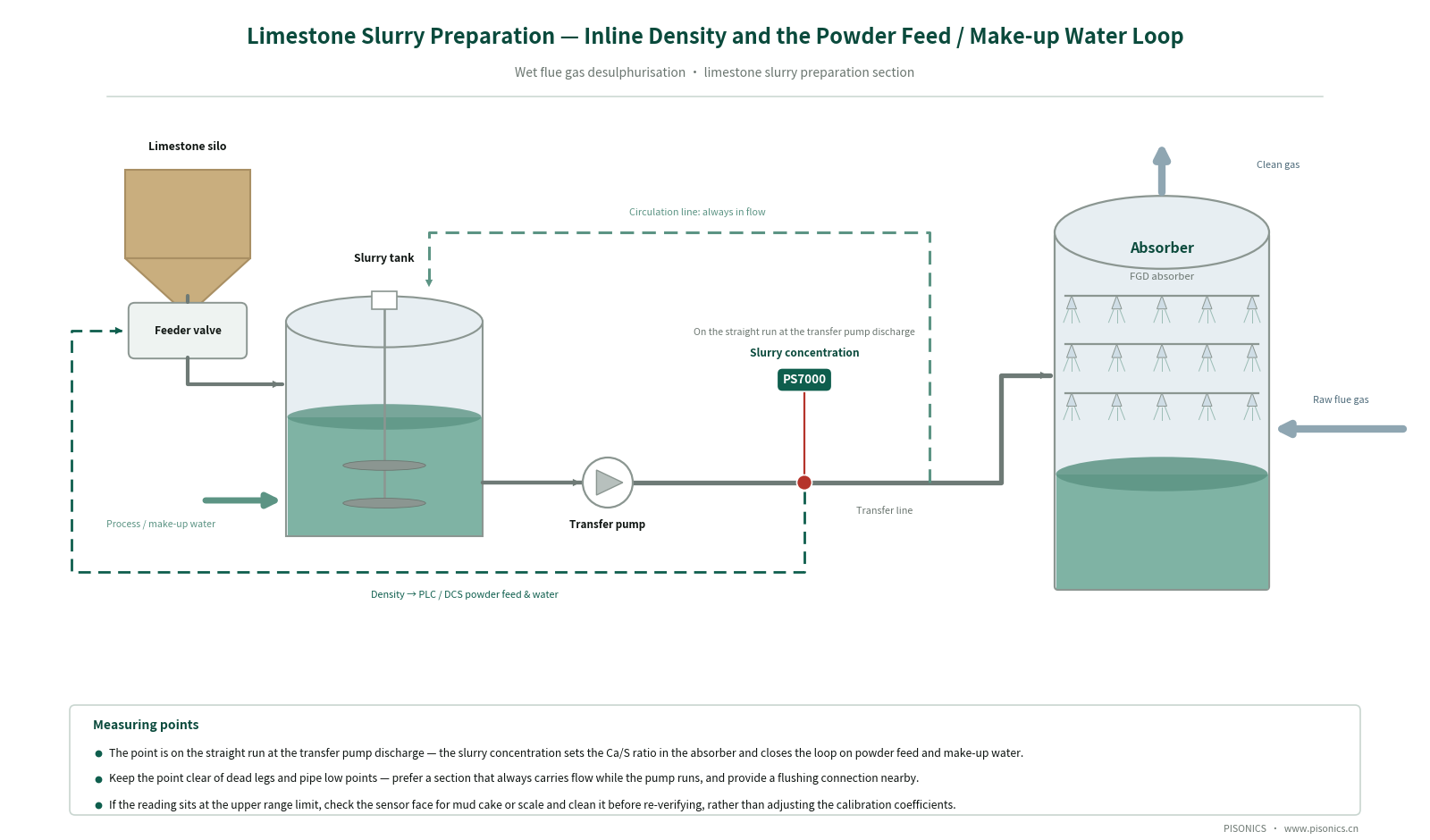
Online Density Measurement for Limestone Slurry Preparation
During the preparation of limestone slurry, conventional density-measurement solutions suffer from issues such as wear and scaling, leading to inaccurate data and compromising flue-gas desulfurization efficiency. The PS7000 acoustic impedance concentration meter overcomes these challenges through non-contact ultrasonic measurement, delivering stable, high-precision online density monitoring and ensuring consistent control of slurry concentration.
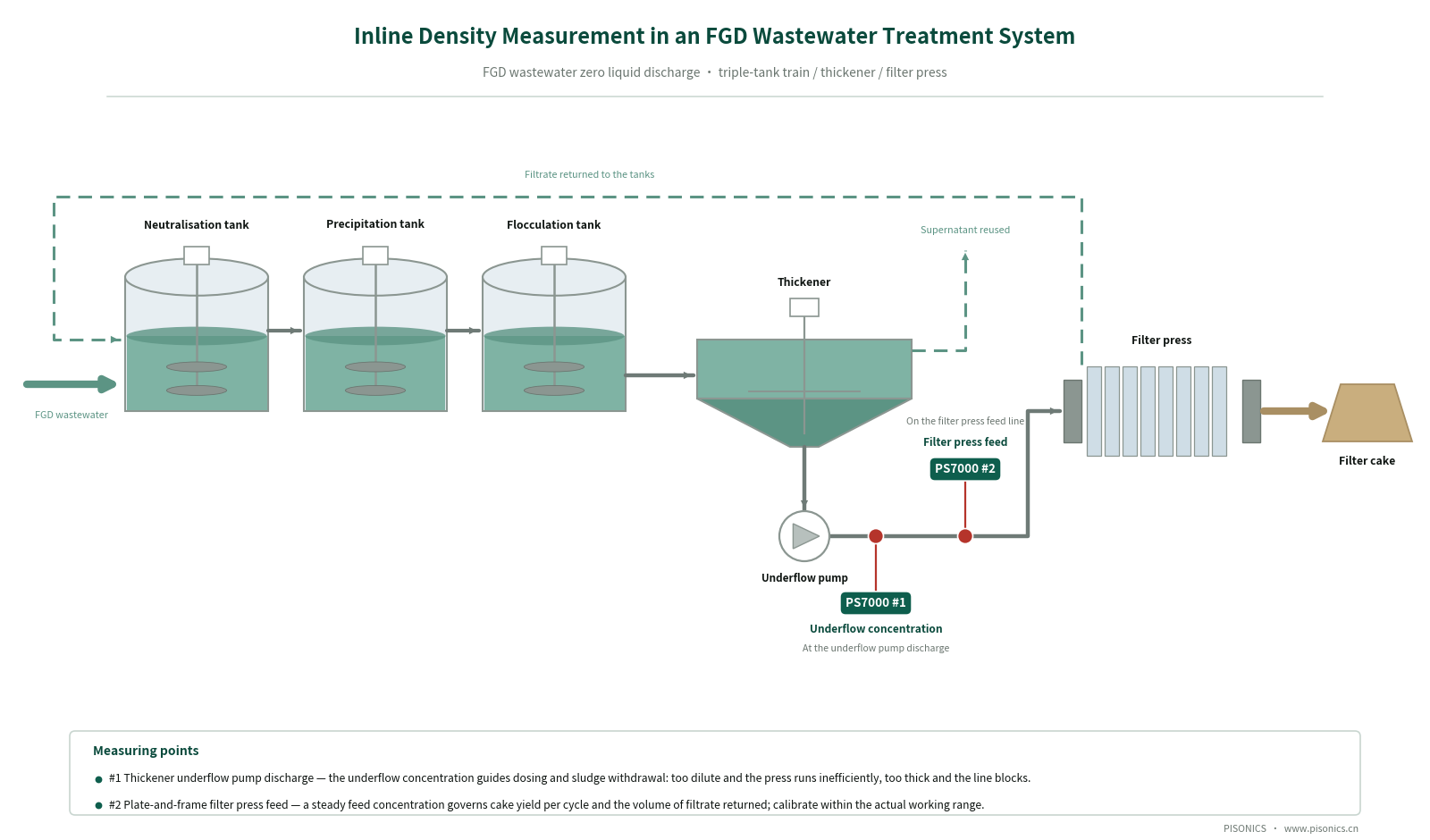
Online Measurement of Desulfurization Wastewater Density
Corrosive FGD wastewater sludge degrades traditional gamma density gauges. The ultrasonic slurry density meter delivers non-intrusive online concentration monitoring.
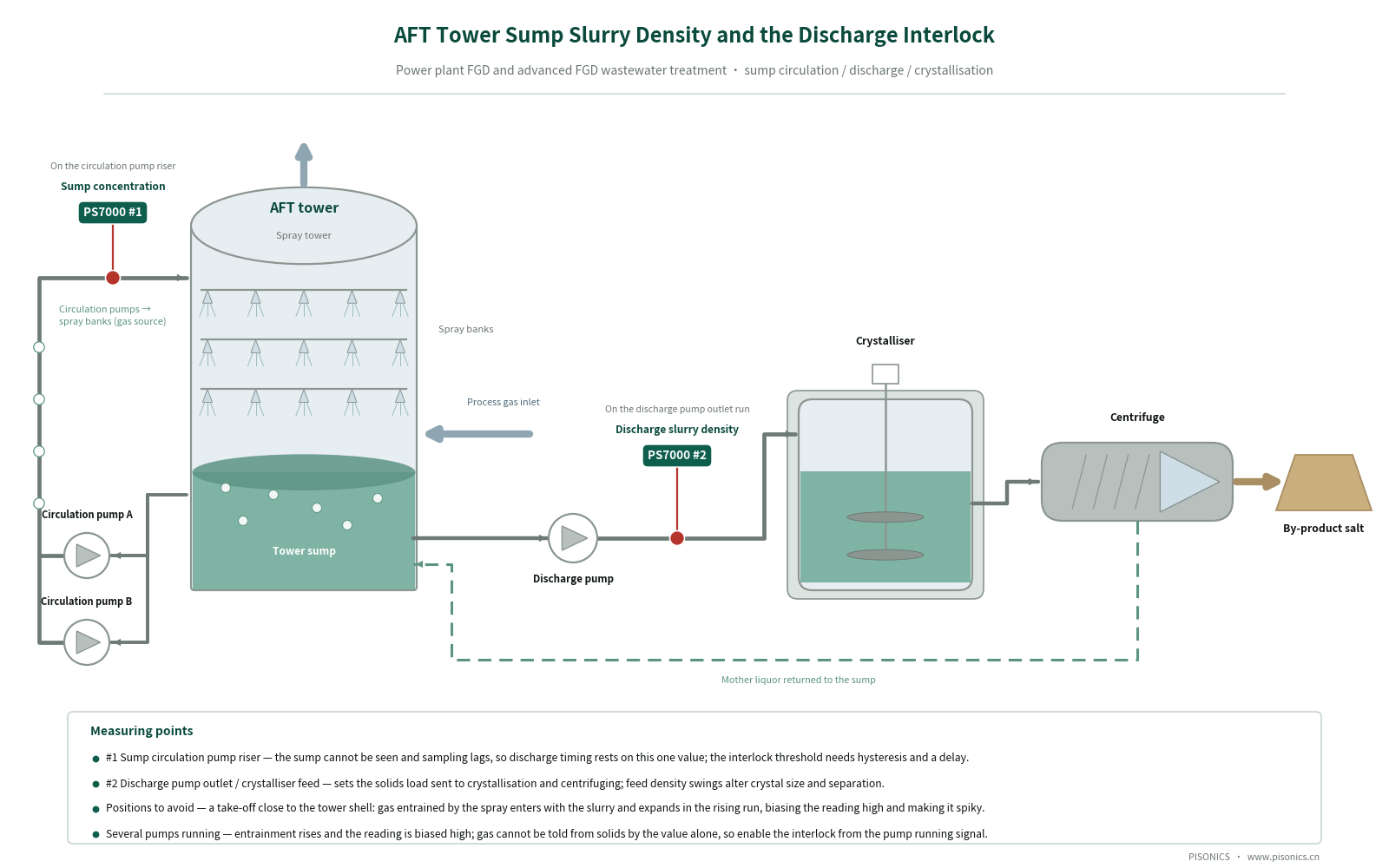
Online Density Measurement for the AFT Tower (High-Concentration Desulfurization Slurry Processing Tower)
In the AFT tower, measuring the density of high-concentration, high-viscosity, and easily crystallizing slurries has long been a challenge. The PS7000 acoustic impedance concentration meter, employing non-contact measurement, overcomes the failures of conventional instruments caused by clogging, wear, and crystallization, enabling real-time, continuous monitoring of slurry density and automated control of the discharge process, thereby ensuring stable system operation.
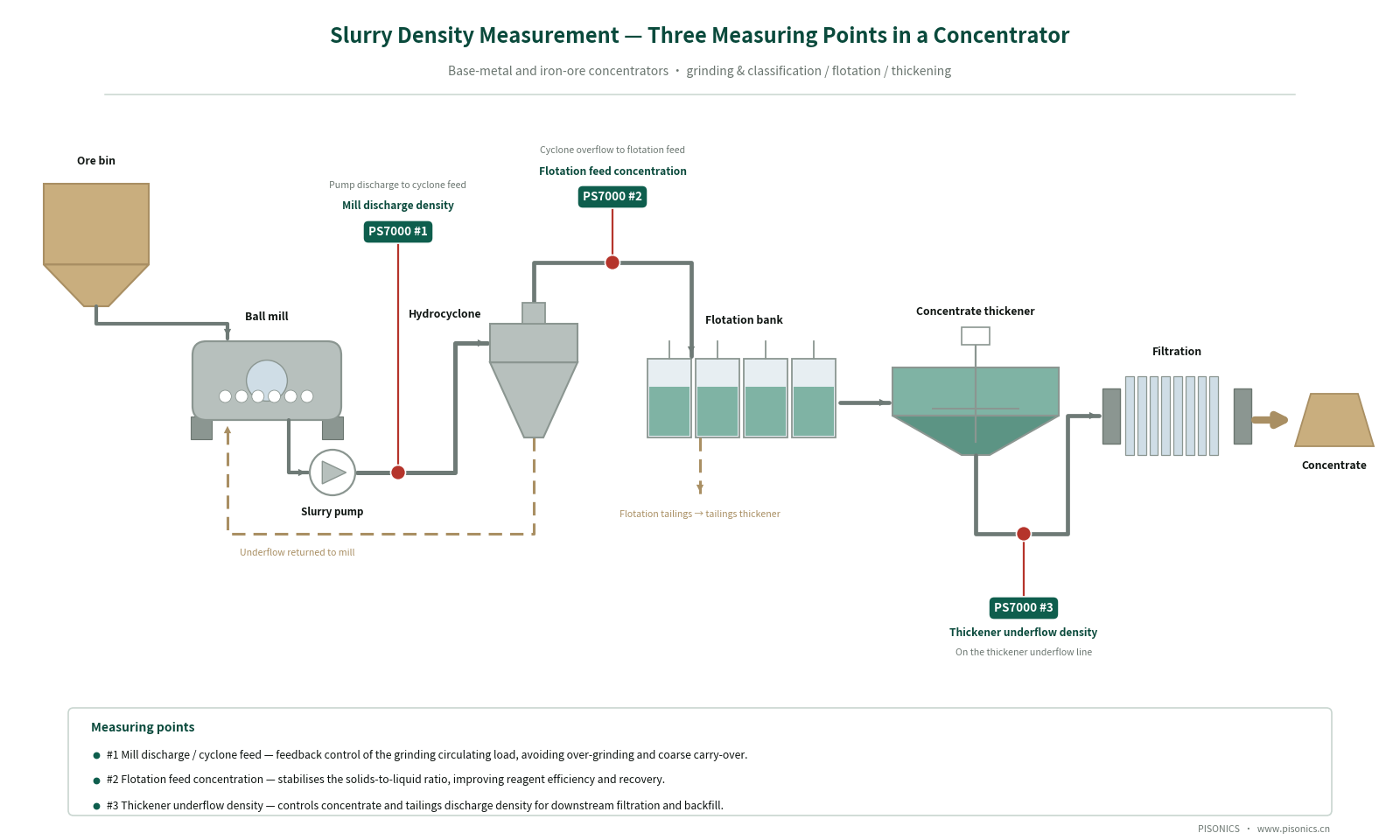
Online Measurement of Slurry Density in Non-ferrous Metallurgical Beneficiation Plants
In nonferrous metal concentrators, fluctuations in slurry density directly affect metal recovery rates and energy consumption. The PS7000 concentration meter employs ultrasonic non-contact measurement technology and features a flanged direct‑insertion installation, eliminating the wear and fouling issues common to conventional instruments, ensuring long‑term stable operation, and operating entirely without radiation, thus obviating the need to obtain a Radiation Safety License.
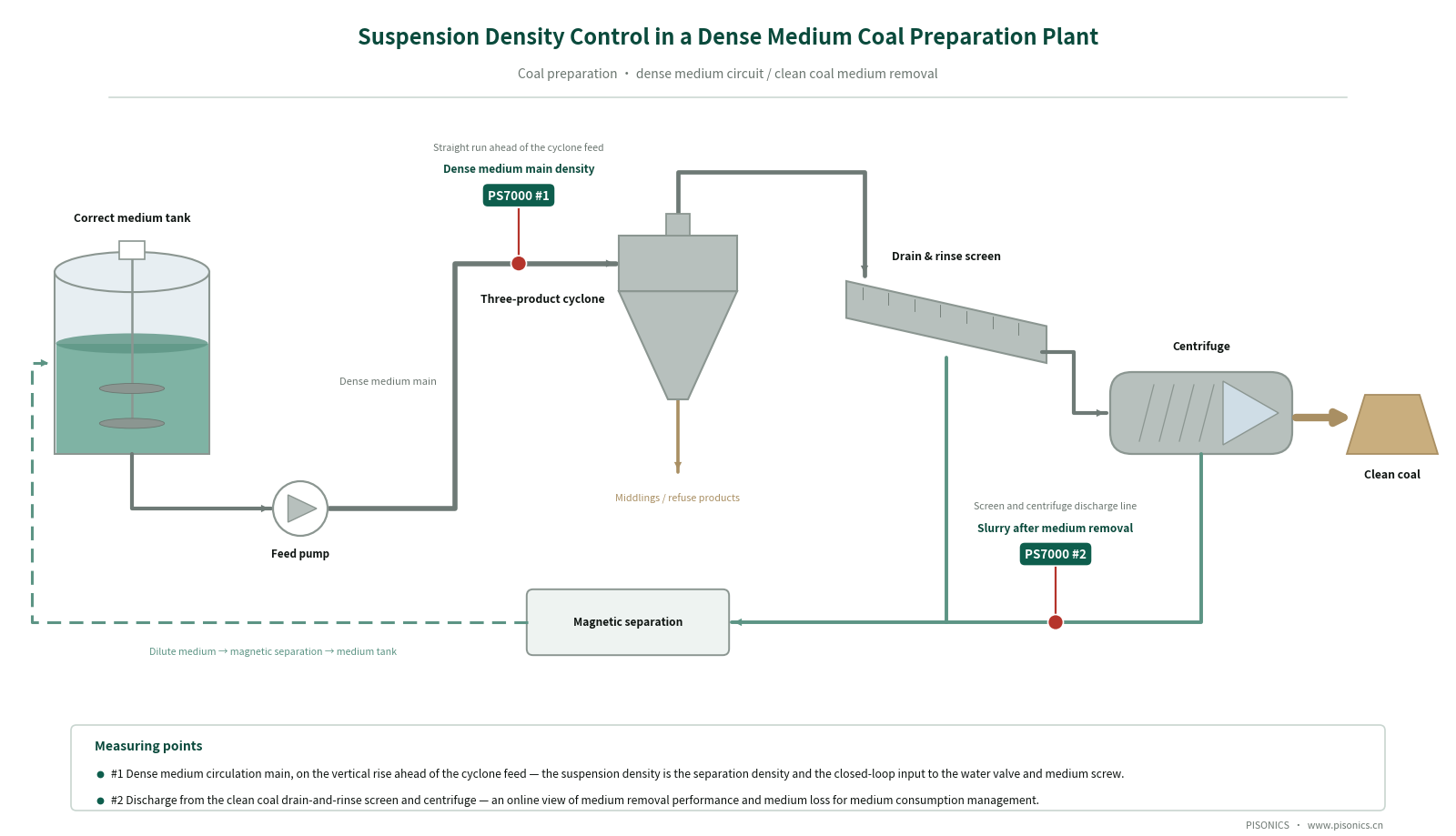
Density Control of Heavy-Medium Suspensions in Coal Washing
In the heavy‑medium coal‑washing process, even slight variations in slurry density can significantly affect the ash content of the clean coal product. Conventional concentration meters, such as nuclear‑based and tuning fork types, suffer from radiation safety concerns, frequent maintenance requirements, and slow response times. Pisonics’ PS7000 acoustic impedance density meter, employing a non-intrusive probe and a Chirp algorithm, delivers high‑frequency, stable density measurements, ensuring precise control by the DCS system, giving the loop a continuously available density signal for steady clean-coal quality.
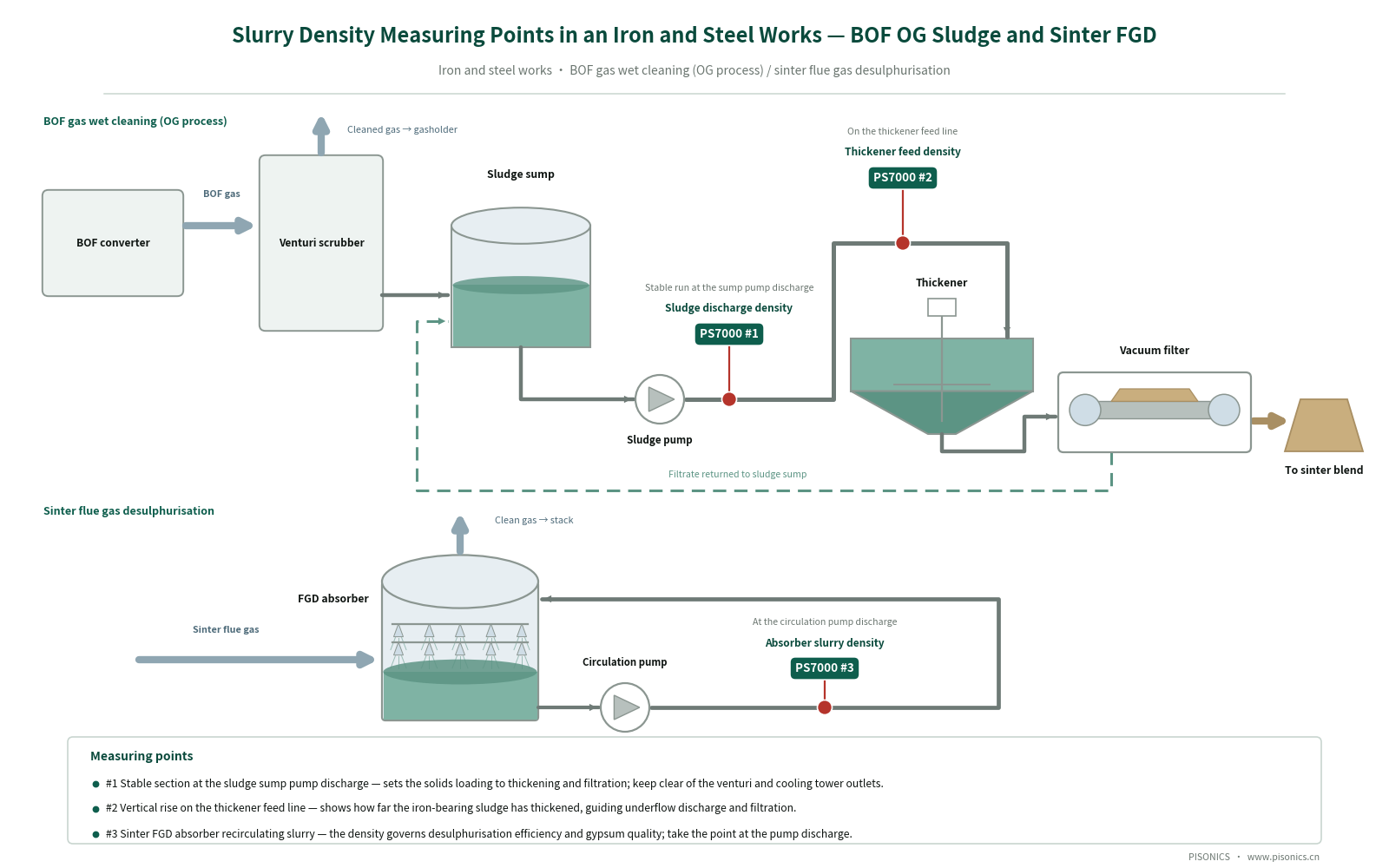
Typical Applications of Slurry Density Measurement in the Iron and Steel Metallurgy Industry
In the wet-slurry processing of the steel industry, conventional density meters frequently fail due to dust, bubbles, and abrasive particles. Pisonics’ PS7000 acoustic‑impedance concentration meter employs a ceramic probe and a Chirp algorithm to enable non‑contact measurement, which not only extends instrument life but also enhances data stability, significantly reducing maintenance costs and increasing iron recovery rates.
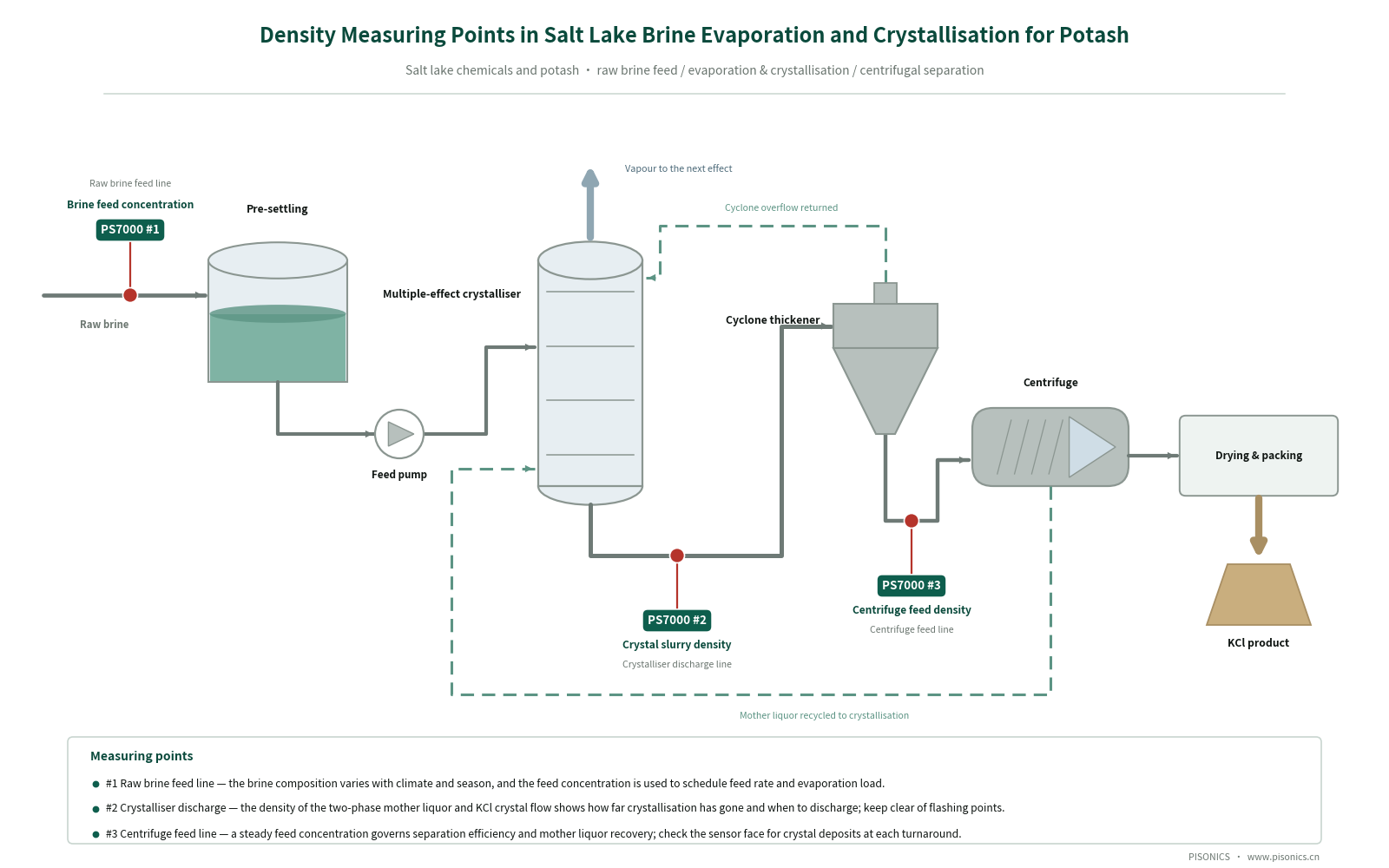
Density Measurement of Salt Lake Brine Potash Fertilizer Evaporation-Crystallization Solid-Bearing Two-Phase Flow
In the potash‑extraction process from salt‑lake brine, the highly corrosive chloride‑rich environment and complex multiphase flow patterns often cause conventional density meters to fail repeatedly. Pisonics’ PS7000 acoustic‑impedance concentration meter features a fully PTFE‑lined design and a ceramic probe, offering exceptional corrosion resistance and insensitivity to bubbles, crystals, and flash vaporization. This ensures stable density measurement in solid–liquid two‑phase flows, significantly enhancing both the plant’s economic efficiency and product quality.
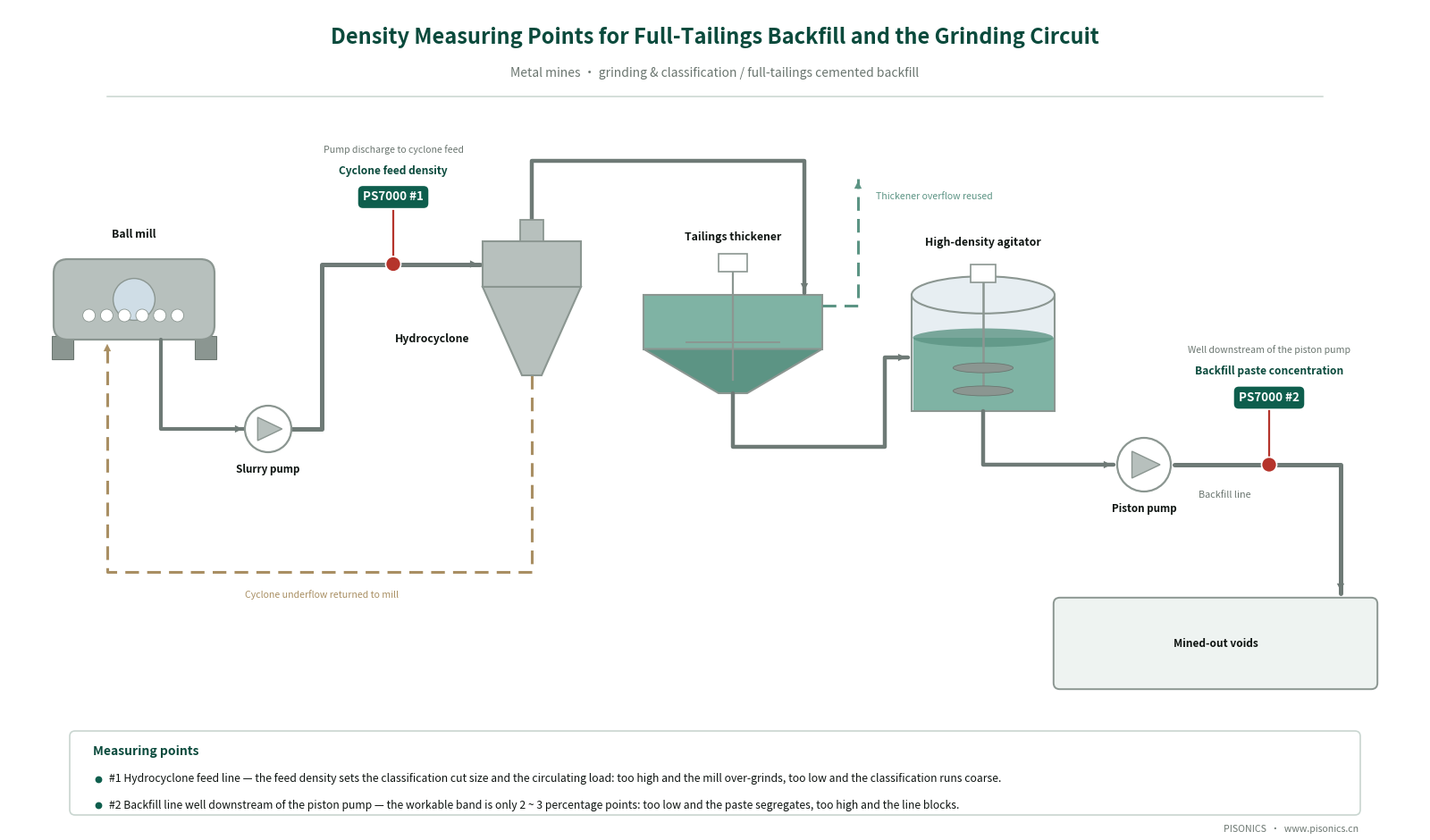
Mine Tailings Backfill Stations and Grinding Circuit Density Measurement
In mine tailings‑filling stations and grinding circuits, density control of high‑concentration paste slurries is critical. Conventional instruments struggle to meet these requirements due to issues such as wear and sluggish response. Pisonics’ PS7000 employs non‑contact measurement, with a response time of less than one second and a ceramic probe life of up to five years, thereby completely eliminating problems of wear and blockage, improving metal recovery rates, and reducing energy consumption.
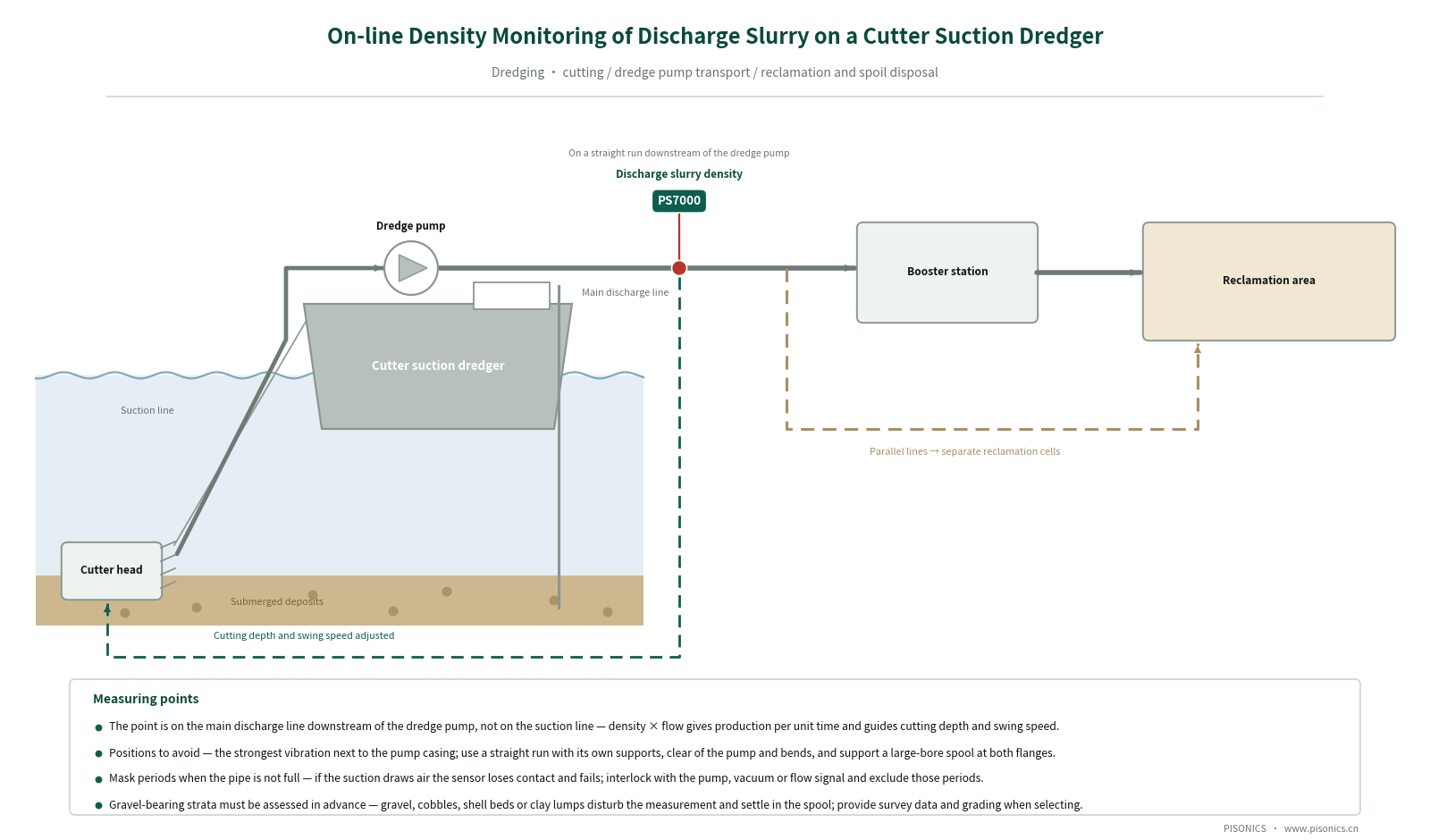
Cutter Suction Dredger · Hopper Dredger · Sand Dredging Vessel Slurry Density Online Monitoring Solution
During dredging operations, the density of the slurry discharged by cutter suction dredgers fluctuates significantly. Conventional nuclear‑based or contact‑type density meters suffer from difficulties in obtaining radiation permits, rapid wear and tear, and slow response times, leading to frequent pump blockages that are hard to predict. The PS7000 ultrasonic acoustic impedance concentration meter is installed non‑contact on the discharge pipeline, withstands erosion by coarse sand, and boasts a response time of less than one second, enabling real‑time density monitoring and early warning to prevent pump blockages.
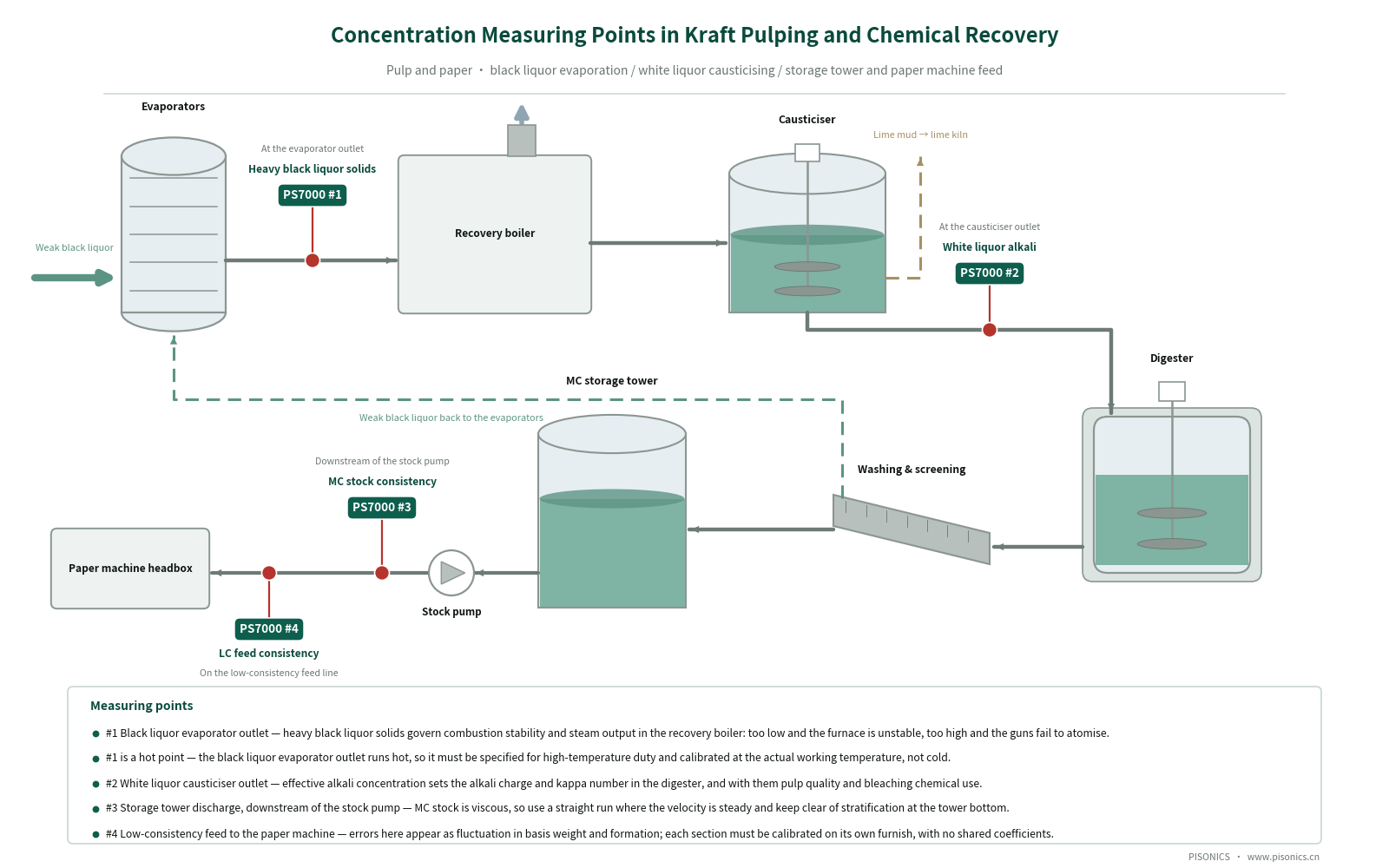
Online concentration monitoring for low-concentration LC / medium-concentration MC / black liquor / white liquor
In the alkali recovery section of a paper mill, the measurement of black liquor and white liquor concentrations has long been plagued by severe corrosion, high viscosity, and radiation safety constraints. Conventional gamma-ray and differential pressure instruments are prone to failure and incur high maintenance costs. The Pisonics PS7000 ultrasonic acoustic impedance density meter, featuring a non-contact probe, a corrosion-resistant PTFE/Hastelloy construction, and an anti-bubble algorithm, enables continuous online concentration monitoring across the entire process—on key points such as the black liquor evaporation outlet and the white liquor causticization outlet—supporting DCS closed-loop control. As a result, black liquor concentration fluctuations have been reduced from ±2.5% to ±0.5%, and white liquor alkali consumption has decreased by approximately 3%.
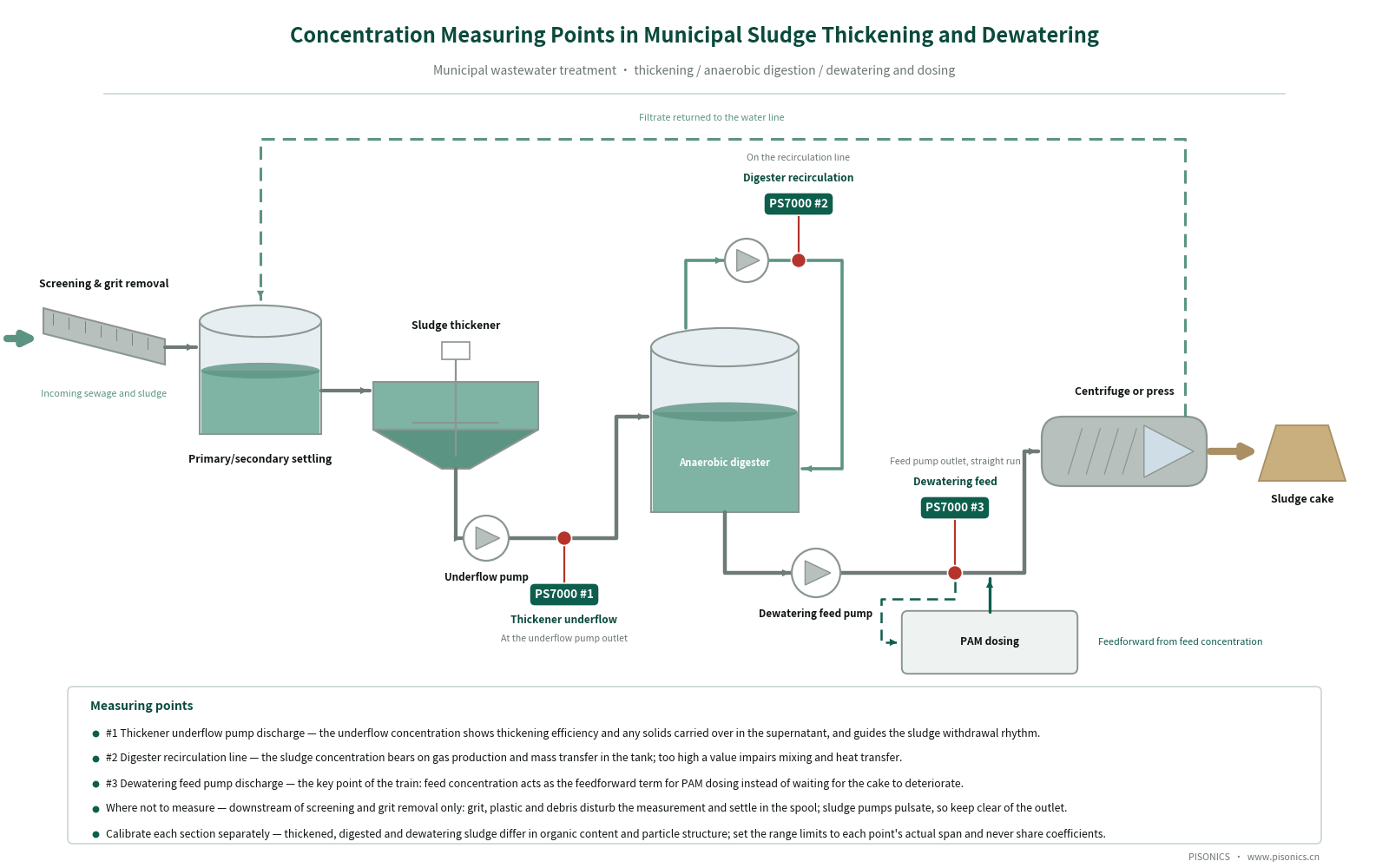
Sludge Thickening / Digestion / Dewatering / Alum Flower Online Monitoring Solution
In the sludge thickening, digestion, and dewatering processes of municipal wastewater treatment plants, conventional gamma-ray density meters pose radiation safety risks, while insertion-type instruments are prone to clogging from hair and fibers. This results in PAM flocculant dosing being based on empirical estimates, leading to chemical waste and fluctuating cake moisture content. The PS7000 series ultrasonic acoustic impedance slurry concentration meter employs a non-contact ceramic probe installed at the thickener underflow, the digester recirculation line, and the dewaterer feed pipe, enabling online density monitoring that is radiation-free, clog-free, and responsive within seconds, thereby supporting precise closed-loop PAM dosing.
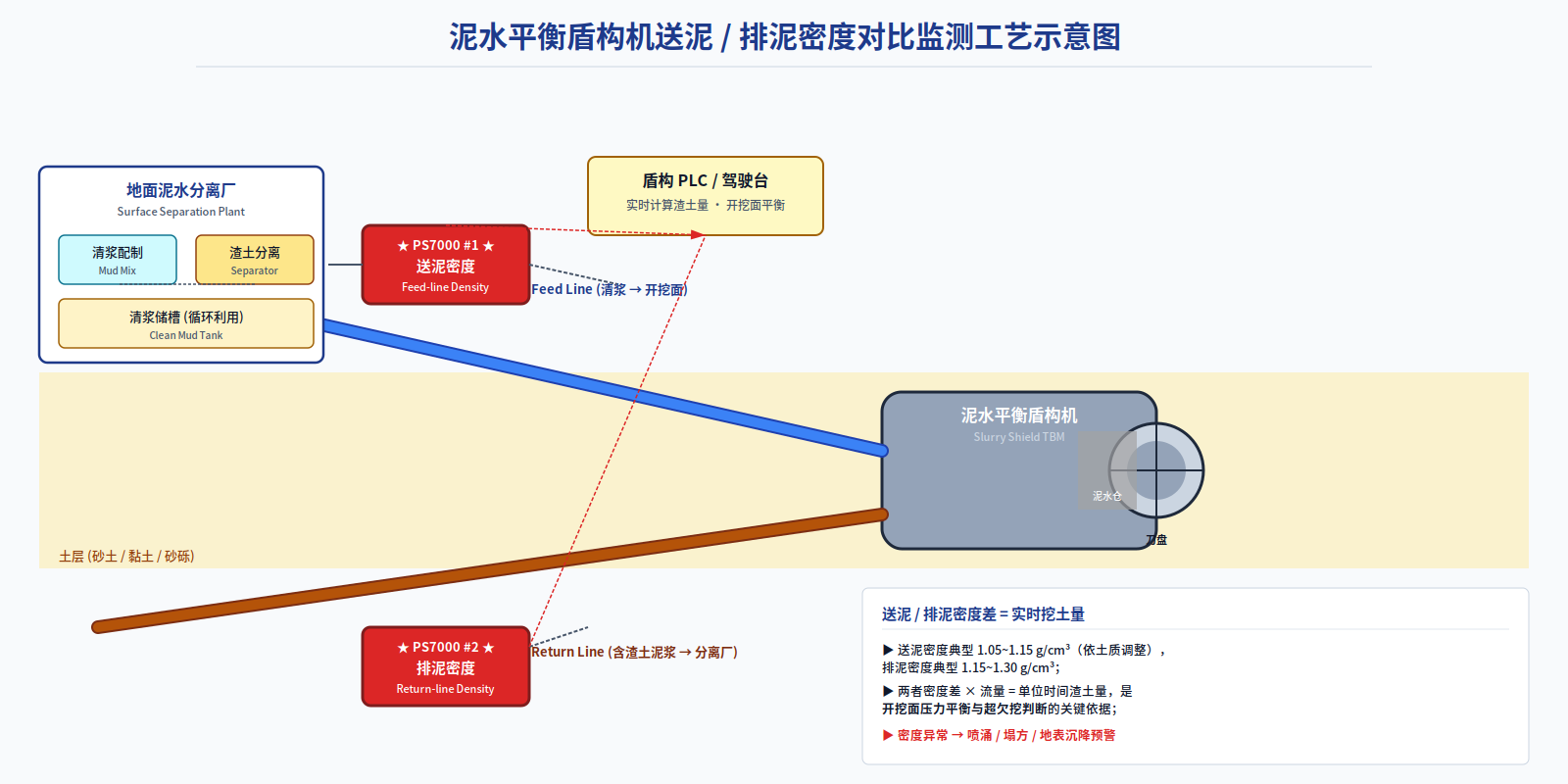
Slurry density comparison measurement for mud delivery/mud discharge · Excavation face balance control
In tunnel‑boring machine (TBM) construction, the density difference between the slurry supply and discharge lines is a critical parameter for assessing excavation face pressure balance and providing early warnings of blow‑ups or collapses. However, conventional differential‑pressure, tuning‑fork, and gamma‑ray concentration meters are prone to wear and clogging in abrasive, gravel‑laden slurries, pose radiation safety risks, and suffer from significant cumulative measurement errors in dual‑channel setups. The PS7000 series ultrasonic acoustic impedance slurry density meter is deployed in pairs, synchronously installed on both the supply and discharge pipelines; it is non‑nuclear, erosion‑resistant, and calibrated using the same model, delivering a density difference accuracy better than ±0.5% and enabling real‑time muck volume calculation and precise control of the excavation face.
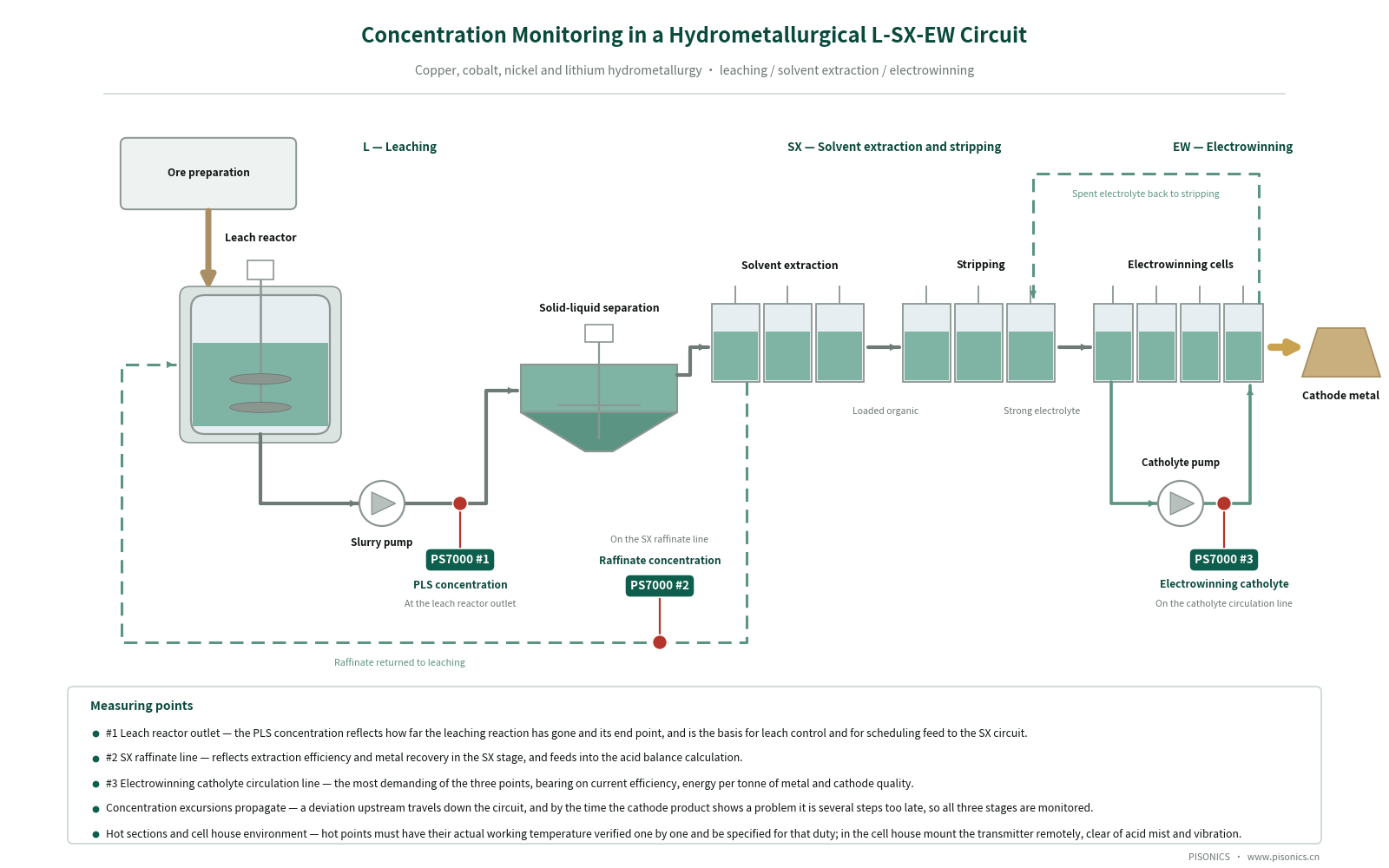
Leaching PLS · Raffinate · Catholyte Concentration On-Line Monitoring
In the L-SX-EW hydrometallurgical process for copper, cobalt, and other metals, customers struggle to monitor the concentrations of the pregnant leaching solution (PLS), the raffinate, and the electrowinning cathode solution. Conventional differential‑pressure, tuning‑fork, or gamma‑ray instruments suffer from corrosion‑induced failures, solution contamination, electromagnetic interference, and restrictive radiation‑permit requirements. The PS7000 ultrasonic acoustic‑impedance slurry density meter, featuring a fully lined construction of Hastelloy, titanium, and PTFE paired with a non‑contact ceramic probe, delivers stable, online concentration measurements across the PLS, raffinate, and cathode solution streams, even in highly acidic, high‑chloride, and strongly electromagnetic environments, thereby supporting improved current efficiency and enhanced cathode‑product quality.
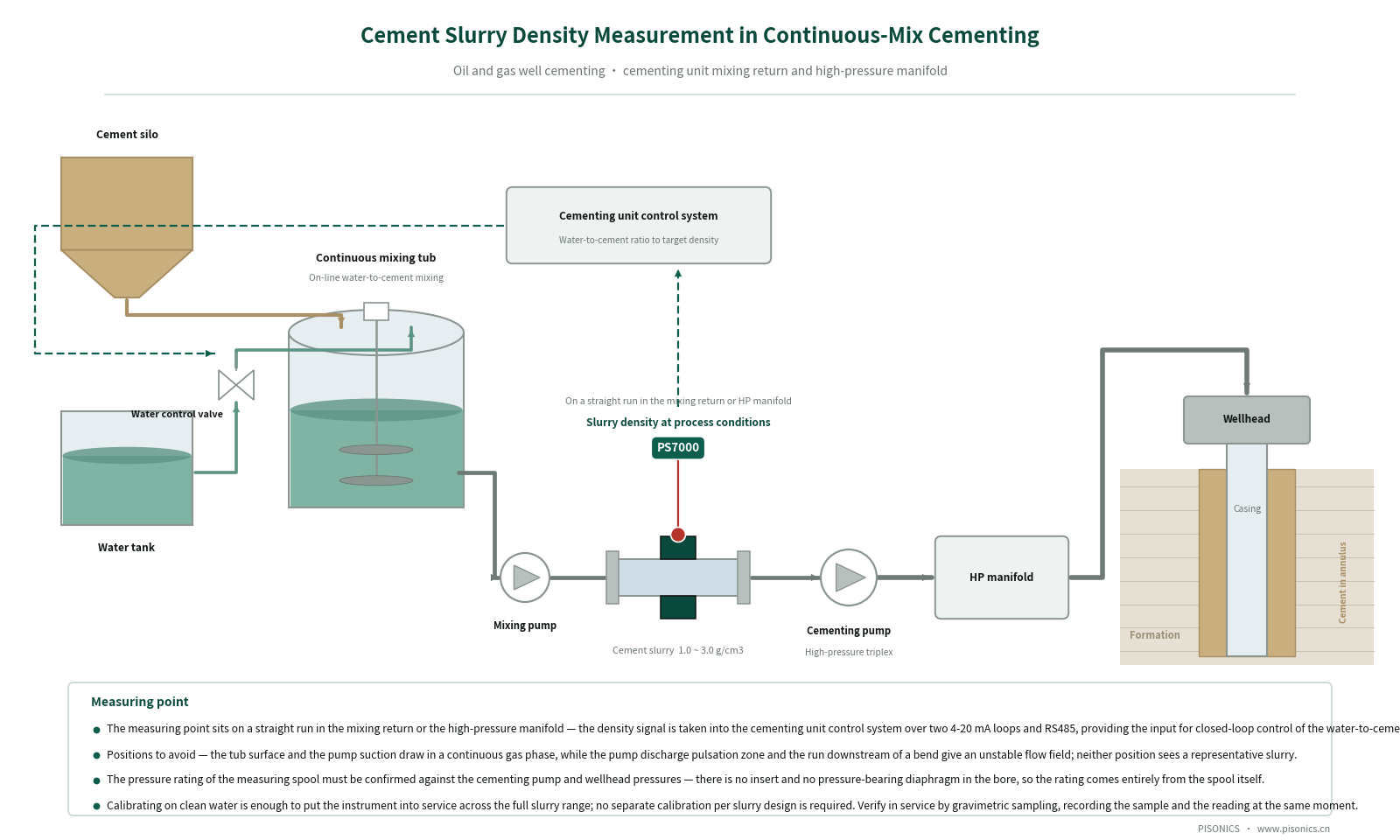
On-line Cement Slurry Density Measurement in Oil-Well Cementing
Cementing operators struggled with real-time density control in narrow-pressure-window wells due to inaccurate Coriolis and hazardous radioactive meters. The PS7000 online slurry density meter delivers stable, accurate 1.0–3.0 g/cm³ measurement during on-the-fly mixing, enabling reliable automatic density control.
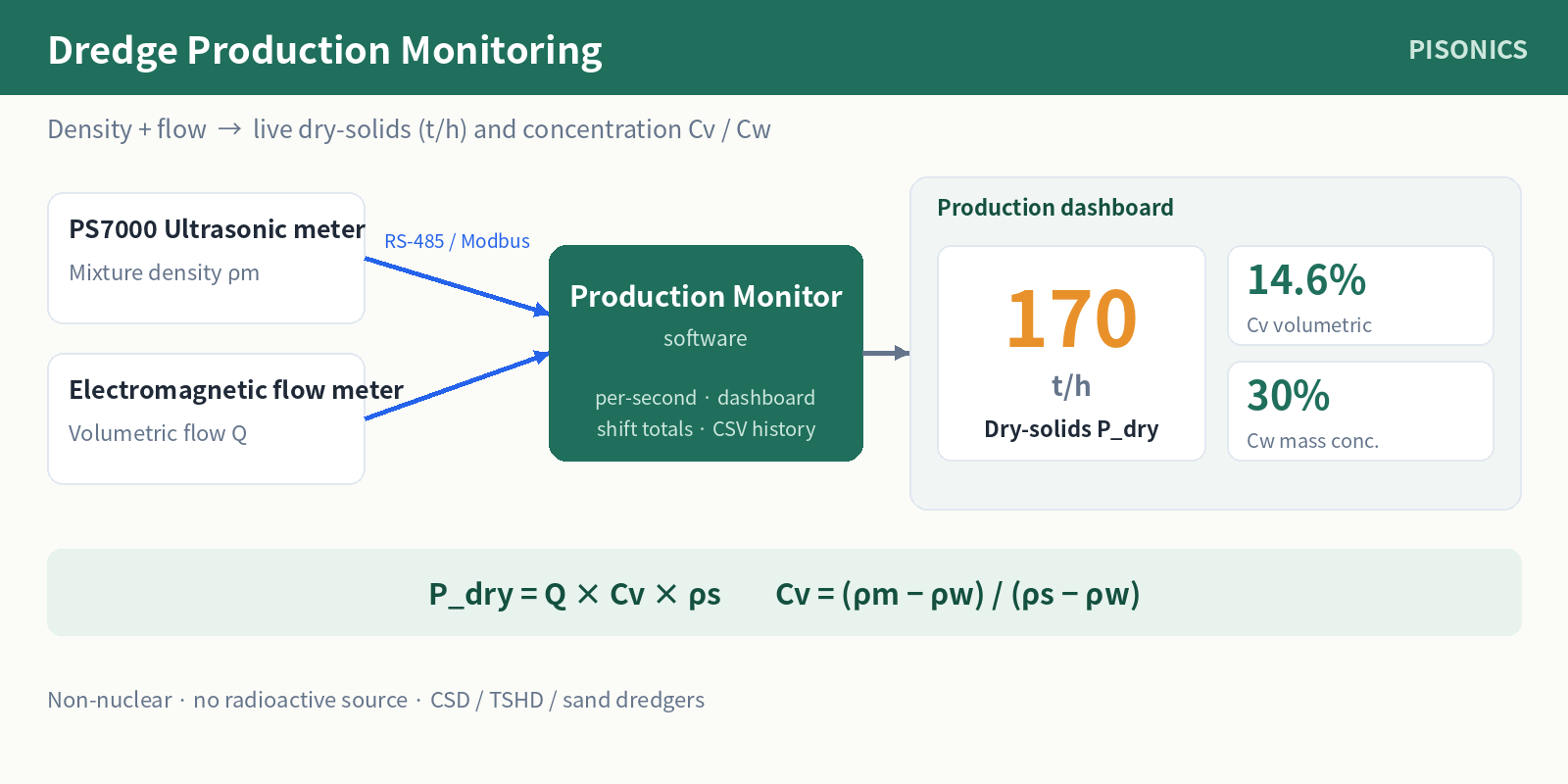
Dredge Production Monitoring — Real-Time Dry-Solids Output from Density + Flow
Turn inline slurry density and pipe flow into live dredge production: dry-solids tonnes/hour, Cv, Cw, specific gravity and line velocity — non-nuclear, with a dashboard, shift totals and history.
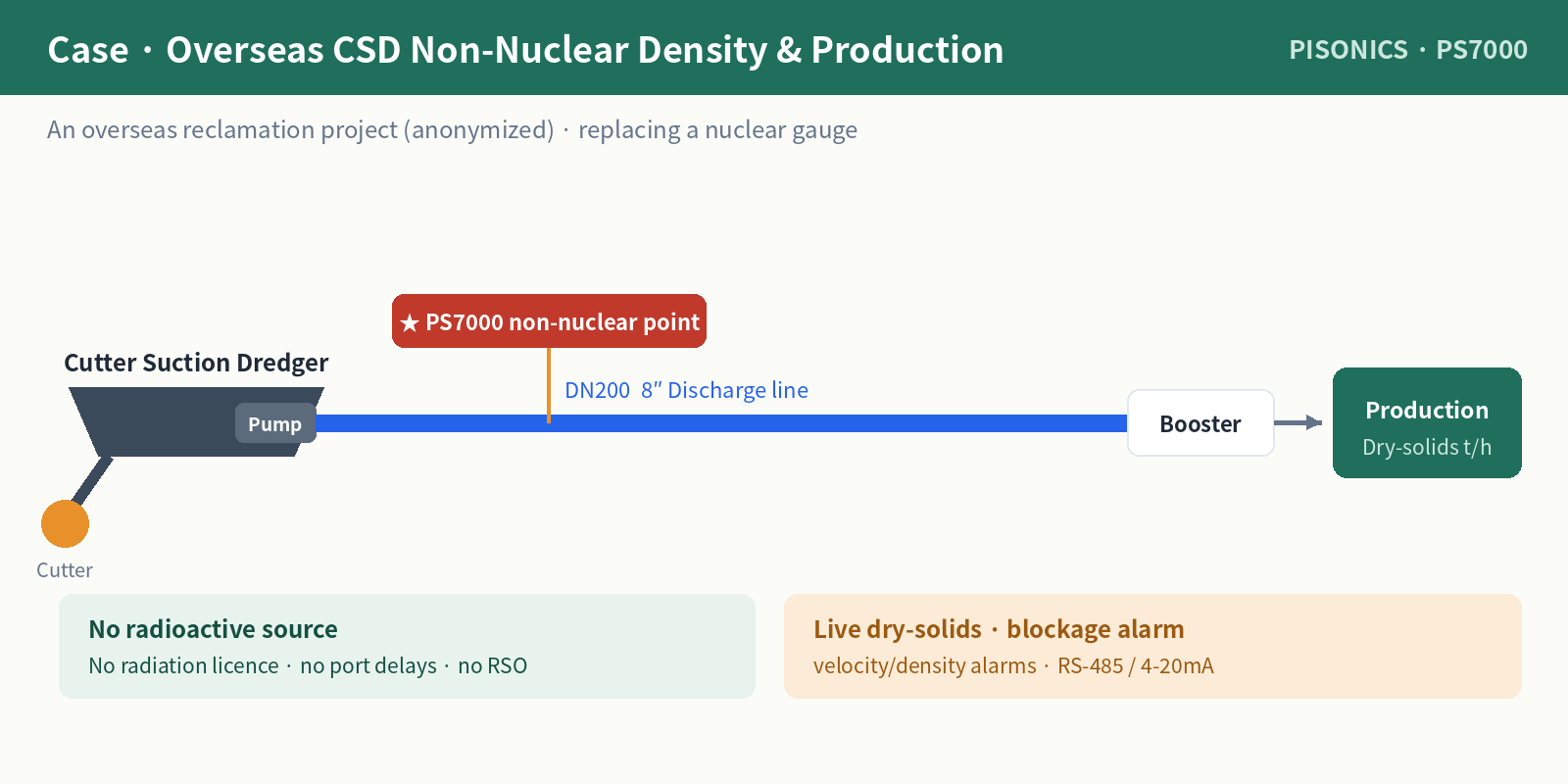
Case Study: Non-Nuclear Density & Production Monitoring on an Overseas Cutter-Suction Dredger
How an overseas reclamation contractor replaced a nuclear gauge with a non-nuclear PS7000 + flow + production-monitor system on a CSD discharge line — real-time dry-solids output, no radiation licence.
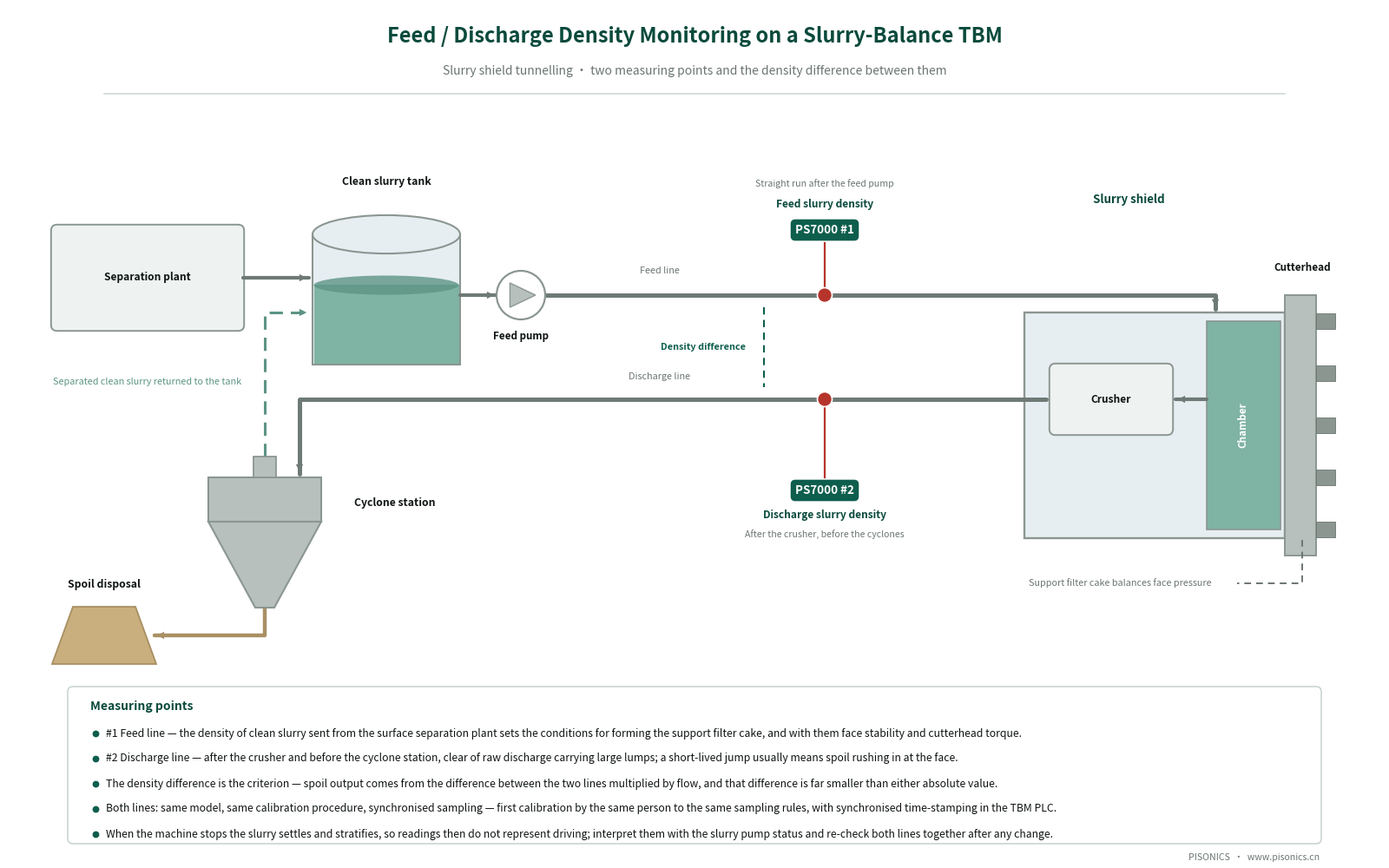
Two Measuring Points on a Slurry TBM: How Reliable Is Spoil Output Calculated from a Density Difference?
Calculating spoil output in slurry TBMs needs reliable density monitoring. The ultrasonic density meter provides non-intrusive online measurement on feed and discharge lines.

Sodium–calcium dual-alkali FGD — regeneration-side density monitoring
Sodium–calcium dual-alkali absorbs with sodium alkali and regenerates with lime, so the tower circulates a clear solution and all solids settle outside it. This page says plainly that the absorber side does not warrant an online concentration meter — the three-component split is set by pH, not pinned by stoichiometry, and controlling make-up on pH is the right call — and concentrates on the two points that do: lime slurry preparation and regeneration-basin density.
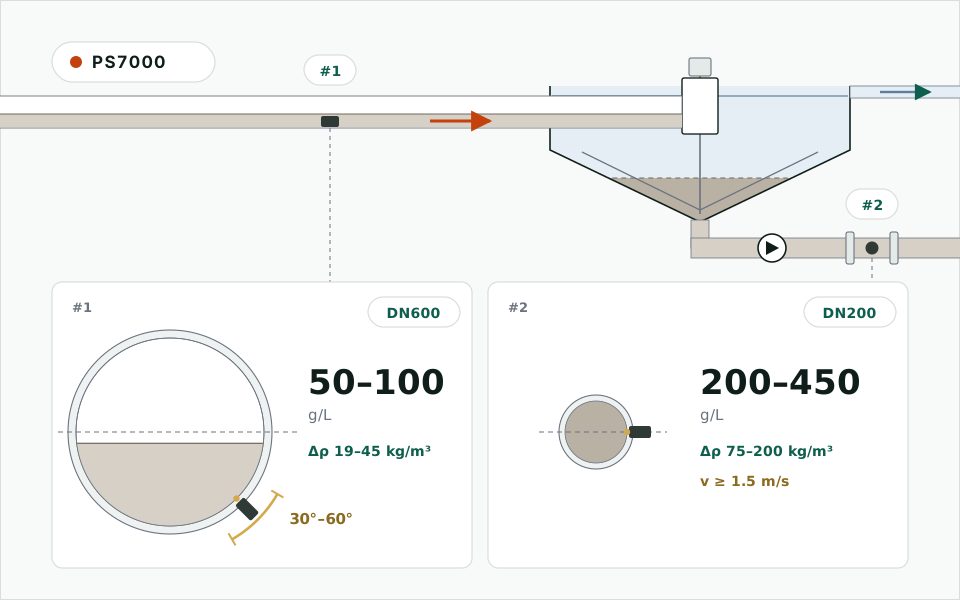
Coal slurry thickener feed and underflow: online solids concentration
Online solids concentration for coal preparation thickeners — feed at 50–100 g/L in part-full gravity lines, underflow at 200–450 g/L — with a non-nuclear ultrasonic meter that has nothing in the flow for flocculated slimes to hang on.
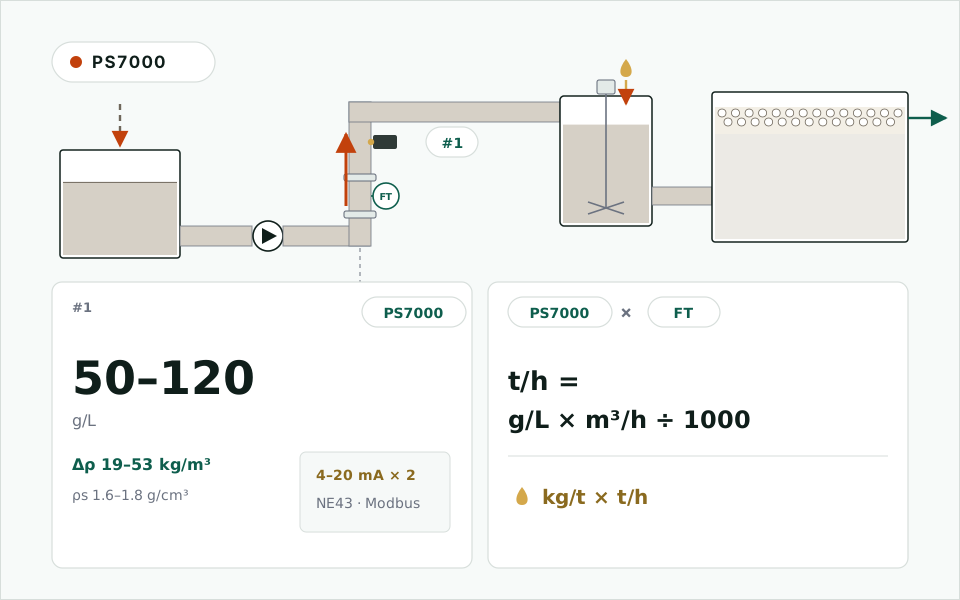
Coal flotation feed: online solids concentration
Online solids concentration on coal flotation feed (50–120 g/L), where concentration × flow gives the dry solids for reagent feed-forward: where a non-nuclear ultrasonic meter goes, how to keep bubbles and reagent off the reading, and how to accept it.
8 applications
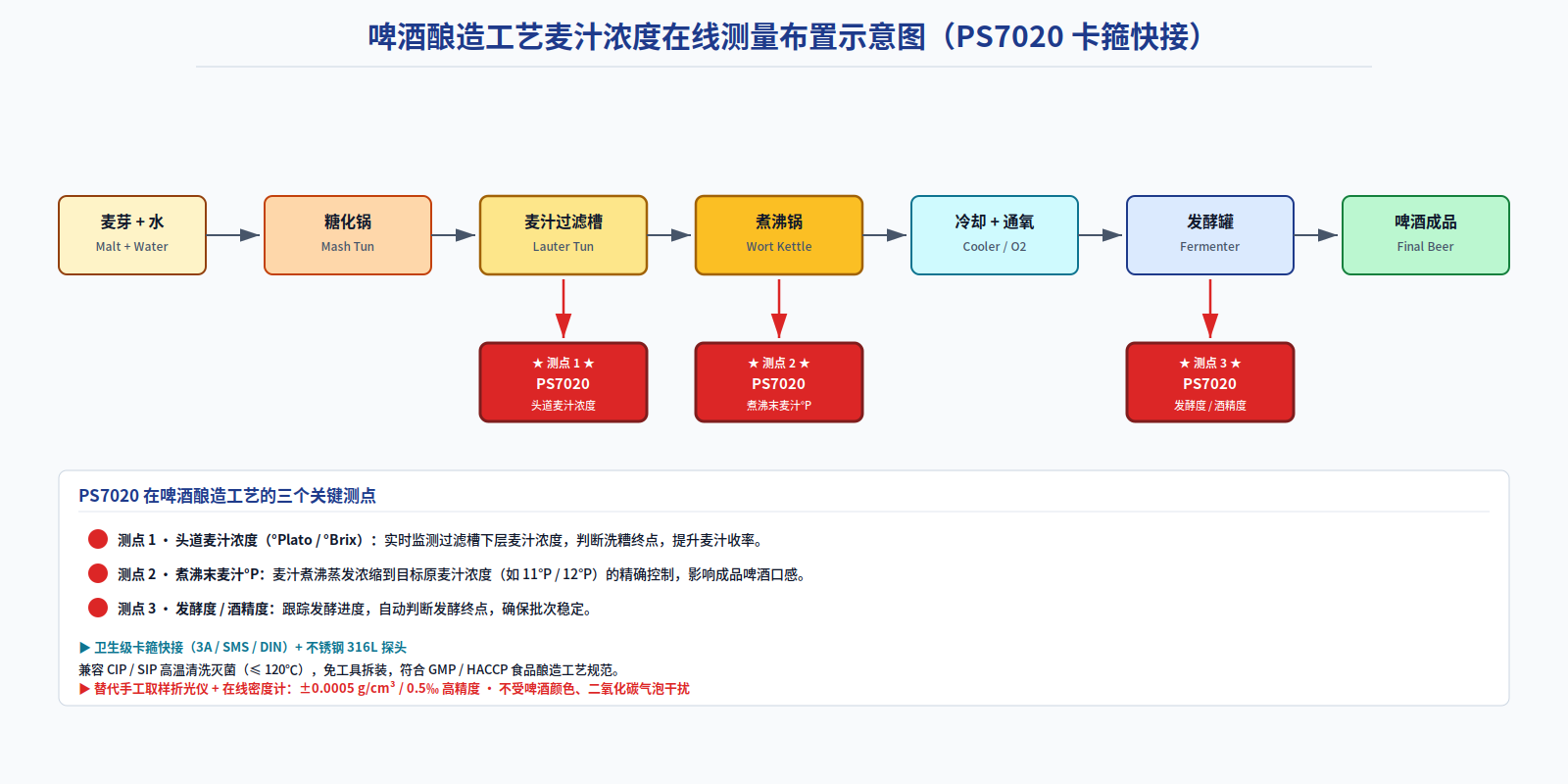
PS7020 Series Ultrasonic Sound Velocity–Based Concentration/Mass Density Meter: Applications in the Food, Brewing, and Sugar-Refining Industries
In the wort mashing, filtration, and fermentation stages of beer brewing, customers face challenges such as delayed wort concentration measurements, bubble interference, and poor performance with dark-colored liquids, resulting in significant batch-to-batch variability and frequent manual sampling. The PS7020 series ultrasonic sound-velocity–based concentration/density meter measures wort °P online with an accuracy of ±0.0005 g/cm³, unaffected by color, bubbles, or CO₂. Equipped with a hygienic clamp‑type quick‑connect and compatible with CIP/SIP, it delivers sub‑second real‑time feedback and seamless integration with MES systems.
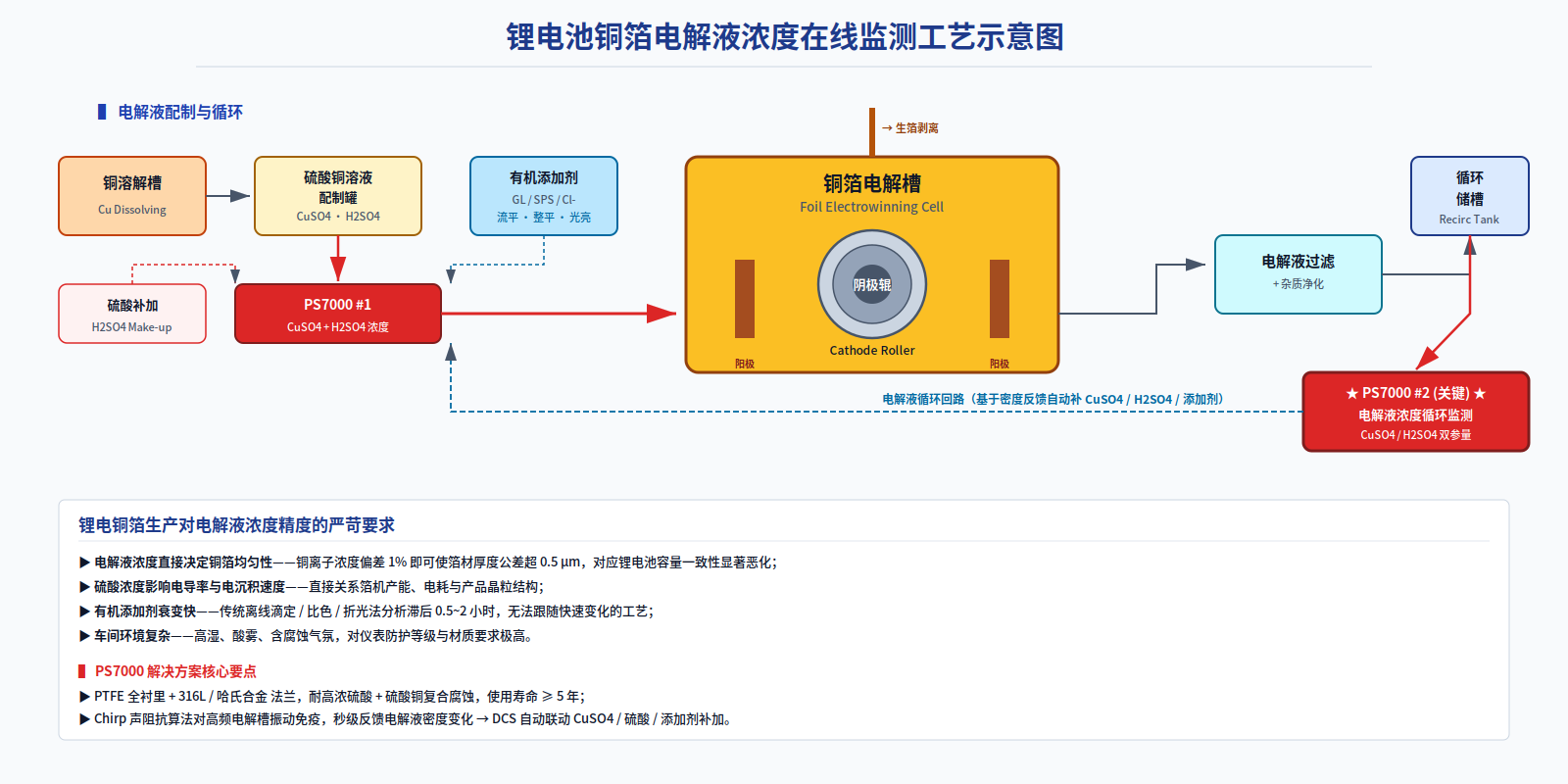
Online Monitoring of Electrolyte Concentration in Copper Sulfate + Sulfuric Acid + Additive Solution
In lithium‑battery copper‑foil production, the customer faced significant fluctuations in the concentration of the electrolyte (copper sulfate, sulfuric acid, and additives), along with the drawbacks of time‑delayed offline analysis and frequent damage to instrumentation caused by highly corrosive media. The PS7000 ultrasonic acoustic impedance concentration meter, featuring a fully PTFE‑lined design and a Hastelloy construction, effectively withstands complex corrosive environments while delivering sub‑second response for online density monitoring. Coupled with DCS control, it enables automated, precise replenishment of chemical solutions, reducing CuSO4 concentration variations from ±2.5 g/L to within ±0.5 g/L.

Chlorine tail-gas caustic scrubber — online residual-alkali monitoring
Online residual-alkali and available-chlorine monitoring on a chlorine tail-gas caustic scrubbing loop. The circulating liquor carries three solutes, but stoichiometry pins them to one reaction path, so a single sound-velocity reading locates it — while a density instrument barely sees the loop change at all. The page sets out both measuring points with their metallurgy and calibration basis, and the three mechanisms that make the reading run high.

Chloride-process titanium dioxide — tail-gas scrubber liquor monitoring
Online residual-alkali and available-chlorine monitoring on the caustic scrubbing loop of chloride-process TiO₂ chlorination tail gas. The liquor is structurally the same as a chlor-alkali tail-gas tower, and the field ranges in granted patent CN111678951B (NaOH 0–15 %, ClO⁻ 0–100 g/L) agree with the switch-out point computed from the reaction equation. This page covers only what differs: HCl in the gas, possible solids, and more complex corrosion.

Hydrogen chloride absorption — acid strength and scrubber liquor monitoring
The two hydrogen-chloride routes measure different things. Water absorption is a binary HCl–water system and the number holds the product acid strength; caustic absorption is a one-dimensional NaOH → NaCl path and the number is neutralising capacity left. Neither measurement is hard; all the difficulty is in wetted materials. This page sets the boundaries of PTFE lining, tantalum, C-276 and titanium — and notes that titanium suits hypochlorite but not plain reducing hydrochloric acid, so the experience does not carry across.

Emergency chlorine absorption — online monitoring of the circulating caustic
GB 11984—2024 clause 6.1.3 d) requires the circulating liquor of a liquid chlorine emergency absorber to hold 15–20 % sodium hydroxide at not more than 45 °C leaving the tower, with online monitoring of concentration and temperature, periodic laboratory analysis, and replacement before caustic falls below 5 %. This page sets out the fact that decides the selection: a standby absorber holds plain caustic, a binary system that sound velocity handles directly; it only turns ternary after an actual release. Also covers raising the strength on existing units, why carbonation is invisible online, and the materials clauses in both standards.

How to measure caustic strength in an emergency chlorine absorber
Titration, pH, conductivity, density, ultrasonic sound velocity and ORP, each judged against the 15–20 % window GB 11984—2024 requires. The focus is conductivity: authoritative data tables put the NaOH conductivity maximum in or against that very band, and one electrodeless caustic meter is sold in 0–10 % and 25–40 % ranges with 10–25 % simply absent. The page also states plainly that we do not claim sound velocity is proven monotonic across the range — monotonicity is established by calibration on the customer's own loop.

Nitrogen trichloride discharge treatment — caustic strength monitoring
GB 11984—2024 clause 5.1.1 requires sodium hydroxide in the nitrogen trichloride discharge treatment facility to be 5–20 %, with discharge frequency set by keeping NCl₃ below 0.5 % by mass. This is the second caustic measuring point in the same standard; the medium is clean and binary, so the measurement is simpler than on an emergency absorber. The page also says plainly that a tank blown down a few times a year with no circulation is adequately managed by laboratory analysis, and the money is better spent on the emergency absorber.
7 applications
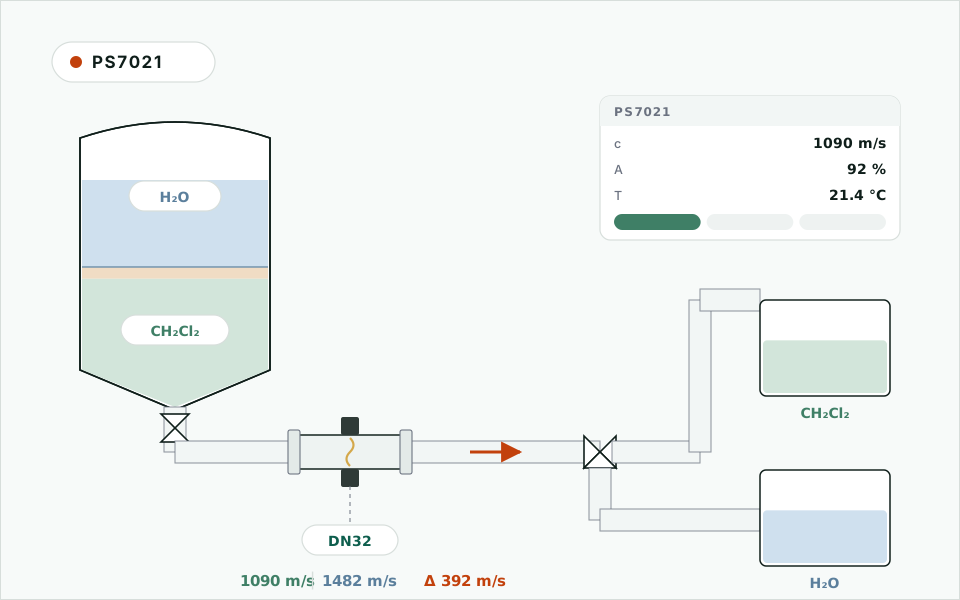
Dichloromethane / water extraction — DN32 inline phase detection
Phase discrimination when a pharmaceutical or fine-chemical reactor drains. Dichloromethane is a third denser than water yet sits at almost the same acoustic impedance, so density and impedance instruments are blind near ambient — while the sound velocities differ by 390 m/s. The page sets out how the two velocity bands are calibrated, how the rag layer is caught by amplitude, the timing and hold-up budget on a DN32 line, and the three conditions that push the reading to not-decidable.
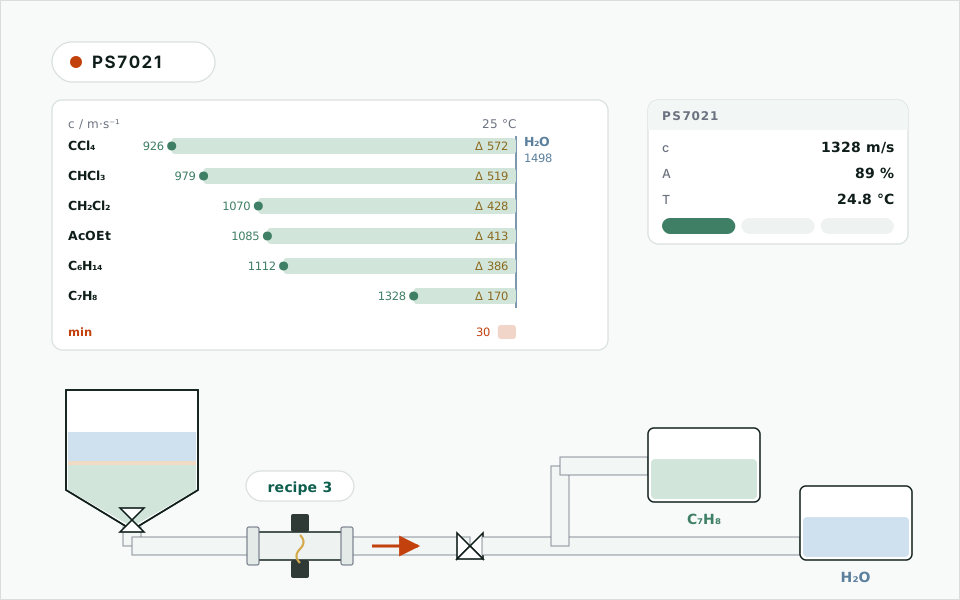
Solvent / water washing — interface detection on toluene, ethyl acetate and hexane circuits
Interface detection on a multi-product line, where the same drain runs toluene this week and ethyl acetate next. Any discriminator tied to colour, conductivity or density has to be re-validated at every changeover. The page tabulates the velocity gap between water and a dozen common solvents (the closest pair still 155 m/s apart), what temperature and salt do to that gap, where the method stops working, and how recipe-based thresholds handle changeovers.
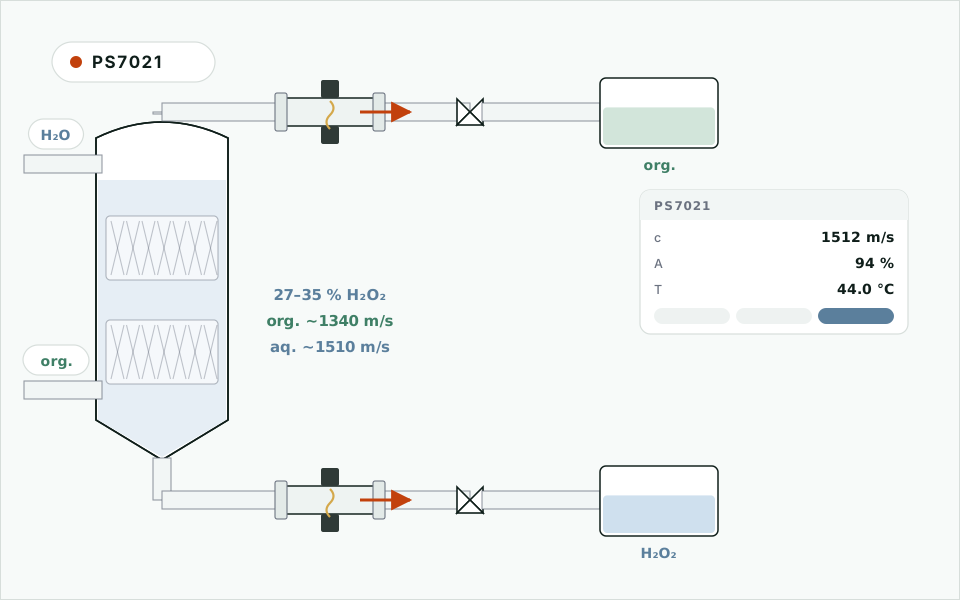
Hydrogen peroxide (anthraquinone process) — phase detection on the extraction section
Two-phase detection around the extraction column of an anthraquinone peroxide plant. The working solution and the 27-35 % peroxide aqueous phase sit over 150 m/s apart, so the call itself is easy; what matters is that carry-over is asymmetric — organics in the product is a quality problem, peroxide returning to hydrogenation is a safety one. The page covers the measuring points, the materials and passivation a peroxide plant demands, and three things this instrument explicitly does not do.
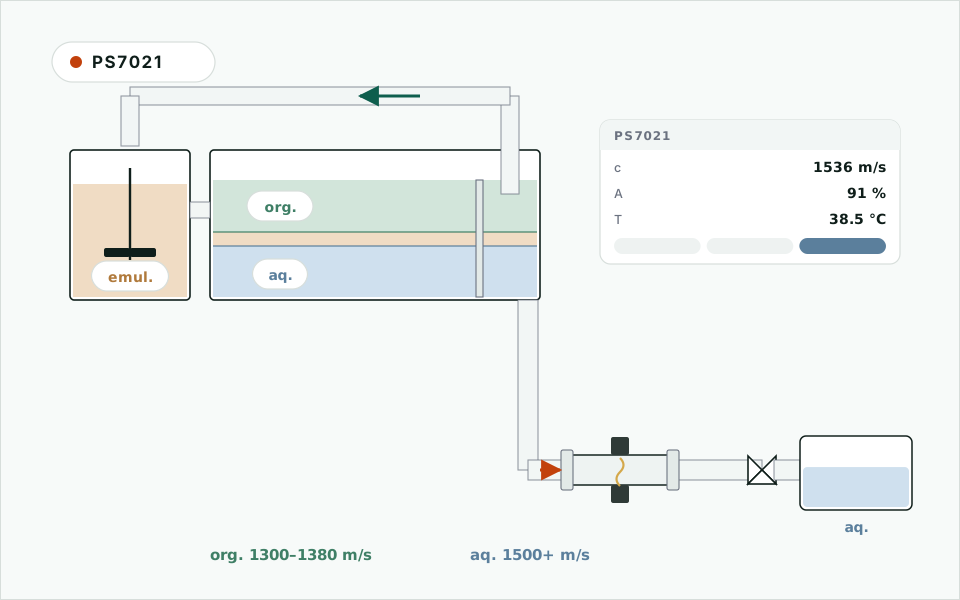
Hydrometallurgy SX — organic / aqueous phase detection at the settler outlet
Phase detection at the settler outlet of a copper, nickel, cobalt or lithium SX circuit. Organic (kerosene diluent plus extractant, 1300-1380 m/s) and the acidic or chloride aqueous phase (above 1500 m/s) sit 180-250 m/s apart. Organic reaching electrowinning burns cathode and carries a fire risk; aqueous in the organic circuit accelerates extractant degradation. The page also draws the line: which phase, not interface height, not entrainment in ppm, not O/A ratio.
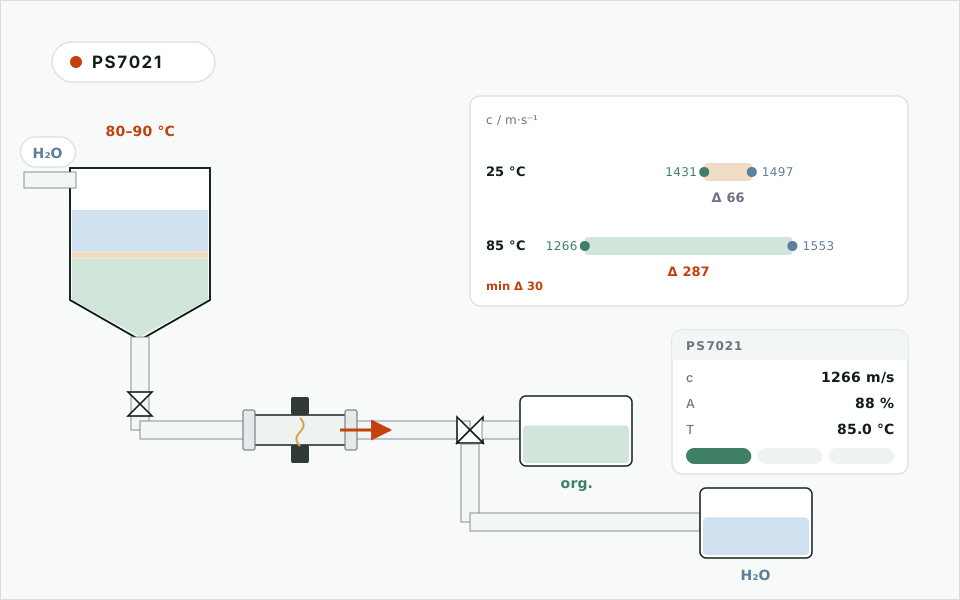
Edible oil refining — oil / wash-water phase detection after neutralisation
Oil-water discrimination on the 80-90 °C wash stage after alkali neutralisation. Temperature is the lever: the phases are 66 m/s apart at ambient and 287 m/s apart at 85 °C, because oil's coefficient is negative and water's is positive. Hot is both the natural state of this duty and the state with the most margin. The page also covers how fouling shows in the amplitude baseline first, and why a sanitary execution has to be confirmed separately.
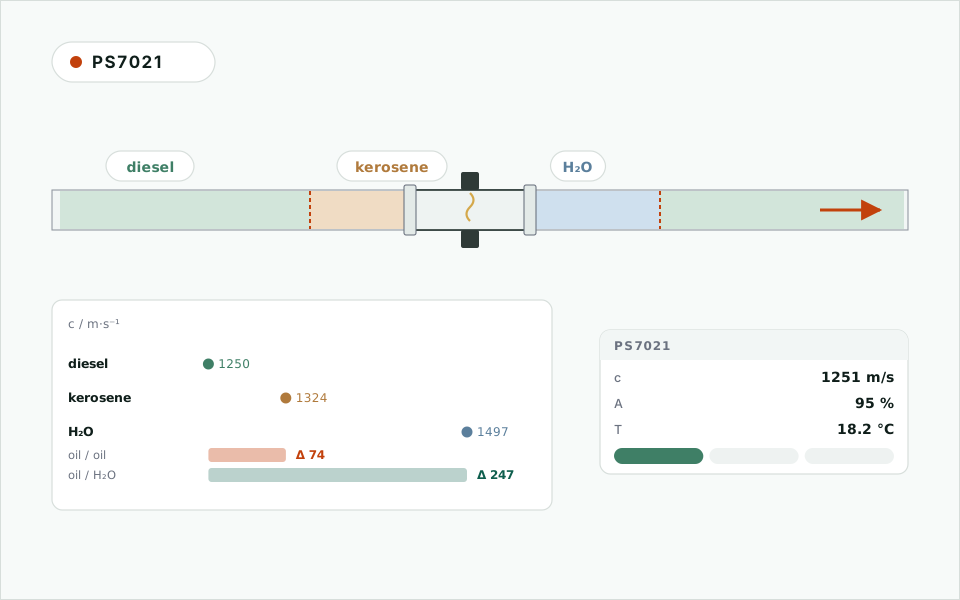
Product pipelines and solvent transfer — batch interfaces and water slugs
Two kinds of interface on one line, an order of magnitude apart. Oil against water is about 247 m/s — a solid water-slug call. Diesel against kerosene is 74 m/s: workable, but every pair has to be measured and compensation kept tight, since one degree of error eats 5 % of the margin. The page states what it does and does not do (no custody transfer, no interface volume) and how it sits beside density-based interface detection.
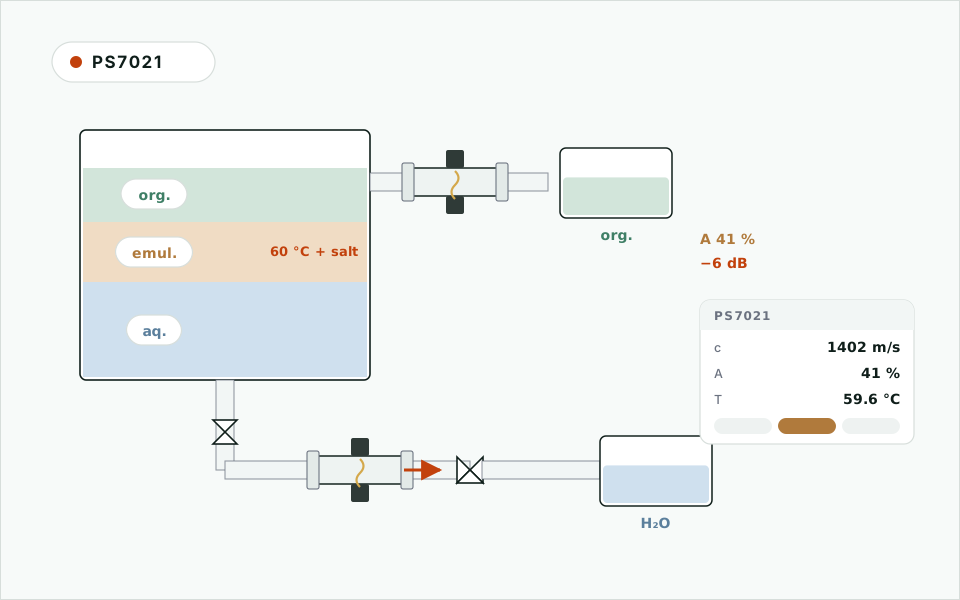
Spent emulsions and oily water — phase detection after demulsification
Skim and decant decisions after breaking spent cutting fluid, rolling emulsion or oily wastewater. Here the rag layer is the normal state rather than an upset, so the amplitude channel earns its keep: the share of each batch spent in the emulsion state measures how well the break worked, a batch earlier than an oil-in-water lab result. The velocity margin depends on temperature and salt — thin at ambient on light oil, over 200 m/s once hot and salted.
8 applications

Online simultaneous analysis of two components: available chlorine and free alkali
Manual titration for available chlorine and free alkali delays the endpoint. The PS7100 spectroscopic concentration meter enables continuous online analysis for precise control.
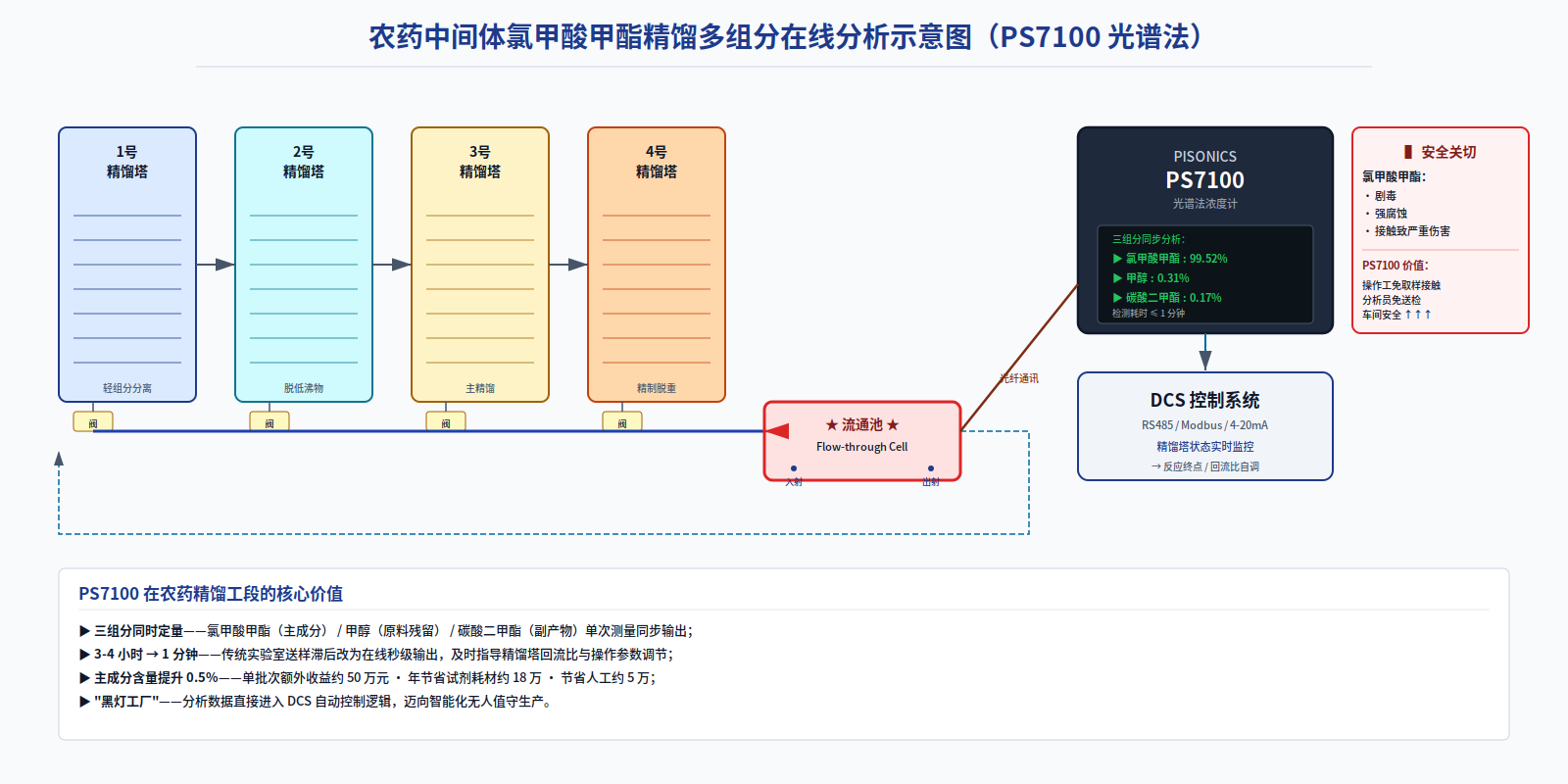
Simultaneous online monitoring of three components: methyl chloroformate, methanol, and dimethyl carbonate
During the methyl chloroformate distillation process, the customer needs to monitor in real time the concentrations of methyl chloroformate, methanol, and dimethyl carbonate. However, the conventional gas chromatography–based approach with manual sampling poses severe toxicity exposure risks and introduces an analytical lag of 3 to 4 hours. The PS7100 spectral‑based concentration meter has been installed at the bypass flow cell on the discharge line of Distillation Tower #4. By acquiring full UV‑Vis‑NIR spectra and employing MLR modeling, it enables simultaneous online measurement of the three components, with results delivered to the DCS within seconds, thereby supporting automatic reflux ratio adjustment and contact‑free safe operations.
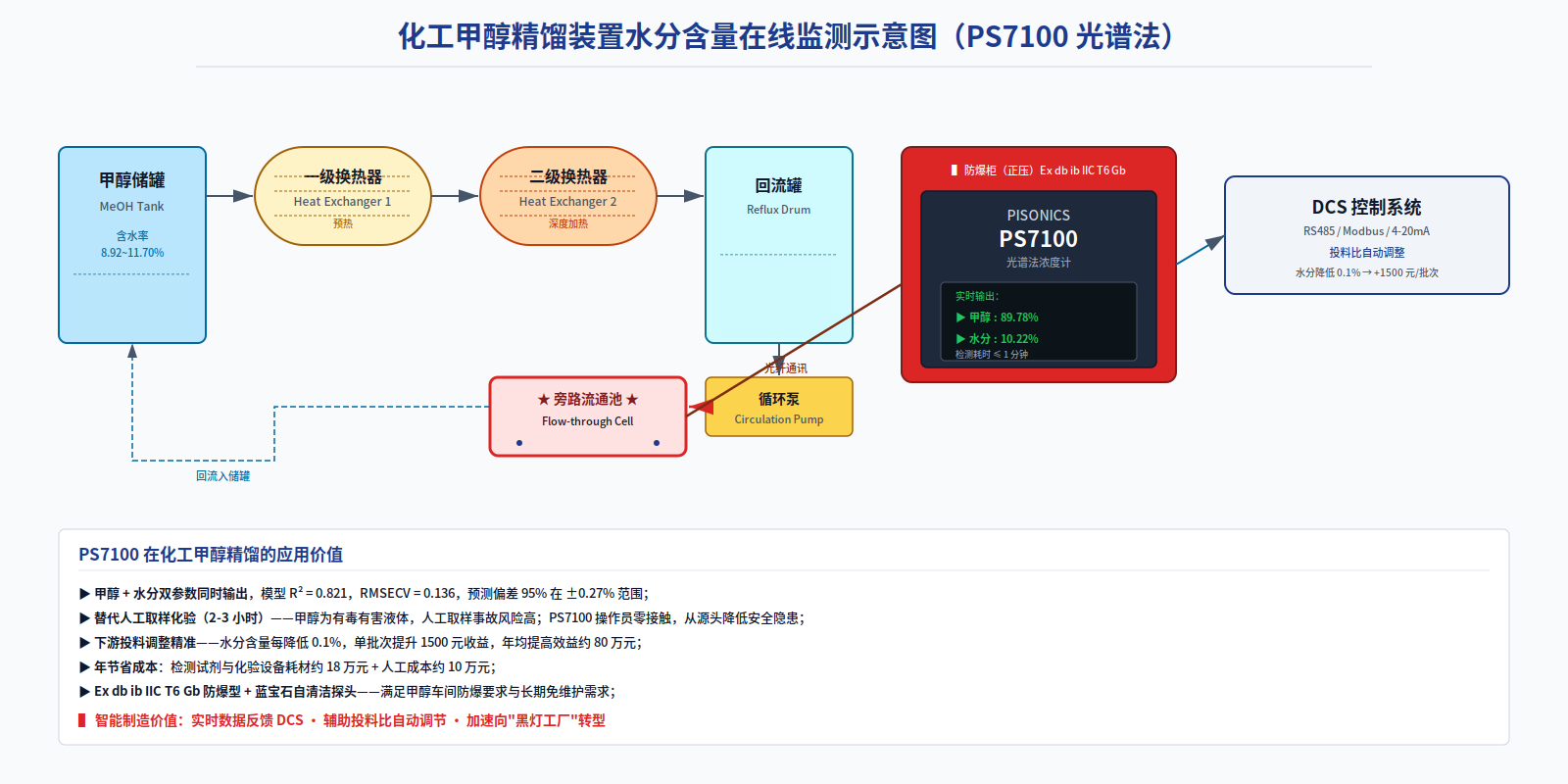
Online Monitoring Solution for Methanol–Water Binary System
At the outlet pipeline of the circulation pump in the methanol distillation unit, the customer faced high risks of personnel exposure during manual sampling, a 2–3 hour delay in laboratory analysis, and an inability to adjust the water content in real time. The PS7100 explosion-proof spectral concentration meter was installed in a bypass flow cell, enabling simultaneous online monitoring of methanol and water content via near-infrared characteristic wavelengths, delivering sub-second response, non-contact measurement, and real-time DCS feedback.
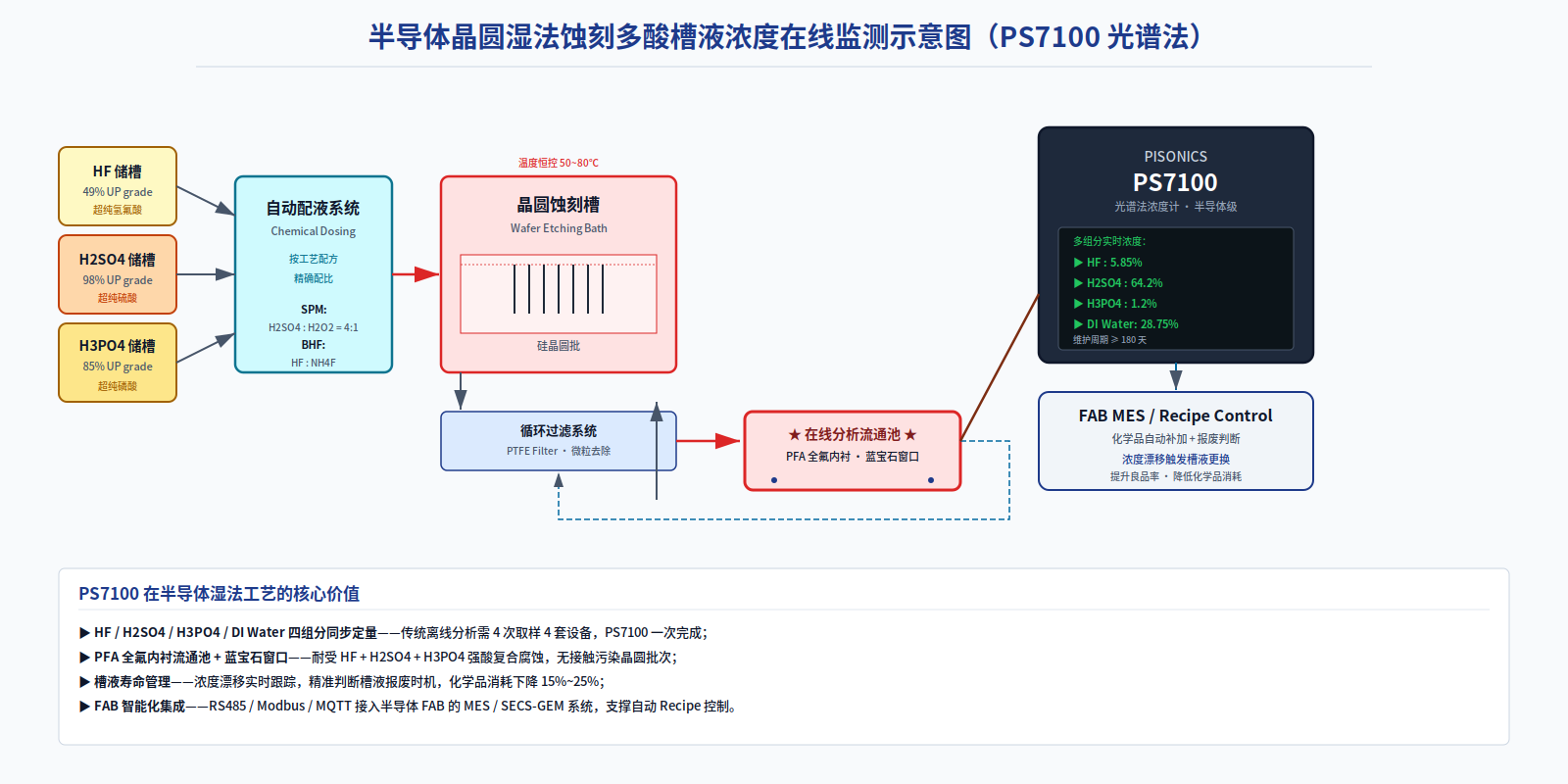
HF + H₂SO₄ + H₃PO₄ + DI Water Simultaneous Monitoring of Multi-Component Tank Solution Concentrations
Semiconductor 12-inch wafer foundries face challenges in BHF and SPM etching tanks: the concentrations of the four components—HF, H₂SO₄, H₃PO₄, and DI water—are prone to drift, making real-time monitoring difficult; manual sampling is both hazardous and time‑lagged; and reliance on empirical judgment for tank‑change timing leads to chemical waste or yield degradation. The PS7100 spectral‑based concentration meter, equipped with a PFA‑lined flow cell and sapphire optical windows, delivers online, synchronous concentration measurements for all four components, enabling sub‑second feedback and precise management of bath life.
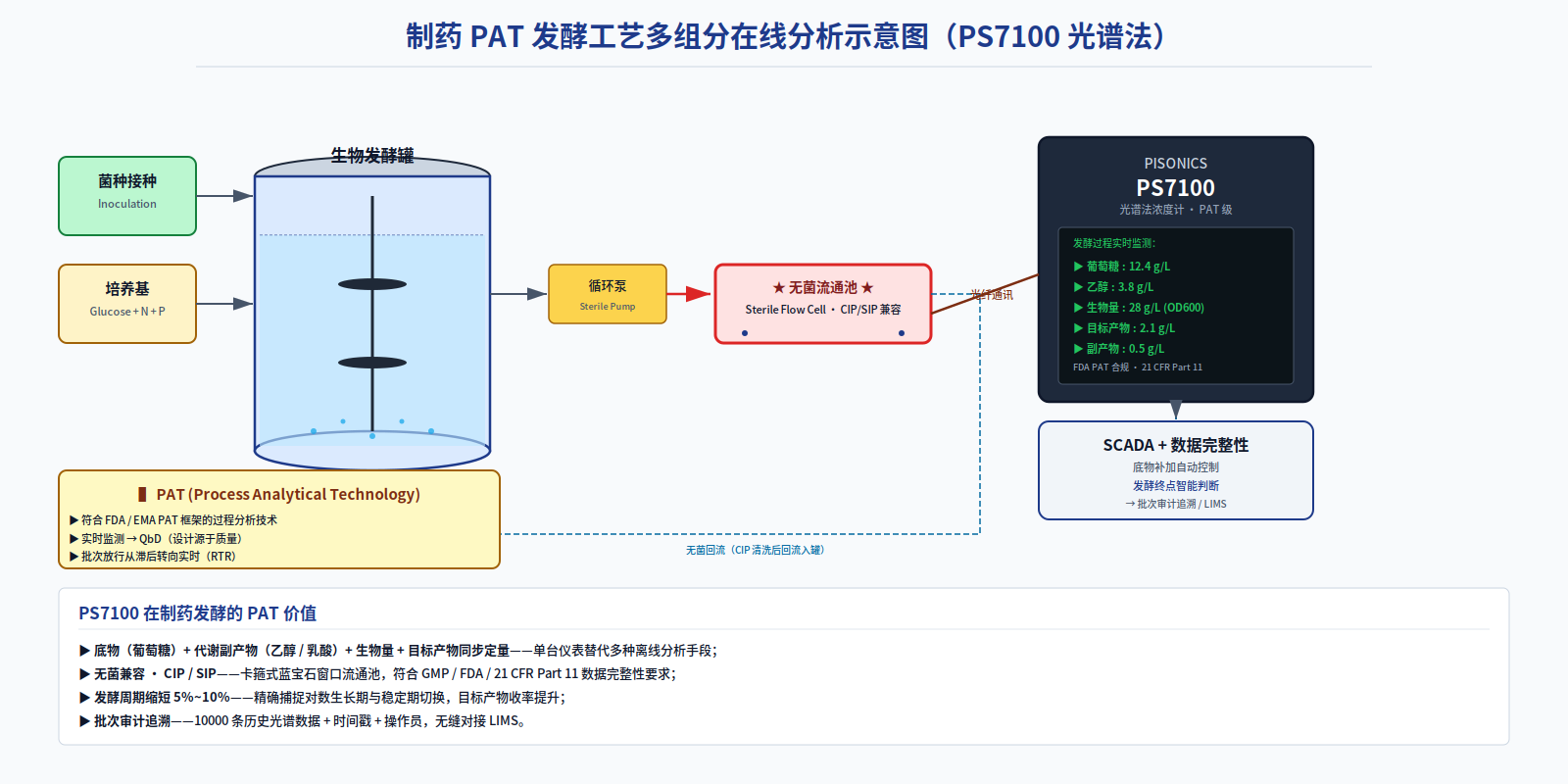
Multicomponent online analysis of substrate + byproduct + biomass + target product
During biopharmaceutical fermentation, customers face challenges such as infrequent offline sampling, high contamination risks, and the need for multiple sets of equipment to analyze multiple components, resulting in prolonged fermentation cycles and fluctuating product yields. The PS7100 spectral concentration/density meter enables online monitoring across the UV–Vis–NIR full spectrum, allowing a single instrument to simultaneously quantify glucose, ethanol, biomass, the target product, and byproducts. Compatible with CIP/SIP sterilization, it delivers sterile, continuous, real-time multivariate analysis.
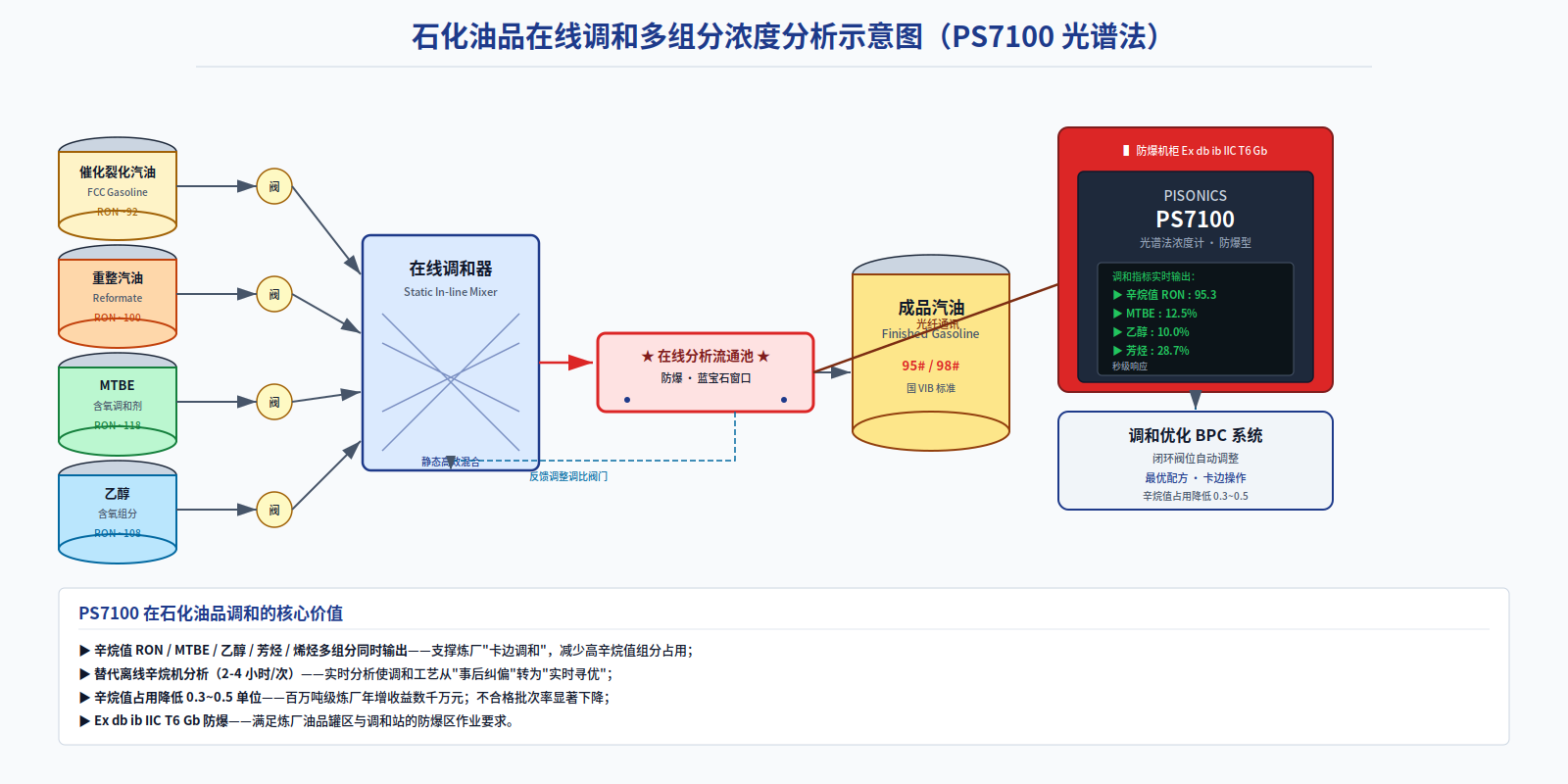
Octane number RON + MTBE + ethanol + aromatic hydrocarbons multi-component real-time blending optimization
At the refinery’s blending station, long-term reliance on offline octane analyzers has resulted in a 2–4 hour analysis lag, making edge‑of‑spec blending challenging, leading to excessive octane reserve usage, and frequent batches failing to meet specifications. The PS7100 explosion‑proof spectral‑based concentration/density meter is installed in a bypass flow cell downstream of the static mixer, providing second‑level, synchronized measurements of RON, MTBE, ethanol, aromatic content, and olefin content, with real‑time feedback to the BPCS for closed‑loop optimization.
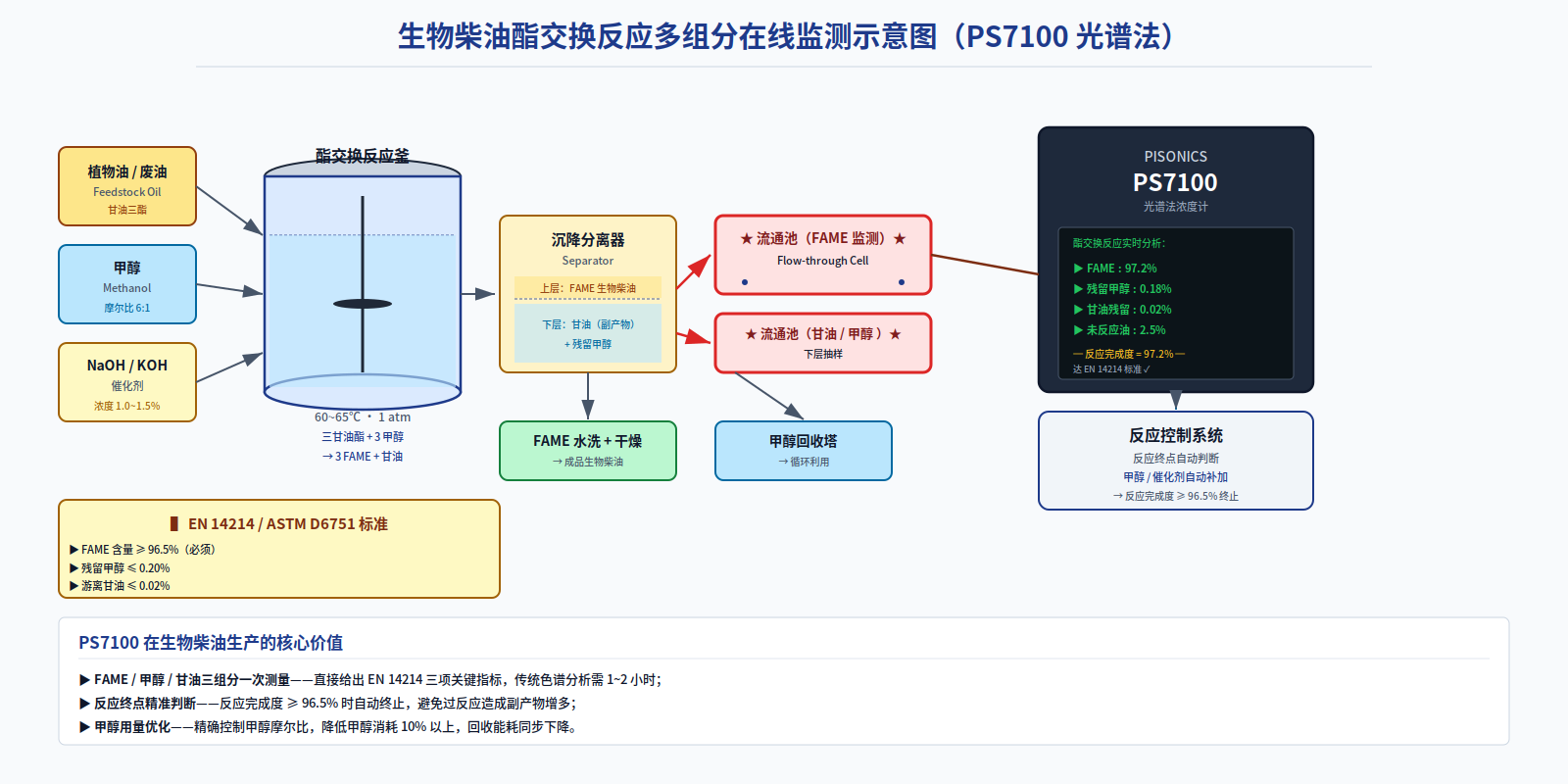
Simultaneous online monitoring of three components: FAME, residual methanol, and free glycerol
In the biodiesel transesterification process, the customer relies on offline gas chromatography to determine the reaction endpoint, which leads to a 1–2 hour data lag, an overuse of methanol by 10%–15%, and fluctuations in the purity of by-products. The PS7100 spectral‑based concentration/density meter has been installed on the discharge line of the reactor and the FAME outlet pipeline of the separator. By acquiring full UV‑Vis‑NIR spectra and employing MLR modeling, it provides real‑time, synchronized measurements of FAME, residual methanol, and free glycerol concentrations. Once the reaction completion exceeds 96.5%, the process is automatically terminated, reducing methanol consumption by 11.3% and stabilizing the FAME content at 97.2%.

What an “ultrasonic dual-parameter concentration meter” means: three routes
“Ultrasonic dual-parameter concentration meter”, as written on enquiry sheets, is not a category with an agreed definition. At least three technical routes answer to it: single-parameter sound velocity reduced to one dimension by stoichiometry, sound velocity plus a second physical quantity such as conductivity, and spectroscopic multi-component analysis. This page selects between them by how many numbers you actually need — and says what we do and do not have.
4 applications

Inline Brix monitoring in sugar refining and brewing
Inline refractometric measurement of sugar liquor, glucose and brewing process concentration: critical-angle refractometry reads only a thin layer at the prism face, so colour and turbidity do not interfere. Scales are built per medium, with CIP / SIP and a sanitary adapter.

Inline concentration monitoring for juice, purée and concentrate
Inline refractometric concentration for sucrose, fructose, juice, purée, jam and stock: unaffected by colour or pulp turbidity, for evaporation end-point and blend ratio control, with CIP / SIP and a sanitary adapter.

Inline ratio monitoring for cutting fluid and coolant
Inline refractometric measurement of cutting fluid, chilled fluid and emulsion ratio: continuous tracking in place of spot checks with a handheld refractometer, with CL1 / CL2 cleaning units and a small-bore adapter.

Inline concentration monitoring for TCM extraction and alcohol precipitation
Inline refractometric concentration for TCM concentrate and alcohol precipitation: dark, opaque decoctions read normally; for concentration end-point and alcohol addition ratio, with CIP / SIP and a sanitary adapter, and a scale built per herb.
6 applications
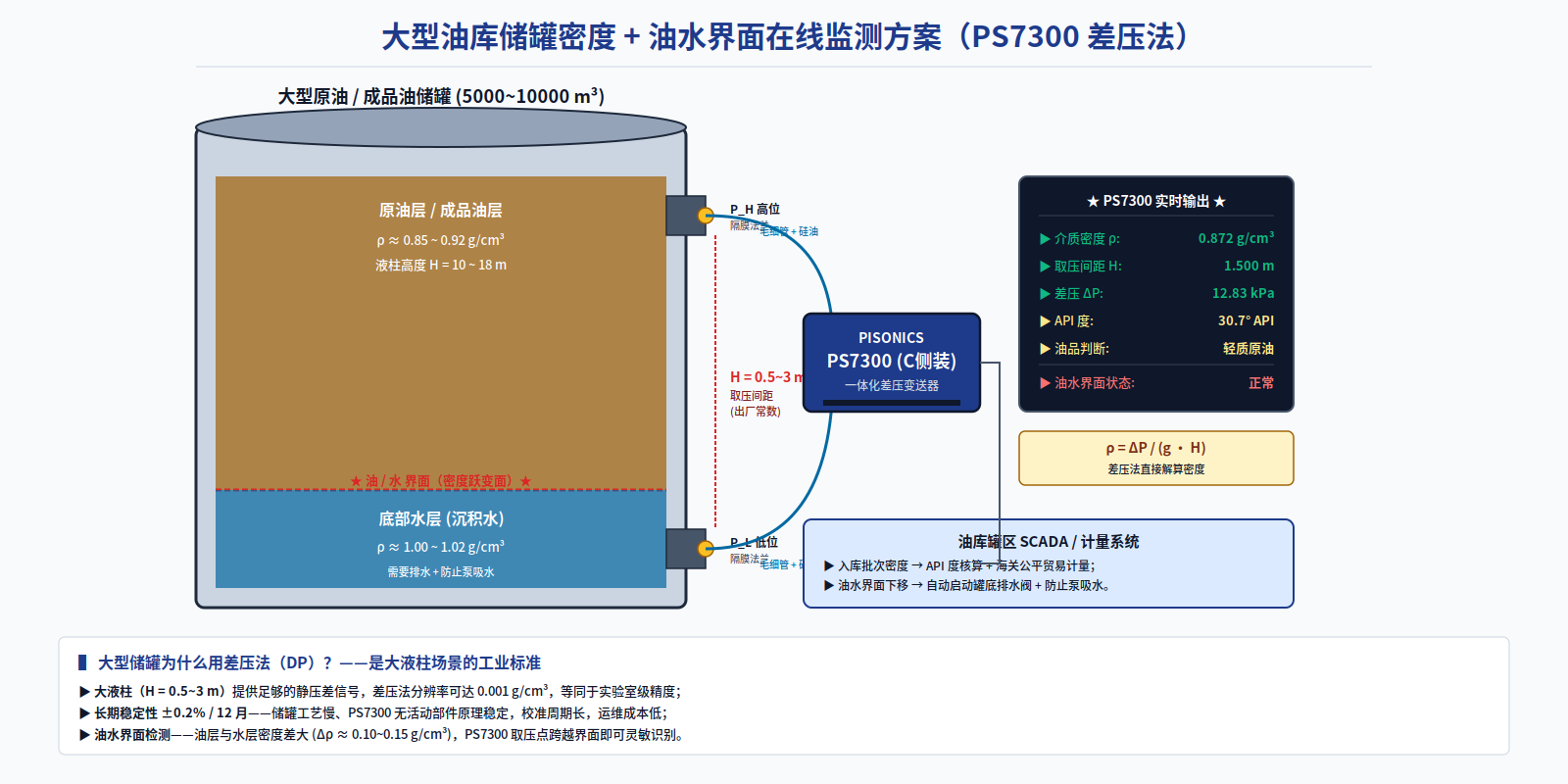
Crude oil / refined-oil tank density + online monitoring of the oil–water interface
In large oil storage tank farms, long-term reliance on manual sampling for offline density measurement and on‑experience judgment of the oil‑water interface has resulted in delayed metering, high risks of water being pumped into the system, and a heavy burden of radiation management associated with nuclear density meters. The PS7300 differential pressure density meter is mounted laterally on the tank wall, providing real‑time density readings and automatically detecting abrupt changes at the oil‑water interface, enabling API gravity calculation within seconds and automated bottom‑of‑tank drainage, thereby completely replacing the nuclear source solution.
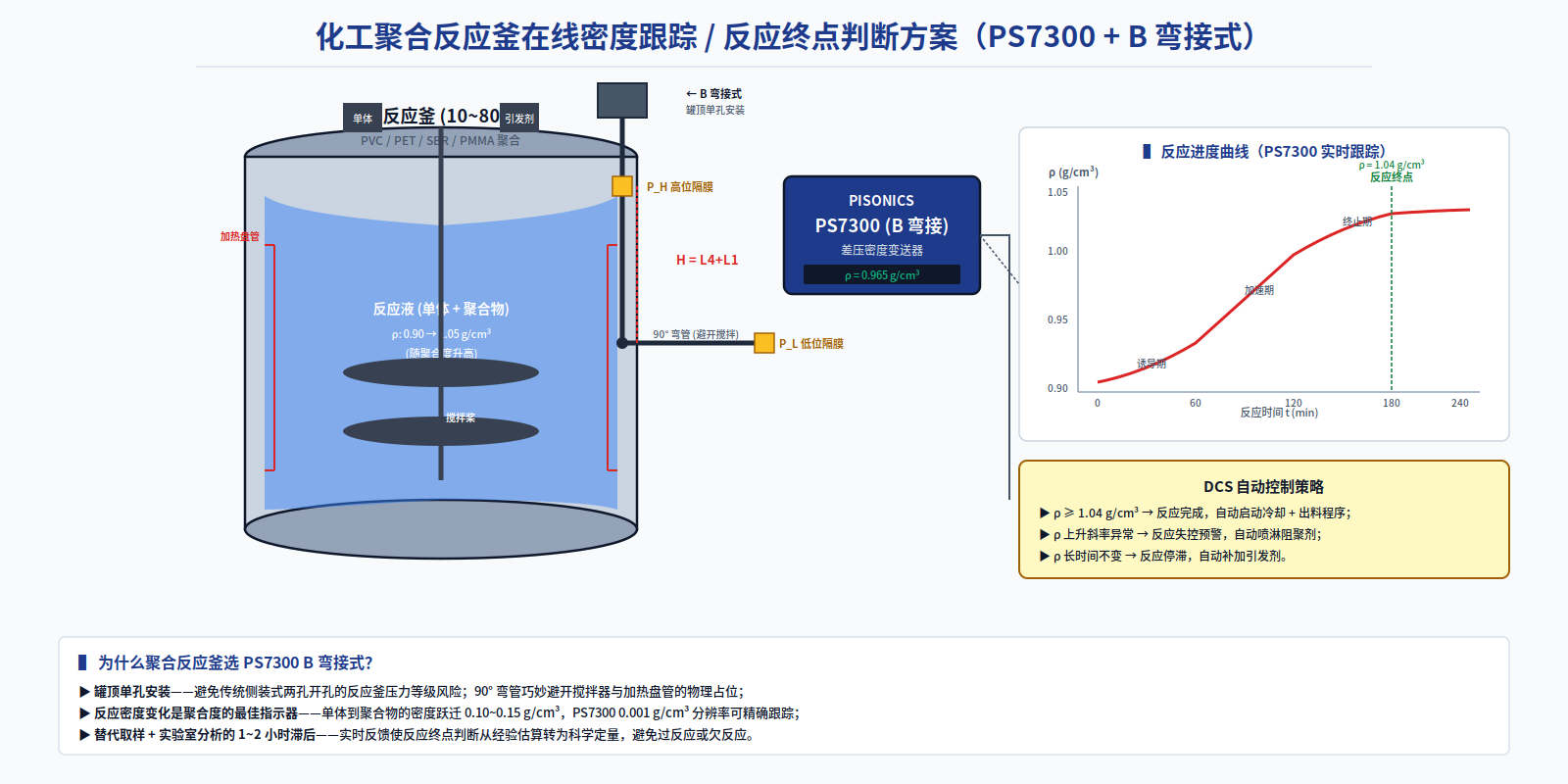
Real-time density tracking of polymerization reactions · Automatic determination of reaction end points
Customers face challenges in large-scale polymerization reactors, including delayed determination of the reaction endpoint, high safety risks associated with manual sampling, and poor batch-to-batch consistency. The PS7300 differential pressure density meter features a B‑bend flange‑mounted, single‑hole installation on the reactor top, bypassing the agitator and heating coils. It tracks real‑time changes in the reaction slurry’s density with a resolution of 0.001 g/cm³, supports DCS‑triggered automatic termination and runaway‑prevention alerts, and enables precise quantitative control of the reaction endpoint.
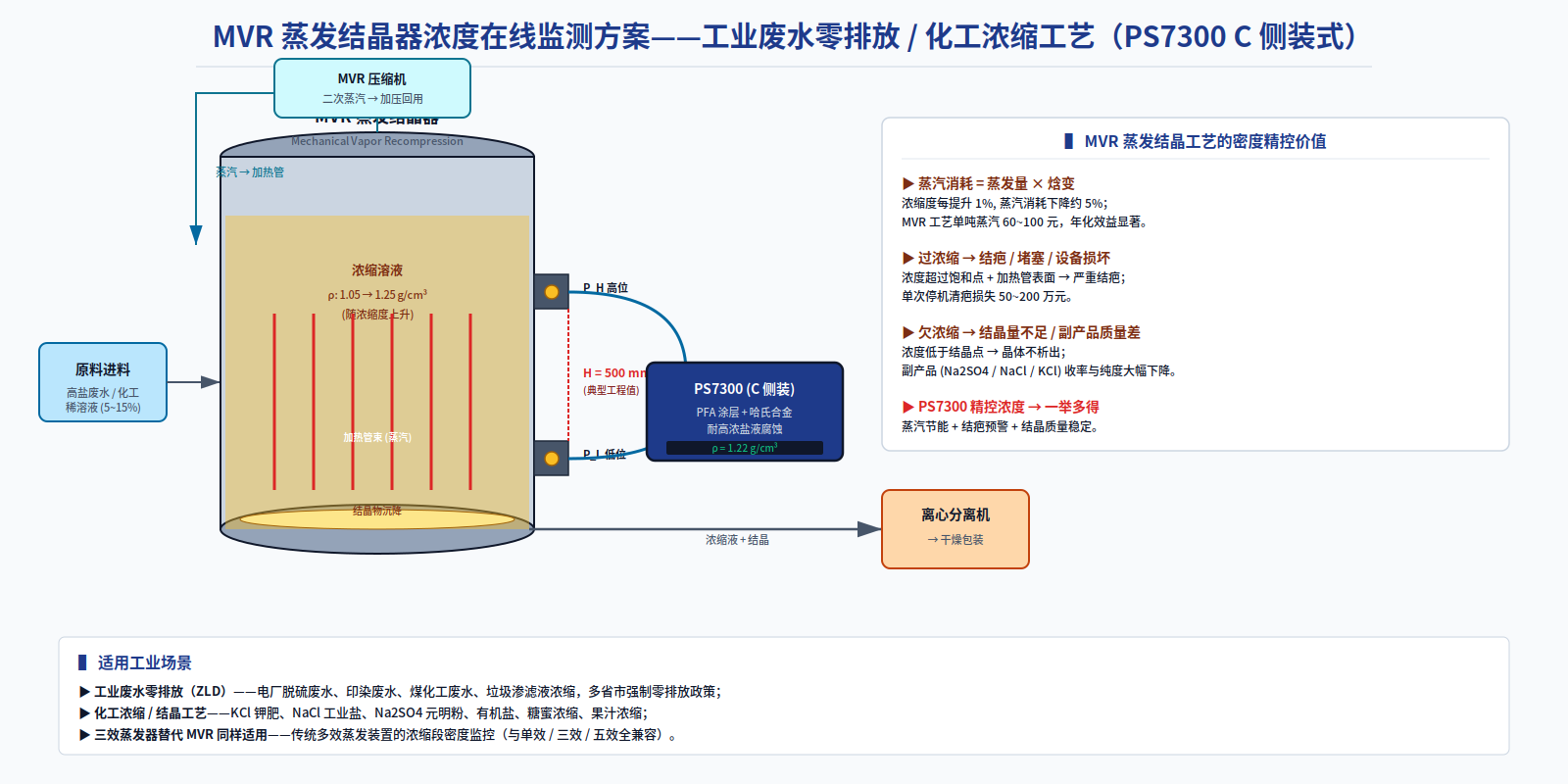
Zero Liquid Discharge (ZLD) for Industrial Wastewater · Precise Concentration Control in Chemical Concentration/Crystallization Processes
In chemical concentration and zero‑liquid‑discharge (ZLD) processes, customers face challenges such as the highly corrosive nature of high‑concentration brines in MVR evaporators, as well as the risk of crystallization leading to jamming of conventional density meters and shutdowns due to scale formation. The PS7300 dual‑flange differential pressure concentration meter features a side‑mount configuration with Hastelloy C‑276 diaphragms and a PFA fluoropolymer coating, offering exceptional corrosion resistance and resistance to crystallization‑induced wear. It enables long‑term, stable online monitoring of density converted to concentration, supporting DCS closed‑loop precision control, preventing scale‑related downtime, and enhancing the purity and recovery rate of by‑product salts.
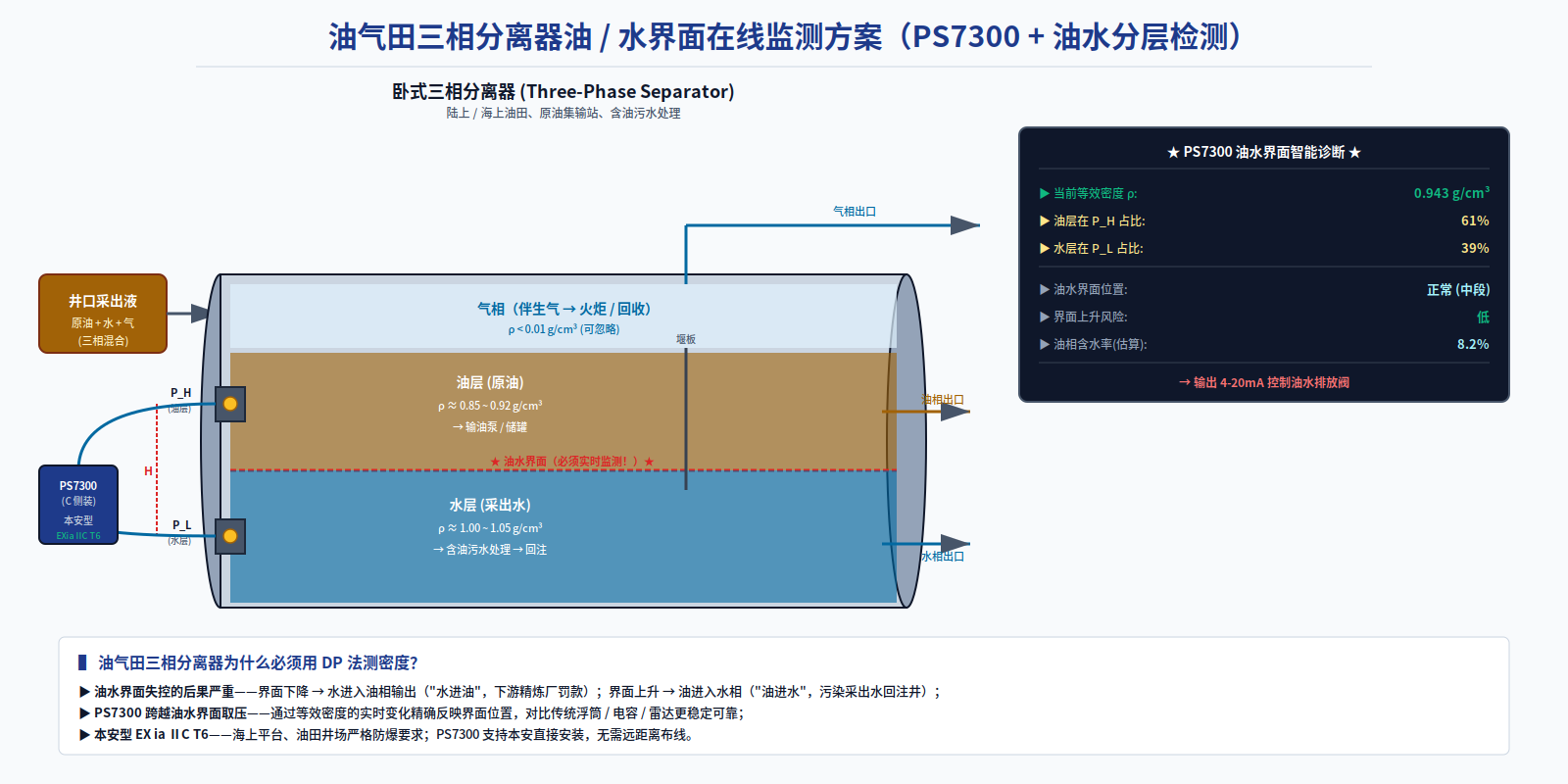
Oil/Water/Gas Interface Online Monitoring · Intelligent Water Cut Estimation
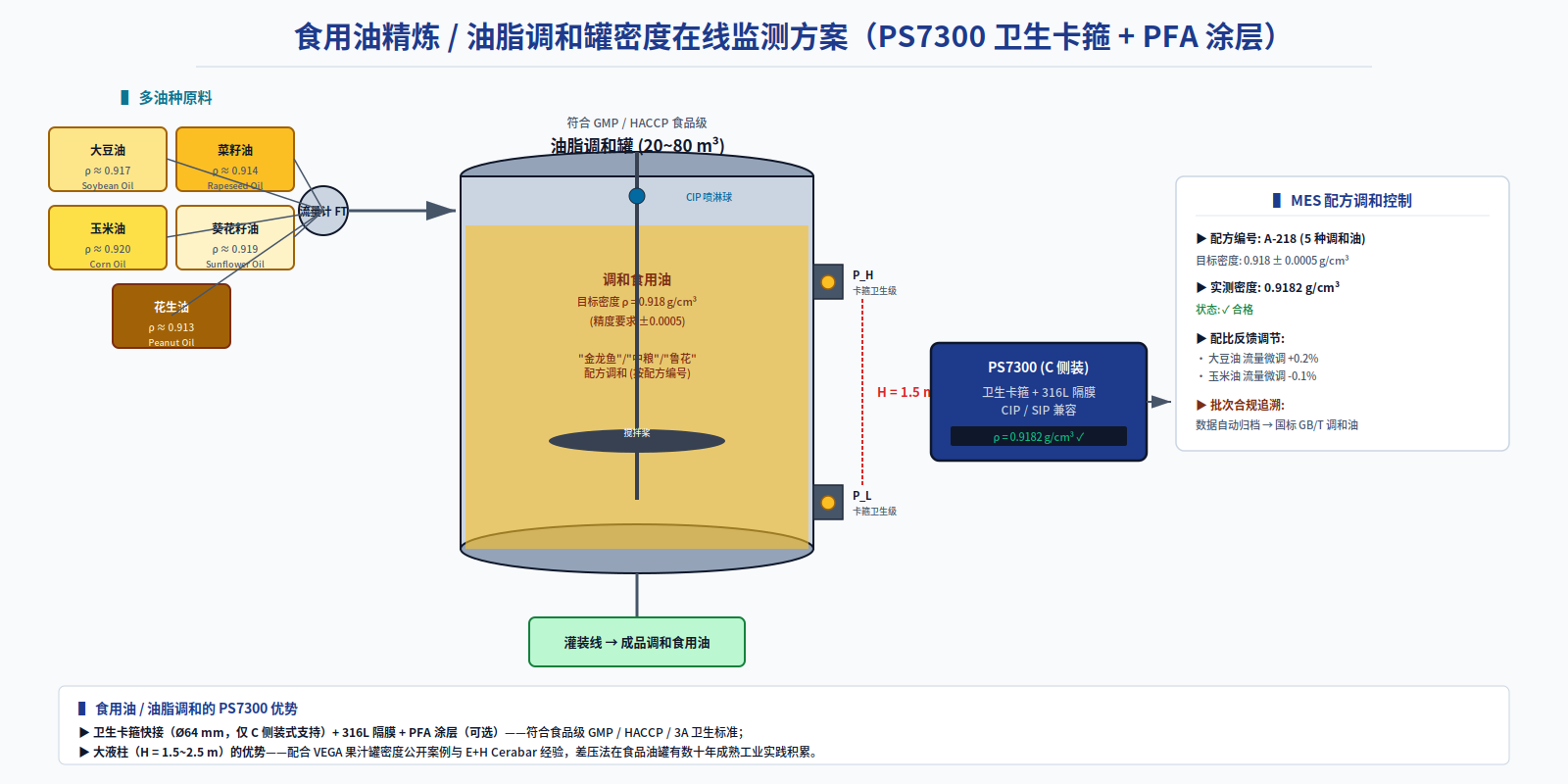
Blended oil recipe control · Sanitary clamp + PFA coating · MES batch traceability
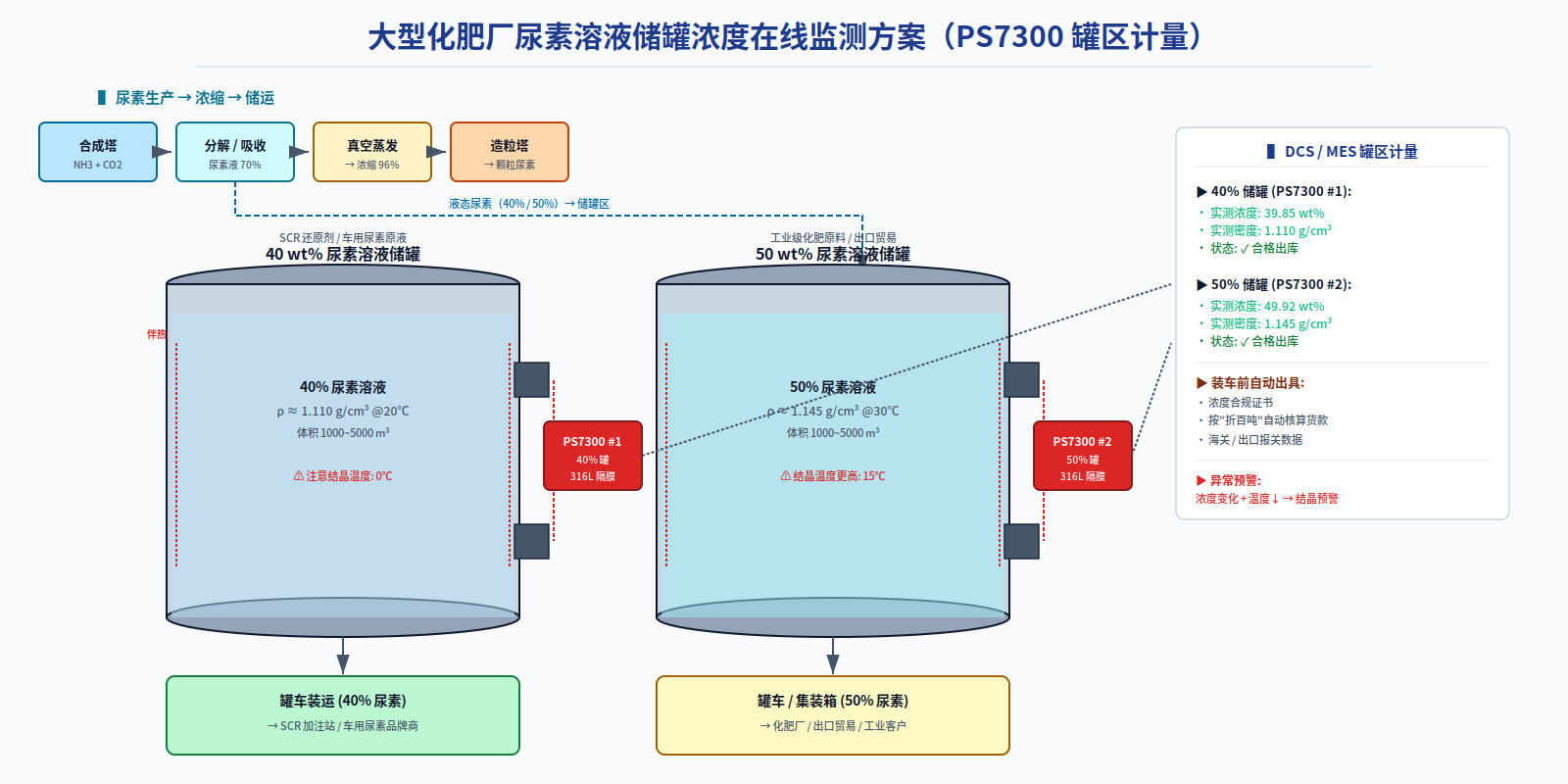
Online Concentration Monitoring of 40% / 50% Urea Solution Storage Tanks
In the urea solution storage tank area of a large fertilizer plant, challenges include lengthy manual sampling and laboratory analysis prior to loading, significant trade‑based discrepancies due to concentration drift when converting to 100% basis, elevated risks of low‑temperature crystallization, and difficulties in verifying automotive urea AdBlue compliance. The Pisonics PS7300 dual‑flange differential pressure density meter is installed side‑mounted on 40% and 50% urea solution storage tanks, providing real‑time density measurements that are converted into weight‑percent concentration. This data supports the DCS/MES systems in enabling five‑minute automated pre‑loading verification, automatic 100%‑basis trade reconciliation, crystallization‑warning‑triggered heat‑trace interlocks, and end‑to‑end compliance monitoring of the AdBlue feedstock.
7 applications
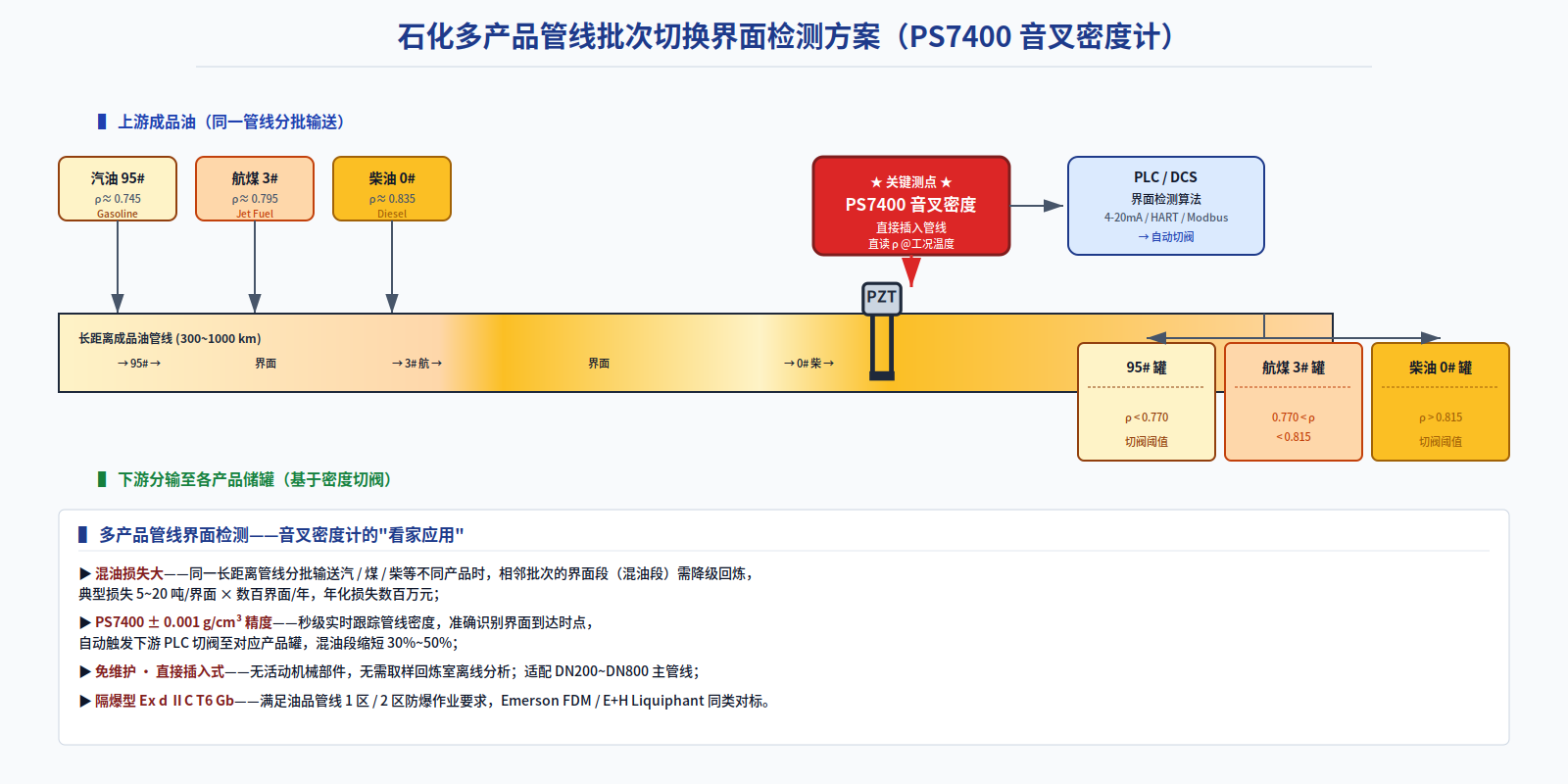
Online detection on the multi-product batch interface
When a long-distance refined‑oil pipeline sequentially transports multiple batches of gasoline, jet fuel, diesel, and other products, the interface mixing zone is difficult to identify accurately, resulting in substantial volumes of substandard oil being sent back for reprocessing and annual losses amounting to several million yuan. The PS7400 online tuning‑fork concentration meter tracks process density changes with second‑level precision at ±0.001 g/cm³, coupled with temperature compensation and an explosion‑proof design, to trigger downstream cut‑off valves in real time, reducing the length of the mixing zone by 30% to 50%. It completely replaces the nuclear density meter while eliminating the burden of radiation management.
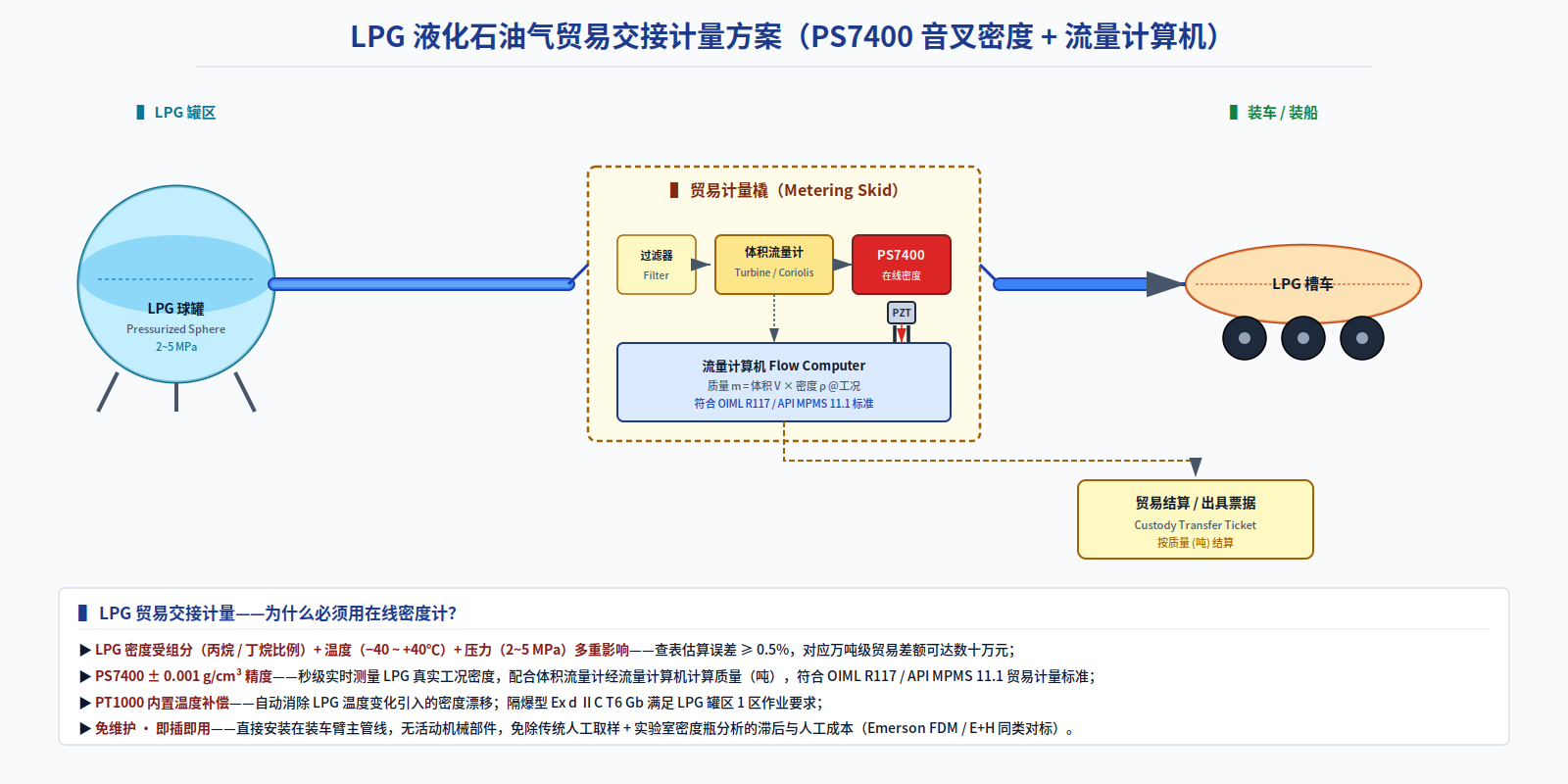
LPG / Liquefied Petroleum Gas Trade Handover
In LPG trade handover, the conventional table‑lookup estimation method and manual sampling result in density measurement errors exceeding 0.5%, leading to commodity‑value discrepancies of hundreds of thousands of yuan for ten‑thousand‑ton‑level loading and unloading operations. The PS7400 explosion‑proof online tuning fork concentration meter is directly installed on the main pipeline for loading onto tank trucks or ships, delivering real‑time process‑condition density within seconds. When paired with a volumetric flowmeter and a flow computer, it enables real‑time mass settlement in compliance with the OIML R117 standard.
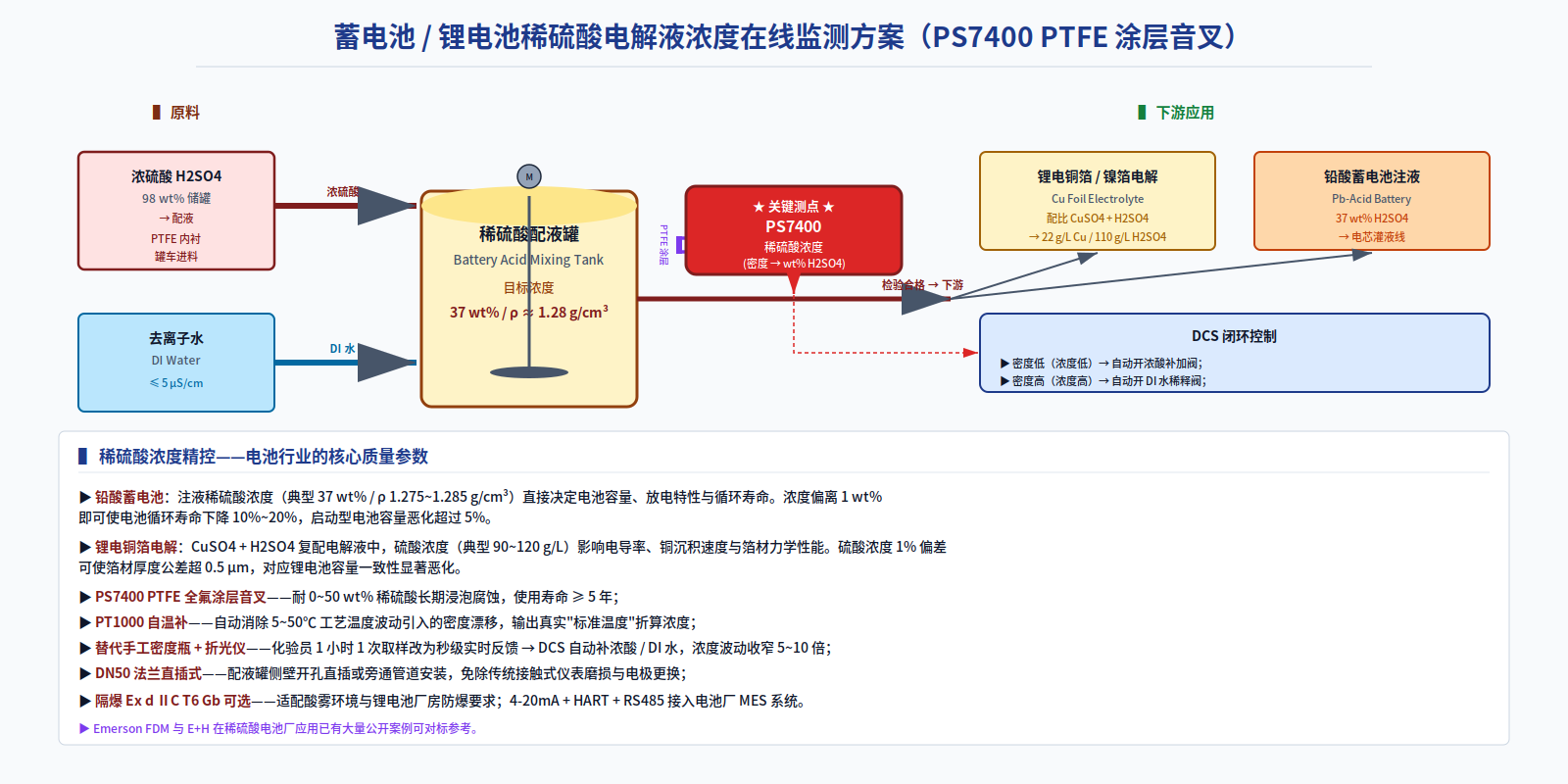
37 wt% dilute sulfuric acid feed tank concentration fine control · PTFE-coated tuning fork resistant to acid
In the electrolyte-filling section of lead-acid battery production, the 37 wt% dilute sulfuric acid mixing tank has long relied on manual sampling with a density bottle, resulting in large concentration fluctuations and delayed response, which in turn leads to poor consistency in battery capacity. The PS7400 PTFE-coated tuning fork concentration meter is directly installed on the tank’s side wall, providing density readings and converting them to wt% within seconds, and, when integrated with the DCS, enables closed-loop control of concentrated sulfuric acid and deionized water. As a result, concentration variations have been reduced from ±0.6 wt% to within ±0.08 wt%.
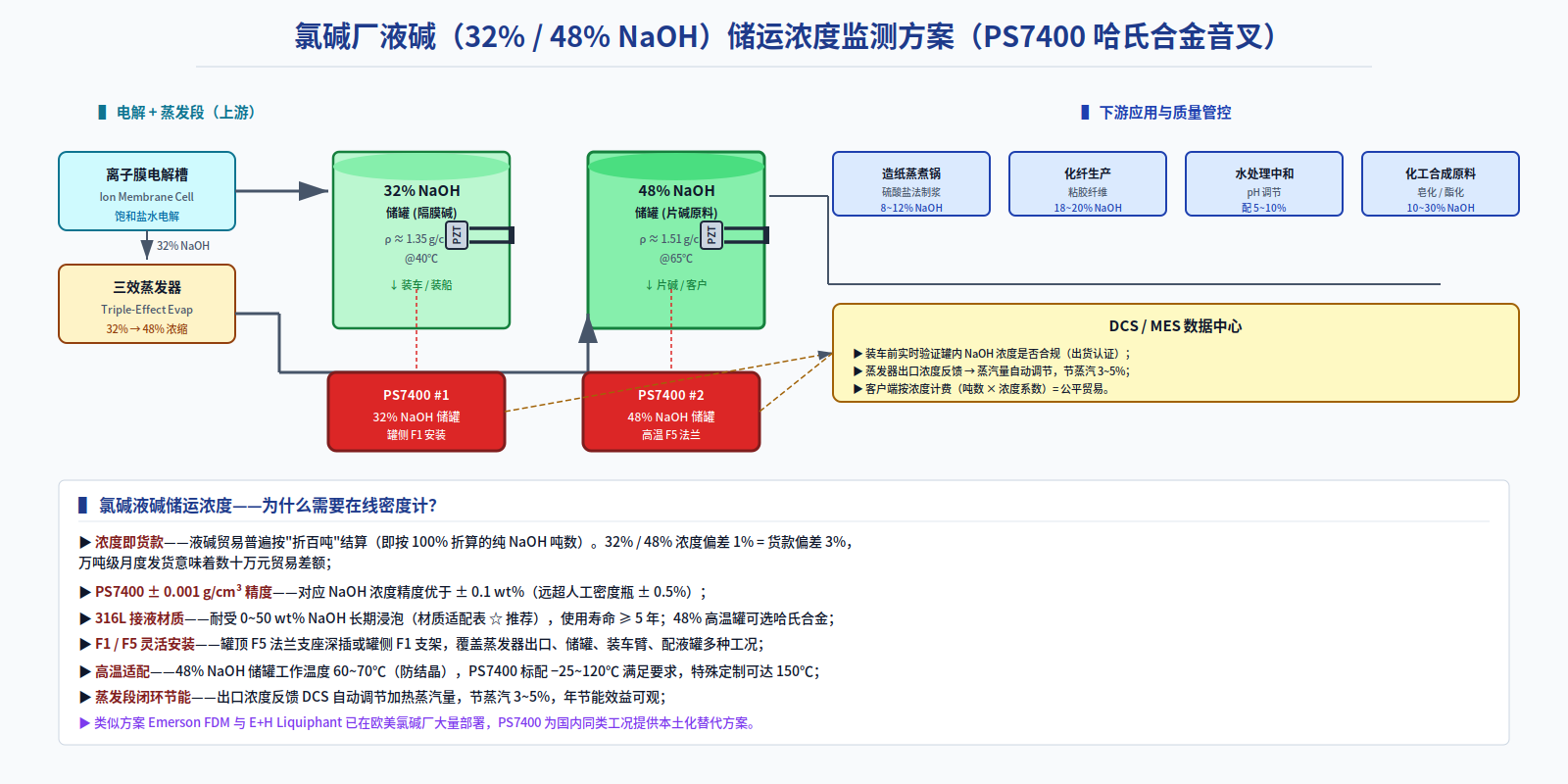
Online Concentration Monitoring of 32% / 48% NaOH Storage Tanks
In the concentration monitoring of 32% and 48% NaOH storage tanks, the customer faced challenges such as delays in manual sampling, short instrument lifetimes due to corrosion by high-temperature strong alkali, control lag in the evaporation section, and significant discrepancies in trade settlement. The PS7400 online tuning fork concentration meter, with wetted parts made of 316L and Hastelloy, delivers a concentration accuracy of ±0.1 wt%, operates reliably at temperatures up to 65°C, and reduces on‑truck verification time to within 5 minutes, thereby enabling DCS‑based closed‑loop energy savings and precise settlement of cargo payments on a 100‑ton basis.
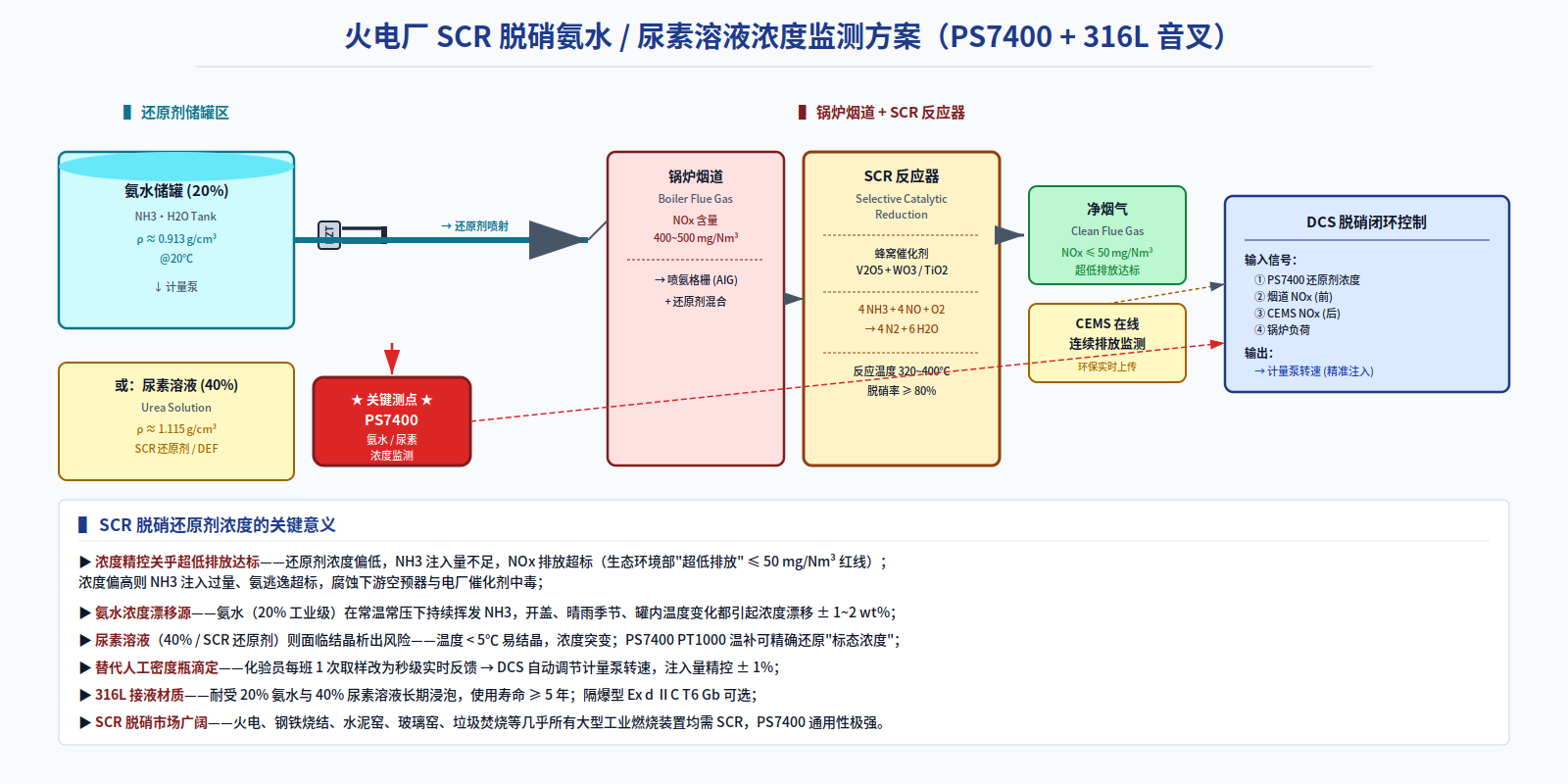
Ammonia Water 20% / Urea Solution 40% Reductant Concentration Online Monitoring
In the SCR denitrification system of a thermal power plant, the concentrations of 20% ammonia solution and 40% urea solution drift due to evaporation or low-temperature crystallization, and the lag in manual sampling leads to fluctuations in NOx emissions and excessive ammonia slip. The PS7400 online tuning fork density/concentration meter is installed on the storage tank’s outlet pipeline to measure concentration in real time and transmit the data to the DCS for closed-loop control, enabling ±1% precision control of the reductant injection rate and ensuring stable compliance with ultra-low emission standards.
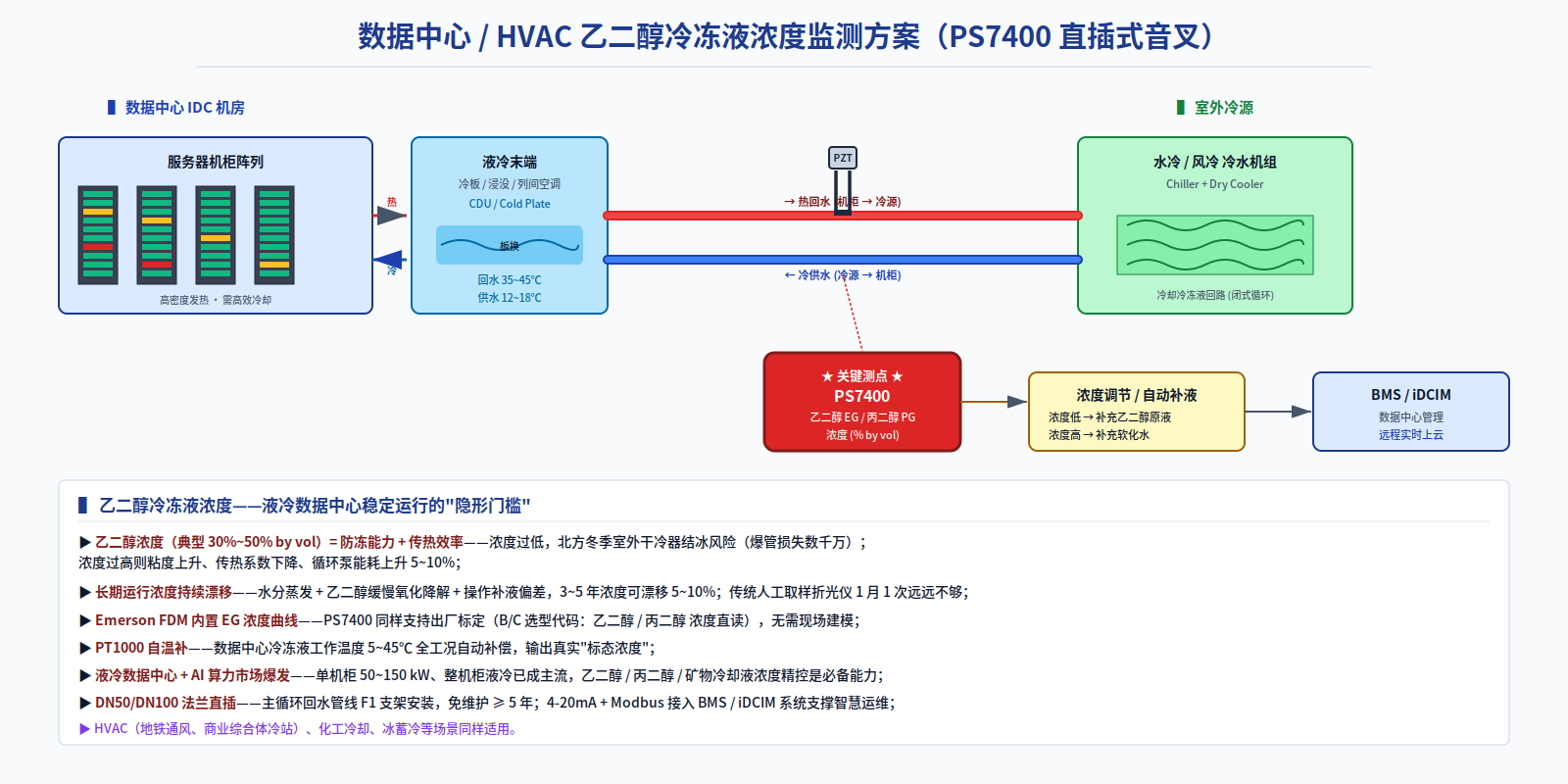
Ethylene Glycol EG / Propylene Glycol PG Online Concentration Monitoring – Dual Optimization for Freeze Protection and Heat Transfer
In AI liquid-cooled data centers, long-term drift in the concentration of the ethylene glycol coolant has led to freezing and tube ruptures in dry coolers during winter, as well as reduced heat-transfer efficiency. The PS7400 online tuning fork concentration meter is directly installed in the primary circulation loop; leveraging its factory‑preset EG/PG concentration curve and PT1000 temperature compensation, it delivers sub‑second continuous monitoring with a concentration accuracy of ±0.5 vol%, enabling precise concentration control and reducing pump energy consumption by 6%.
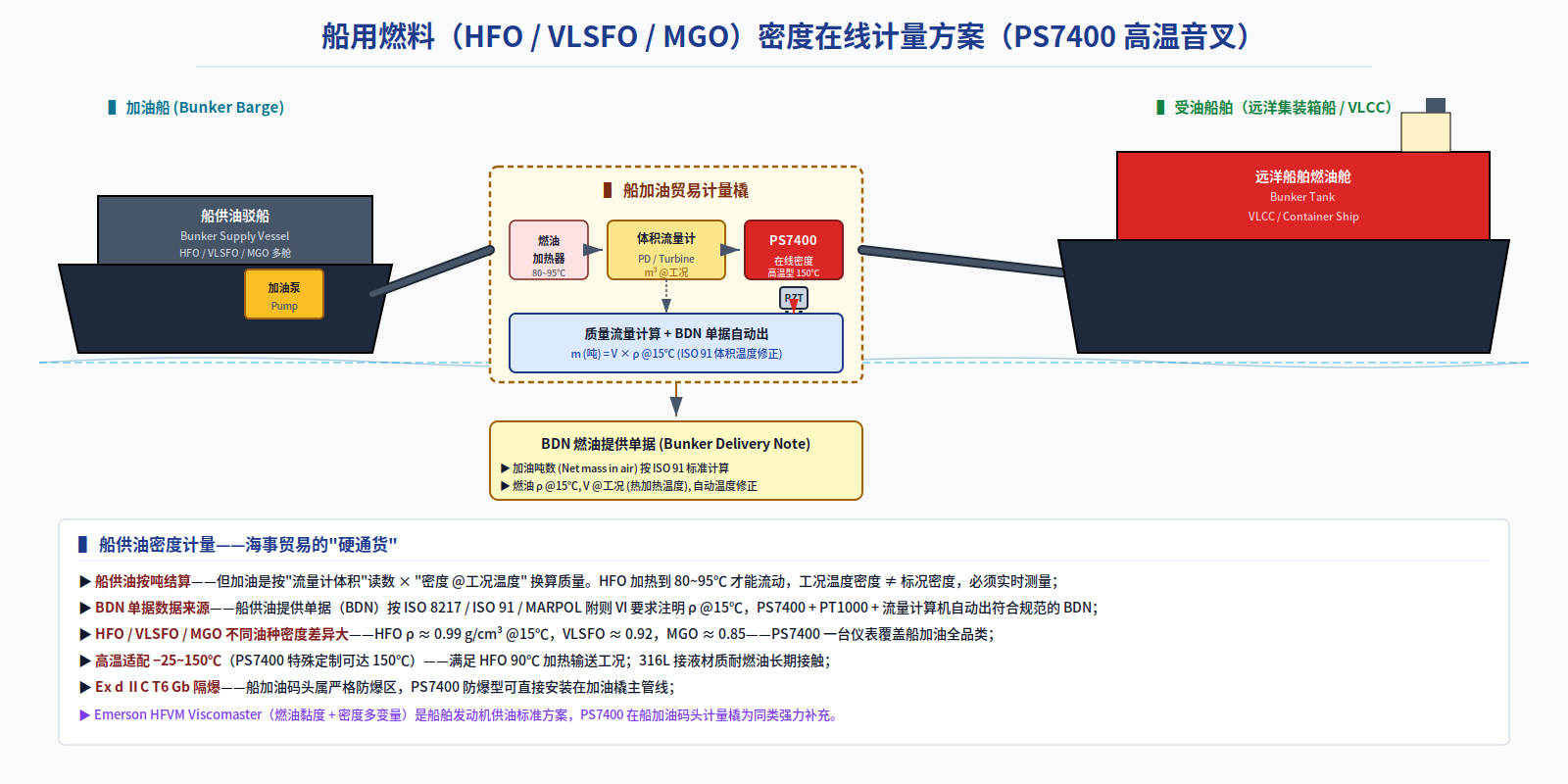
Marine fuel / HFO·VLSFO·MGO refueling measurement
At the ship refueling terminal, during the heated transfer of multiple fuel grades—including HFO, VLSFO, and MGO—real-time density measurement is required under high-temperature conditions of 80–95°C to convert flow rates into tonnage. However, conventional sampling analysis is time‑lagged, and contact-type instruments are prone to thermal drift and seal failure. The PS7400 high‑temperature tuning fork concentration meter is installed directly on the main pipeline downstream of the heater, operating reliably across the full temperature range of −25 to 150°C. Coupled with PT1000 temperature compensation, it delivers real‑time standard density at 15°C in accordance with ISO 91, enabling automatic BDN document generation and MARPOL Annex VI‑compliant settlement.