INDUSTRY 11

Tunnel Boring (TBM)

11 / TUNNELING

Supply and return slurry density on mixshield / slurry-balance TBMs — monitors face support pressure and spoil separation efficiency.

1 applicable products 2 application cases

Overview

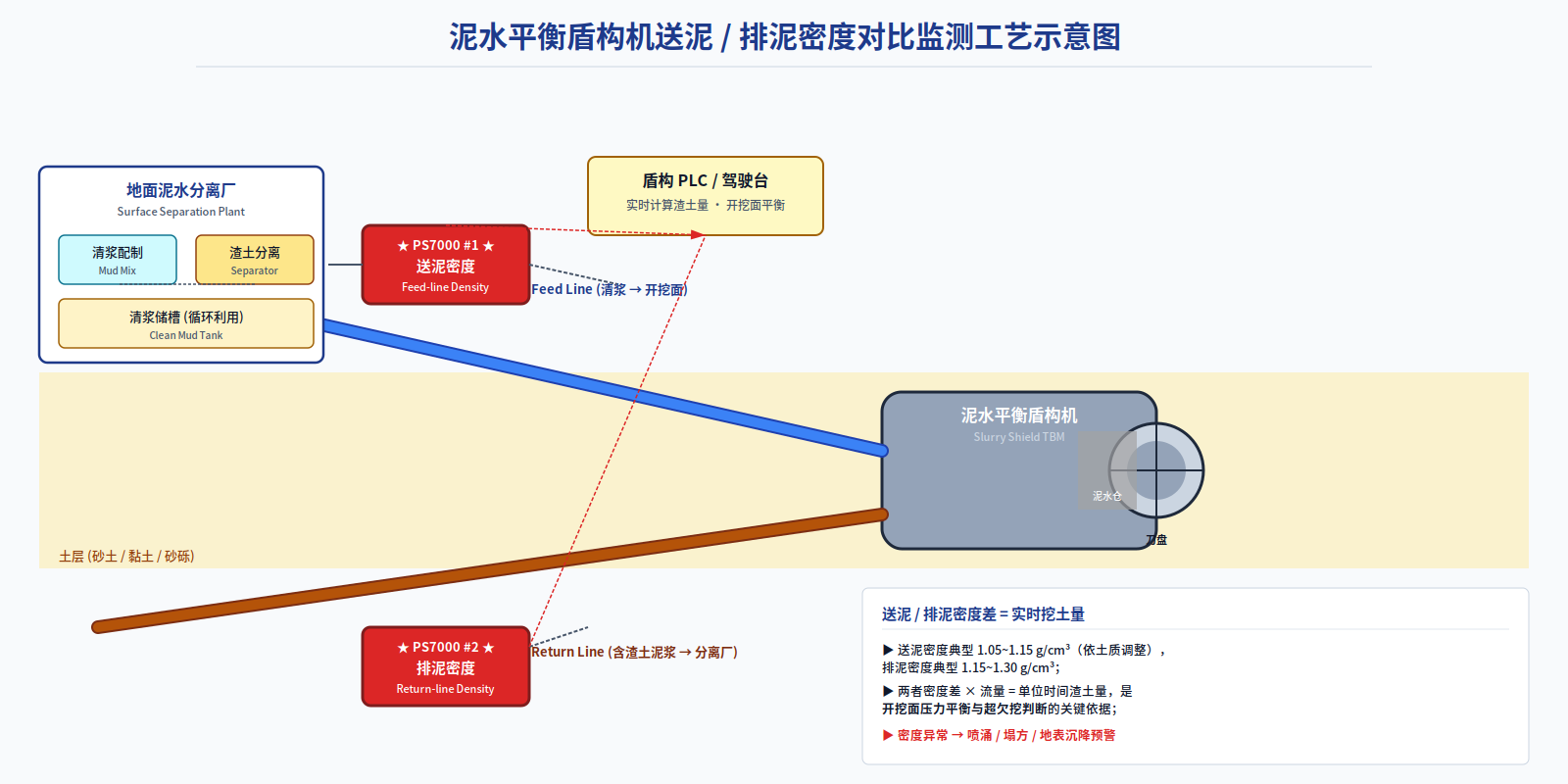
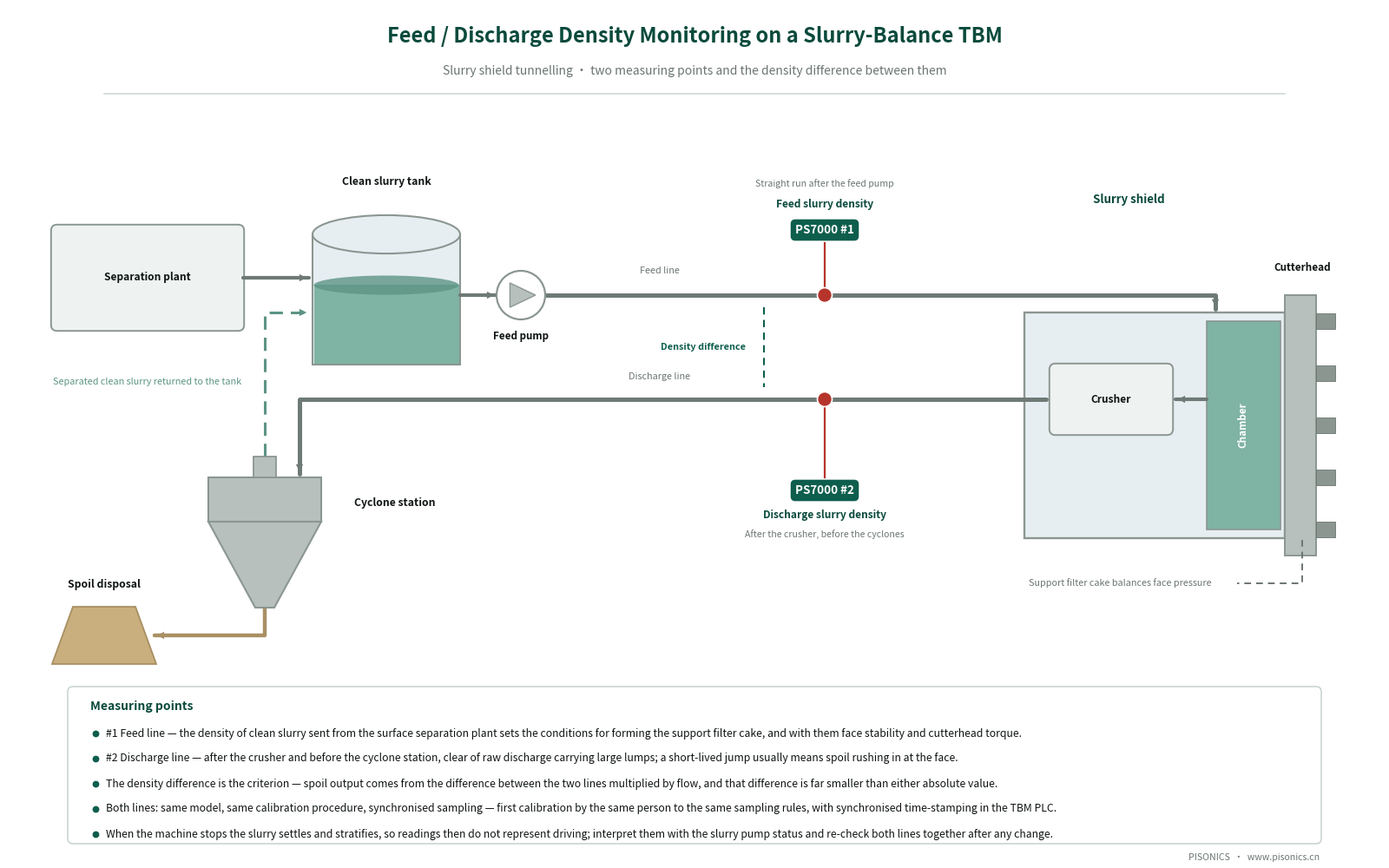
Mixshield and slurry-balance tunnel boring machines (TBMs) drive subway lines, under-river crossings and long-distance utility tunnels. The density difference between supply slurry (fresh) and return slurry (with cuttings) reflects spoil volume and excavation chamber pressure — the primary monitoring parameter for slurry TBM operators worldwide.

Process challenges

  • Return slurry carries cobbles and rock chips — extremely abrasive; intrusive sensors wear out fast
  • Supply line operates at 1-6 bar — sensors need high-pressure rating
  • Compact installation space in shield cab — sensors must be slim
  • Ground formations switch abruptly (soil / sand / cobble / rock) — millisecond response required
  • Confined-space tunnels make radioactive gauges hard to license

Recommended solutions

Measurement pointPrincipleModels
Supply (fresh slurry) lineUltrasonic acoustic impedancePS7000
Return slurry lineUltrasonic acoustic impedance + abrasion shieldPS7000
Spoil separator outletUltrasonicPS7000

Selection support for this industry

Guides

All guides →

Comparisons

All comparisons →

Industry FAQ

Which meter for TBM (tunnel boring machine) slurry balance?

The mud–water balance density measurement in tunnel boring machines is a key parameter for stabilizing the excavation face.

Typical operating conditions:

  1. Inflow slurry density: 1.05–1.20 g/cm³;
  2. Outflow slurry density: 1.20–1.40 g/cm³ (containing cuttings);
  3. The slurry contains coarse sand and gravel with particle sizes ≤ 50 mm;
  4. Severe on-site vibration, high humidity, and heavy condensation.

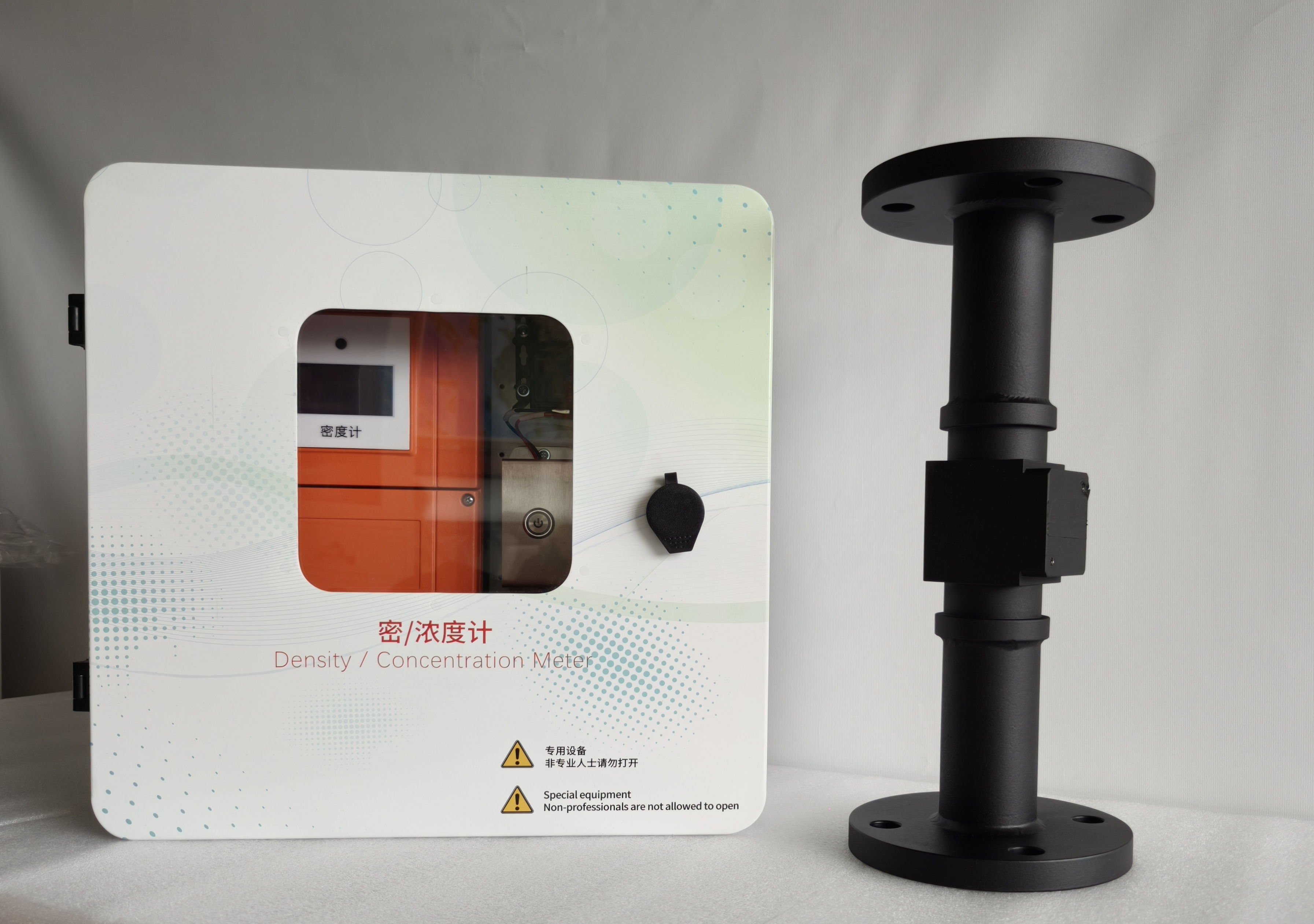
We recommend the PS7000 ultrasonic acoustic impedance concentration meter:

  1. Flanged direct‑insertion design with a non‑contact probe, eliminating wear;
  2. Sapphire probe resistant to sand and gravel erosion;
  3. Chirp algorithm suppresses bubble interference;
  4. IP65 rating; explosion‑proof ExdⅡCT6Gb optional;
  5. 4–20 mA + Modbus connectivity to the TBM’s main PLC, enabling real‑time feedback of the inflow–outflow density difference to support chamber pressure adjustment.

All FAQs