PISONICS| Xi’an Pisonics
PS7400 Series
Online Tuning Fork Density Meter / Concentration Meter
Piezoelectric Excitation · Tuning Fork Resonance · Plug-and-Play · Maintenance-Free
Product OverviewProduct Overview
PS7400 Series Online Tuning Fork Density Meter / Concentration Meteris a vibrational instrument developed by Xi’an Pisonics Information Technology Co., Ltd. (PISONICS) for real-time density / concentration monitoring in industrial processes, offering customers a fully integrated"plug-and-play, maintenance-free"density-measurement solution. The instrument measures based on the correlation between the tuning fork’s resonant frequency and the density of the contacting liquid, and employs an onboard PT1000 temperature sensor to compensate for thermal drift.
It can be widely deployed on-site pipelines, open or sealed storage tanks, and other industrial environments, primarily forindustrial process automation and control. The meter’s housing is an IP65-rated aluminum-alloy unit, with an optionalEx d ⅡC T6 Gb explosion-proof certificationfor safe, worry-free operation.
It offersflanged, / clamp, / threaded, / cable-separated configurations, along with a suite ofF1 through F6—six installation accessories(mounting brackets, bypass lines, flow-through chambers, flush ports, flange supports, protective hoods)—covering various application scenarios such as online pipeline measurement, open tanks, agitated vessels, and media prone to fouling; insertion lengths are available in five options: 100, 150, 200, 300, and 400 mm.
Measurement PrincipleHow It Works
The PS7400 tuning‑fork sensor consists of two piezoelectric crystals (PZT): thedrive PZTexcites the metal tuning fork to vibrate freely at its resonant frequency via an acoustic‑frequency signal; thereceive PZTmonitors the vibration period. When the tuning‑fork tines are immersed in a liquid, the total vibrating mass becomes the sum of the tine mass and the mass of the contacting liquid, causing the resonant frequency to vary with the medium’s density—thus,the frequency (or period) is a function of the liquid’s density.
The sensor incorporates anhigh‑precision PT1000 platinum resistor(resolution 0.01 °C, accuracy 0.1 °C, no calibration required), which continuously measures the medium’s temperature and simultaneously compensates for the temperature effects on both the piezoelectric vibrations and the tine material, yielding a true‑density reading. The final density‑calculation formula is:
ρ = K0 + K1 · T + K2 · T²
where ρ represents the density of the measured liquid, T is the vibration period output by the sensor, and K0, K1, K2 are the sensor constants calibrated at the factory.
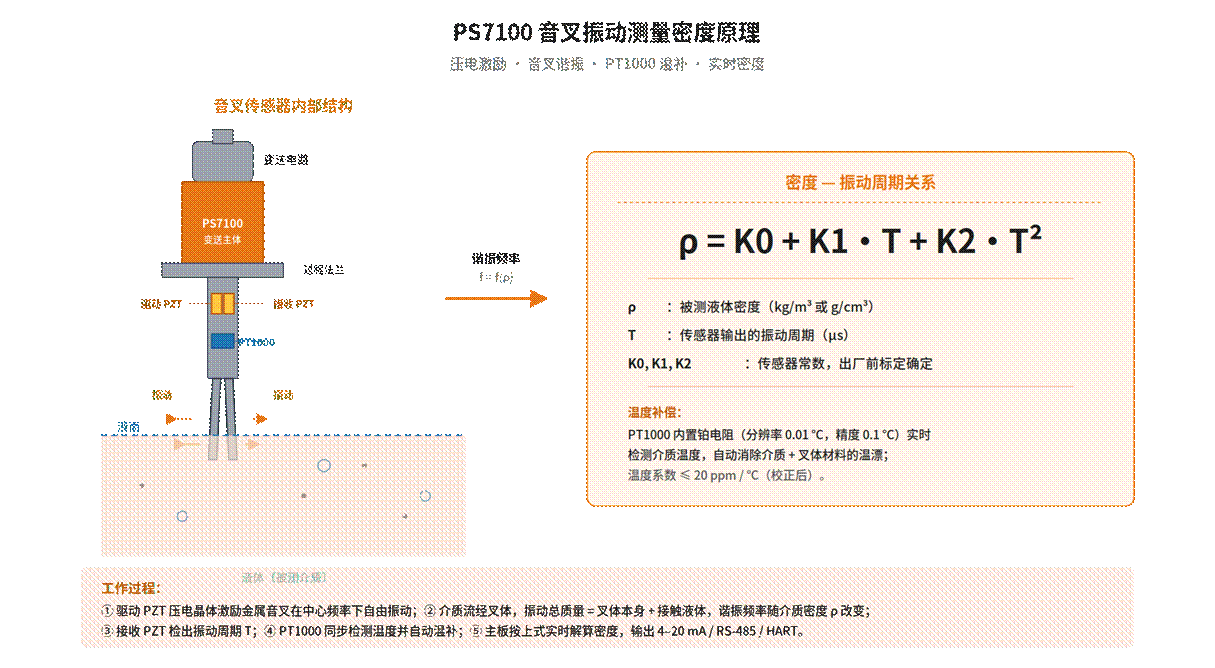
Figure 1: PS7100 tuning‑fork principle for density measurement—piezoelectric excitation—resonant‑frequency detection—PT1000 temperature compensation—real‑time density
→ Because the measured quantity is the “vibration period”—a purely physical parameter—the instrumenthas no moving mechanical parts, no electrode wear, and no consumable reagents; the tine surface is smooth, minimizing particle adhesion, enabling long‑term, stable, high‑precision density readings.
Core Technical AdvantagesCore Advantages
No. | Key Technologies / Features | Customer Value |
1 | Tuning fork resonance direct density measurement | Piezoelectric crystal excitation + periodic detection, pure physical quantity frequency measurement, with no sensor zero-point or span drift |
2 | High Precision and High Repeatability | Accuracy: ± 0.001 g/cm³, repeatability: ± 0.0001 g/cm³, long-term stability |
3 | PT1000 Temperature Self-Compensation | Built-in platinum resistance thermometer (0.01 ℃ resolution), with a temperature coefficient ≤ 20 ppm/℃, automatically compensating for temperature drift |
4 | Plug-and-play, maintenance-free | Integrated design, with no moving mechanical parts, no reagents or consumables, and no need for routine cleaning or calibration |
5 | Wide process temperature range | Standard configuration: −25 to +120 °C; custom options available from −25 to +150 °C |
6 | High operating pressure | Standard configuration ≤ 2.5 MPa; custom options can reach up to ≤ 6.3 MPa |
7 | Wide viscosity range | 0–2,000 cP, covering most industrial liquids |
8 | Various wetted materials | Options include 316L, Hastelloy, titanium alloy, zirconium, PTFE lining, and ceramics, suitable for a wide range of corrosive operating conditions |
9 | Various tuning fork surface treatments | Standard polishing / electropolishing / PTFE coating, designed to handle scaling and highly corrosive environments |
10 | Six installation accessories available | F1 mounting bracket / F2 bypass pipe / F3 flow cell / F4 flush port / F5 flange support / F6 protective cover |
11 | Multi-mode signal output | Four output options: 4–20 mA (four-wire system), RS-485, and HART protocol |
12 | Explosion-proof certification | Optional Ex d ⅡC T6 Gb explosion-proof model, enabling safe operation in flammable and explosive process environments |
Typical Application ScenariosTypical Applications
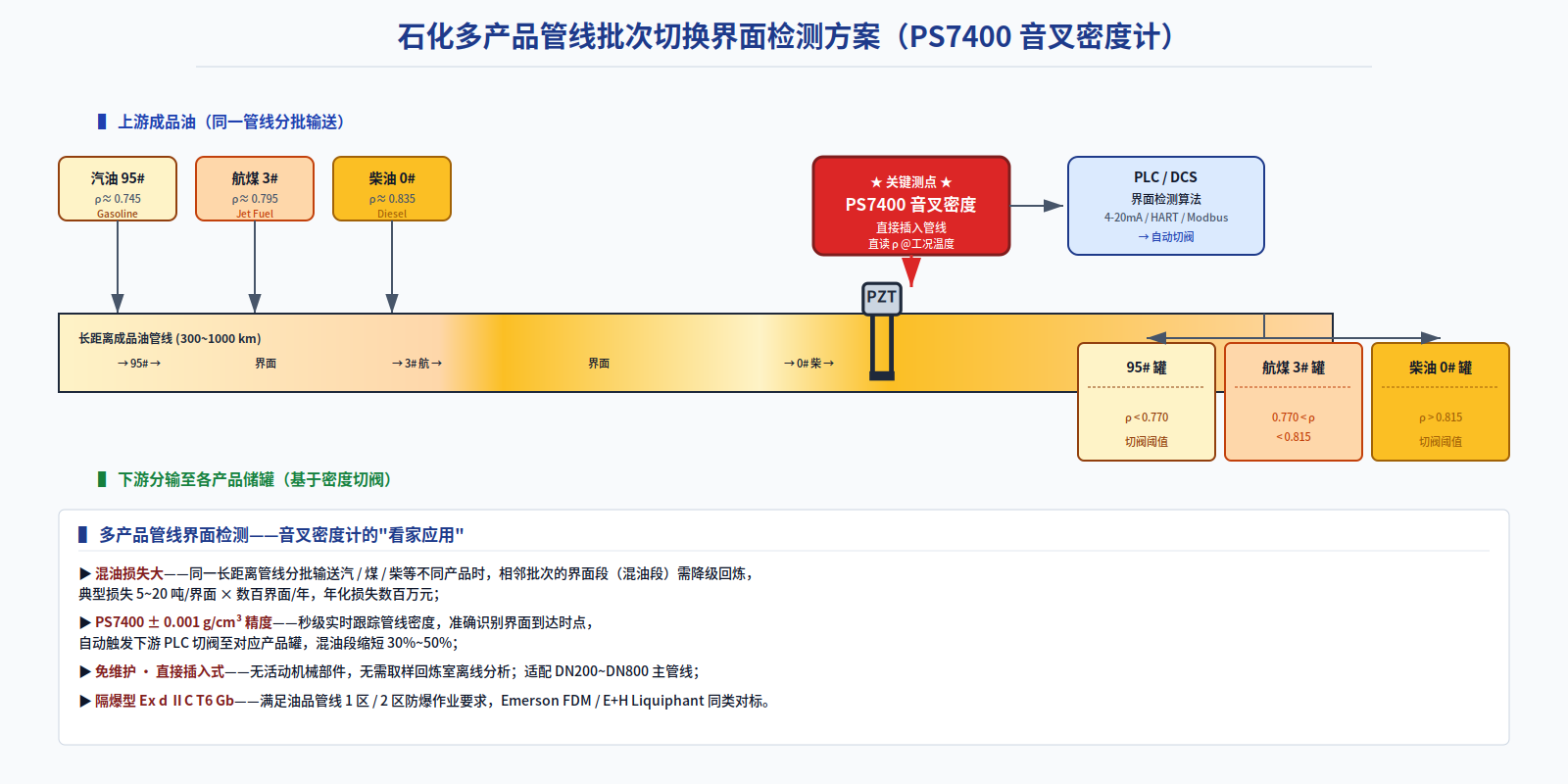
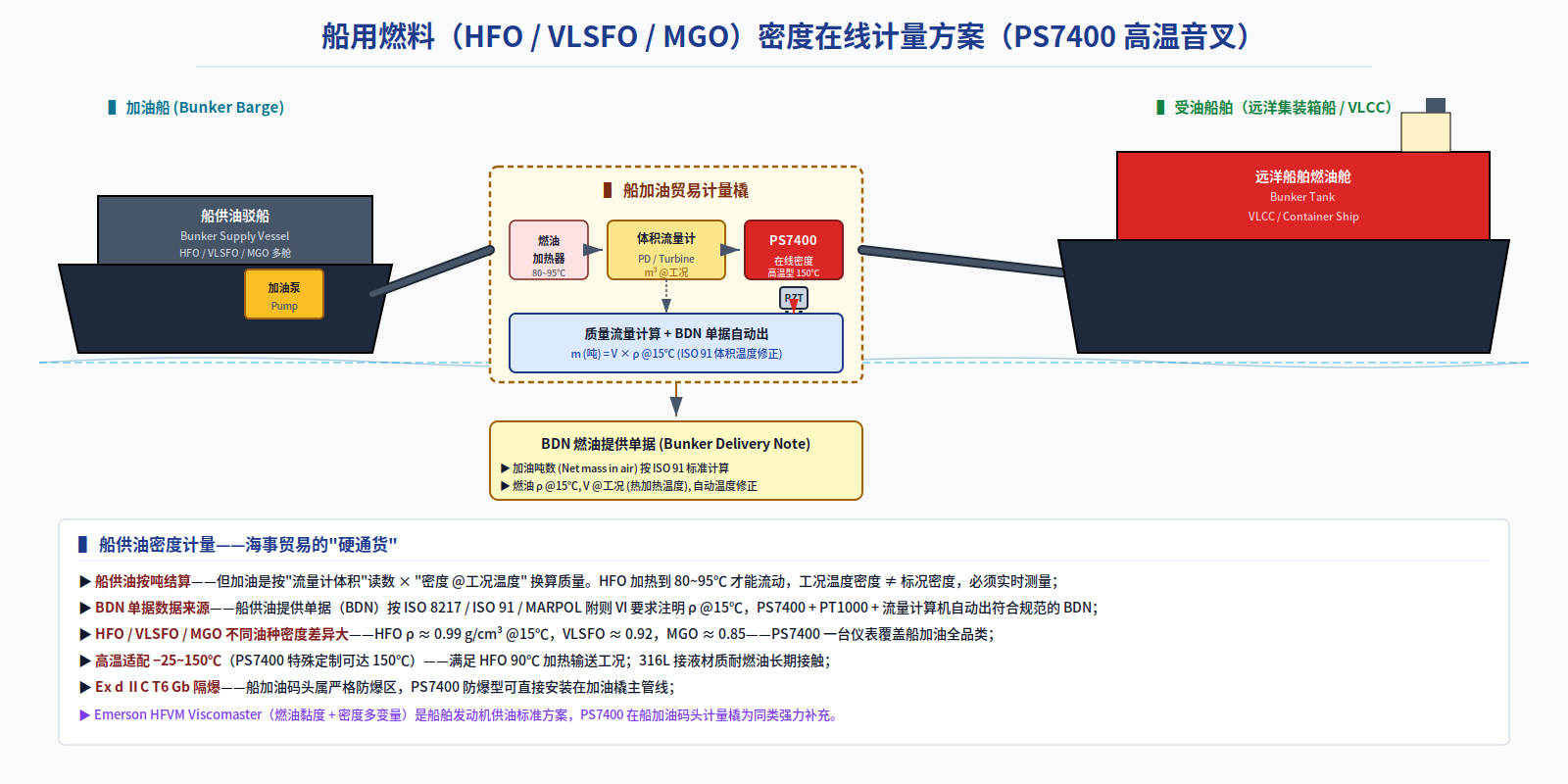
- Petroleum and Petrochemical Industry Diesel, gasoline, ethylene, and other oil product density monitoring; interface detection on multi‑product transfer pipelines
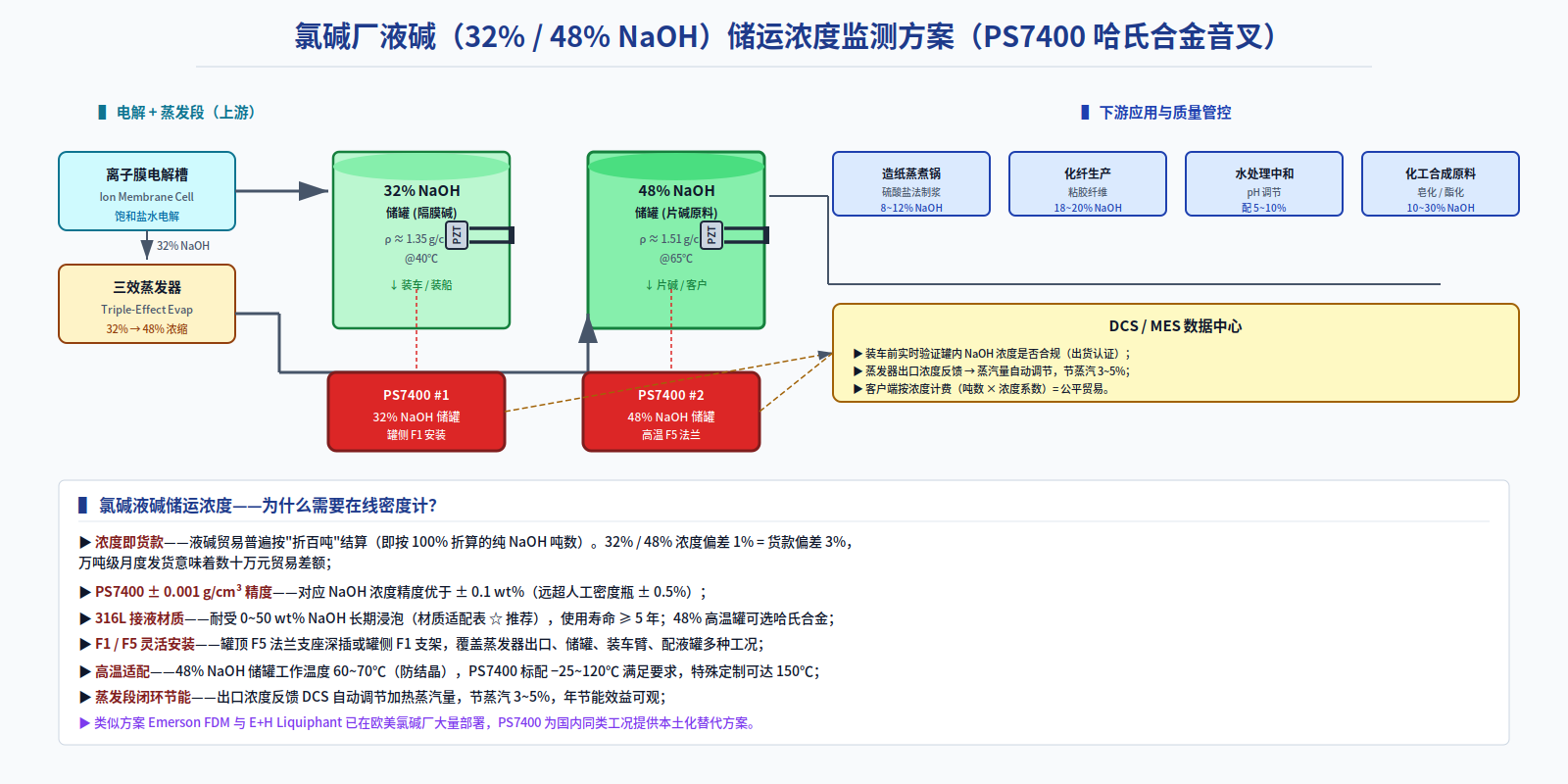
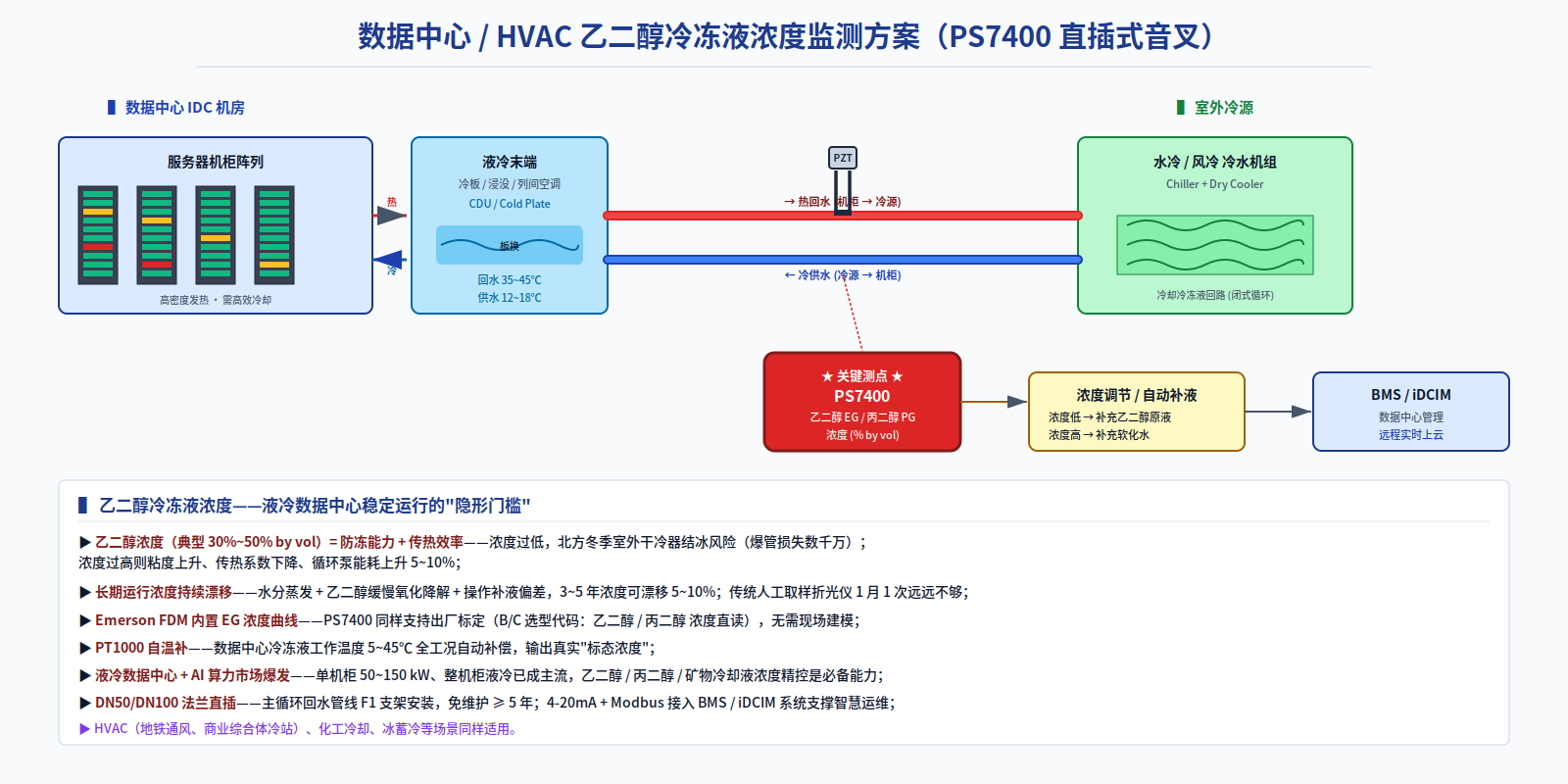
- Chemical Industry Continuous concentration monitoring of sulfuric acid, hydrochloric acid, nitric acid, chloroacetic acid, ammonia, methanol, ethanol, brine, sodium hydroxide, coolant, sodium carbonate, glycerin, hydrogen peroxide, and more
- Pharmaceutical Industry Online concentration detection of medicinal solutions, biological fluids, alcohol extracts, acetone, and alcohol recovery
- Food and Beverage Online production‑line monitoring of sugar water, fruit juices, brewing, cream, and other concentrations
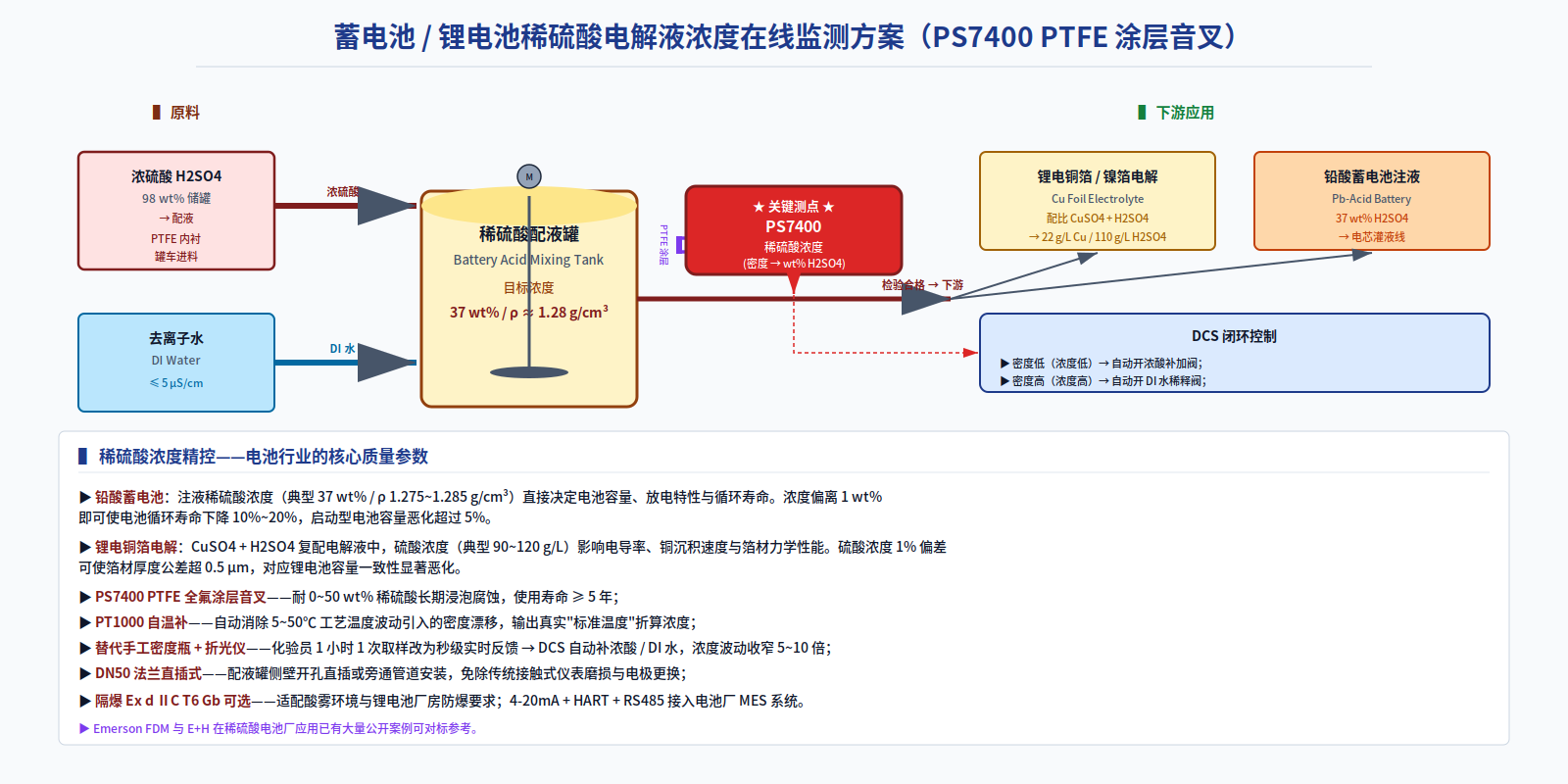
- Batteries / Electrolytes Precision control of electrolyte concentrations such as sulfuric acid and lithium hydroxide
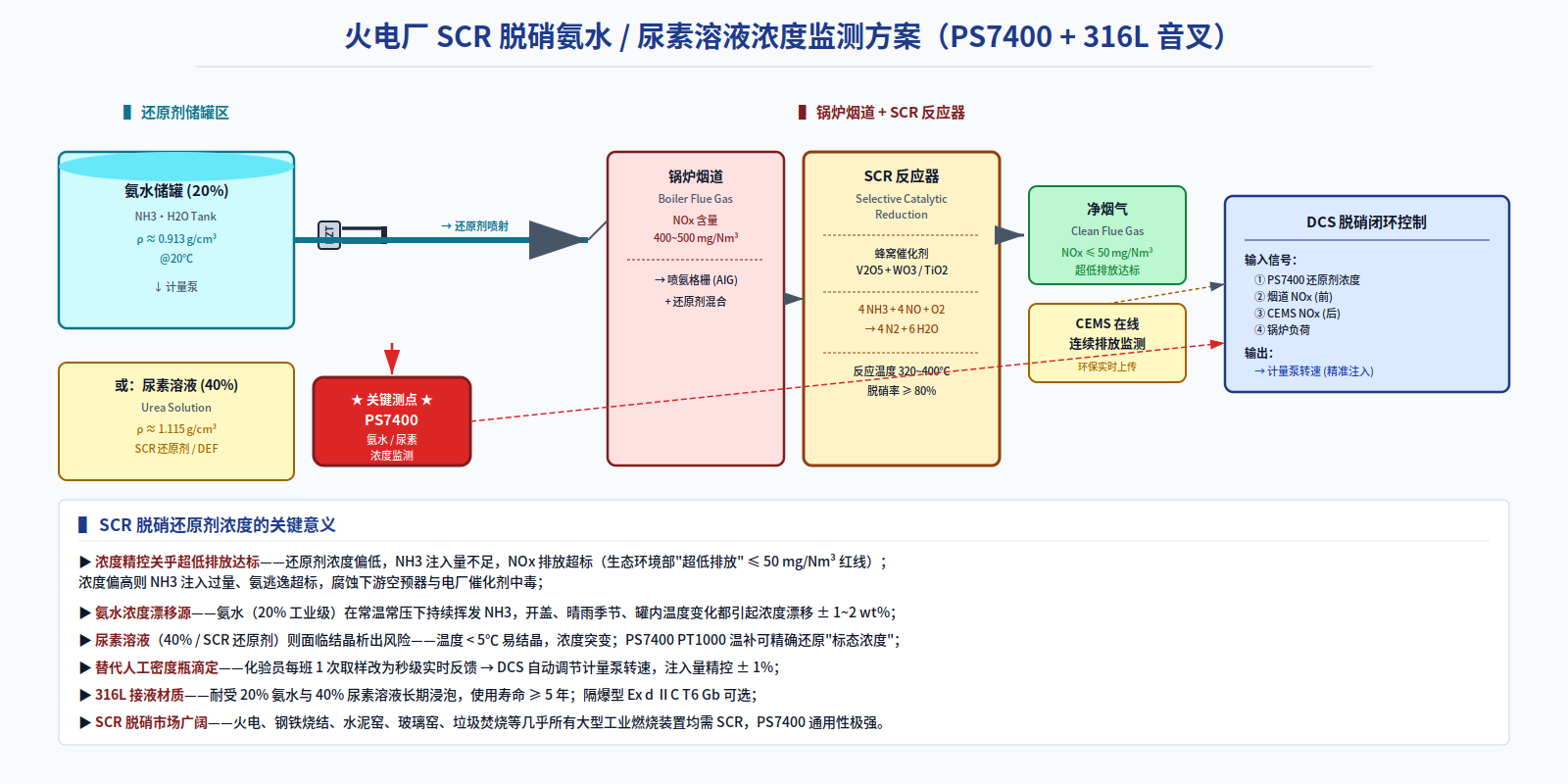
- Environmental Protection Industry Flue-gas desulfurization (lime slurry / gypsum slurry), denitrification (ammonia water / urea), wastewater treatment MVR (acid / alkali / salt recovery)
- Brewing Industry Quality control during the fermentation of baijiu / beer / wine — continuous online monitoring
- Organic / Inorganic Chemical Materials Leak detection in underground brine storage tanks; concentration and quality control of acids / alkalis
Diverse Installation AccessoriesInstallation Accessories
The PS7400 offerssix installation accessories(when ordering, select one accessory code from F0 to F6). Whether for wall‑mounted or column‑fixed installations, or for pipeline‑in‑line, flow‑through chamber, or top‑agitated tank applications, there is a suitable solution for every process scenario:
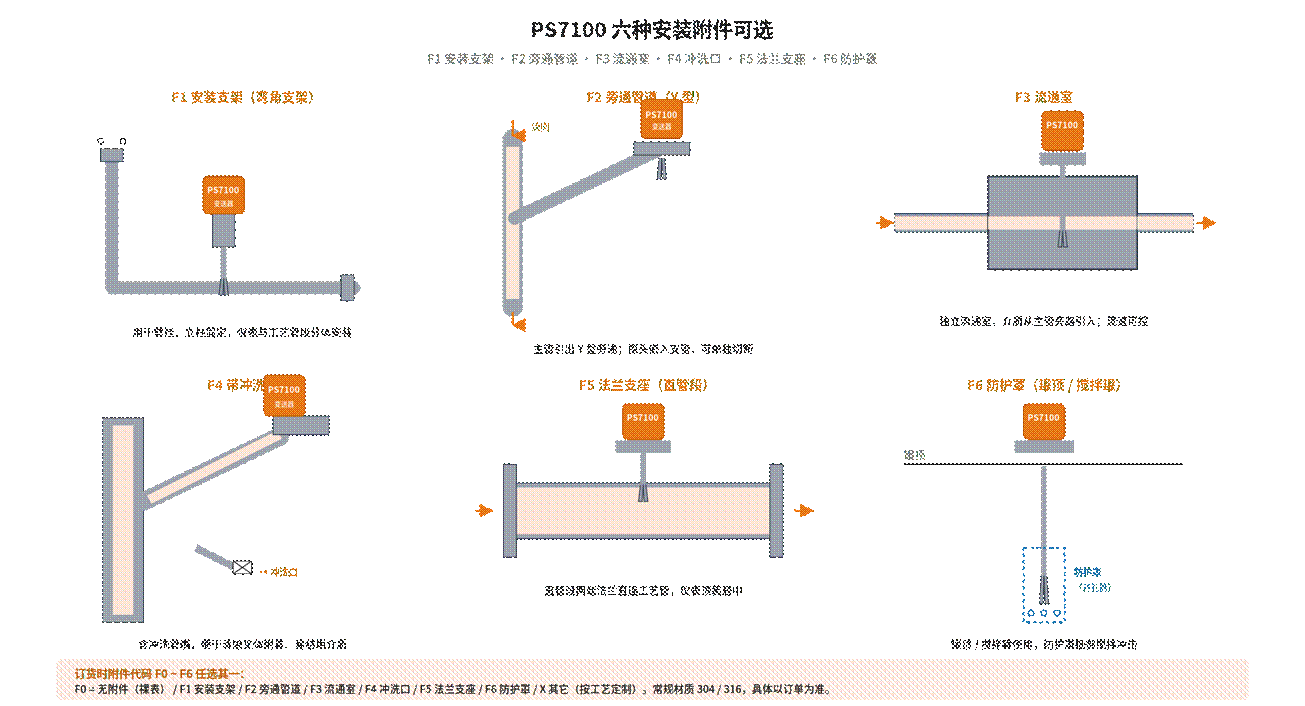
Figure 2 Schematic of the six PS7100 installation accessories: F1 mounting bracket / F2 bypass pipe / F3 flow‑through chamber / F4 flushing port / F5 flanged support / F6 protective cover
Notes for top‑mounting:The tuning fork should be positioned below the liquid surface; if agitation is present, a protective cover (F6) is required. This method is typically used for tanks with only a top opening or for underground tanks. To adjust the insertion depth, a flanged support (F5) can be employed.
Notes for side‑mounting:In the absence of agitation, the tuning fork can be inserted directly into the tank. If agitation is present but no sediment forms, it is recommended to use a protective cover or a T‑shaped sleeve (F6). When both agitation and sediment are present, installing via a flared opening or a flow‑through chamber (F3) is advised.
Wetted Material CompatibilityWetted Material Compatibility
The PS7400’s wetted parts can be made from SUS316L, Hastelloy, titanium alloy, zirconium, PTFE‑lined materials, ceramics, and other options. The fork tines can feature standard polishing, electrolytic polishing, or a PTFE coating. The following table provides recommendations for material compatibility with common media (this is not an exhaustive list; for special conditions, please consult an engineer for evaluation):
Category | Name | Molecular Formula | Concentration (%) | 316L | Hastelloy Alloy | titanium alloy | Zirconium | PTFE |
Acid | Hydrochloric acid (fluoride-free) | HCl | 0–40 | × | × | × | × | ☆ |
Sulfuric acid | H₂SO₄ | 0–50 | × | ○ | × | ☆ | ☆ | |
sulfuric acid | H₂SO₄ | 50–75 | × | × | × | ○ | ☆ | |
Sulfuric acid | H₂SO₄ | 75–98 | × | × | × | × | ☆ | |
nitric acid | HNO₃ | 0–100 | ○ | ○ | × | × | ☆ | |
Phosphoric acid | H₃PO₄ | 0–98 | × | ○ | × | × | ☆ | |
Alkali | sodium hydroxide | NaOH | 0–50 | ☆ | ☆ | ☆ | ○ | ☆ |
Potassium hydroxide | KOH | 0–50 | ☆ | ☆ | ☆ | ○ | ☆ | |
calcium hydroxide | Ca(OH)₂ | 0–50 | ☆ | ☆ | ☆ | ○ | ☆ | |
Salt | Sodium chloride | NaCl | 0–50 | × | ☆ | ☆ | ○ | ☆ |
ammonium chloride | NH₄Cl | 0–50 | × | ☆ | ☆ | ○ | ☆ | |
ammonium sulfate | (NH₄)₂SO₄ | 0–50 | × | ☆ | ☆ | ○ | ☆ | |
Others | urea | (NH₂)₂CO | 0–100 | ☆ | ☆ | ○ | ☆ | ☆ |
Sodium hypochlorite | NaOCl | 0–16 | × | ○ | × | × | ☆ | |
hydrogen peroxide | H₂O₂ | 0–90 | ☆ | ☆ | ○ | ☆ | ☆ |
☆ Recommended ○ Use under specific concentration and temperature limits × Not recommended
Operating LimitsOperating Limits
Tuning‑fork‑type instruments have certain requirements for particle size, gas content, and viscosity of the medium. The following is a guide to recommended operating conditions:
Particle Diameter | Suspension Particle Fraction | Gas Content Conditions | Maximum Liquid Viscosity | Recommended Applications |
< 10 micrometers | ≤ 40 % | Recommended for use | ≤ 500 cP | ★ Optimal performance under standard operating conditions |
10 to 50 micrometers | ≤ 20 % | Not typically used | ≤ 2000 cP | Can be used; F3 flow cell or F4 rinse port recommended |
> 50 microns | > 20 % | — | > 2000 cP | Not recommended; please contact an engineer for evaluation |
Technical SpecificationsTechnical Specifications
Performance Indicators
Item | Specifications |
Display Parameters | Density/concentration display, dual-density display |
Measurement Accuracy | ± 0.001 g/cm³ / ± 0.25% |
Repeatability | ± 0.0001 g/cm³ / ± 0.1% |
Measurement Range (Density) | 0 ~ 1.5 / 0 ~ 2.0 / 0 ~ 2.5 g/cm³ (other ranges can be customized) |
Measurement Range (Concentration) | 0 ~ 50% / 0 ~ 100% (calibrated according to the medium) |
Temperature Coefficient (Calibrated) | 20 ppm / ℃ |
Liquid Viscosity | 0 ~ 2000 cP |
Applicable Operating Conditions
Item | Specifications |
Process Temperature | Standard −25 ~ +120 ℃; customized −25 ~ +150 ℃ |
Ambient Temperature | −25 ~ +85 ℃ |
Built-in temperature sensor | PT1000 platinum resistance thermometer (resolution 0.01 °C, accuracy 0.1 °C) |
Maximum Working Pressure | Standard configuration ≤ 2.5 MPa; special customization ≤ 6.3 MPa (subject to the process connection rating) |
Test Pressure | 1.5 times the maximum working pressure |
Electrical Characteristics
Item | Specifications |
Power Supply | DC 24 V |
Electrical Interface | M20 × 1.5 (standard configuration) |
Output signal | 4–20 mA (four-wire) + RS-485 / HART protocol |
Display Module | Intelligent LCD display (multi-parameter measurement of density/concentration/temperature) |
Structure and Materials
Item
Specifications
Wetted parts
316L, Hastelloy, titanium alloy, zirconium, 316L lined with PTFE, ceramics, etc.
Tuning fork surface treatment
Standard polishing / Electro-polishing / PTFE coating
Housing Material
Aluminum alloy, IP65
Process Interface
Flange (2″ 150LB / 300LB, DN50 PN16 / PN25) / Clamp (2″ / 3″) / Threaded (G3/4 / G1) / Cable-separated type
Insertion length
100 / 150 (standard) / 200 / 300 / 400 mm (other sizes customizable)
Explosion-proof Rating
Ex d ⅡC T6 Gb (explosion-proof type, optional)