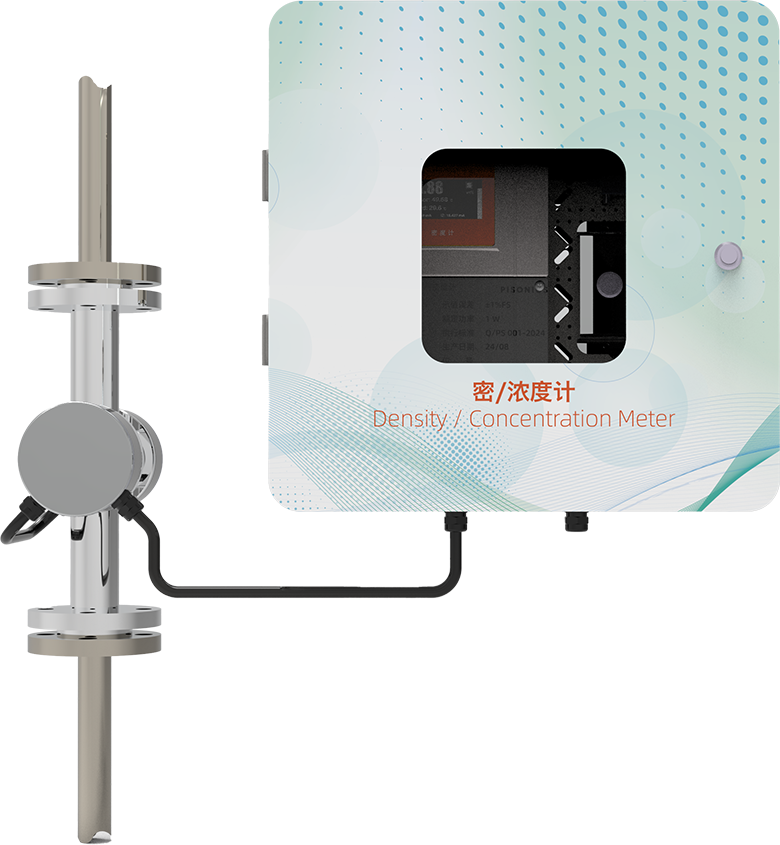
Overview
Wafer fabrication's wet etch, clean and CMP processes use multi-acid baths of HF, H₂SO₄, H₃PO₄, NH₄OH, H₂O₂ and DI water. As nodes shrink to 14 / 7 / 5 nm, concentration tolerance has tightened from ±5% to ±1%. PS7100 uses UV-Vis-NIR multi-channel absorption + MLR multi-component modelling, with PFA-lined flow cells and sapphire optical windows — supplying inline concentration monitoring to FABs across China (SMIC, Hua Hong, YMTC, NAURA, Hefei Crystal Integration).
Process challenges
- HF corrodes glass, quartz and stainless steel — conventional contact sensors fail fast and contaminate wafer lots (single batch worth hundreds of K USD)
- Multi-component baths (SPM, BHF) need 3-4 species measured simultaneously — traditional offline requires 4× sampling + 4 lab setups
- 14 / 7 nm nodes tolerate only ±1% — drift directly hits yield (each yield point ≈ 0.5-1% revenue)
- FABs restrict personnel ingress; frequent sampling is unacceptable; HF and H₂SO₄ exposure risk
- Bath life decisions are guesswork — premature change wastes electronic-grade chemicals (electronic HF ≈ USD 12K / ton)
Recommended solutions
| Measurement point | Principle | Models |
|---|---|---|
| Wet etch bath (HF + H₂SO₄ + H₃PO₄ + DI, 4-component) | Spectroscopic + MLR | PS7100 |
| CMP slurry concentration | Spectroscopic / refractive | PS7100 / PS7110 |
| Wafer clean bath (SPM / BHF) | Spectroscopic | PS7100 |
| High-purity chemical blending station | Refractive / ultrasonic SoS | PS7110 / PS7020 |