Overview
Pisonics density meters cover the full oil & gas value chain: upstream three-phase separators at oilfield wellheads, midstream tank-farm metering and long-distance pipeline interface tracking, and downstream refinery blending, LPG custody transfer and marine bunkering. Major NOC operators (CNPC / Sinopec / CNOOC / Yanchang / Zhenhua), international ports and IMO-compliant bunkering terminals all rely on inline density measurement for production and commercial settlement.
Process challenges
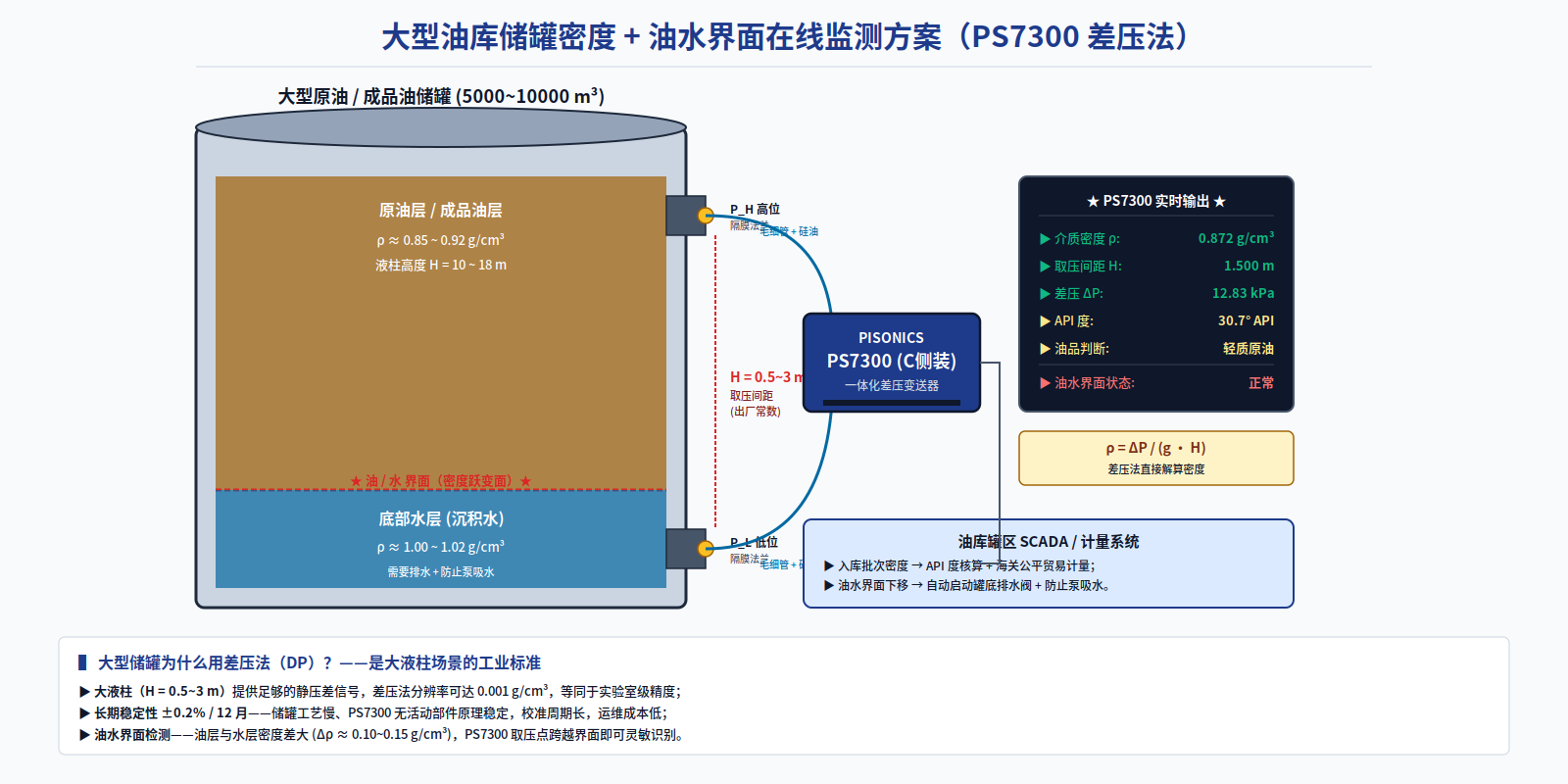
- Tank farms have tall liquid columns (10-18 m) and dozens of tanks per terminal — manual sampling impractical, nuclear gauges hard to license
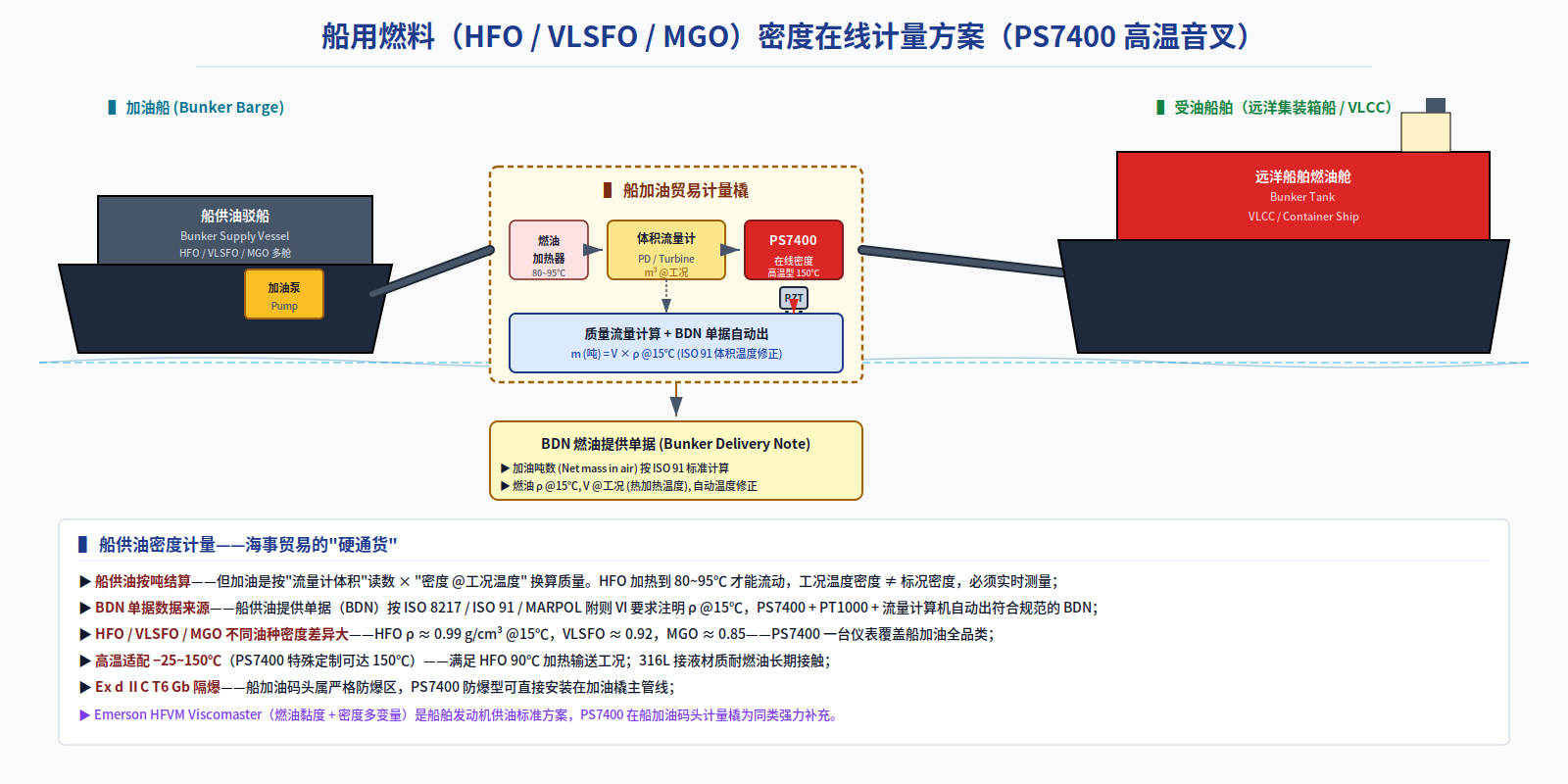
- Marine bunkering settles by tonnage (1,000-5,000 tons per bunker, USD 0.8-5M); HFO must be heated to 80-95°C, requiring real-time ISO 91 correction
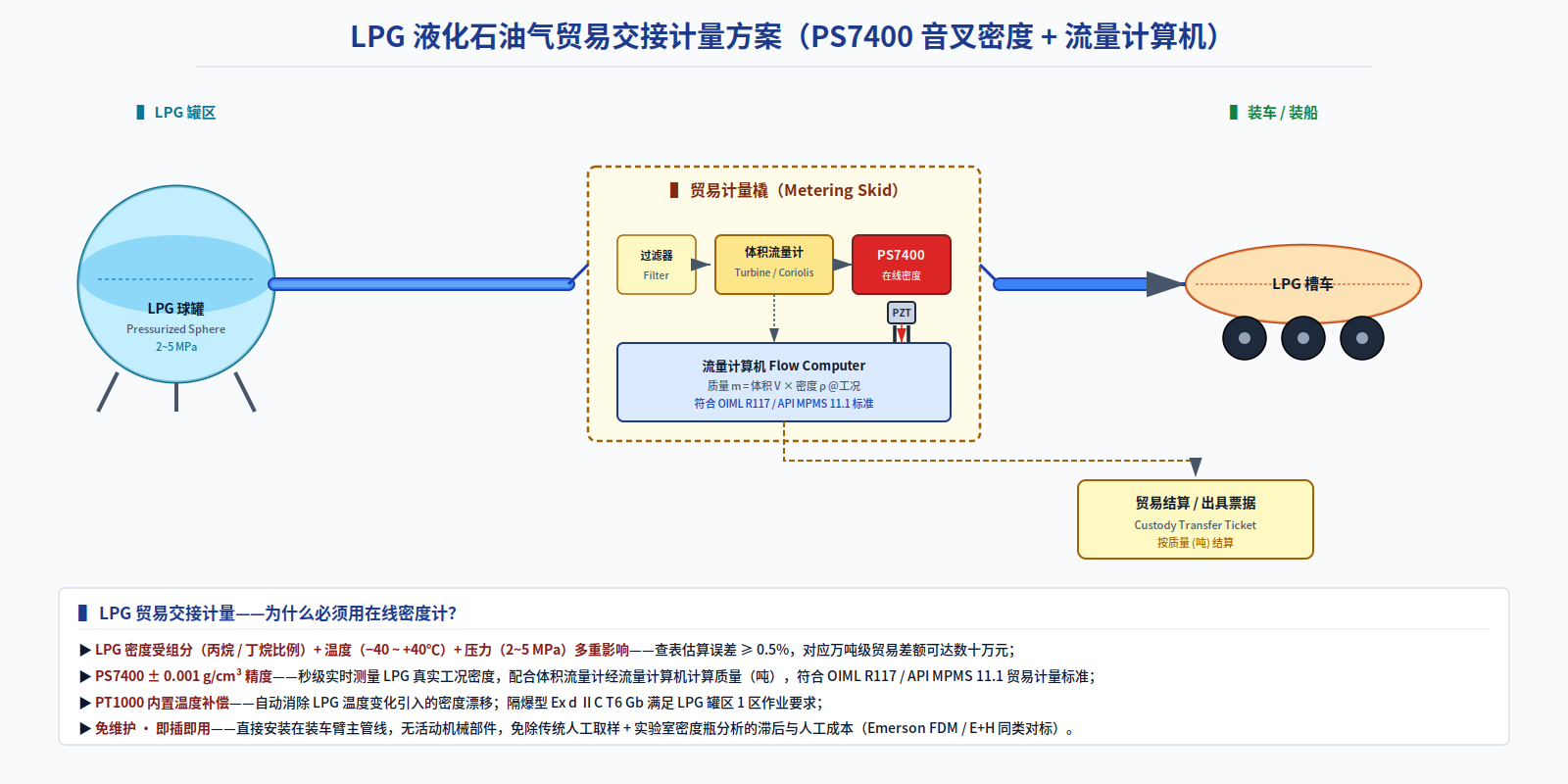
- LPG trade settles by density (propane / butane ratio sensitive), short transfer windows demand real-time data
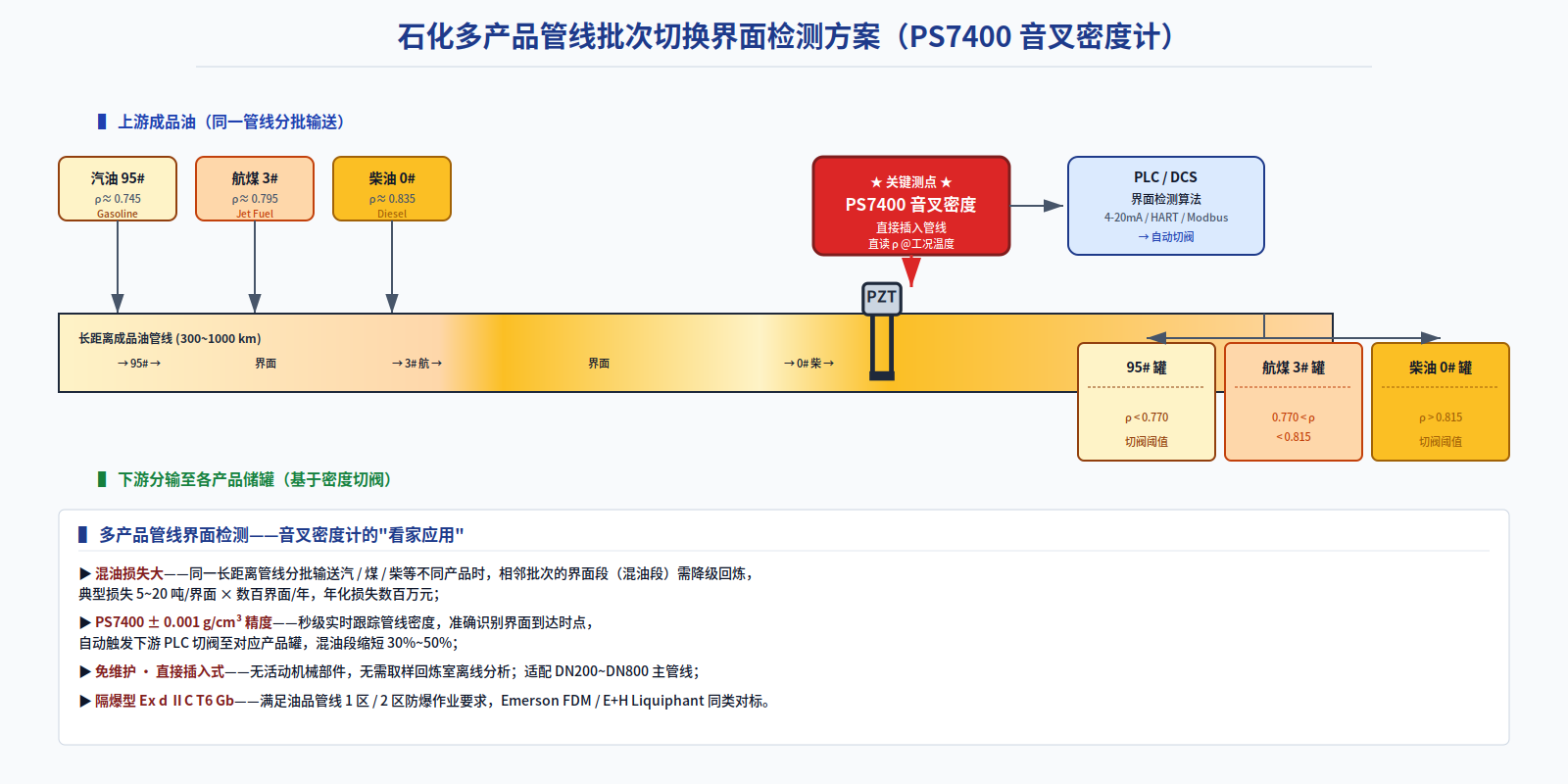
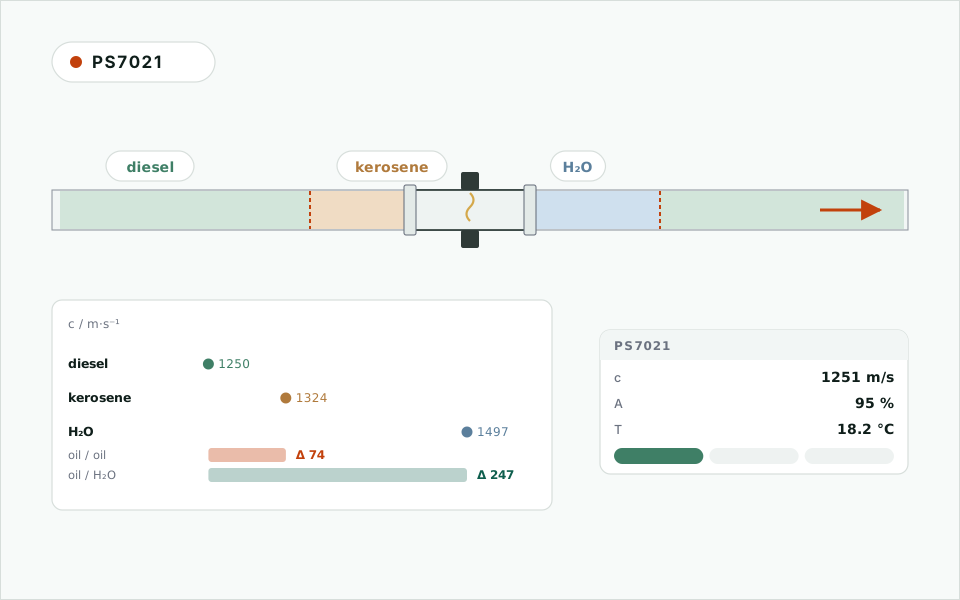
- Long-distance pipeline product switching (gasoline → diesel → jet) uses density change as interface signal
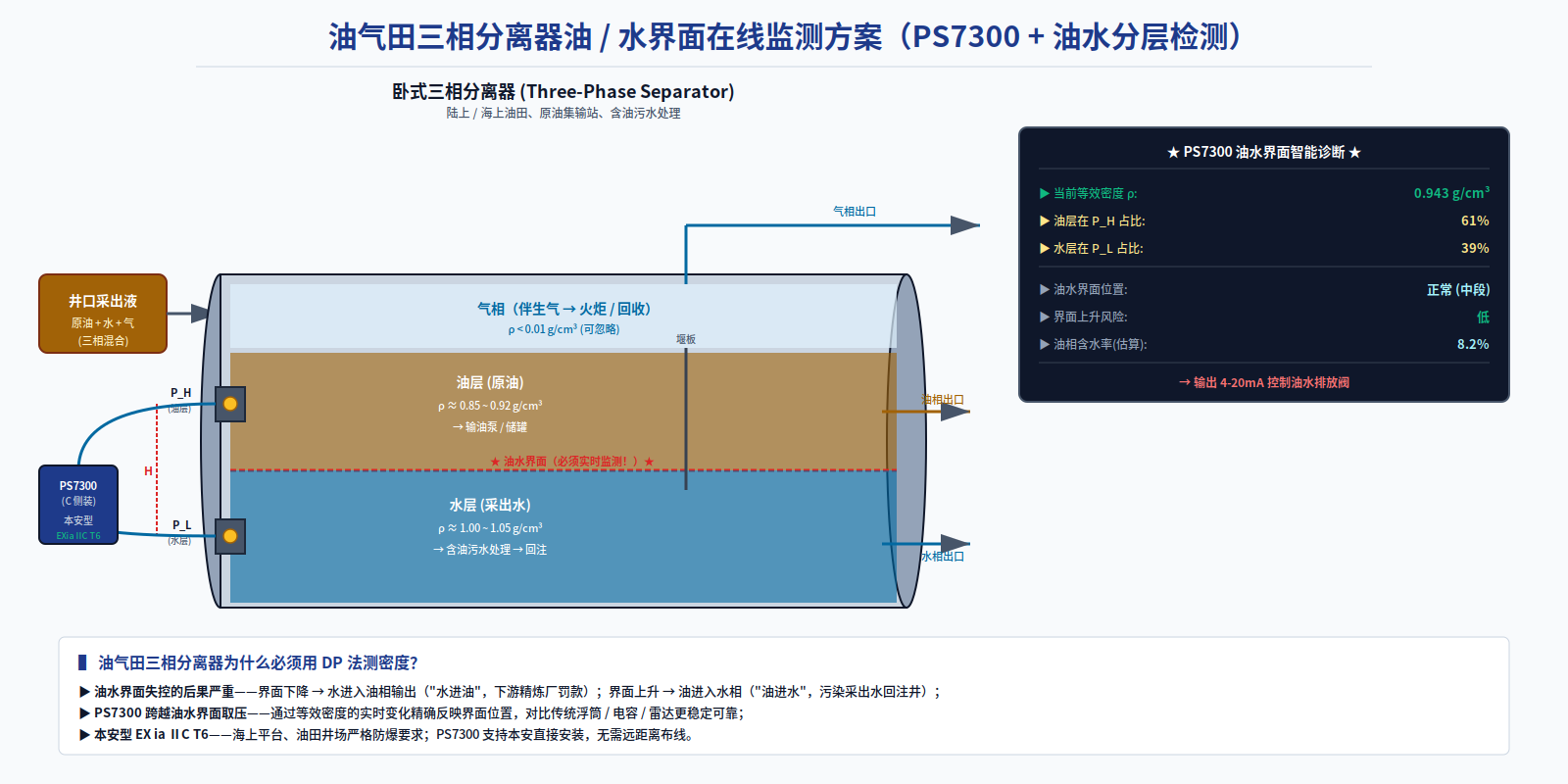
- Oilfield three-phase separators need dual-parameter level + oil/water interface control
- Refinery product blending (octane / cetane / kerosene density) requires API-grade precision
Recommended solutions
| Measurement point | Principle | Models |
|---|---|---|
| Tank farm density + oil/water interface | DP (side-mount double flange) | PS7300 |
| Pipeline interface density tracking | Tuning fork | PS7400 |
| LPG custody transfer | Tuning fork + high-pressure Ex | PS7400 |
| Marine bunkering (HFO / VLSFO / MGO) | High-temp tuning fork (-25 to 150°C) | PS7400 |
| Refinery blending | Spectroscopic / refractive index | PS7100 / PS7110 |
| Three-phase separator | DP + multipoint level | PS7300 |
| Batch interface / water slug | Ultrasonic velocity + amplitude | PS7021 |