Onboard slurry density for cutter-suction, hopper & sand dredgers
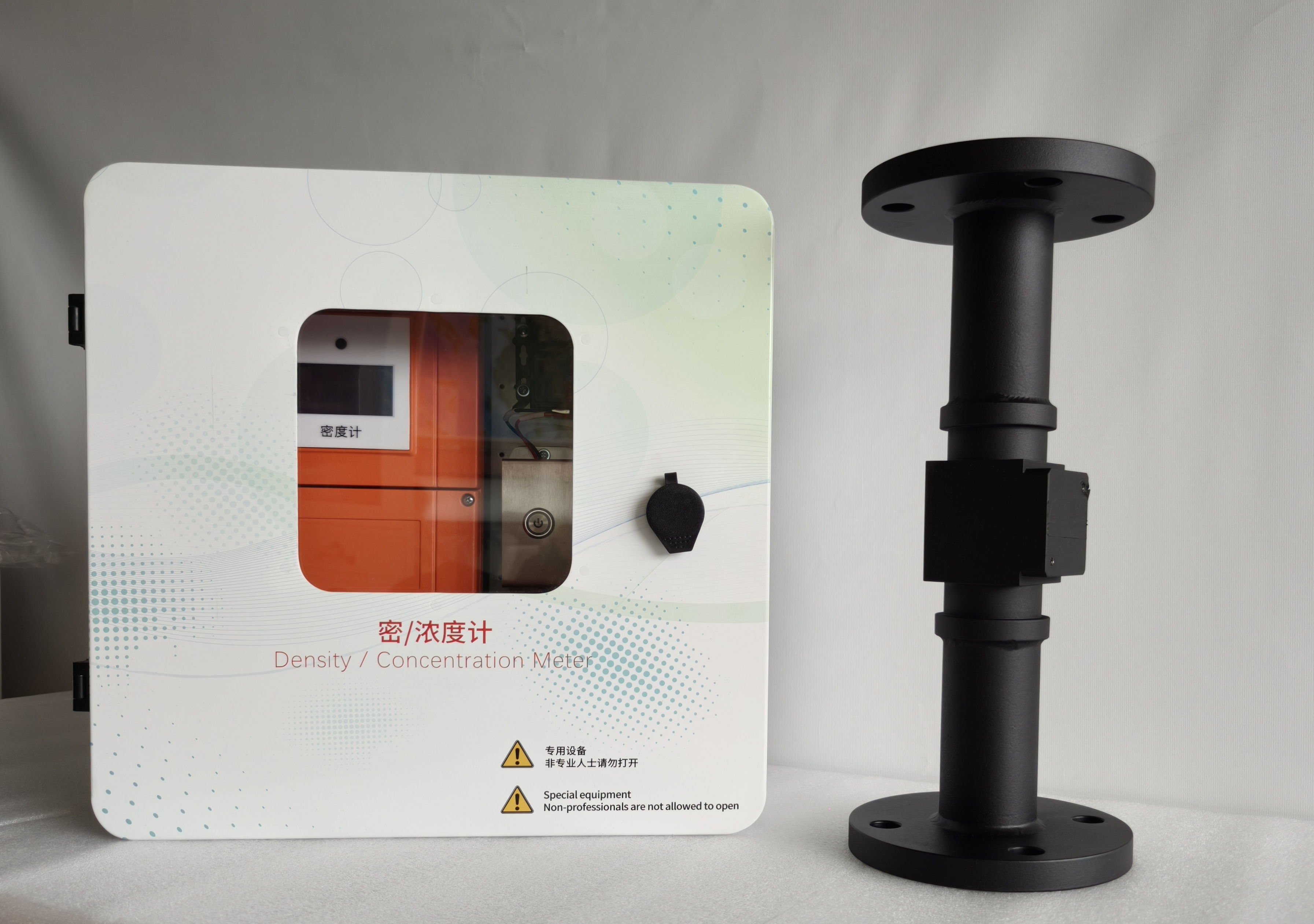
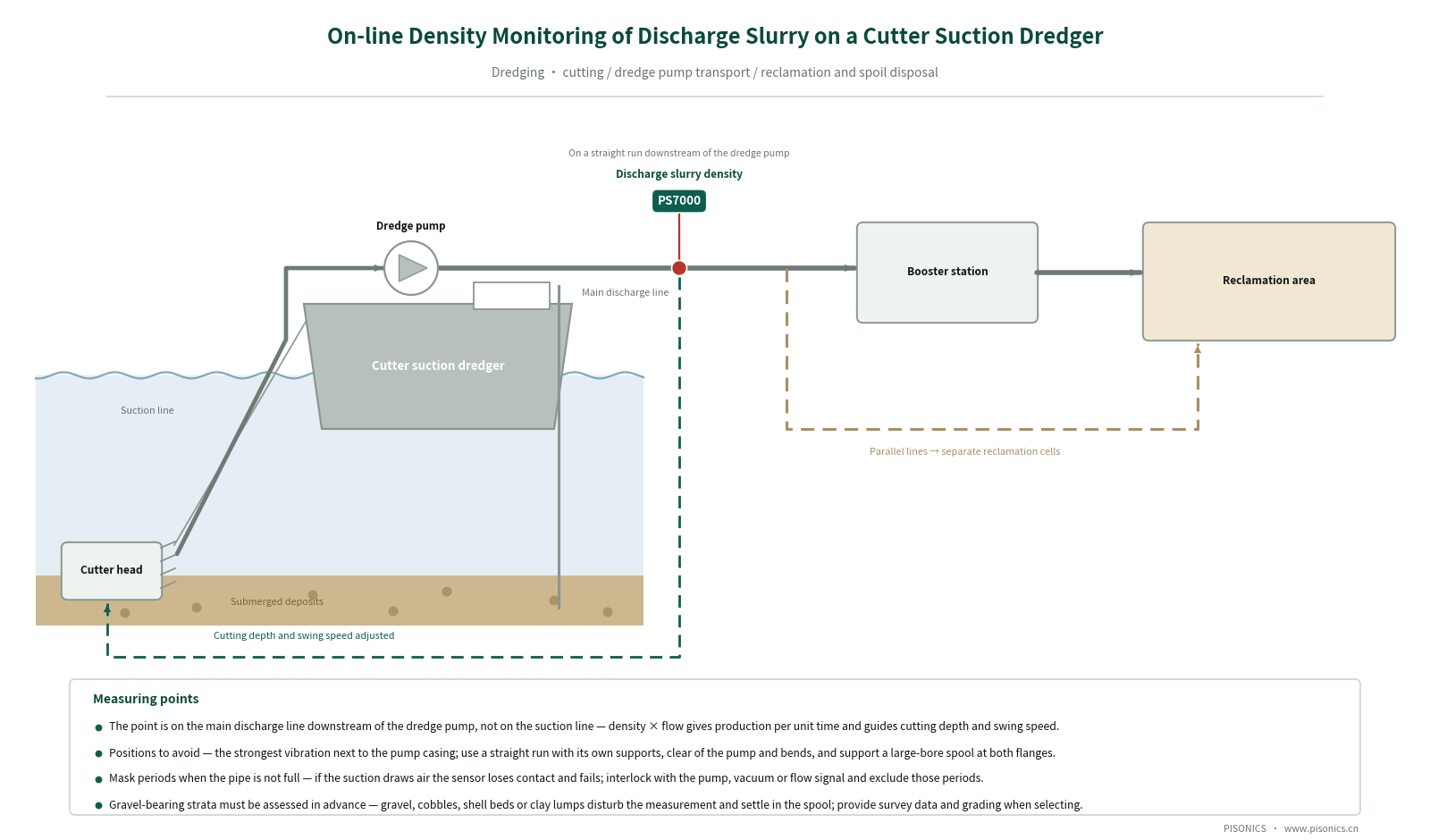
Dredgers (CSD, TSHD and sand dredgers) remove sediment and pump slurry via floating pipelines to discharge zones. Slurry density — solids content in the discharge line — is the key parameter for production monitoring, pump-speed control and blockage prevention. Operators such as Royal IHC, Jan De Nul and CCCC dredging fleets rely on inline density for real-time discharge monitoring. Pisonics ultrasonic density meters measure non-intrusively, non-nuclear.
Measurement points
| Process point | Principle | Model |
|---|---|---|
| CSD / TSHD discharge main | Ultrasonic acoustic impedance (clamp-on) | PS7000 |
| Sand dredger discharge | Ultrasonic acoustic impedance | PS7000 |
| Reclamation inlet manifold | Ultrasonic acoustic impedance | PS7000 |
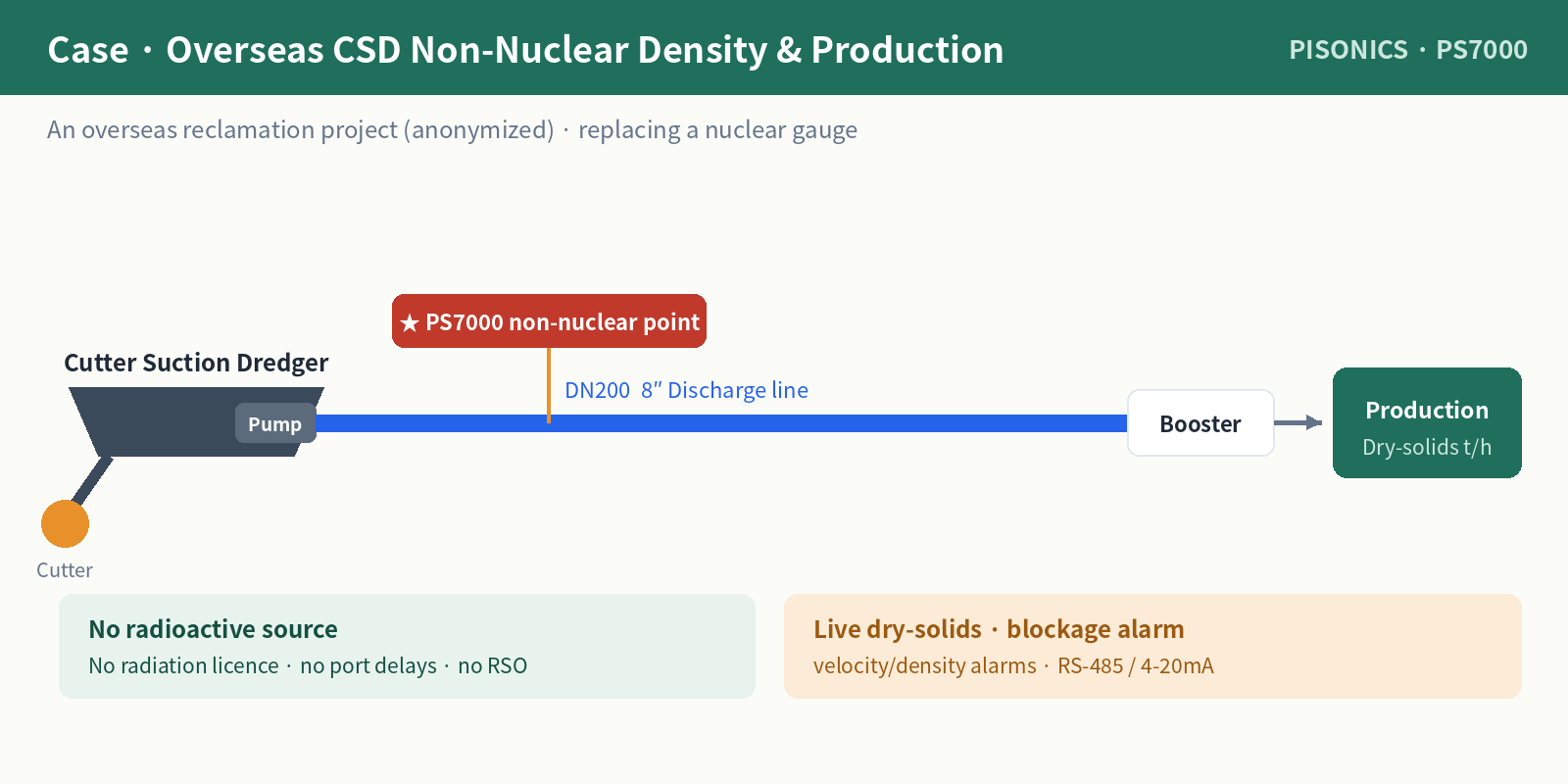
Related field case: CSD · hopper · sand-dredger slurry density monitoring solution.
Why dredging slurry is hard
- Highly abrasive, variable grain size — wears out intrusive sensors; the flush PS7000 window has no protruding parts.
- Large pipelines (DN500–DN1000) need non-intrusive measurement to avoid pressure drop.
- Vessel motion, temperature swings and entrained air demand robust signal stability — Chirp wideband rejects bubble scatter.
- Pump-blockage risk needs fast density-gradient alarms feeding the DCS for pump-speed interlock (4-20 mA / RS485 / HART).
Non-nuclear, by design
A direct substitute for Cs-137 / Co-60 dredge gauges — eliminates shipboard radiation licensing, cross-border port inspection delays and dedicated radiation-safety officers. Compare: PS7000 vs Cs-137 · PS7000 vs Rhosonics SDM ECO.
Selection help
Tell us your pipe size and dredger type for a recommendation.
Production monitoring & guides
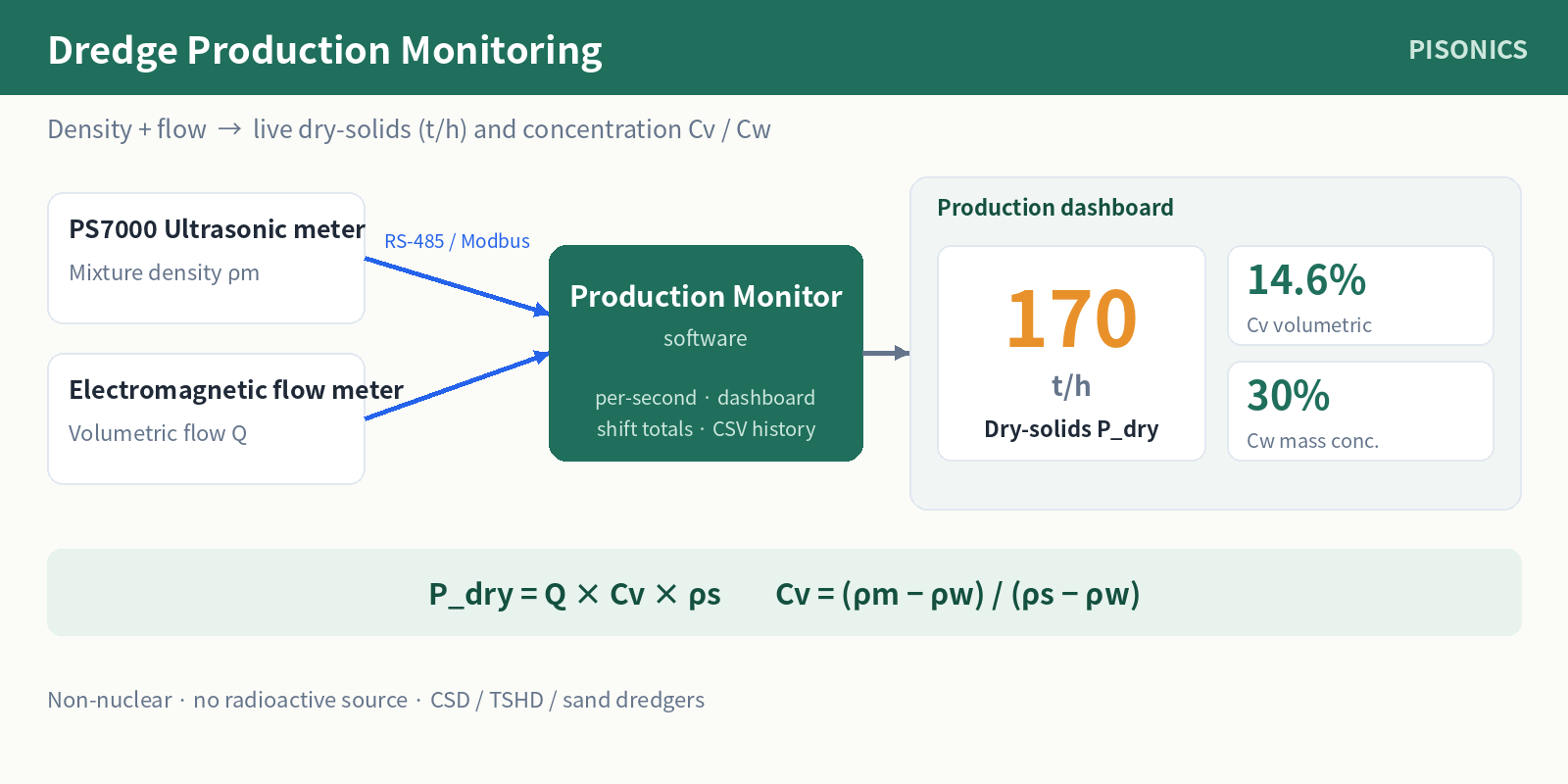
Beyond density, see live dredge production monitoring (dry-solids t/h), the production-calculation guide, non-nuclear density for dredgers, and an overseas CSD case study.