Differential pressure · PS7300

Pipeline Differential Pressure Density Meter

Differential pressure

Online differential pressure density meter uses a special density sensor to measure the density of various liquids or liquid mixtures online, directly reads the density value and outputs a 4-20mA DC signal with HART communication protocol. It is widely

Also known as Differential Pressure Density Meter, DP Density Meter, Pipeline Density Meter, Online Differential Pressure Density Sensor, Hydrostatic Density Meter

Best fit for
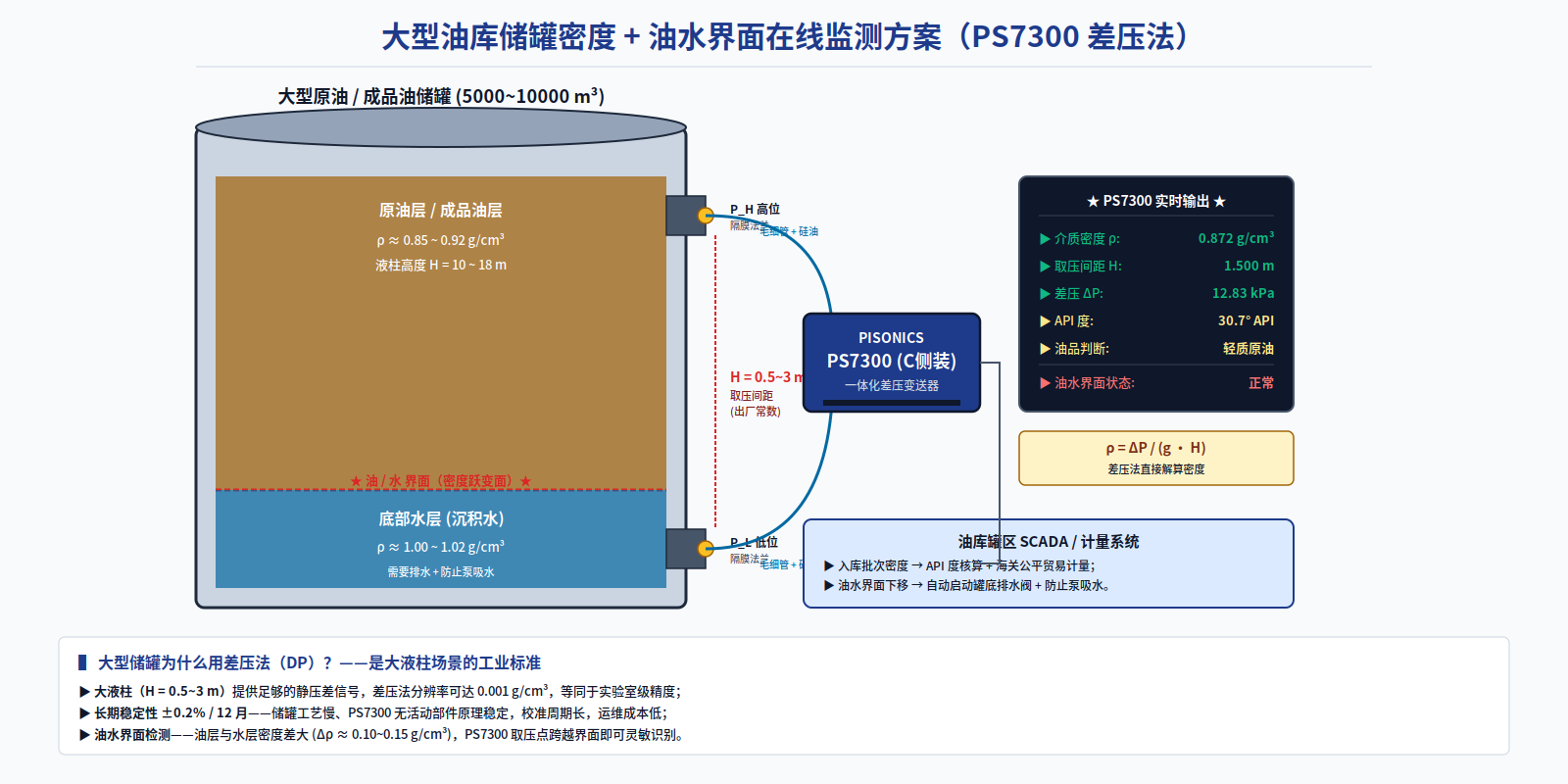
  • Oil storage tank oil-water interface monitoring
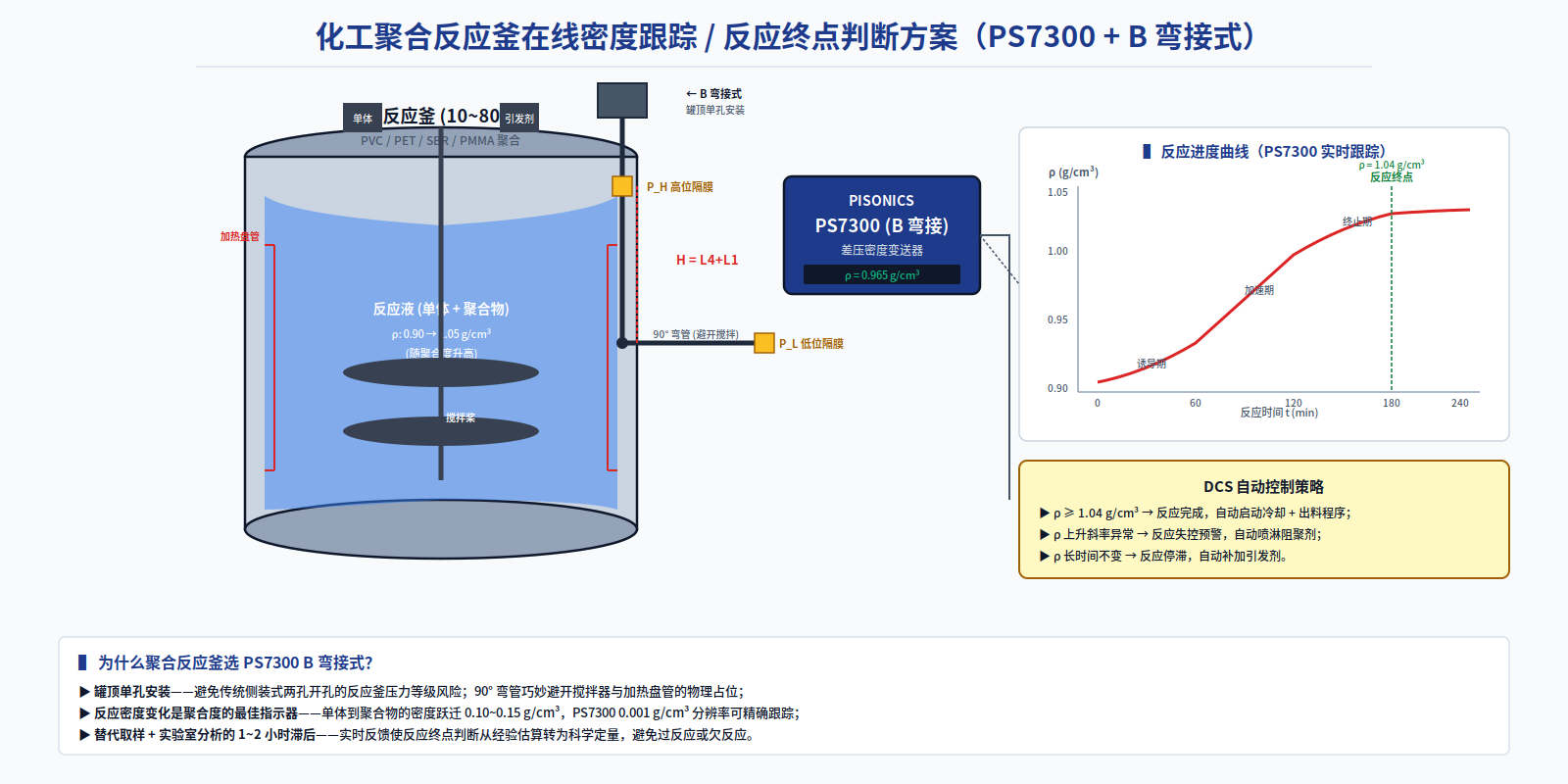
  • Polymerization reactor reaction endpoint determination
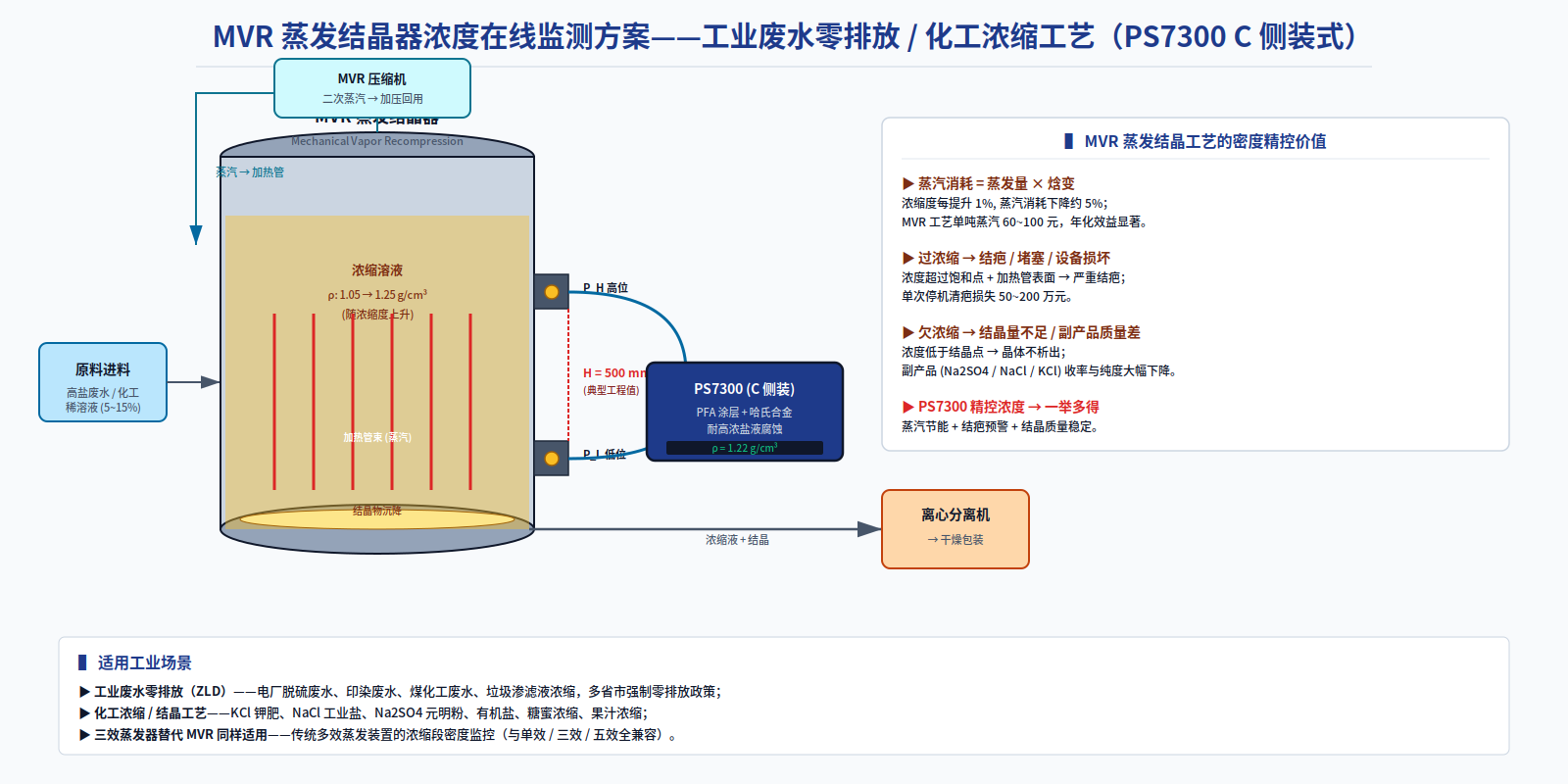
  • ZLD brine concentration control in MVR evaporators
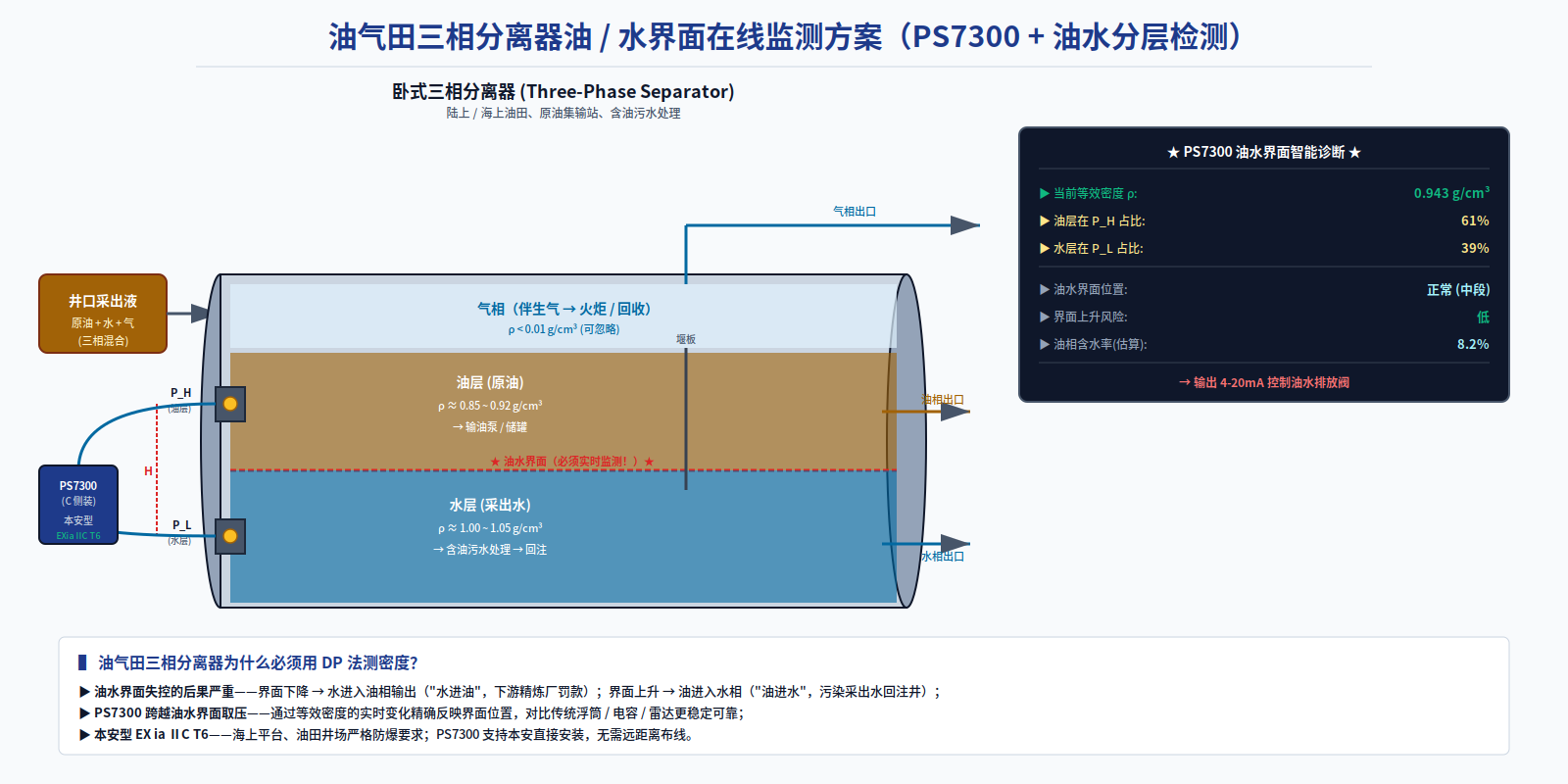
  • Oil-water-gas multiphase interface monitoring
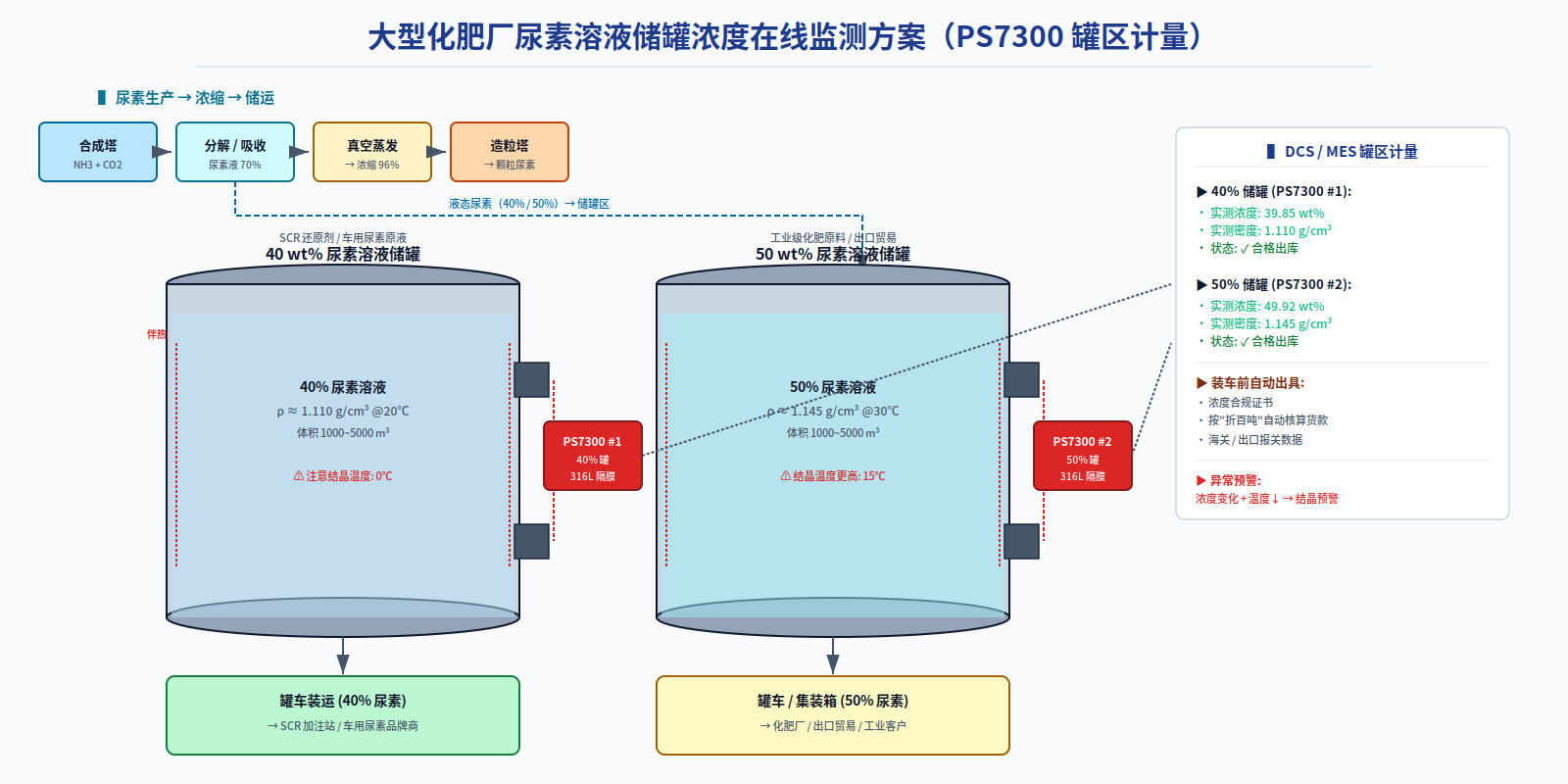
  • Urea solution storage tank concentration monitoring
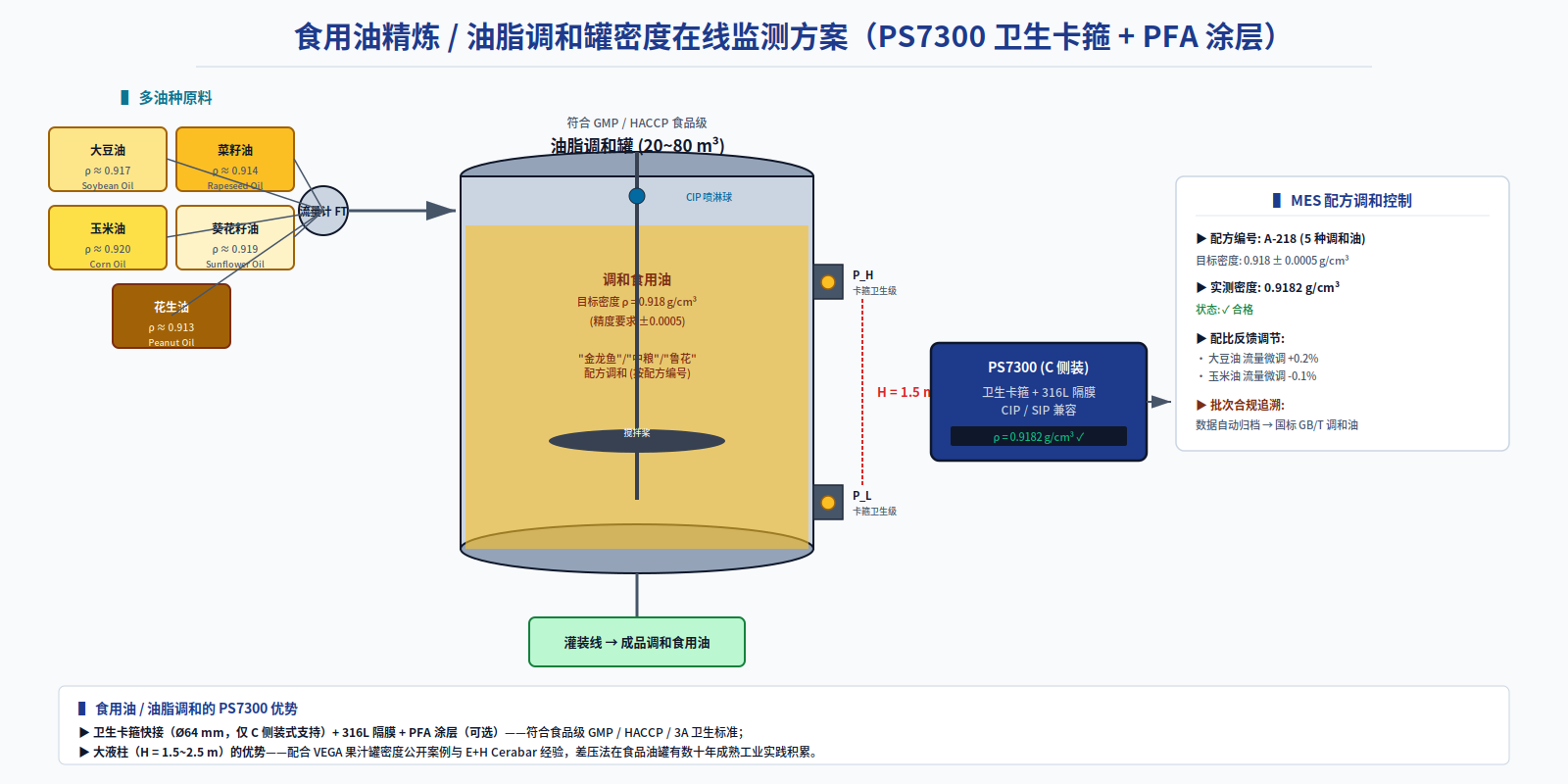
  • Sanitary blended oil recipe control
Not recommended for
  • Low-flow or highly variable flow conditions(consider PS7000 instead)
  • Severe scaling or fouling in pipe (e.g., lime scale, polymer buildup)(consider PS7010 instead)
  • Applications requiring measurement of opaque slurries with >5% suspended solids(consider PS7000 instead)
  • Density measurement in gas-entrained liquids (e.g., aerated wastewater, foaming process streams)

Online differential pressure density meter uses a special density sensor to measure the density of various liquids or liquid mixtures online, directly reads the density value and outputs a 4-20mA DC signal with HART communication protocol. It is widely used in the density measurement of general liquids and in the petrochemical industry for oil, oil refining, oil blending, and oil-water interface detection; sanitary density meters can be used in the food industry for various edible liquids and soft drink processing and other production sites; anti-corrosion density meters can be used for the measurement of acid and alkali solutions and the measurement of urea, detergents, ethylene glycol, acid and alkali, and polymer density in the chemical industry. There are also many special specifications such as high temperature and horizontal pipe for high temperature working conditions of 100℃~150℃ and on-site environment.

Technical Specifications

Item

Content

Measuring range

0~3g/cm3

Explosion-proof type

Flameproof, intrinsically safe

Temperature range

-20~90℃

Operating Voltage

12~45VDC

Electrical Interface

1/2NPT or M20×1.5

Outpu

4~20mA(2 wires)

Communication

Hart

Installation

Flange pipe installation

Wetted parts

316 stainless steel or anti-corrosion material

Application Areas

1. Petroleum industry

2. Chemical industry

3. Food and beverage industry

4. Battery and electrolyte industry

5. Pharmaceutical industry

Dimensions & Installation

Selection Table

PS7300

Intelligent pipeline online density meter

Measuring range

R1


0~1.0g/cm3

R2


0~2.0g/cm3

R3


0~3.0g/cm3

RX


other

Flange specifications


A


2〞or DN50


B


3〞or DN80


C


4〞or DN100


X


other

Filling fluid


A


DC200 Silicone oil


B


DC704Silicone oil


C


olive oil


X


other

Diaphragm material


J1


316L


J1


Hastelloy


J2


Tantalum


JX


other

Flange material


M0


SUS304


M1


SUS316L


M2


Polytetrafluoroethylene

Wetted material


2


316L


3


Polytetrafluoroethylene

Explosion-proof grade


N

none


i

Intrinsically safe ExiaIICT6


d

Flameproof ExdIIBT4

Precision beyond limits

For non-standard ranges, special wetted parts, or hazardous-area variants — talk to a Pisonics engineer.

Frequently asked questions

How do I choose between PS7300's three mounting styles (A/B/C)?

The PS7300 offers three installation configurations:

A—Straight‑tube insertion—vertically inserted through a single hole in the tank roof; this is the most common method and is suitable for atmospheric‑ or low‑pressure storage tanks without agitation or with stable liquid levels (such as finished‑oil tanks and urea solution tanks).

B—Bent‑joint insertion—inserted through a single hole and then bent to a specified depth inside the tank, bypassing agitators or heating coils; this is ideal for large chemical polymerization reactors and MVR evaporation crystallizers.

C—Side‑mount installation—two openings on the tank sidewall, with the diaphragm directly facing the liquid column; this is appropriate for stirred reaction vessels, oil‑gas field three‑phase separators, and horizontal pipeline applications.

Simple guidelines: vertical installation with no obstructions → A; obstacles inside the tank requiring bypass → B; feasible with two side‑wall openings → C.

All three methods have a measurement range of 0–1.0/2.0/3.0 g/cm³, with a resolution of 0.001 g/cm³.

READY TO SPECIFY?

Get tailored quote

Request quote