PISONICS· Xi’an Pisonics
PS7300 Series
Differential-Pressure Density Meter
Dual-flange differential pressure · Integrated transmitter · Three installation options available
Application Case in the Edible-Oil/Blended-Oil Industry
—— Blended-oil recipe control · Sanitary clamp connection + PFA coating · MES batch traceability ——
Replaces manual density-bottle measurements · Recipe accuracy ±0.0005 g/cm³ · GMP/HACCP compliance
【Key measured parameter: blended-oil density (→ recipe compliance determination)】
【Installation type: C-side mount · Sanitary clamp connection + PFA coating】
Edible-Oil/Blended-Oil · PS7300 Differential-Pressure Density-Meter Solution
1. Process Background
China is the world’s largest edible-oil consumer market, with annual consumption exceeding 40 million tons, of which blended edible oils (a blend of multiple vegetable oils in specific proportions) account for more than 30%. A typical blended-oil formulation includes soybean oil (ρ ≈ 0.917 g/cm³), rapeseed oil (ρ ≈ 0.914), corn oil (ρ ≈ 0.920), sunflower seed oil (ρ ≈ 0.919), peanut oil (ρ ≈ 0.913), and other base oils, which are blended according to brand-specific recipes such as those of “Golden Dragon Fish,” “Luhua,” and “COFCO,” then bottled and shipped.
The GB/T 40851 “Edible Vegetable Blended Oil” mandatory standard, issued by the State Administration for Market Regulation in 2018, requires that the proportion of each component in blended oils be precisely labeled, with a target density accuracy of ±0.0005 g/cm³—imposing extremely stringent online density-monitoring requirements within the blending tanks. At the same time, food-grade instruments must comply with GMP, HACCP, and 3A hygiene standards and support CIP/SIP high-temperature cleaning and sterilization.
2. Pain Points of Traditional Density-Measurement Solutions
• Manual sampling plus laboratory density-bottle analysis takes 0.5–1 hour; recipe deviations in the blending tank can only be corrected post‑facto, leading to batch-to-batch quality fluctuations;
• Conventional contact-type vibrating concentration meters experience accuracy drift in medium-viscosity edible-oil media (50–80 cP), and their moving mechanical parts are difficult to clean, prone to harboring contaminants;
• The edible-oil refining process involves multi-temperature-zone operations such as deodorization at 200–260°C, decolorization at 80–110°C, and winterization at –5–10°C; instrumentation must accommodate a wide process-temperature range;
• The barriers to hygienic certification for food-grade instruments (3A, GMP, HACCP, EHEDG) are high, making it difficult for standard industrial devices to meet these requirements.
3. PS7300 Solution
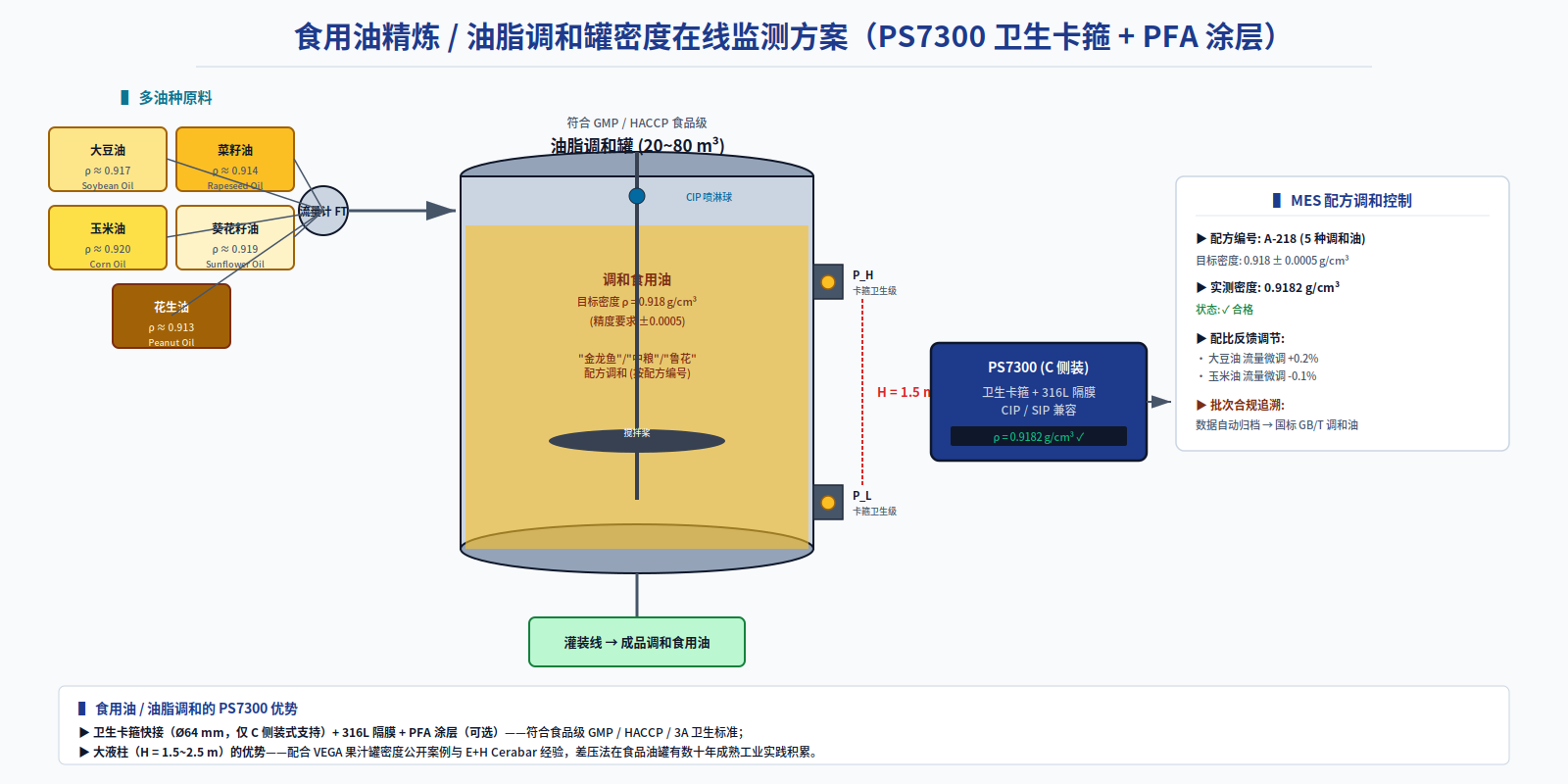
The PS7300 C-side-mount model (sanitary clamp Ø64 mm interface + 316L diaphragm + optional PFA coating) is installed on the side wall of the oil-blending tank, spanning the liquid column inside (H = 1.5–2.5 m) to monitor the blended-oil density in real time. The MES system integrates the PS7300 density signal with flowmeter data from each base-oil feed line, dynamically adjusting the positions of the respective flow valves according to pre-set recipes (e.g., “Golden Dragon Fish Blend A-218”) to achieve precise recipe control and batch-compliance traceability.
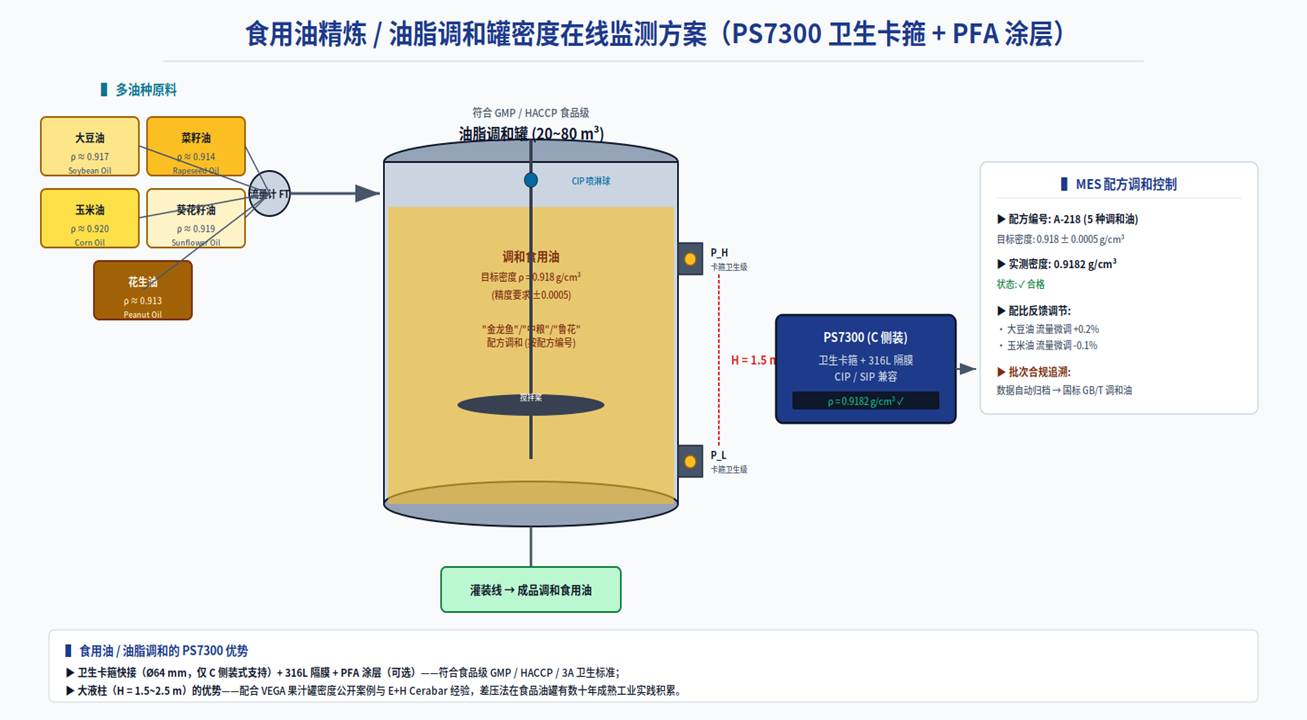
Figure 1: Online Density Monitoring Scheme for Edible-Oil Refining/Blended-Oil Tanks
Core Technical Value of the PS7300 in Edible Oil/Fat Blending ▶ Hygienic Clamp-Style Quick Connect Ø64 mm (supported only for C‑side mounting; see PS7300 selection code KG‑L) — compliant with GMP/HACCP/3A food-grade hygiene standards; ▶ 316L diaphragm (default) + PFA coating (optional) — meets food-grade wetted-material specifications, eliminating the risk of metal contamination; ▶ CIP/SIP high‑temperature cleaning compatibility — clamp‑style connection allows tool‑free disassembly, enabling full‑tank CIP without removing the instrument; ▶ 0.001 g/cm³ resolution + long‑term stability ±0.2% over 12 months — meeting the GB/T 40851 blending oil formulation accuracy requirement of ±0.0005; ▶ Automatic data archiving to MES/LIMS — outputs via 4–20 mA, HART, and Modbus protocols, ensuring complete and auditable batch‑traceability data; ▶ Wide process temperature range of −20 to 90°C (high‑temperature version up to 150°C) — covering the entire temperature zone of edible oil refining processes, including deodorization, decolorization, and winterization. |
4. Customer Value
Comparison Dimensions | Original manual density bottle solution | PS7300 Hygienic Solution |
Response Time | 0.5 to 1 hour offline | Second-level real-time (0.25s) |
Formula accuracy | ±0.002 g/cm³ fluctuation | ±0.0005—Laboratory-grade |
CIP/SIP compatible | Requires disassembly and cleaning | Tool-free clamp disassembly and assembly |
Hygiene Compliance | Unable to meet GMP requirements | 3A / HACCP / GMP |
Batch Traceability | Manual recording is prone to loss | MES automatic archiving |
Batch Pass Rate | fluctuation | Significant improvement |
Benchmark Products | VEGA juice tank differential pressure | PS7300 Localization Solution |
At the core blending section of a major domestic edible-oil group’s production base (annual capacity 800,000 tons, five base oils, twelve blended-oil SKUs), six PS7300 C-side-mount units (sanitary clamp + 316L diaphragm) replaced the previous “hourly manual sampling plus laboratory density-bottle” setup, deployed on the side walls of six 50 m³ blending tanks. After 12 months of operation, the statistics show that the qualified rate of blended-oil batches improved from 94.2% to over 99.5%, and annual product-quality complaint incidents were reduced to zero; the MES system achieved 100% completeness in batch-traceability data, successfully passing the State Administration for Market Regulation’s special inspection of GB/T 40851 labeling requirements for blended oils. Compared with similar solutions such as the VEGA VEGADIF 65 (public case: “density measurement in fruit-juice tanks”) and the E+H Cerabar remote-diaphragm-sealed food-grade option, this approach provides the domestic edible-oil industry with a localized, hygienic-grade differential-pressure-density alternative.
Conclusion
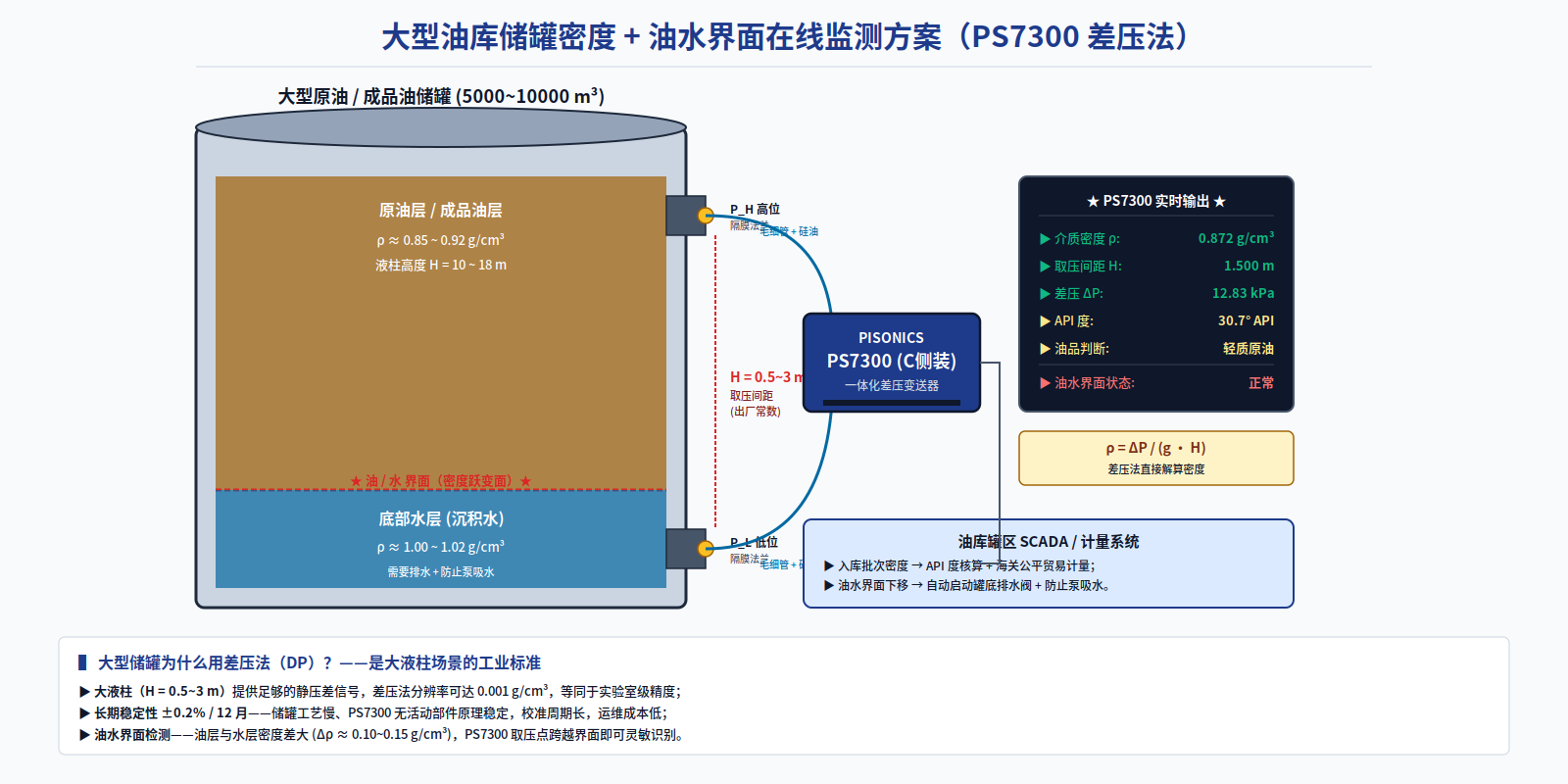
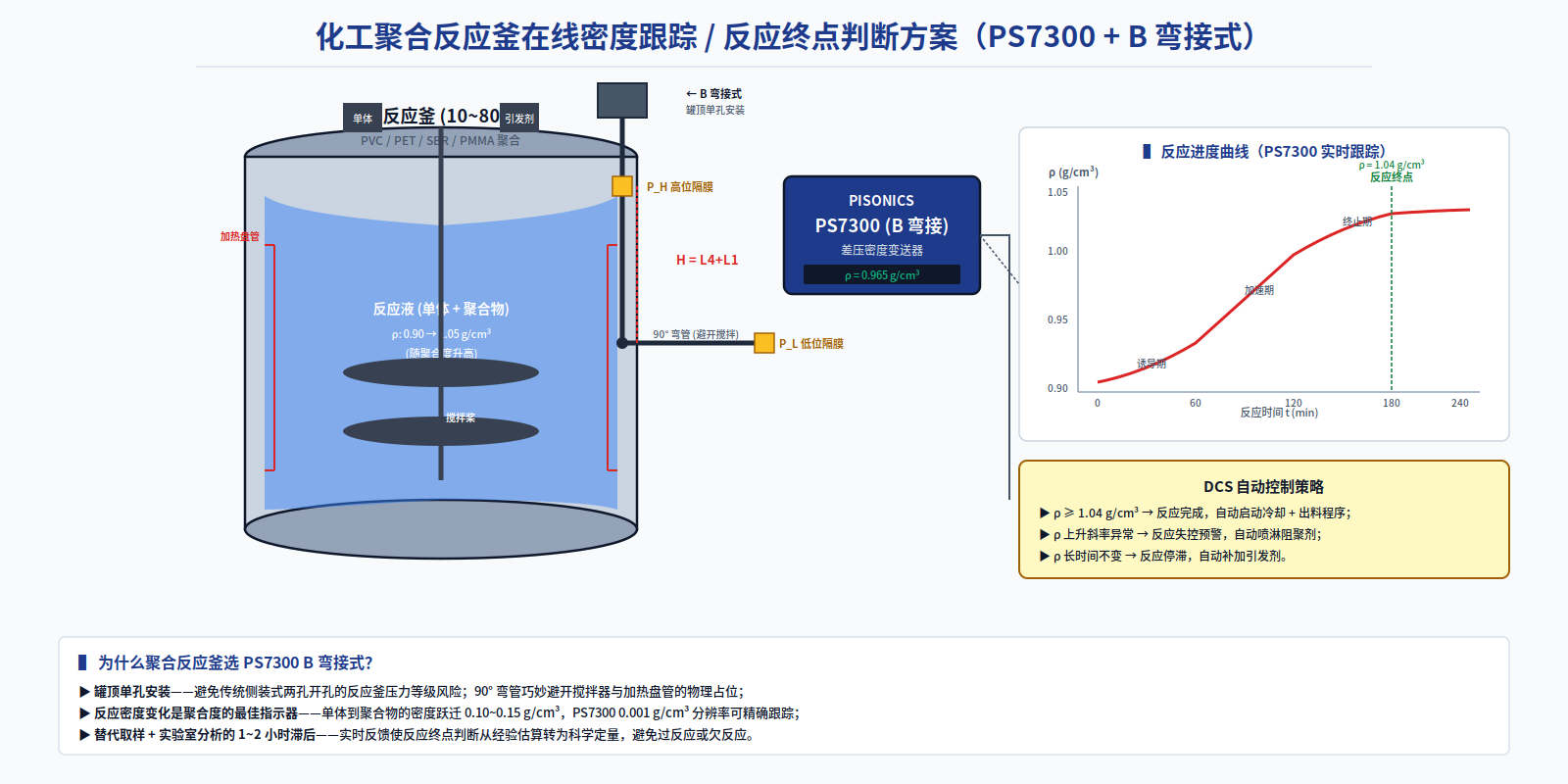
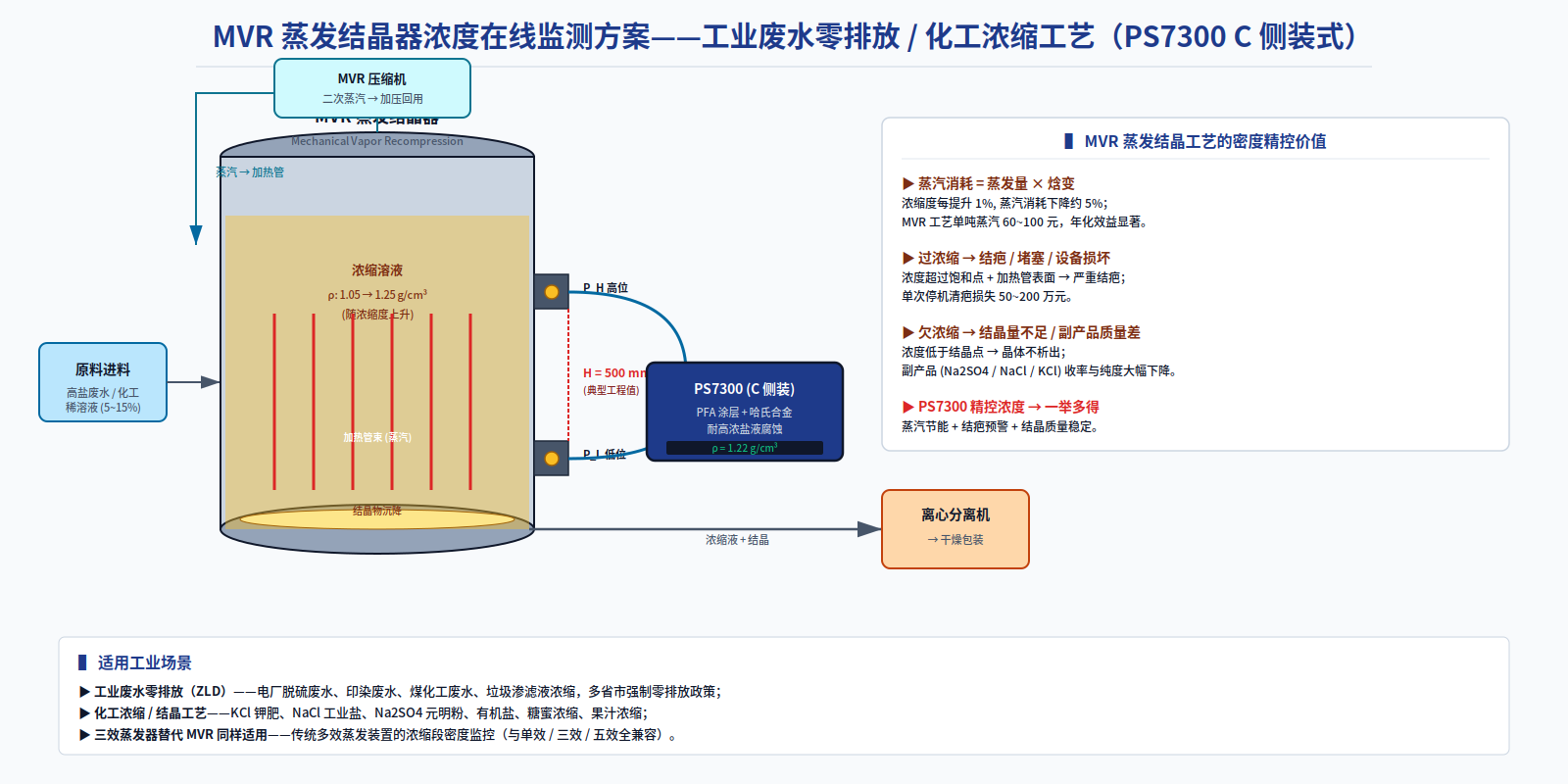
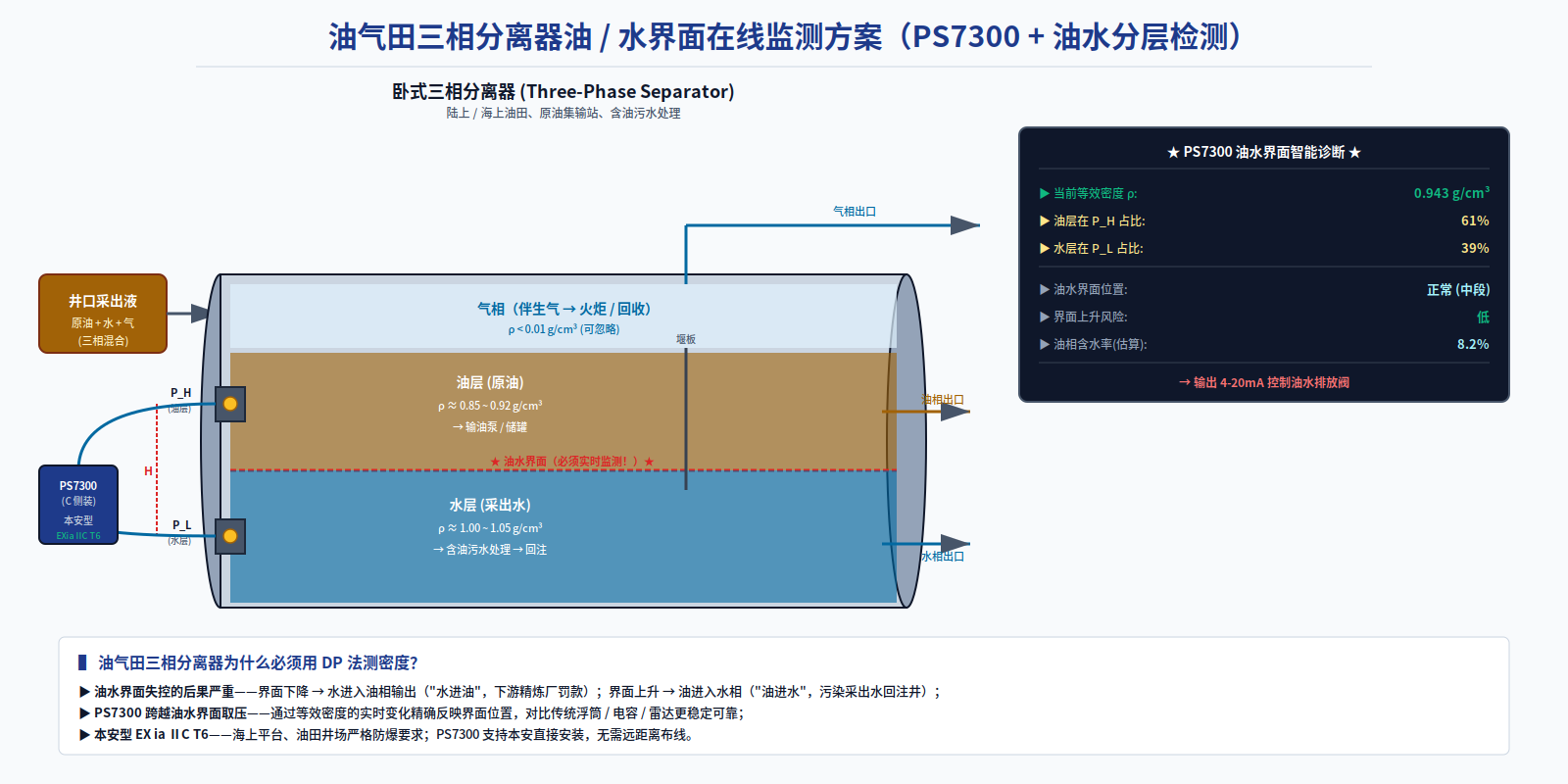
Based on the PS7 series’ five density/concentration-measurement principles (PS7000 acoustic impedance, PS7020 sound-velocity method, PS7100 spectroscopy, PS7300 differential pressure, and PS7400 tuning-fork technology), Xi’an Pisonics (PISONICS) has built a comprehensive portfolio of industrial-process measurement instruments, covering everything from solid-containing two-phase slurries to clean, homogeneous liquids, from single-component to multi-component systems, and from inline process monitoring to large-storage-tank metering. Among these, the PS7300 differential-pressure density meter—grounded in the classic ΔP = ρ · g · H physical principle and benchmarked against international mainstream brands such as E+H Deltabar PMD75/FMD77, Emerson Rosemount 3051SAL + 1199 remote-diaphragm-sealed models, and VEGA VEGADIF 65/85—represents a long-term, stable, low-maintenance industrial-standard solution for large storage tanks, tall liquid columns, and slow-process density monitoring.
Tailored to the process characteristics of the edible-oil/blended-oil industry, the PS7300 series of differential-pressure density meters offers full-dimensional selection and customization capabilities, covering installation types (A straight-tube, B elbow, C side-mount), wetted-material options (316L, Hastelloy, Monel, tantalum, titanium, PFA coating), process connections (HG/T20592, JIS, ASME, sanitary clamp), explosion-proof ratings (intrinsically safe ExiaIICT6, flameproof ExdIIBT4), and communication protocols (4–20 mA, HART, Modbus RS-485). For an in-depth discussion of your project’s specific operating conditions or to obtain a tailored selection proposal, please feel free to contact the technical-engineering team at Xi’an Pisonics at any time.