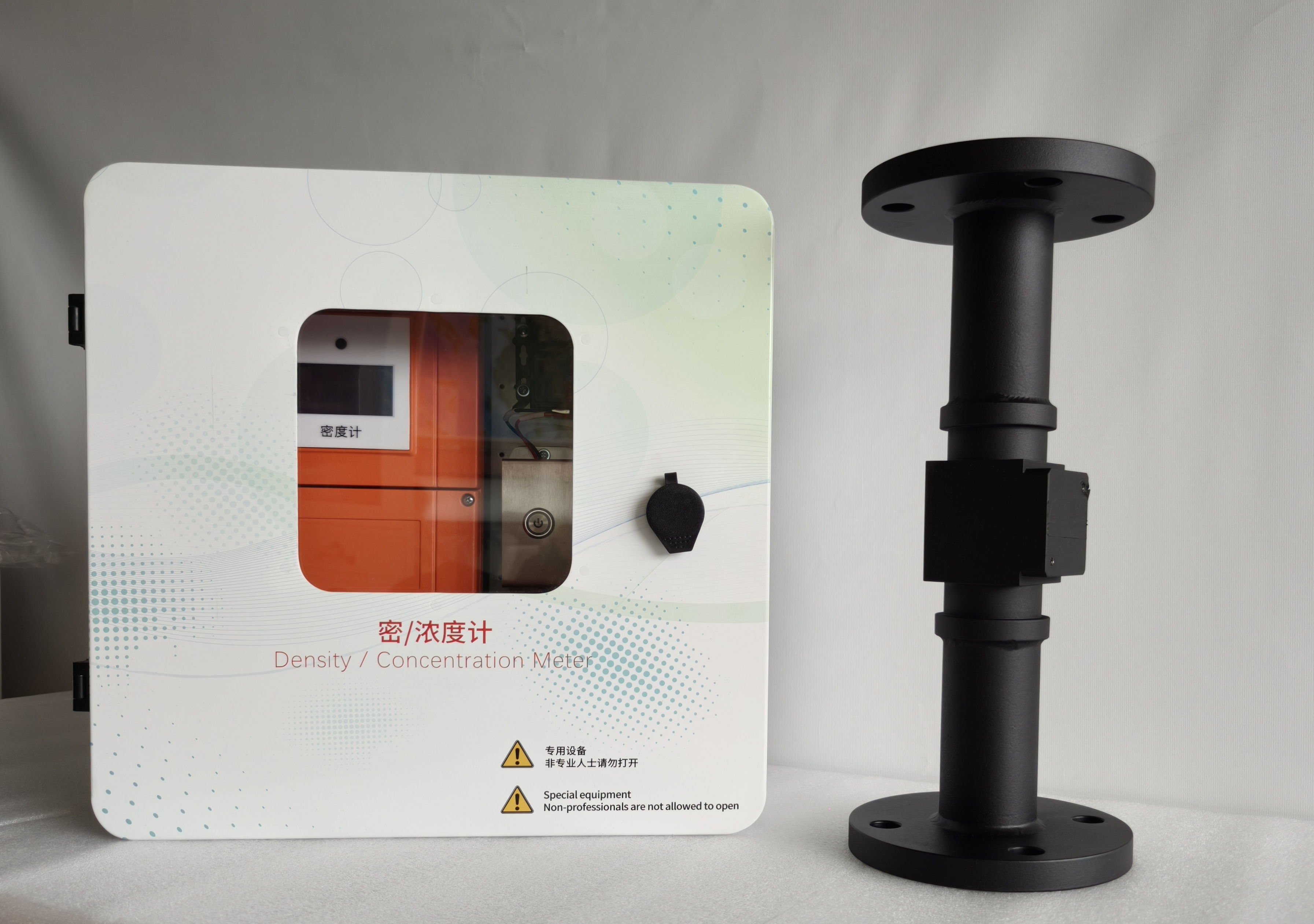
Overview
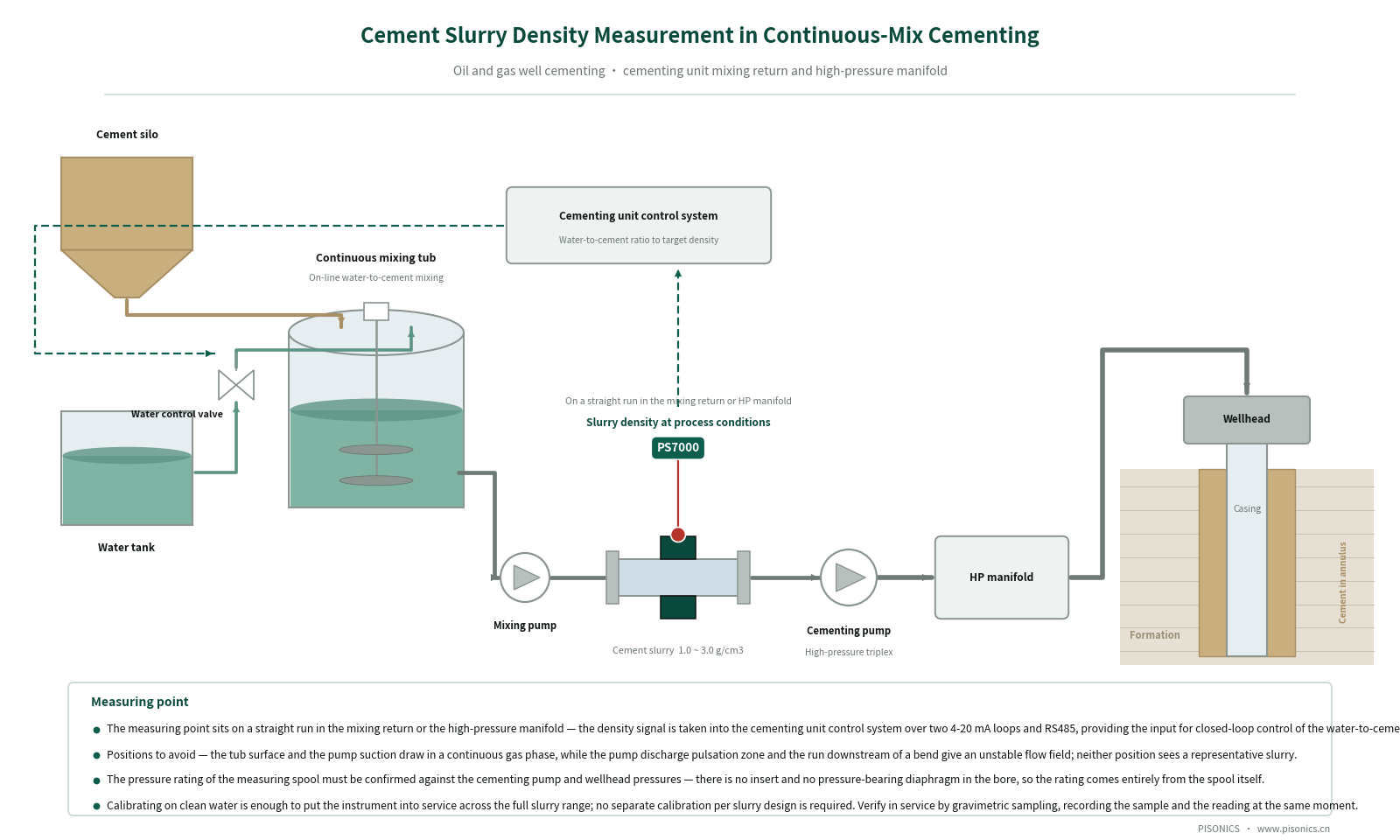
In oil-well cementing, slurry density is the job. Mix density decides hydrostatic head against formation pressure, the compressive strength the set cement will reach, and whether the annulus is displaced cleanly. A cementing unit blends dry cement, mix water and additives on the fly, so density has to be read continuously and fed back to the mixing control — a lab check after the fact is a post-mortem, not a control loop.
Typical challenges
- Slurry is abrasive and sets hard; anything that protrudes into the flow wears or gets buried
- Mix density changes fast during a job — the measurement has to keep up with the blender
- Entrained air from the mixing tub reads as low density on some principles and high on others, so a reading without an air diagnostic can be misleading
- Cementing units are mobile and cross borders; a sealed radioactive source brings licensing, transport documentation and a radiation-safety officer along with it
- Wellsite areas are often classified, so the instrument has to suit the zone
Recommended solutions
| Measuring point | Principle | Model |
|---|---|---|
| Cementing unit mix line — slurry density to the mixing control | Ultrasonic acoustic impedance | PS7000 |
| Recirculation / tub loop density | Ultrasonic acoustic impedance | PS7000 |
| Mix-water and additive solution concentration | Ultrasonic sound velocity | PS7020 |
| Existing line, no hot work possible | Ultrasonic attenuation (clamp-on) | PS7010 |
Why non-nuclear matters here specifically
Cementing units are the clearest case for replacing a radiometric densitometer, because the unit moves. A source that lives on a truck crossing borders carries transport paperwork, port and customs inspection, controlled storage between jobs and a licensed custodian — costs that recur on every mobilisation rather than once at purchase. An acoustic measurement removes that whole category. Compare: PS7000 vs Cs-137.
Selection notes
Tell us the line size, the density range you actually mix across (a 1.2–2.4 SG job and a narrow 1.85–1.95 SG job are calibrated differently), the maximum rate, and whether the area is classified. Air entrainment from the mixing tub is the single most common cause of a disputed reading, so ask any vendor how their instrument reports it rather than whether it is immune to it.