Optical Concentration Meter
inline refractometer · refractive index meter · spectroscopic concentration meter · online refractometer
Light passing a liquid is refracted and absorbed. Refractive index tracks total dissolved solids; absorption at characteristic wavelengths tracks specific components. One answers "how much", the other "which".
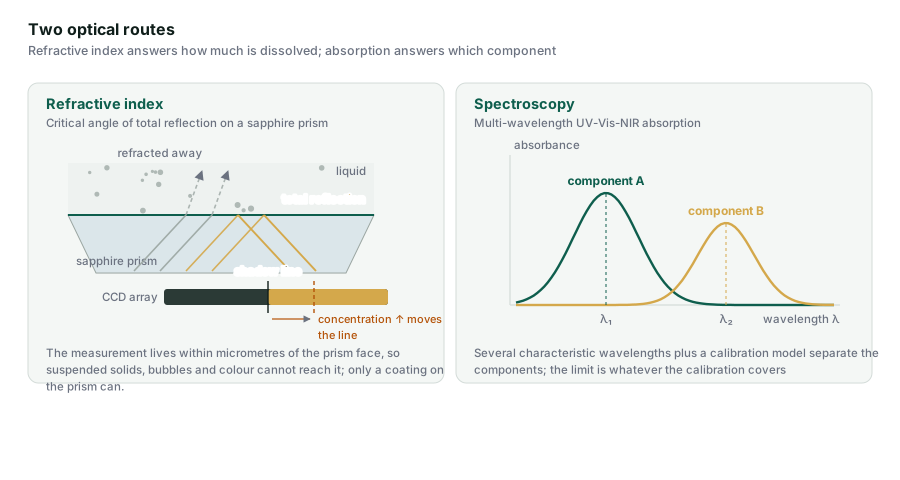
Tap the diagram to open it full size
Two optical routes that have almost nothing in common
Refractive index — how much is dissolved
Light crosses a sapphire prism towards the liquid and undergoes total internal reflection beyond the critical angle. The position of the resulting shadow line is set by the refractive index of the liquid, and a CCD reads that position. Refractive index against total dissolved concentration is a stable single-valued curve, so this instrument answers "how much is dissolved" — Brix, brine strength, acid concentration, glycol content, coolant ratio. PS7110 takes this route.
Its strength is often misunderstood: the measurement happens within a few micrometres of the prism face, so it is indifferent to suspended solids, bubbles and colour. Dark, opaque liquid measures perfectly well, because the light was never going to cross it. Its weakness is equally sharp: the prism has to stay clean. Once a film, an oil layer or crystal forms, the critical angle is set by that layer and not by the process.
Spectroscopy — which component
Different molecules absorb characteristically across the UV, visible and near-infrared. Measuring absorbance at several wavelengths and fitting a calibration model separates components — free chlorine and free alkali reported at the same time, or two acids distinguished in a mixture. PS7100 takes this route.
What a spectroscopic analyser can do is set by its calibration: it is accurate over the conditions the model has seen and extrapolates badly beyond them. Commissioning takes longer than for any other principle here, and the payoff is a multi-component answer nothing else on this page can give.
Against the other principles
A refractometer and a fork or Coriolis are not measuring the same thing: those measure density, this measures refractive index. In a binary solution the two are interchangeable; add a third variable — temperature, suspended solids, a second solute — and they diverge, and which one is "right" depends on what you are controlling.
Against ultrasonic sound velocity: both target clean liquid. Sound velocity does not care about a dirty window but does care about bubbles; refractive index does not care about bubbles or particles but does care about films. Dirty and gas-free points to optical; gassy and clean points to ultrasound.
The window is the whole story
Every optical concentration meter is accurate on the bench. On site, the difference between them is almost entirely whether the window stays clean. Three rules that hold up:
- Mount where the liquid moves and cleans the face. A probe in a dead zone fouls within a week.
- For film-forming media, fit steam or liquid purge and put the purge interval into the control logic rather than into someone's memory.
- Treat zero drift as a fouling alarm, not an instrument fault. A periodic water zero check is the single most effective maintenance routine for this class of meter.
Buying from China
CE marked; ATEX / IECEx varies by configuration and hygienic (3-A / EHEDG) options exist for food and beverage duty — confirm both against your specification before ordering. Quotations in USD or EUR on EXW, FOB Shanghai or CIF, with HS code and declaration of conformity. For a spectroscopic application, send the medium composition and its expected range with the enquiry: the calibration plan, not the hardware, decides whether the project succeeds.
Where it works
- Dissolved concentration: Brix, brine, acid and caustic strength, glycol and coolant ratio
- Dark or turbid liquids that do not form films — a refractometer needs no transparency
- Multi-component systems where the components must be reported separately (spectroscopic)
- Crystallisation control and evaporation end-point
- Food and beverage, fine chemicals, electronic chemicals, battery electrolyte
Where it doesn't
- Film-forming, oily or crystallising media with no purge available
- High-solids mineral slurry — not impossible, but the window maintenance does not pay
- Duties that need bulk density rather than dissolved concentration (use a fork, ultrasound or Coriolis)
- Complex mixtures with no way to collect enough calibration samples (spectroscopic)
Spectroscopic (UV-Vis-NIR)
1 models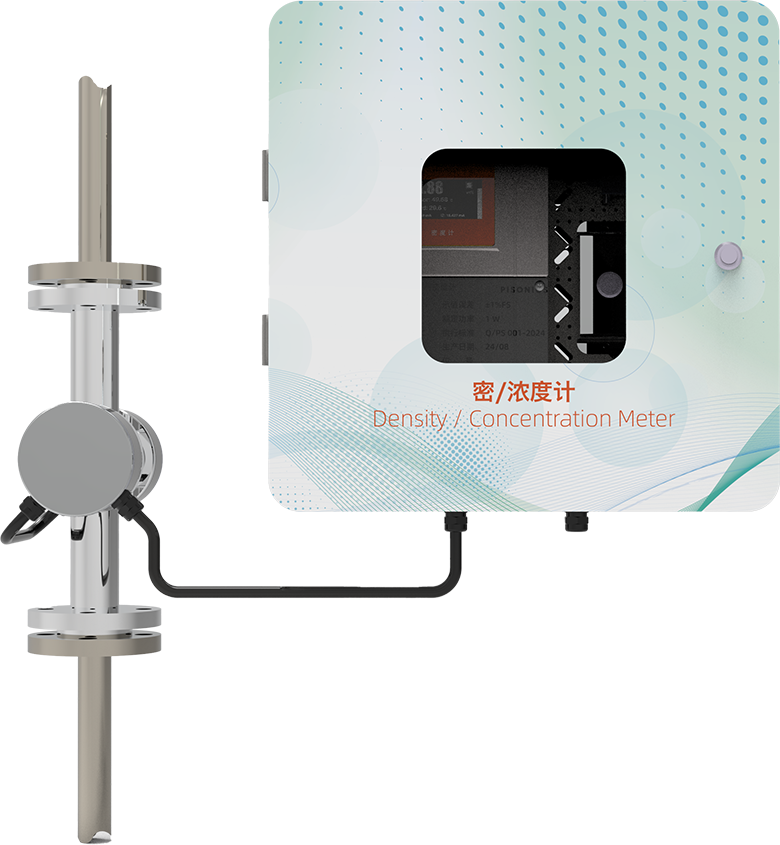
Refractive index
1 models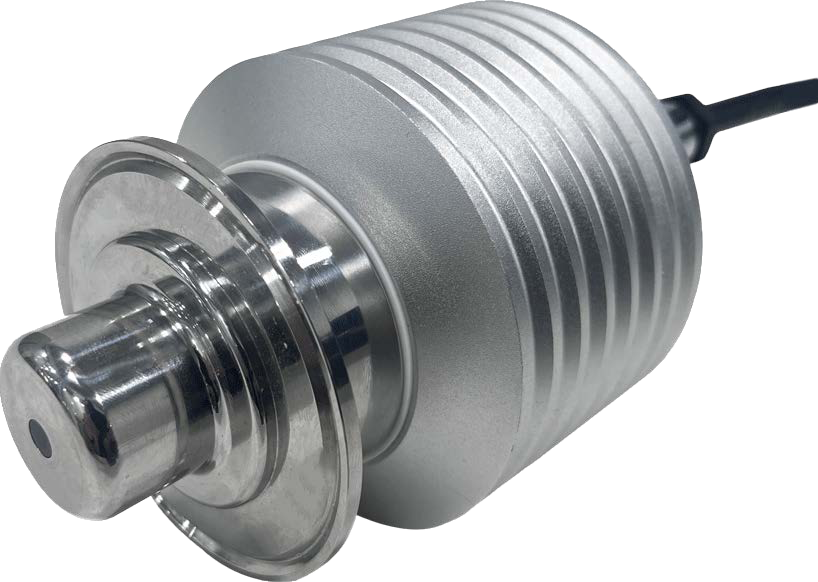
Common questions
Does the PS7110 prism need cleaning, and how often should it be checked?
Can PS7100 spectroscopy measure multiple components simultaneously?
Yes. The PS7100 employs a full-spectrum UV-Vis-NIR absorption method (200–1,700 nm) combined with an MLR multivariate linear regression algorithm, enabling the simultaneous output of concentrations for multiple components in a single measurement.
Typical applications:
- In chlor-alkali sodium hypochlorite production, it simultaneously measures effective chlorine and free alkali NaOH (model R² > 0.99);
- Dual-component analysis of mixed acid solutions (HCl + H₂SO₄);
- Semiconductor wet etching solutions (HF + HNO₃);
- Simultaneous monitoring of sugar content and alcohol content in pharmaceutical fermentation broths.
The multi-component capability requires preliminary modeling; Pisonics will develop a dedicated MLR model in its headquarters laboratory based on the customer’s media samples, with a modeling cycle of 2–4 weeks.
Get a free field assessment
Tell us your medium, process and what you're measuring — we'll match the right principle and model.