PISONICS | Xi’an Pisonics
PS7000 Series
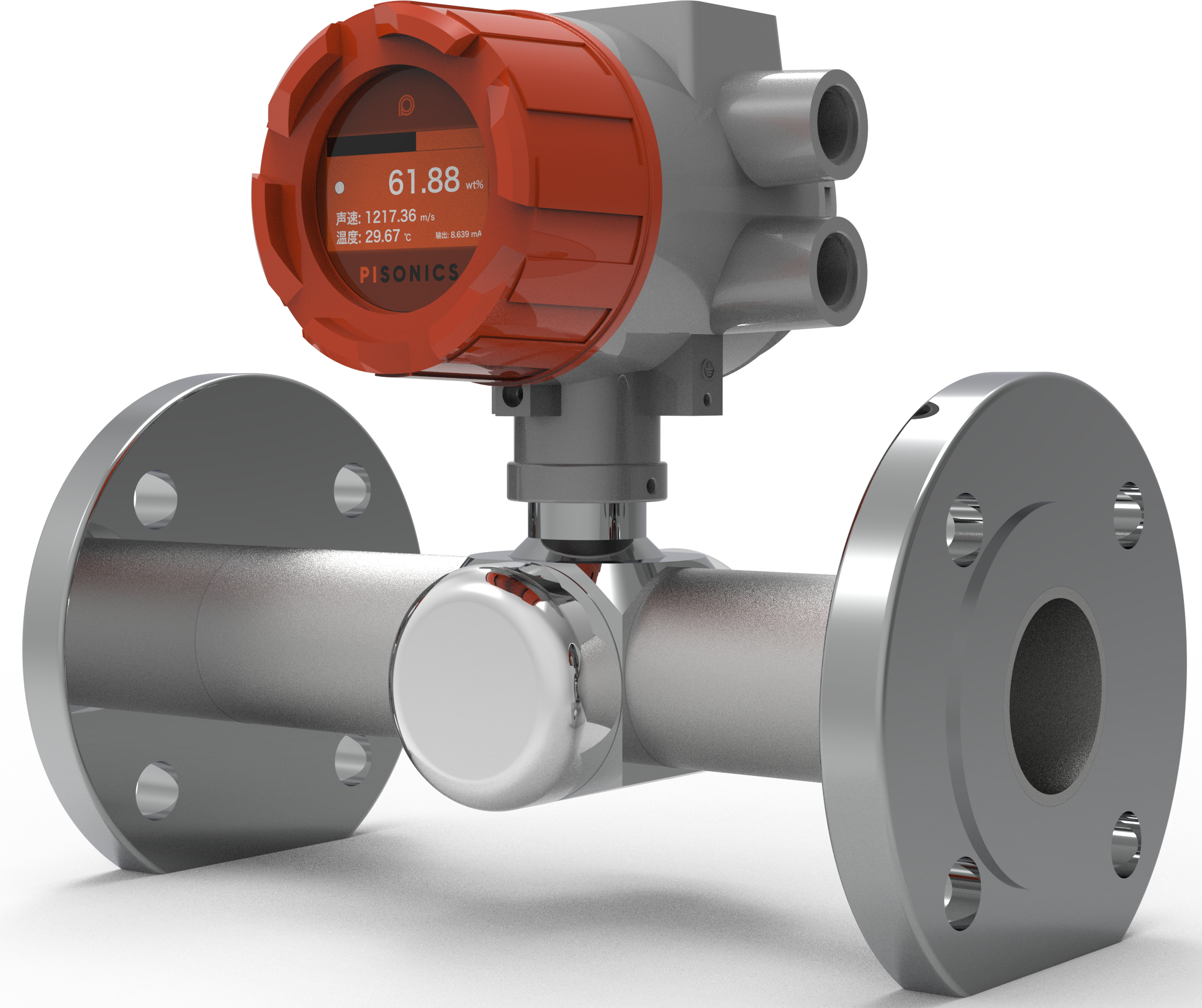
Ultrasonic Slurry Density Meter
Non-nuclear measurement · engineered for aerated slurry
Product Overview
The PS7000 series ultrasonic slurry density meter is a non-nuclear inline slurry density meter developed by Xi’an Pisonics Information Technology Co., Ltd. (PISONICS). It uses no gamma-ray source and therefore involves no radiation protection and none of the associated environmental approval, registration and decommissioning procedures. It is designed for inline slurry density control in non-ferrous metallurgy, thermal power, coal preparation, chemical and metallurgical processing, and potash and salt chemistry.
Compared with conventional single-frequency reflective ultrasonic density meters, the defining capability of the PS7000 is that it stays stable in aerated slurry: from broadband excitation, IQ-gate feature extraction and dual-gate ratio drift rejection through to statistical outlier rejection and adaptive filtering, the complete signal chain is engineered against bubble interference, and the degree of aeration is quantified into a readable, transmittable and alarmable diagnostic value. Five parallel interfaces are provided — 4–20 mA, RS485 Modbus-RTU, HART, 4G and Bluetooth — linking the instrument, the PC software and the cloud platform for remote configuration, guided automatic calibration and over-the-air firmware update.
How It Works
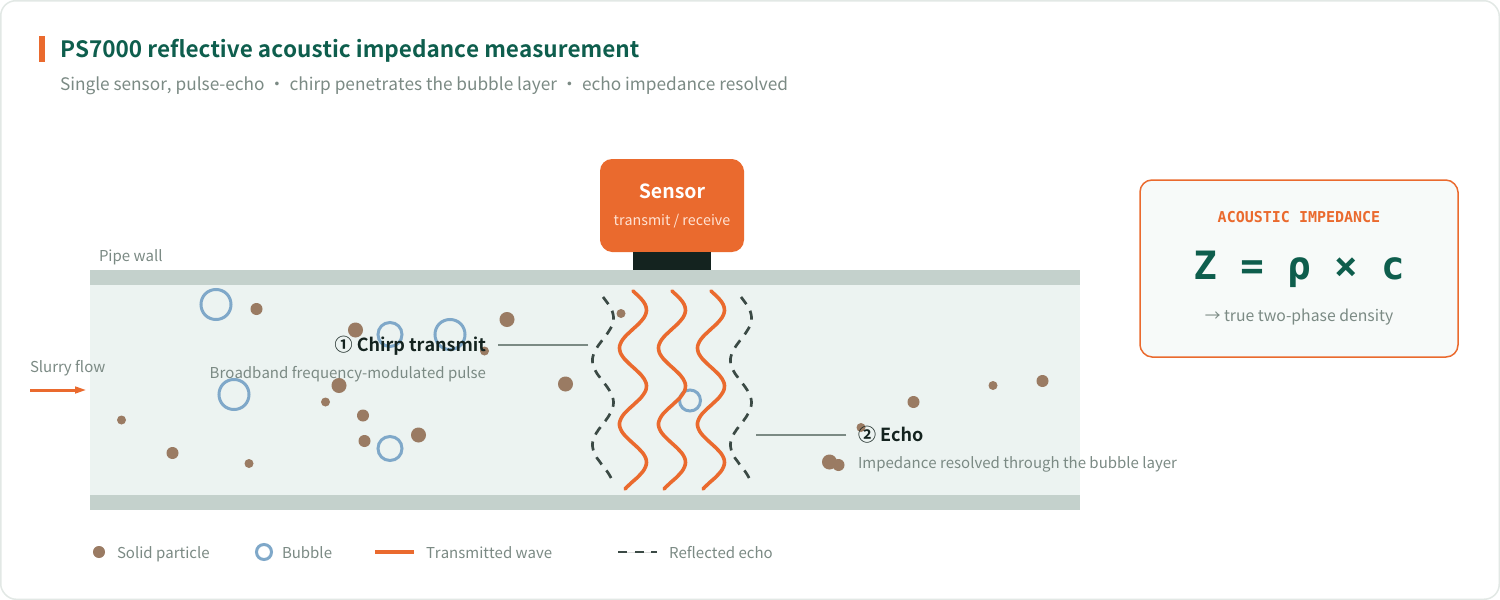
Acoustic impedance measurement rests on one core physical effect: when ultrasound travelling in a medium meets a solid–liquid interface, the strength of the echo is determined by the difference in acoustic impedance across that interface, and acoustic impedance Z = density ρ × sonic velocity c is directly related to slurry density.
The PS7000 uses a single sensor that both transmits and receives. It continuously emits linear frequency-modulated (chirp) ultrasonic pulses and acquires the echo in real time. The broadband nature of a chirp signal penetrates the bubble layer and suppresses multiple reflections, and the transmitter resolves the acoustic impedance signature of the echo to recover the true slurry density.
→ The higher the slurry density, the greater the acoustic impedance and the more pronounced the echo signature — which gives the PS7000 a better signal-to-noise ratio at high solids content, in clear contrast to transmission-based methods that depend on penetration. The sensor makes a single-point reflective measurement over a short acoustic path: it is independent of pipe material and lining thickness, and needs no acoustic couplant.
Core Advantages
Technology / feature | Customer benefit |
Chirp acoustic impedance algorithm | Penetrates the bubble layer and suppresses multiple reflections, recovering the true density of the mixture |
Non-nuclear, zero radiation | No gamma radiation protection, and none of the licensing, registration, annual inspection or decommissioning burden |
Non-intrusive sensor | Wetted but not protruding into the flow; no moving parts, corrosion-, clog- and wear-resistant |
Purpose-specified sensor material | High surface finish, wear- and fouling-resistant; material selected to the corrosivity and abrasiveness of the medium |
Flanged measuring spool | Installed in a straight run; the pipe need not run full as long as the sensor face stays submerged, so small liquid volumes can also be measured; linings available for aggressive and abrasive duties |
Two mounting methods | Spool-piece needs no hot work and can be pre-calibrated at the factory; weld-in needs no pipe cutting and goes straight into the existing line. In both cases the transmitter is wall-mounted clear of pipe vibration and radiant heat, and easy to read and service |
Four-layer bubble rejection | Broadband excitation + IQ gate + statistical outlier rejection + adaptive filtering, addressing the reading offset and instability caused by aerated slurry; dual-gate ratio drift rejection is available as an option |
Aeration and drift are traceable | Aeration index, bubble flag, dual-gate ratio and echo energy are transmitted with the primary variable, so field anomalies can be substantiated |
Five interfaces in parallel | 2 × 4–20 mA + RS485 Modbus-RTU + HART + 4G + Bluetooth; DCS/PLC, handheld communicator, mobile device and cloud can all be connected at the same time |
NAMUR NE43 compliant output | On fault the output goes to 3.5 mA low alarm (ex works); out-of-range readings run into the 3.8 / 20.5 mA bands, so fault, out-of-range and valid measurement stay distinguishable at the DCS and a plausible-but-dead reading is avoided |
Identical calibration maths on instrument and PC | Instrument menu and PC software return the same a, b and r² for the same calibration points, so the result does not depend on the tool used |
Inline calibration without shutdown | Multi-point regression from sampling and weighing with automatic r² assessment; a calibration failing the criterion is rejected, not written to the instrument |
Remote OTA firmware update | Dual-slot with CRC-32 and device-type verification; an interrupted update retains the previous firmware and never affects calibration data |
Ex / CE certification | Ex d IIC T6 Gb available; EU CE certified |
Stability in Aerated Slurry
Entrained air is the most common cause of failure in inline slurry density measurement: the acoustic impedance of gas differs enormously from that of liquid, introducing strong scattering and multiple reflections into the echo, so that a conventional single-frequency reflective instrument reads high, jumps, or loses lock altogether. The PS7000 builds four layers of online protection from transmission through to output, plus an optional fifth layer of dual-gate ratio drift rejection.
Beyond that, the instrument does not treat entrained air as noise to be hidden; it quantifies it into a process value that can be read and acted on. The 0–100 aeration index and the bubble flag are output together with the primary variable, can be transmitted to the DCS over Modbus, and can serve as an alarm condition on the cloud platform. The index is derived from the stability of the measurement process itself rather than from absolute signal strength, and is used to distinguish a genuine rise in concentration from an apparent rise caused by aeration.
Note: the PS7000 is designed to measure stably in aerated slurry, not to deliver an accurate density at any level of entrained air. At measuring points with persistent heavy air entrainment — severe pump suction cavitation, or directly above an aeration lance — the reading should be interpreted together with the aeration index, and the measuring point should preferably be moved to a vertical riser or a pump discharge section with less entrained air.
Typical Applications
Industry | Typical measuring points |
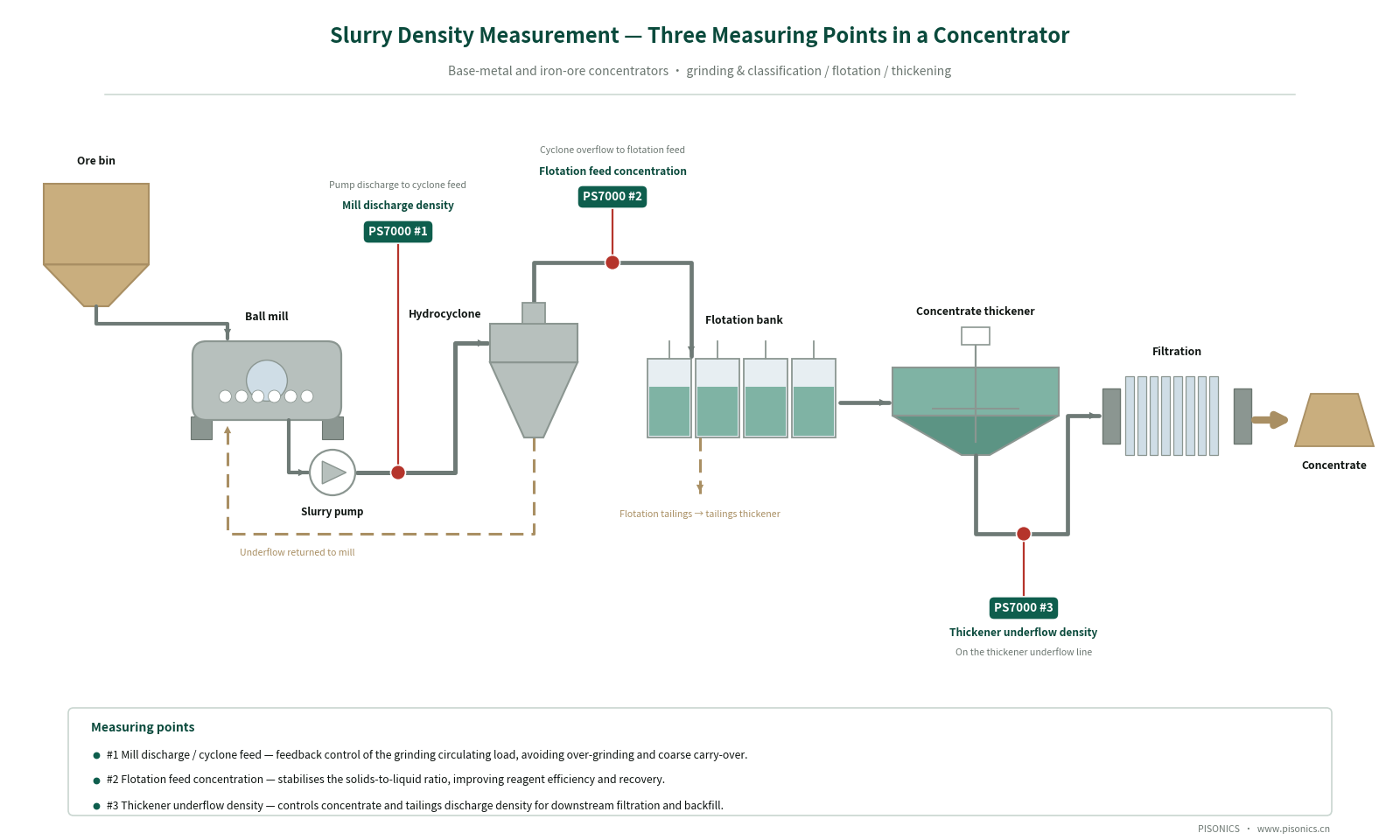
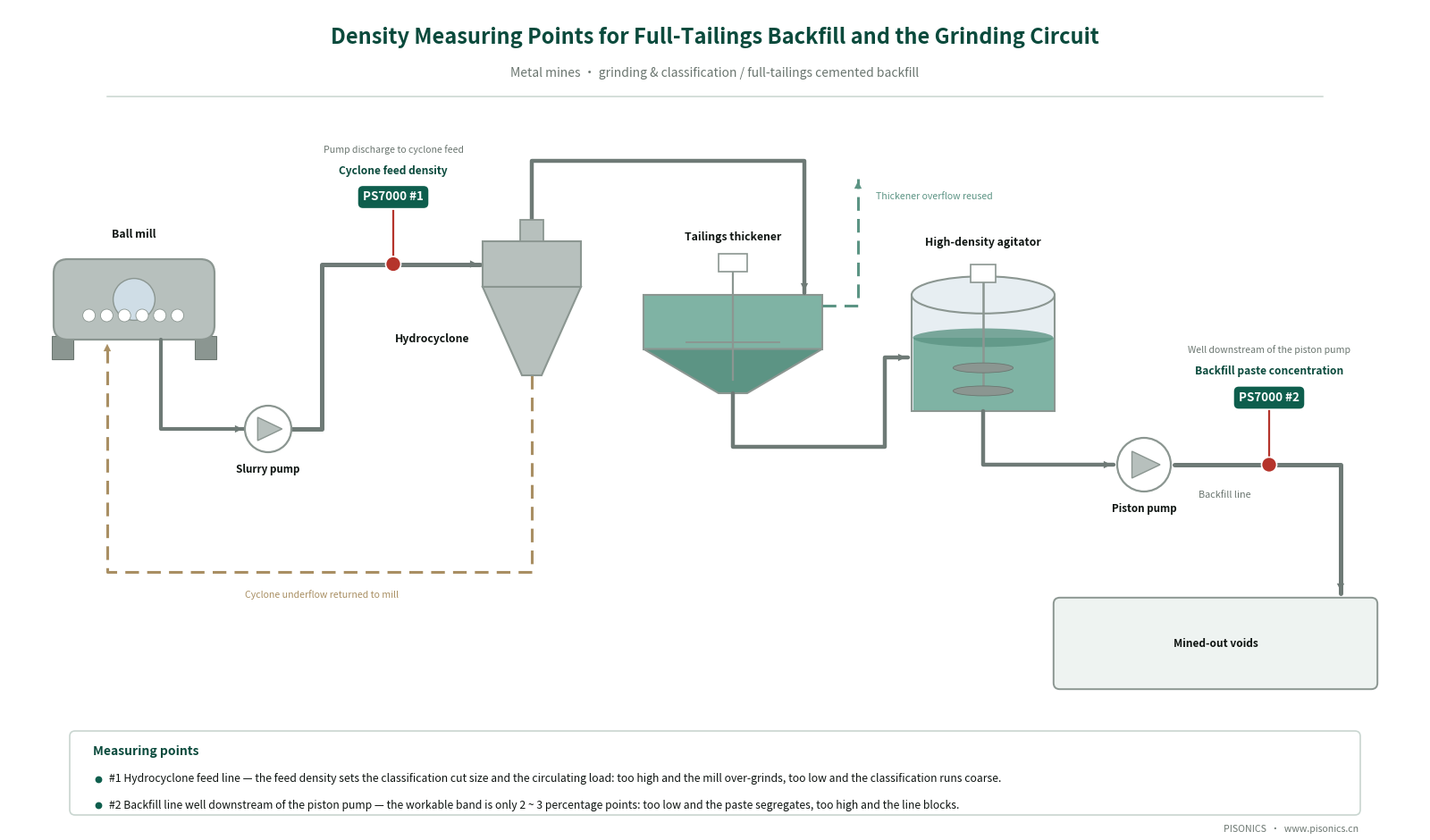
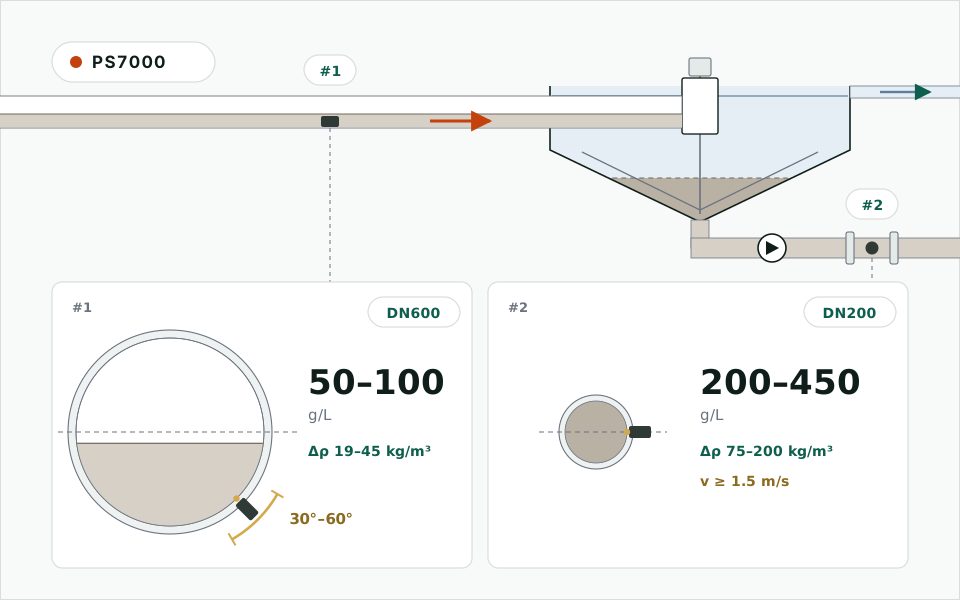
Non-ferrous mining slurry | Concentrator feed and discharge density, flotation density, thickener underflow and cyclone overflow, grinding circuit density, tailings and backfill plant discharge slurry concentration |
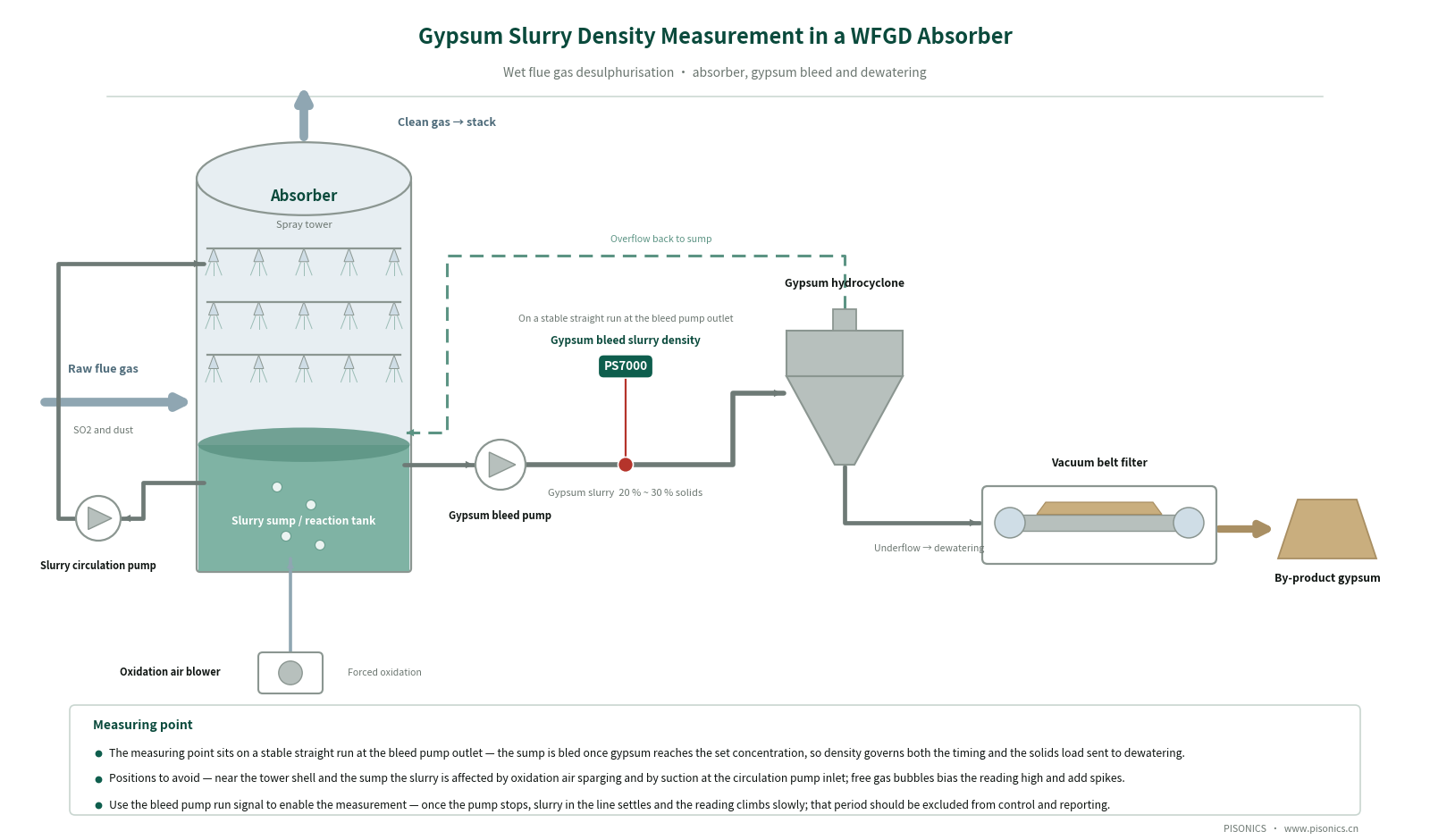
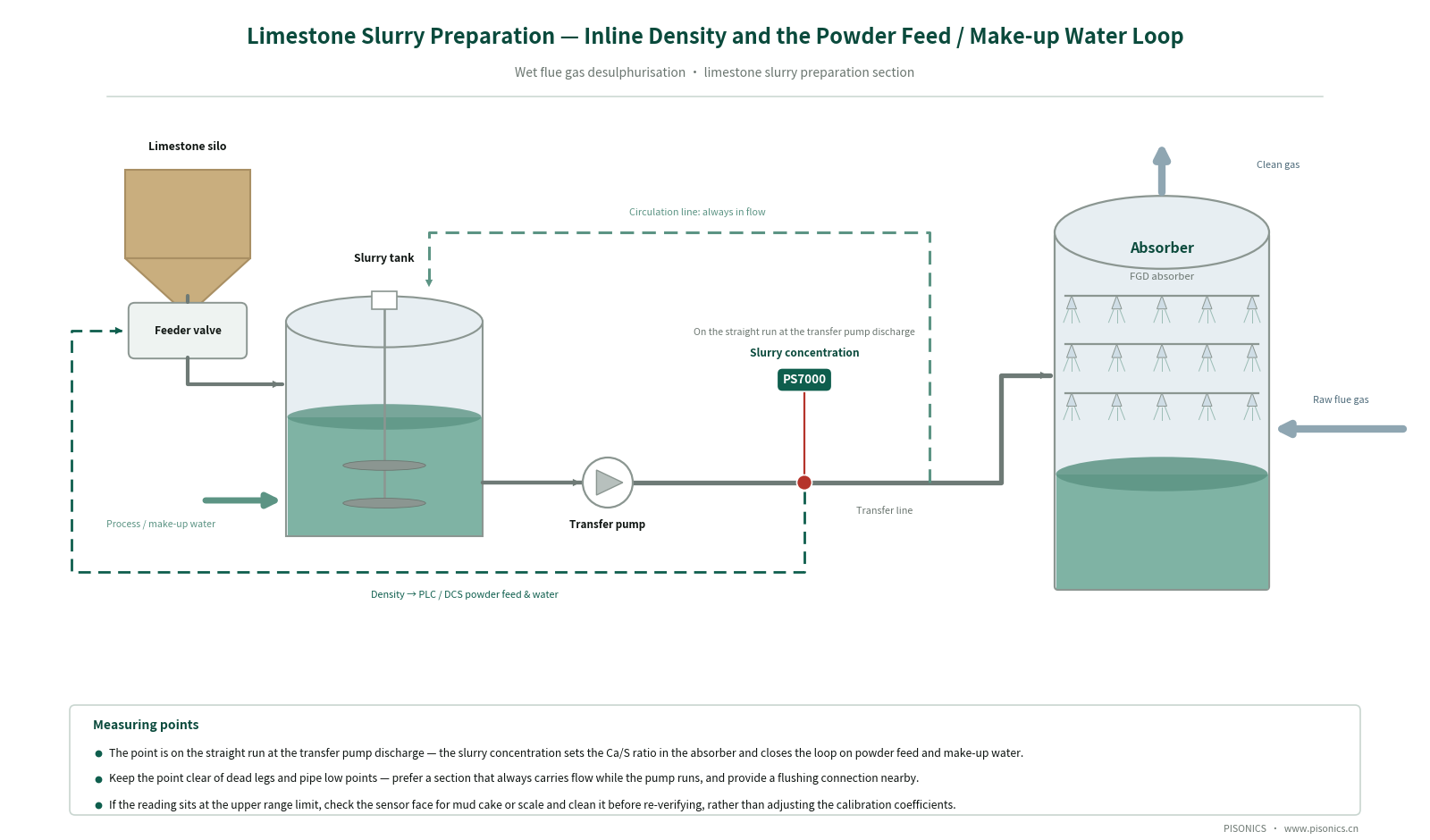
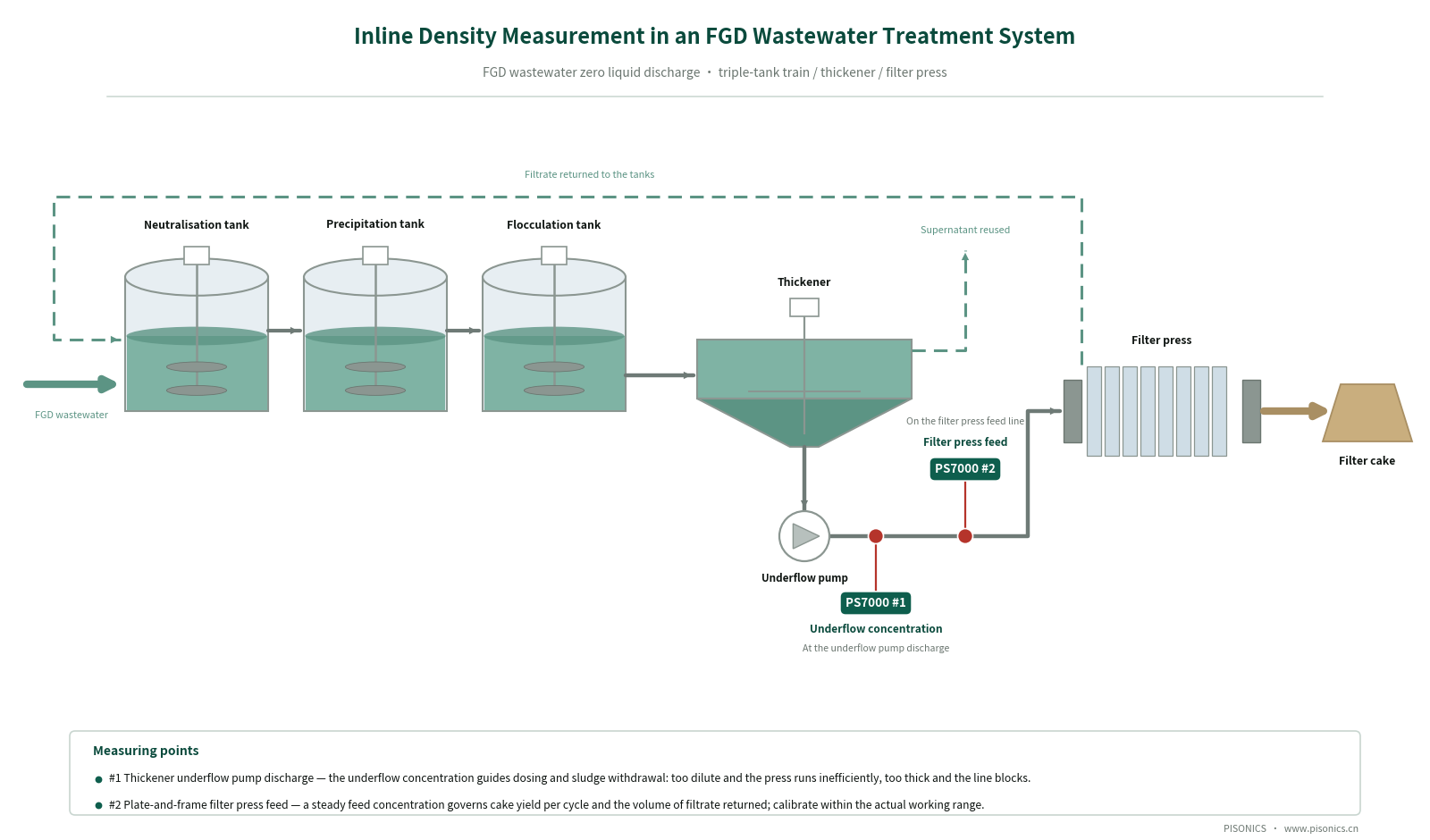
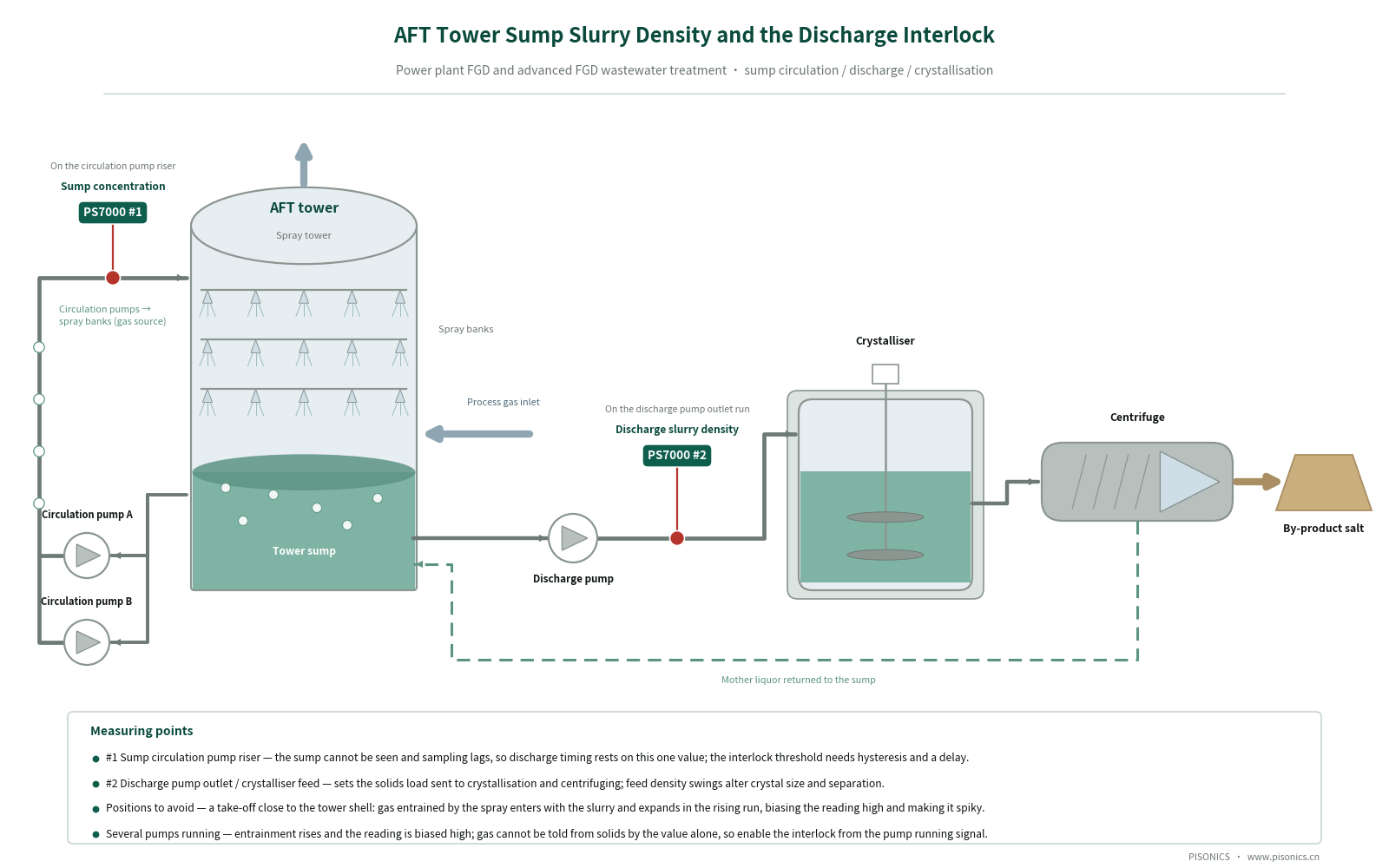
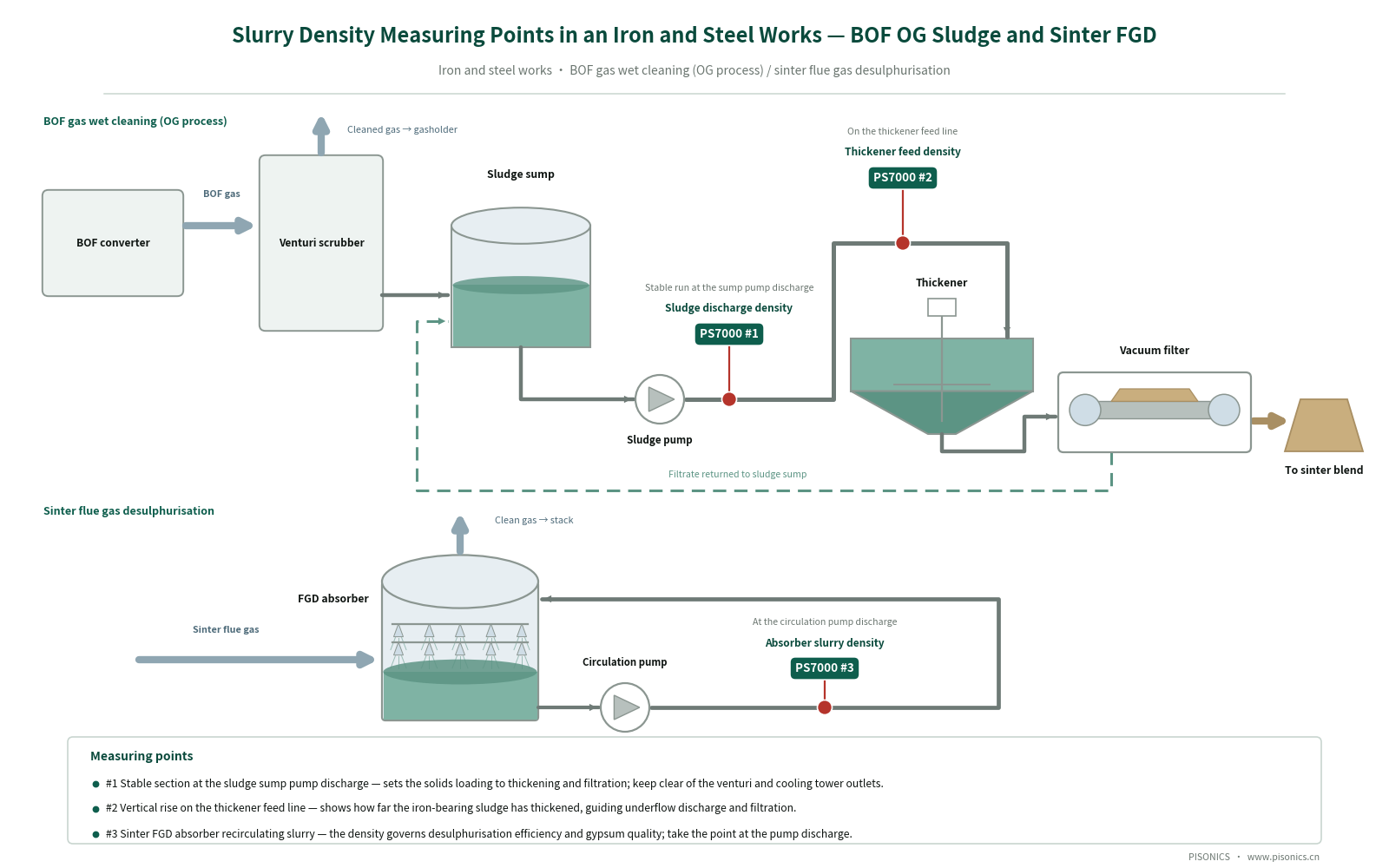
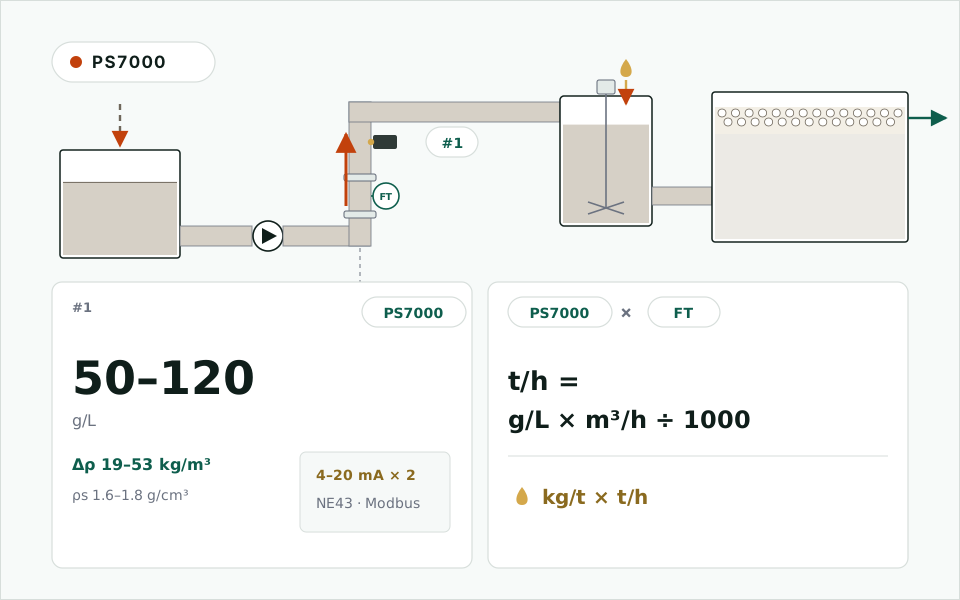
Power plant flue gas treatment | Limestone slurry preparation, gypsum slurry discharge from the FGD absorber, AFT high-concentration slurry treatment tower, desulphurisation wastewater concentration pond underflow |
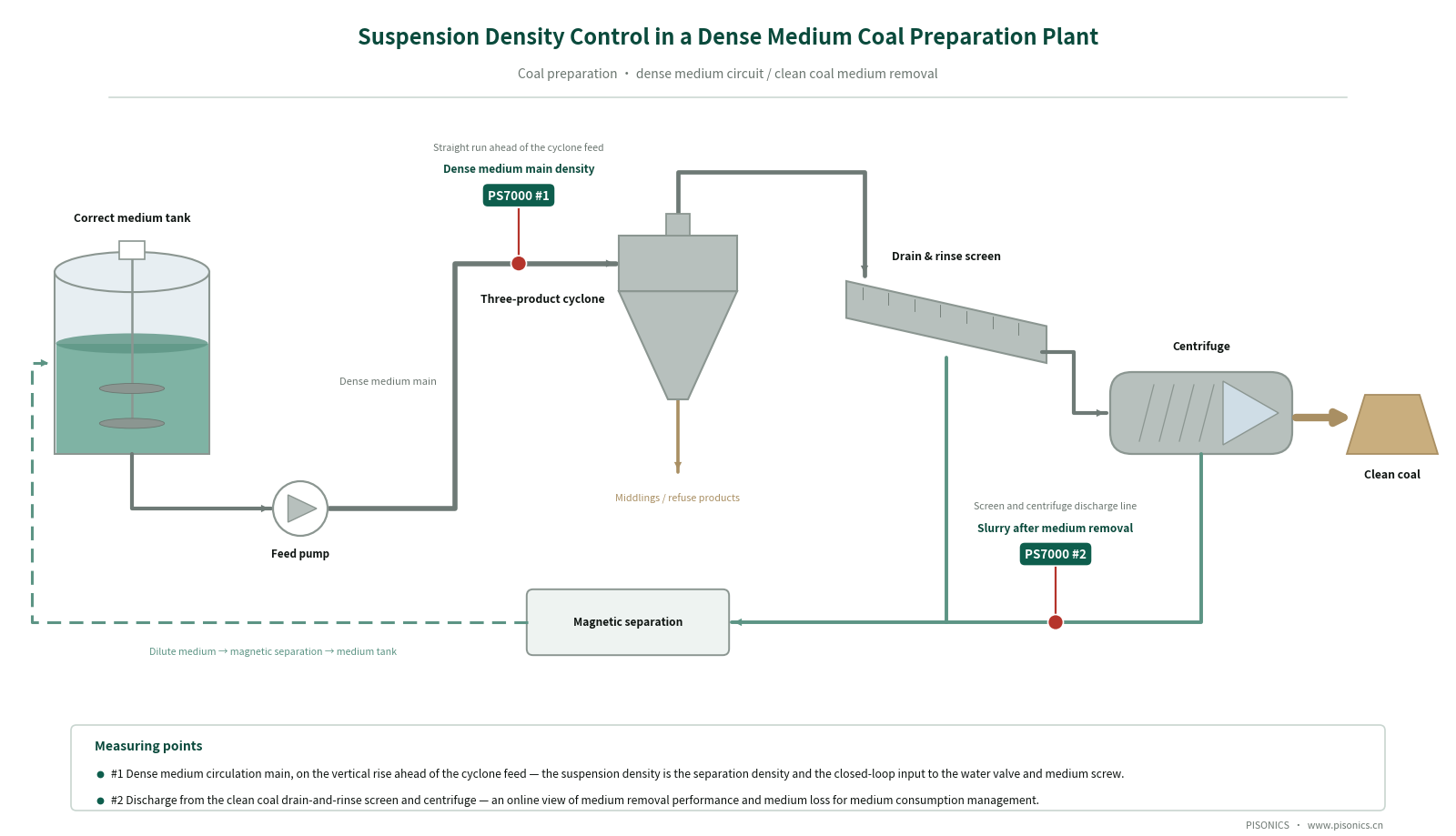
Coal and coal preparation | Dense-media suspension density (which sets the separation density), coal slurry water concentration, thickener underflow, coal-water fuel |
Steel desulphurisation and coking | Desulphurisation slurry density in the sintering, pelletising and coking processes; converter OG dedusting slurry concentration |
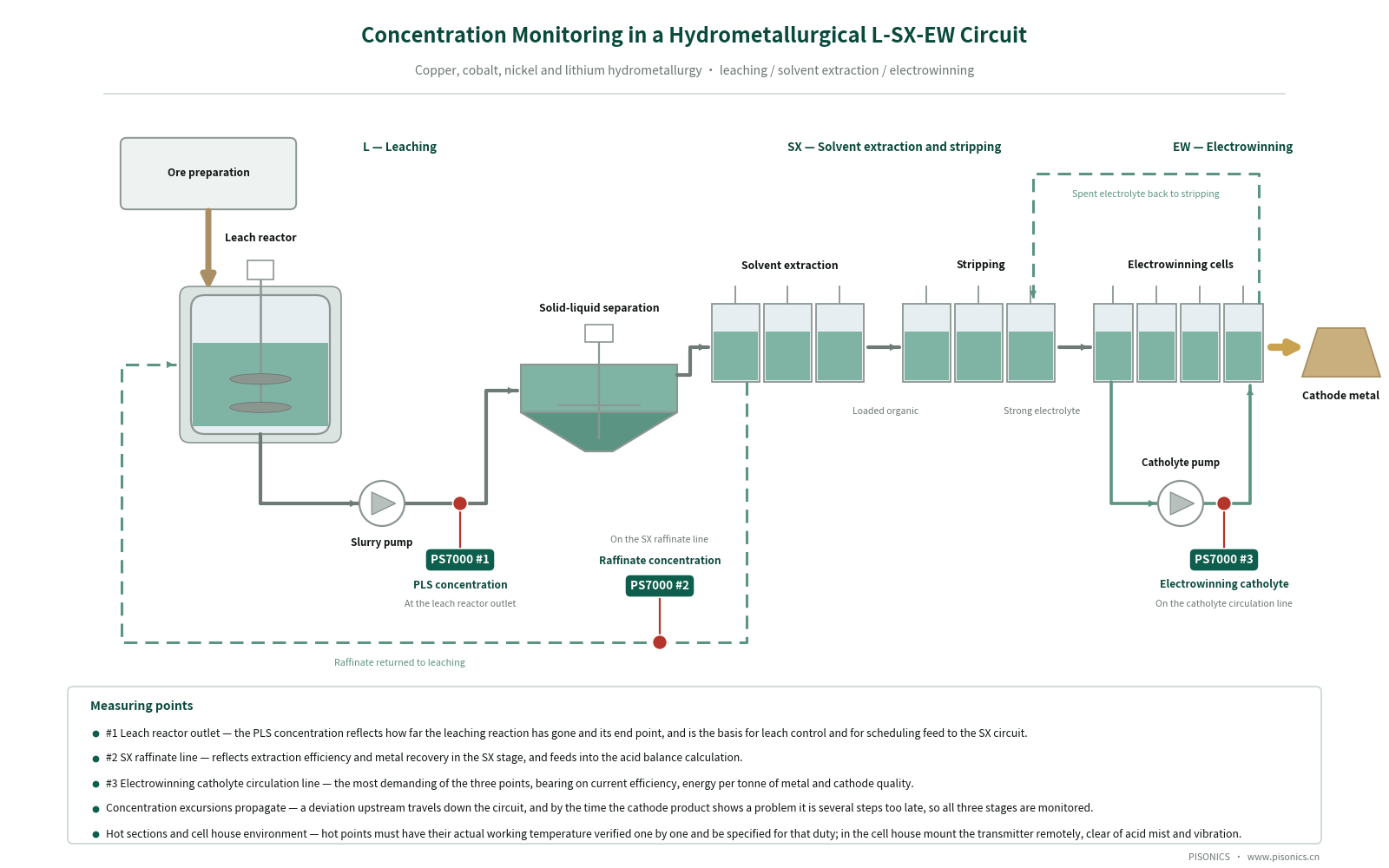
Hydrometallurgy and refining | Pregnant leach solution (PLS), raffinate and electrowinning catholyte concentration, across copper / cobalt / nickel / lithium refining |
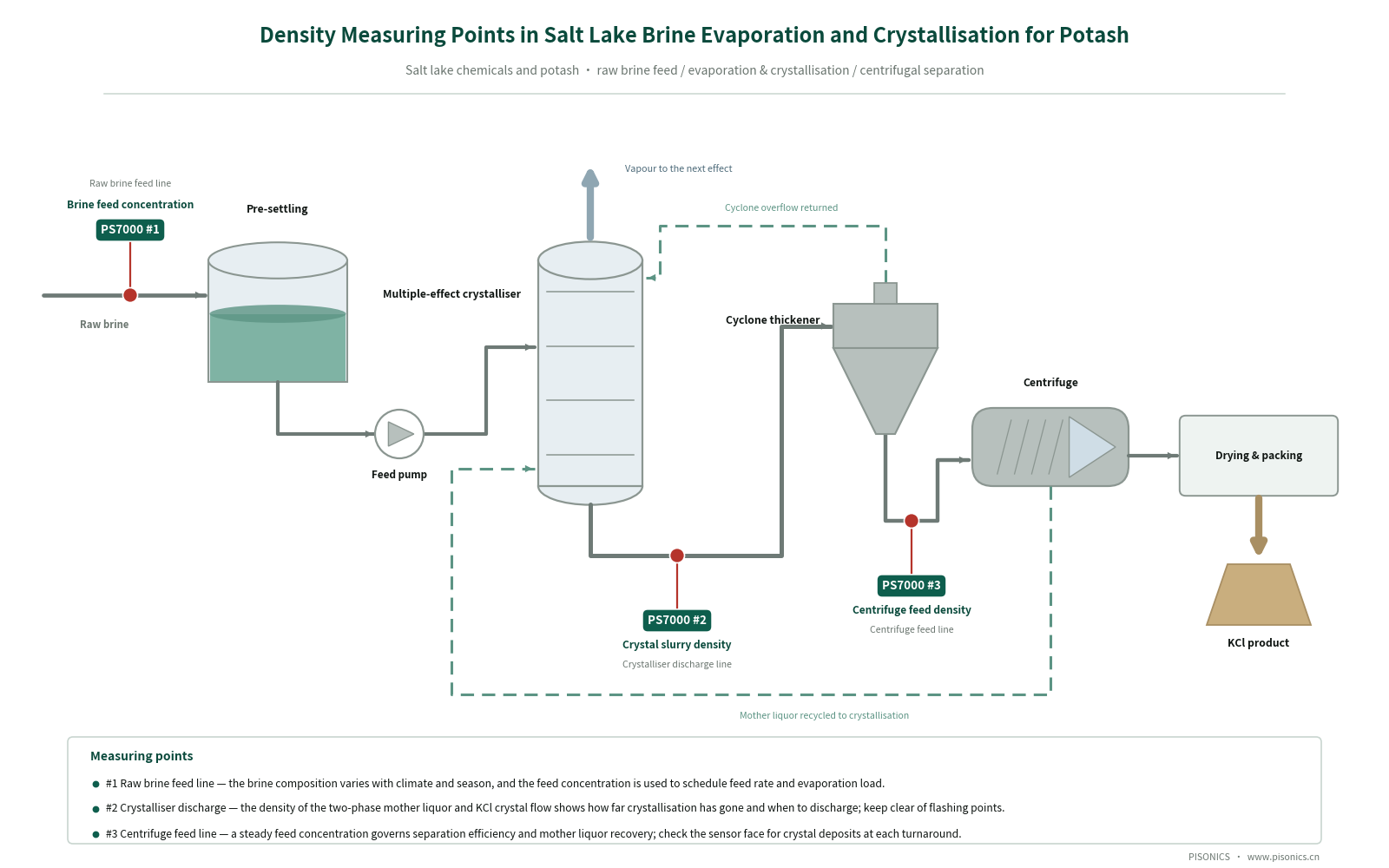
Chemical and fine chemical | Potash recovery from salt-lake brine, two-phase flow in evaporation and crystallisation, acid, alkali and absorption liquids, reactor slurry concentration |
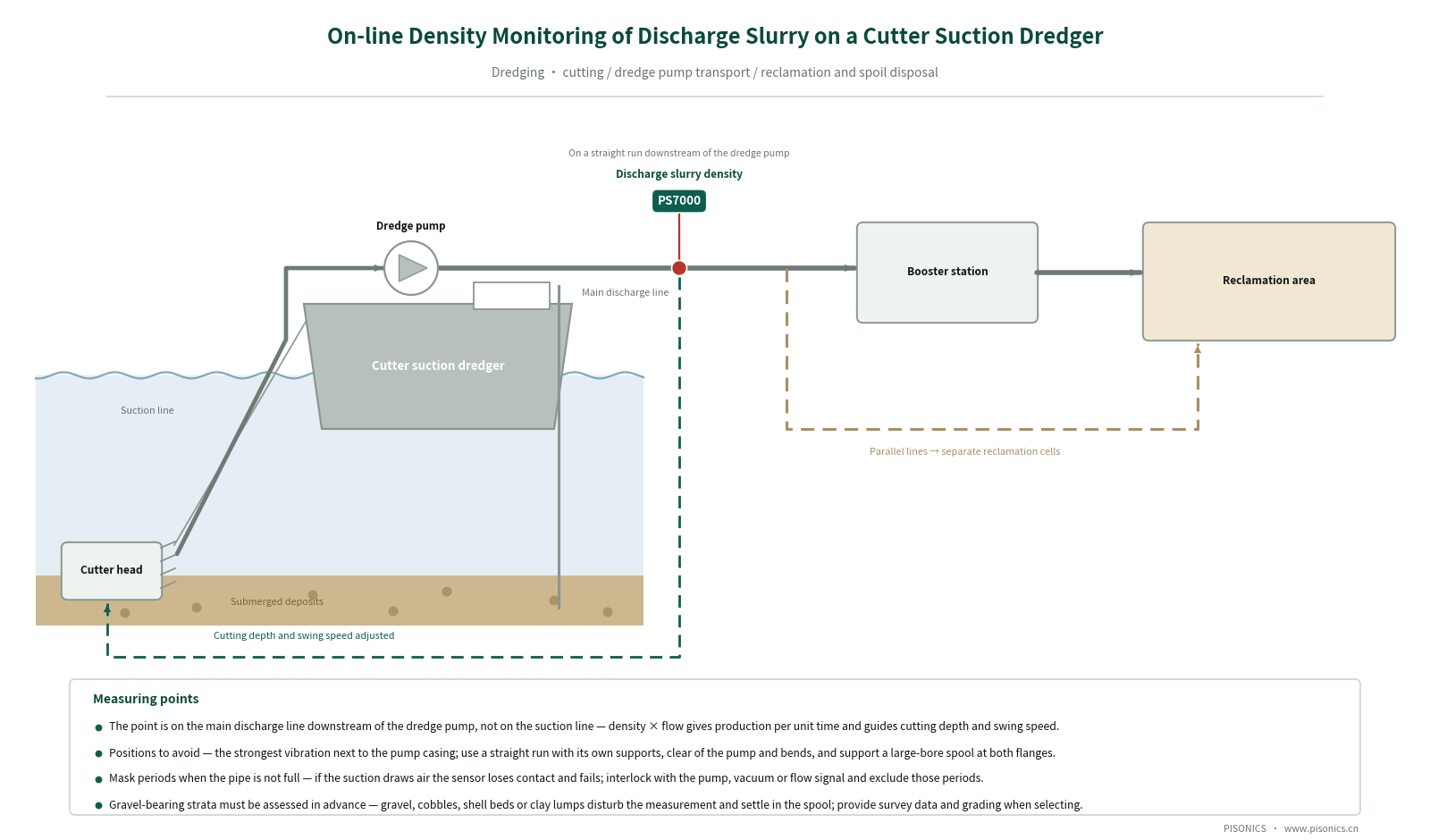
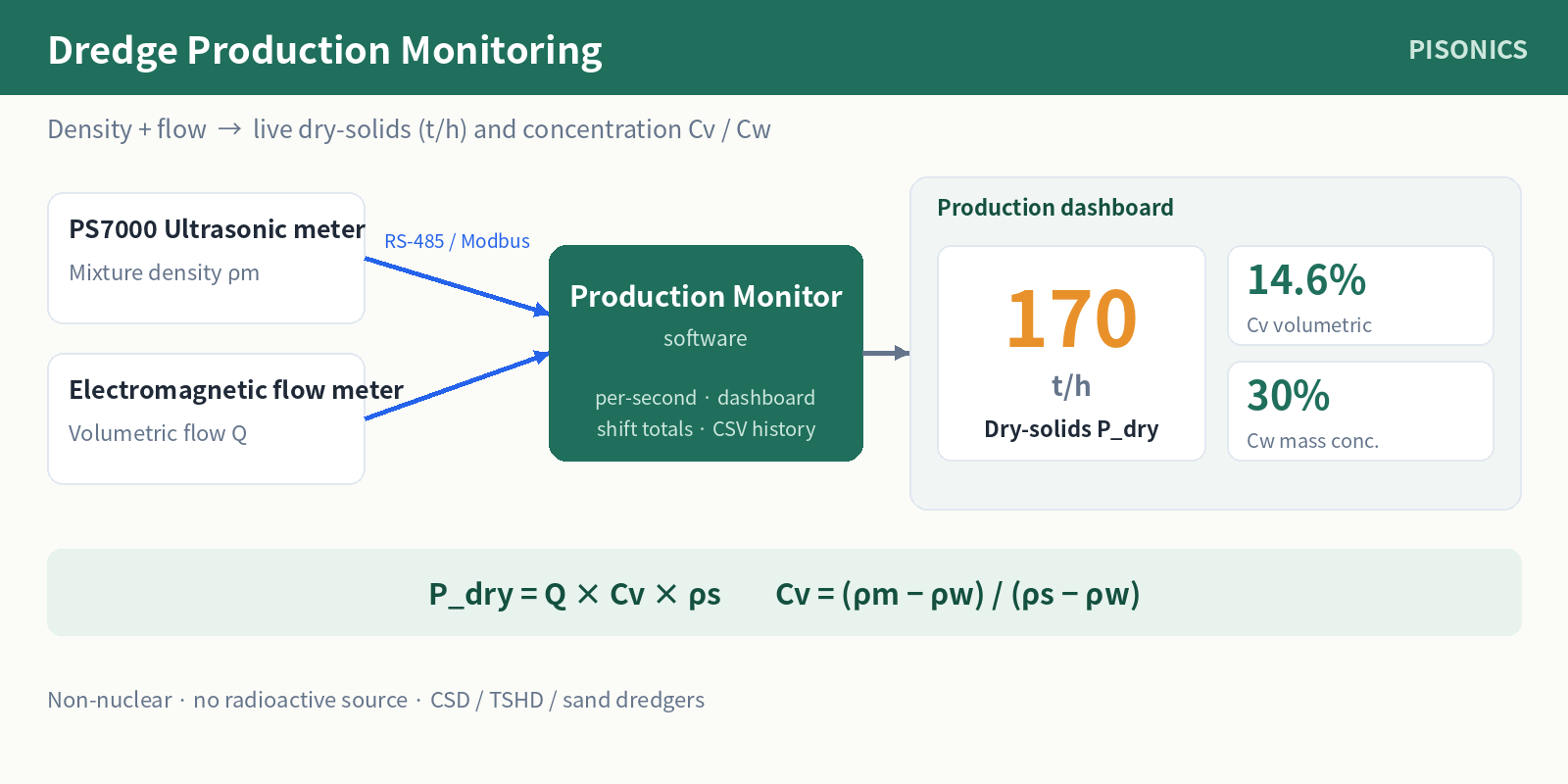
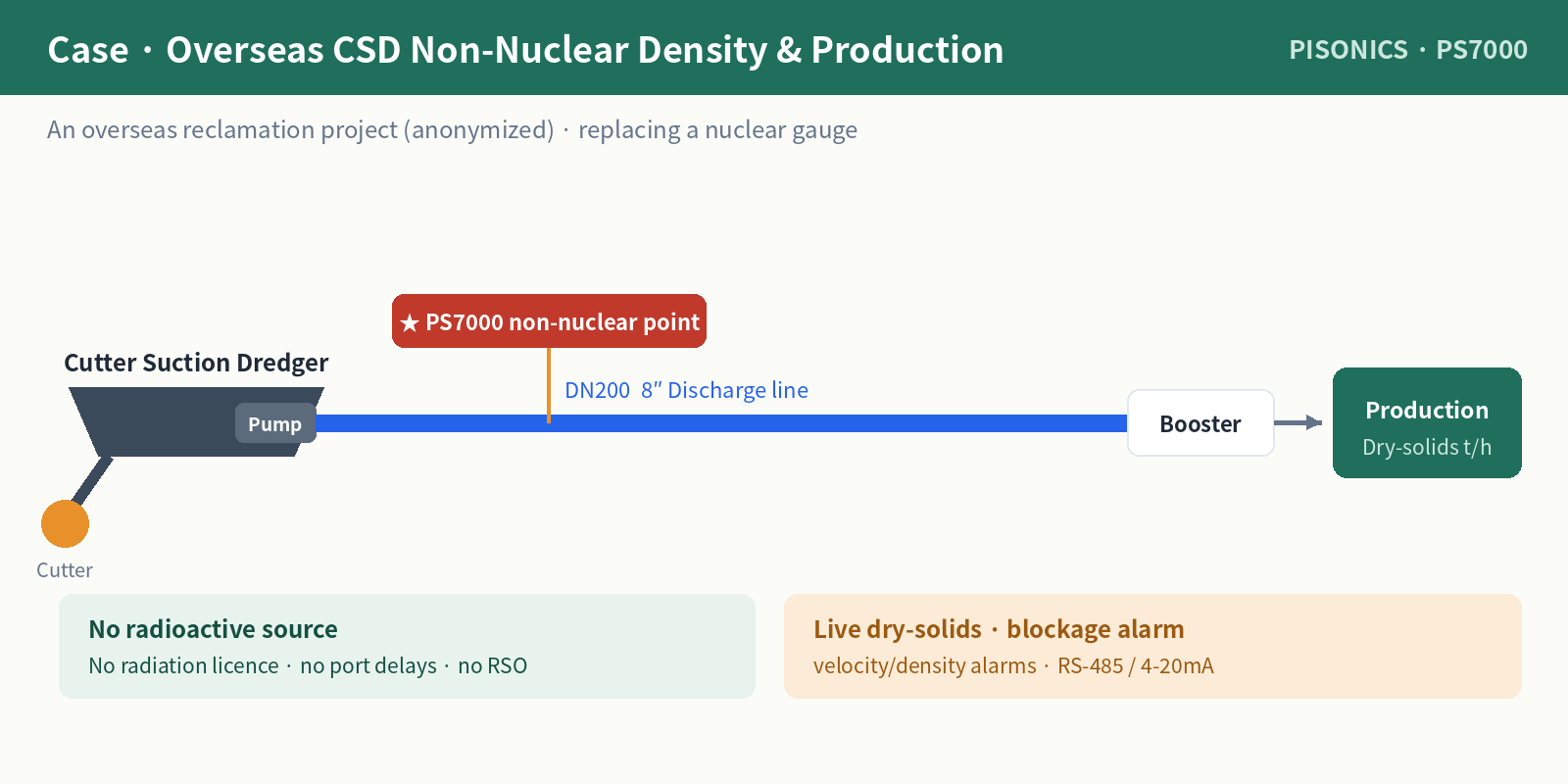
Dredging | Slurry density in the discharge line of cutter suction, trailing suction and sand dredgers; combined with a flow meter it gives live dry production (t/h) and early warning of pump blockage |
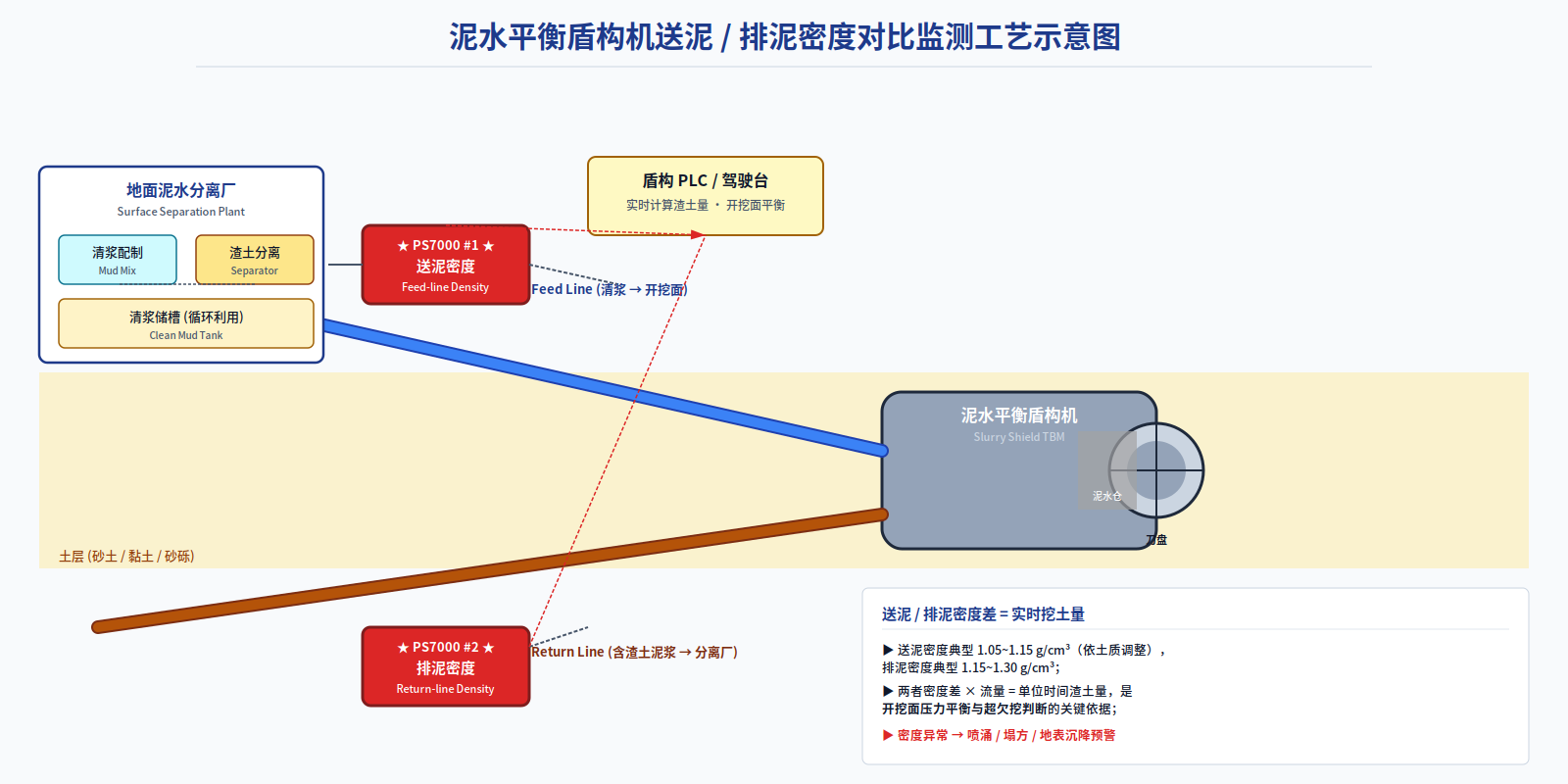
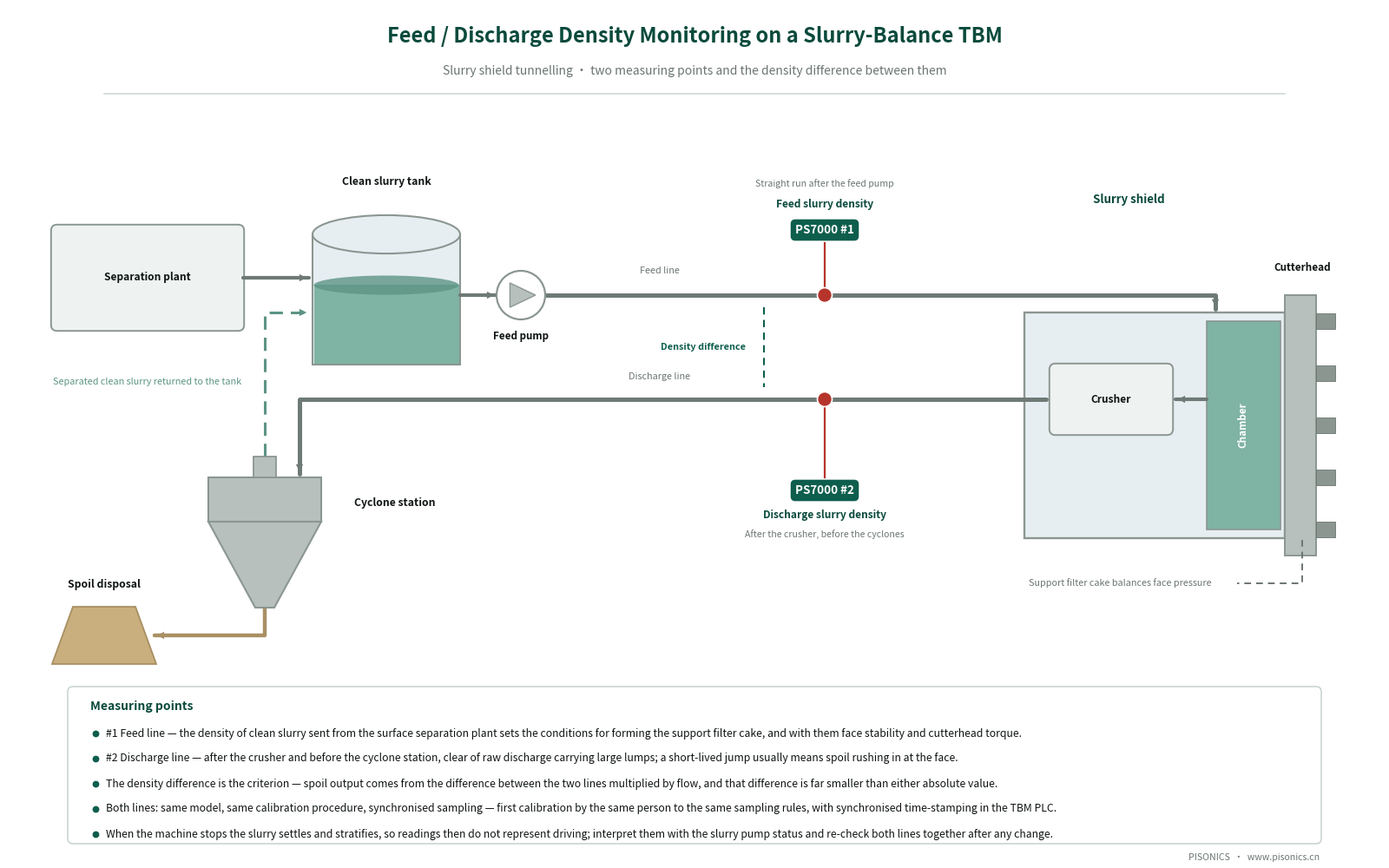
Tunnelling (slurry shield) | Comparative density measurement in the feed and discharge lines, for face pressure balance monitoring and assessment of spoil separation efficiency |
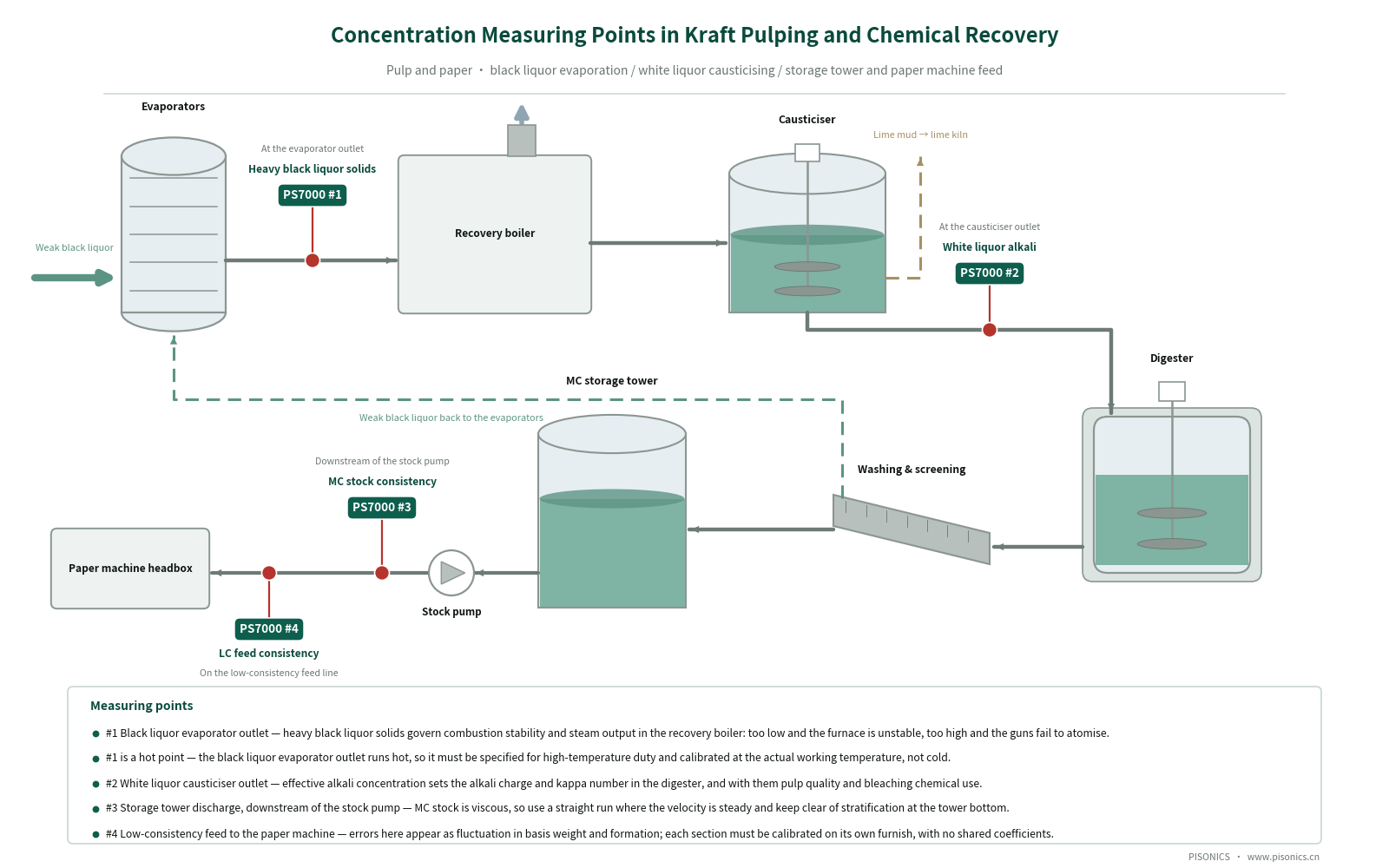
Pulp and paper | Low-consistency (LC) and medium-consistency (MC) pulp, black liquor concentration at the evaporator outlet, white liquor alkali concentration at the causticising outlet |
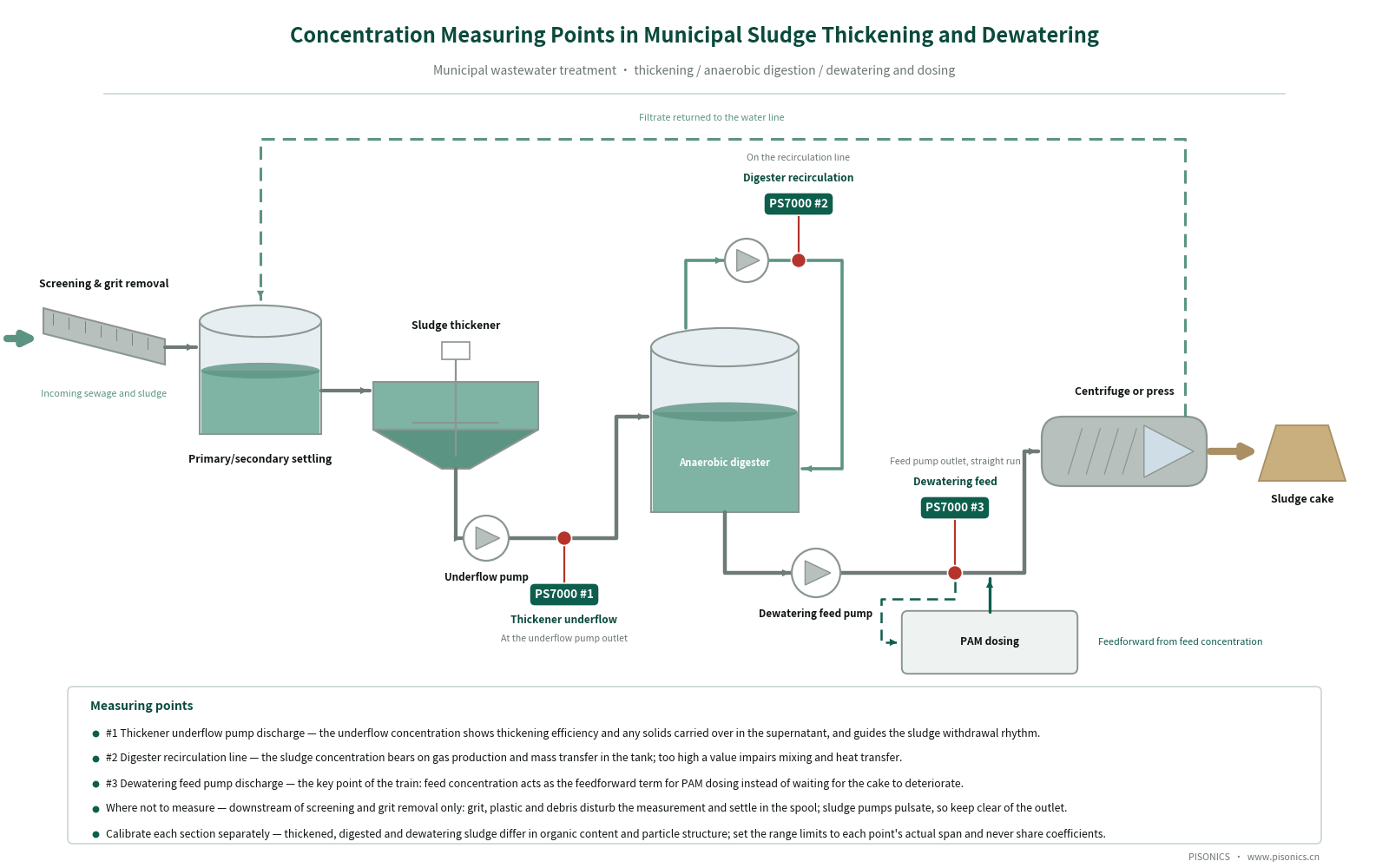
Water treatment and sludge | Thickener underflow, digester recirculation line, sludge density at the dewatering machine inlet; floc concentration and coagulant dosing optimisation in waterworks |
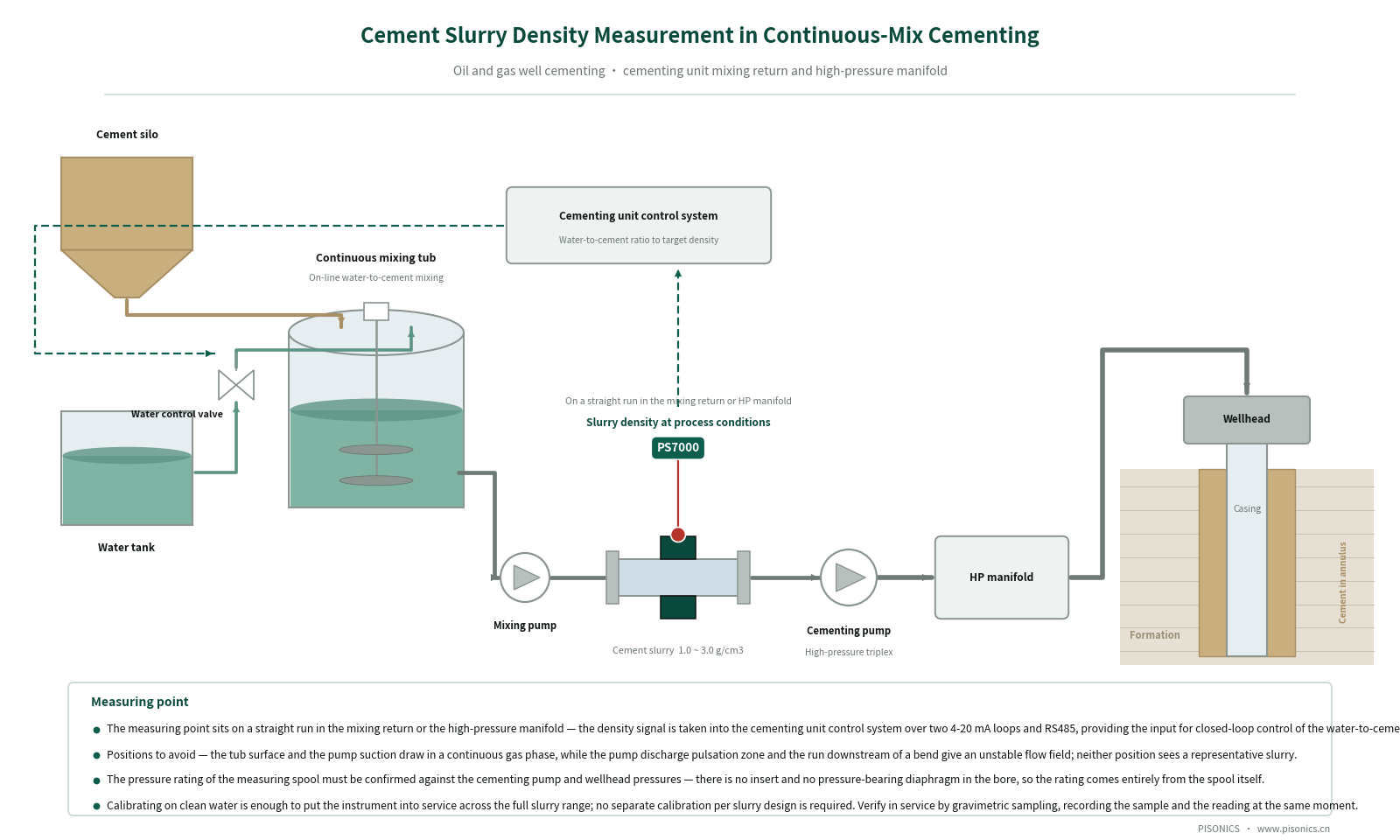
Oilfield cementing | Inline density of the mixed cement slurry, supporting closed-loop automatic proportioning on the mixing unit |
Duties not listed | Please provide the medium composition, particle size distribution, temperature, bore and velocity, and the manufacturer will assess suitability and the calibration approach. |
Installation & Interfaces
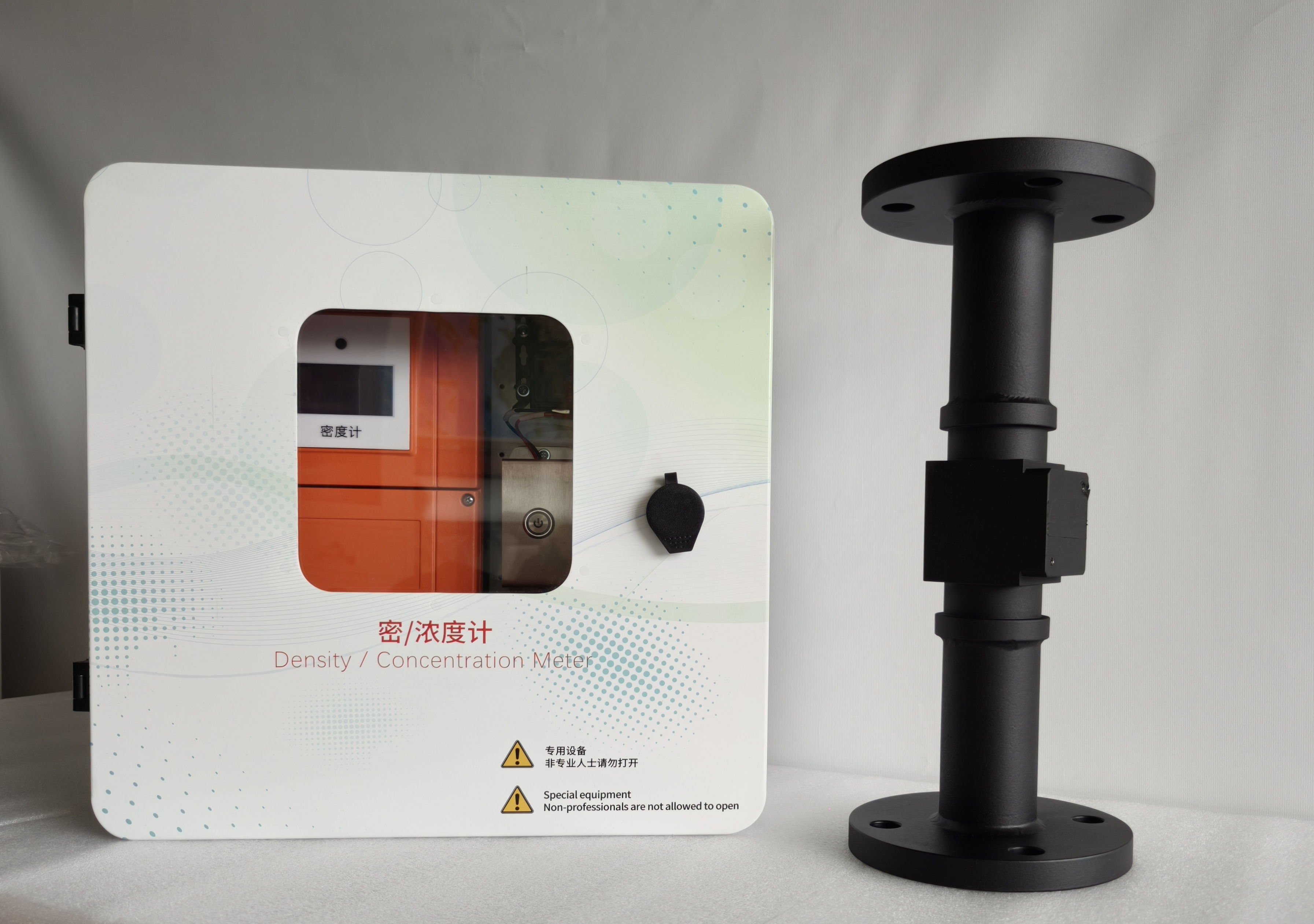
The transmitter enclosure is always mounted remotely on a wall or a post, in a position convenient for viewing and service. Two sensor arrangements are available: spool-piece — the sensor is pre-fitted in a custom flanged measuring spool that is bolted into the process line, allowing pre-calibration in the works and needing no hot work on site — and weld-in — a Ø60 hole is cut in the existing pipe and a base welded on, with no need to break the line or add a spool. Both impose identical requirements on straight run, velocity, sensor immersion and orientation.
Vertical installation with upward flow is recommended, and the velocity must exceed the critical deposition velocity for the bore and the solids density. Provide ≥ 10D of straight run upstream and ≥ 5D downstream (a minimum of 5D and 3D where space is restricted). Field calibration uses the sampling-and-weighing method and can be carried out inline without shutdown.
The output complies with NAMUR NE43: 3.5 mA low alarm on fault (default ex works) and a 3.8 / 20.5 mA out-of-range indication band, so fault, out-of-range and valid measurement stay clearly distinguishable at the DCS.
Technical Specifications
Item | Specification |
Model | PS7000 series (ultrasonic acoustic impedance) |
Measuring principle | Ultrasonic linear frequency-modulated (chirp) acoustic impedance method; single sensor, pulse-echo, reflective |
Medium | Solid–liquid slurries (mineral, ash, coal, limestone slurry, salt solutions, etc.); entrained air permitted |
Measuring range | 0–80 % (mass concentration), calibrated to the medium |
Accuracy | ±1 % (mass concentration) |
Primary variable | Density (g/cm³ or kg/m³), mass concentration, volume concentration, degrees Baumé, solids content (g/L) |
Diagnostic values | Aeration index (0–100) and bubble flag, echo energy, signal quality, sensor temperature, fault status word |
Power supply | AC 220 V (AC 100–240 V, 50/60 Hz wide-range input) or DC 24 V; both supply options are standard |
Power consumption | ≤ 1 W |
Ambient temperature | −30 to +60 °C |
Medium temperature | 0 to 80 °C |
Humidity | ≤ 98 %RH, non-condensing |
Nominal bore | DN50 to DN1000 (larger on request) |
Mounting | Spool-piece (custom flanged measuring spool inserted into the line) or weld-in (Ø60 mm hole cut in the existing pipe and a boss welded on); in both cases the transmitter is remotely wall-mounted |
Sensor cable | Standard 5 m (custom lengths available) |
Sensor form | Non-intrusive — the sensor is wetted but does not protrude into the flow; purpose-specified wear-resistant material with a high surface finish |
Lining options | PTFE / rubber / ceramic (to duty) |
Temperature sensing | PT1000 sensor temperature (22-bit Σ-Δ acquisition with open- and short-circuit diagnostics) plus an on-board digital temperature sensor |
Analogue output | 4–20 mA × 2, NAMUR NE43 compliant; output variable, range endpoints, correction coefficients and fault current are configurable independently per channel |
Digital communication | RS485 Modbus-RTU, slave address 1–247, baud rate 1200 / 2400 / 4800 / 9600 / 19200 / 38400 / 57600 / 115200 bps (57600 ex works), transmission distance approx. 500 m |
HART | HART 5 slave, Bell 202 FSK (1200 bps) superimposed on 4–20 mA loop 1 |
Bluetooth | Bluetooth 5.4 BLE; live readings and full parameter configuration from a phone or tablet |
Remote transmission | 4G / DTU to the Pisonics cloud platform (option) |
Fieldbus | Profibus-DP (option) |
Display and operation | OLED display window, bilingual Chinese/English menu, infrared remote control; remote digital display (option) |
Field calibration | Multi-point linear regression Y = aX + b, up to 20 points; from 3 points the result is assessed automatically against r² ≥ 0.8. Can be performed inline without shutdown |
Factory calibration | 40 independent calibration sets, each with up to 16 concentration points × 15 temperature points, retained in Flash |
Data storage | 360 local history records (logging interval configurable, 20 min ex works ≈ 5 days); telemetry retained for 90 days once connected to the cloud platform |
Firmware update | Dual-slot OTA with CRC-32 whole-image verification and device-type identity check; on failure the previous firmware is retained automatically. Remote update supported |
Ingress protection | IP65 |
Hazardous area | Ex d IIC T6 Gb (option, to be specified when ordering) |
Certification | EU CE (certificate supplied with the instrument) |
Transmitter enclosure | 400 (W) × 400 (H) × 180 (D) mm |
Transmitter weight | approx. 15 kg |
※ For non-standard ranges, special linings, explosion-proof versions or a detailed selection proposal, please contact a Pisonics engineer. The PS7000 Technical Specification is the authoritative source for the complete data.
Compared with other density meters
- Rhosonics SDM ECO — ultrasonic, non-nuclear
- Berthold LB 480 — radiometric nuclear gauge
- Alia ADM — accelerometer mass sensing
- Red Meters — pipe deflection
- Ultimo — clamp-on percussion
- Arenal PCS — ultrasonic spectroscopy