INDUSTRY 03

Chemical / Fine Chemical

03 / CHEMICAL

Acid / alkali / absorption liquid — corrosion-resistant wetted parts.

9 applicable products 15 application cases

Overview

Fine and bulk chemicals span large volumes of acidic, alkaline and organic concentration control. From reactor monitoring through absorption-tower metering to intermediate dosing tanks, accurate online density / concentration data is essential. Media are often highly corrosive, flammable or toxic — strict intrinsic-safety, wetted material and sealing requirements apply.

Typical challenges

  • Aggressive media (HNO₃, HCl, HF) need specialty wetted materials (Hastelloy C-276, tantalum, PFA)
  • Hazardous-area certifications: ATEX / IECEx, Ex d or Ex ia
  • Wide reaction temperature swings demand auto-compensation
  • Batch production calls for rapid model switching
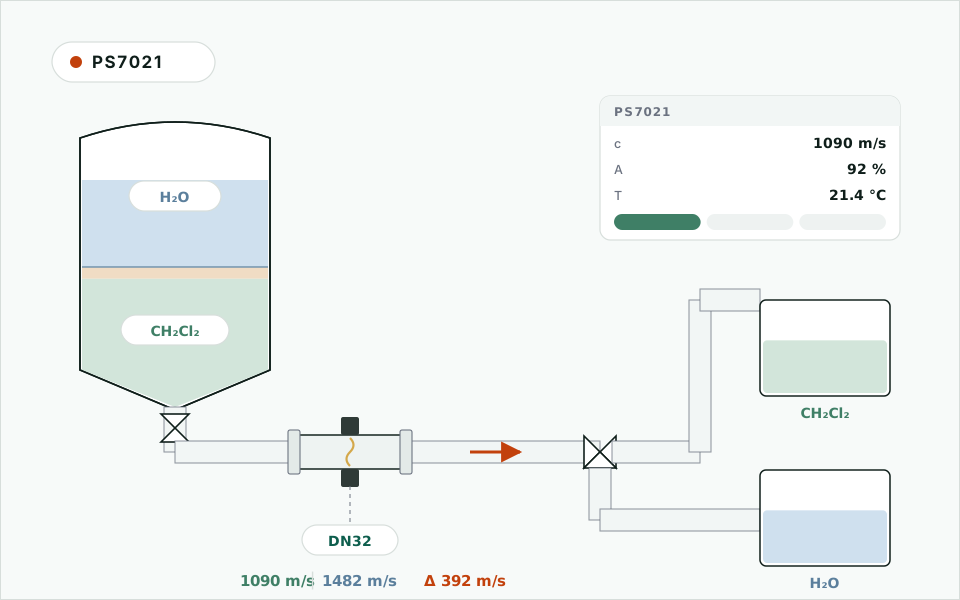
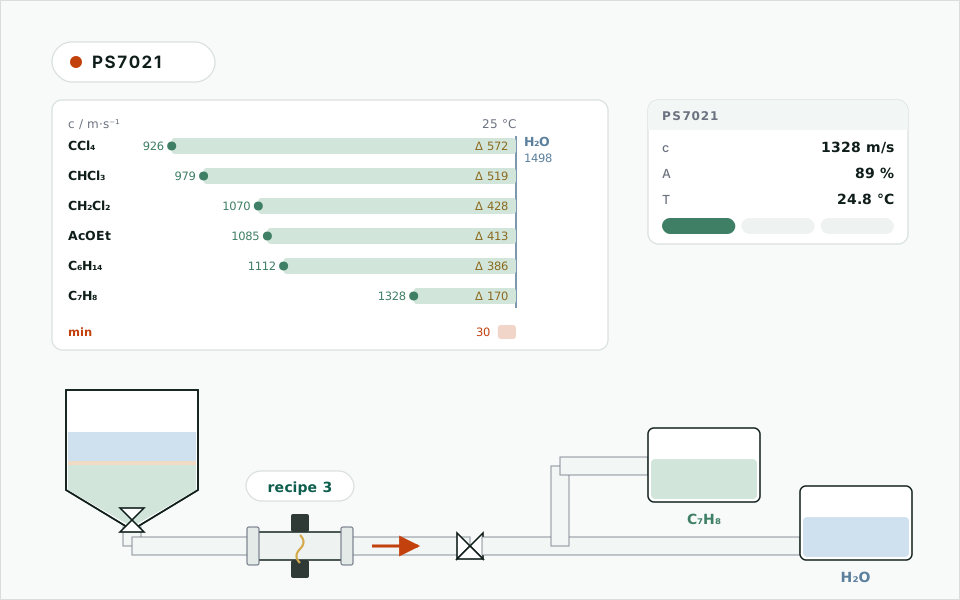
Sound Velocity Concentration Meter · PS7020

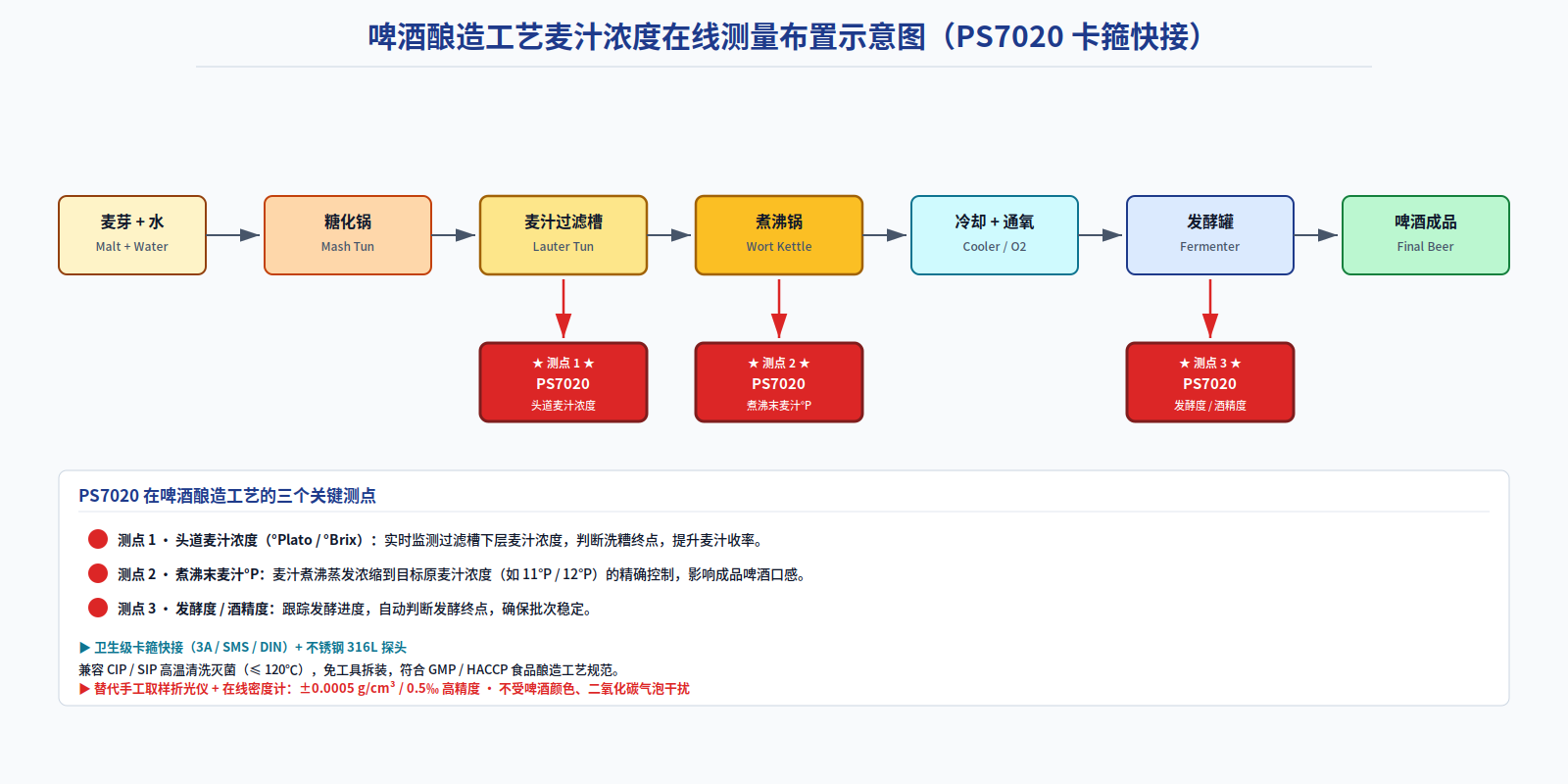
PS7020 Series Ultrasonic Sound Velocity–Based Concentration/Mass Density Meter: Applications in the Food, Brewing, and Sugar-Refining Industries

In the wort mashing, filtration, and fermentation stages of beer brewing, customers face challenges such as delayed wort concentration measurements, bubble interference, and poor performance with dark-colored liquids, resulting in significant batch-to-batch variability and frequent manual sampling. The PS7020 series ultrasonic sound-velocity–based concentration/density meter measures wort °P online with an accuracy of ±0.0005 g/cm³, unaffected by color, bubbles, or CO₂. Equipped with a hygienic clamp‑type quick‑connect and compatible with CIP/SIP, it delivers sub‑second real‑time feedback and seamless integration with MES systems.

View case
Spectroscopic concentration meter · PS7100

Online simultaneous analysis of two components: available chlorine and free alkali

At the outlet recirculation line of the sodium hypochlorite reaction tower, the customer faced the challenge of simultaneously monitoring effective chlorine and free alkali, yet the conventional titration method introduced a delay of 0.5 to 1 hour and required operators to frequently handle toxic samples. The PS7100 spectral concentration meter employs UV-Vis-NIR full-spectrum absorption coupled with MLR multicomponent modeling to deliver sub-second, dual-component online analysis—without sampling or reagent consumption—while seamlessly integrating the measurement results into the DCS for automated determination of the reaction endpoint.

View case
Spectroscopic concentration meter · PS7100

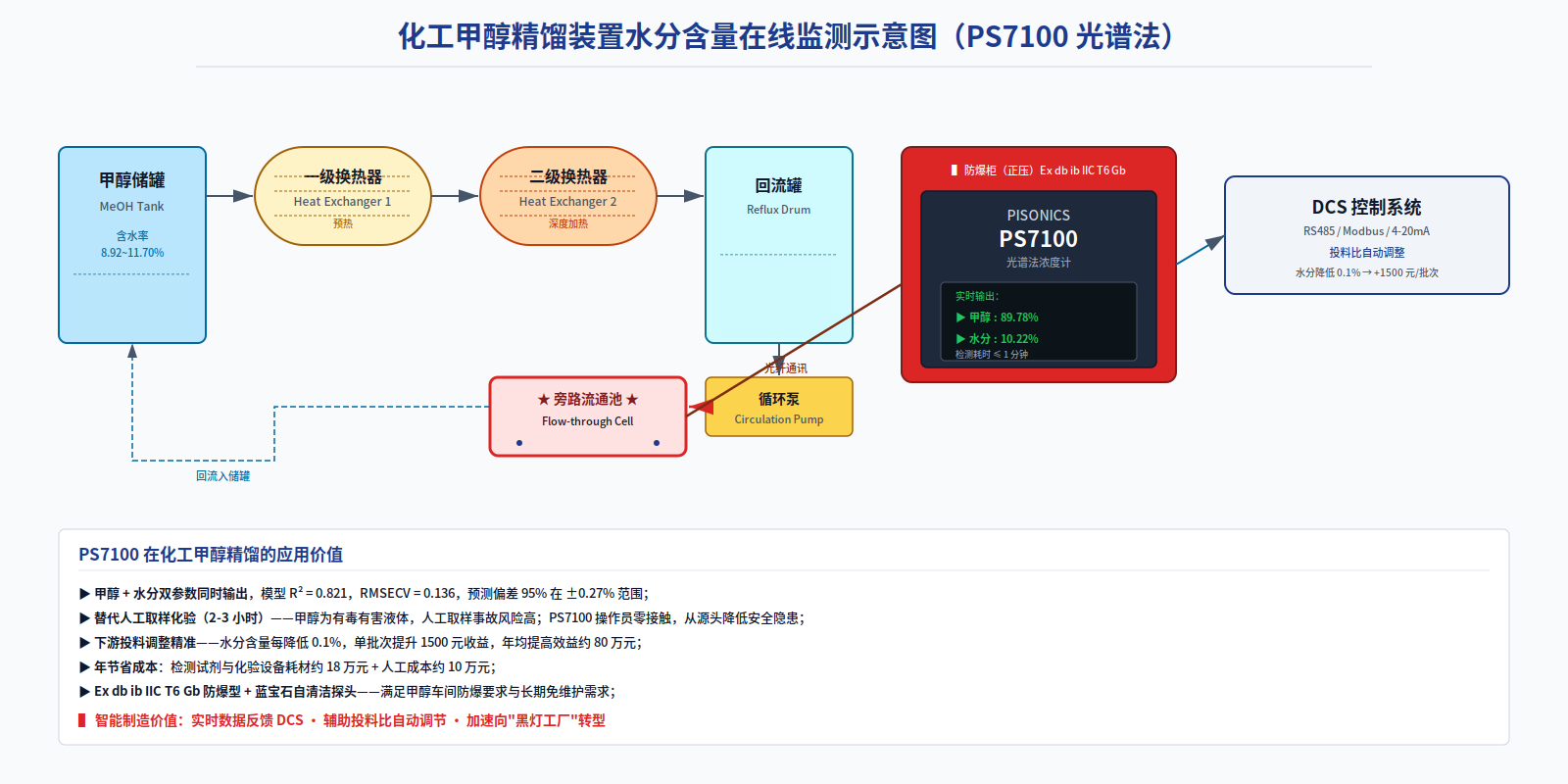
Online Monitoring Solution for Methanol–Water Binary System

At the outlet pipeline of the circulation pump in the methanol distillation unit, the customer faced high risks of personnel exposure during manual sampling, a 2–3 hour delay in laboratory analysis, and an inability to adjust the water content in real time. The PS7100 explosion-proof spectral concentration meter was installed in a bypass flow cell, enabling simultaneous online monitoring of methanol and water content via near-infrared characteristic wavelengths, delivering sub-second response, non-contact measurement, and real-time DCS feedback.

View case
Spectroscopic concentration meter · PS7100

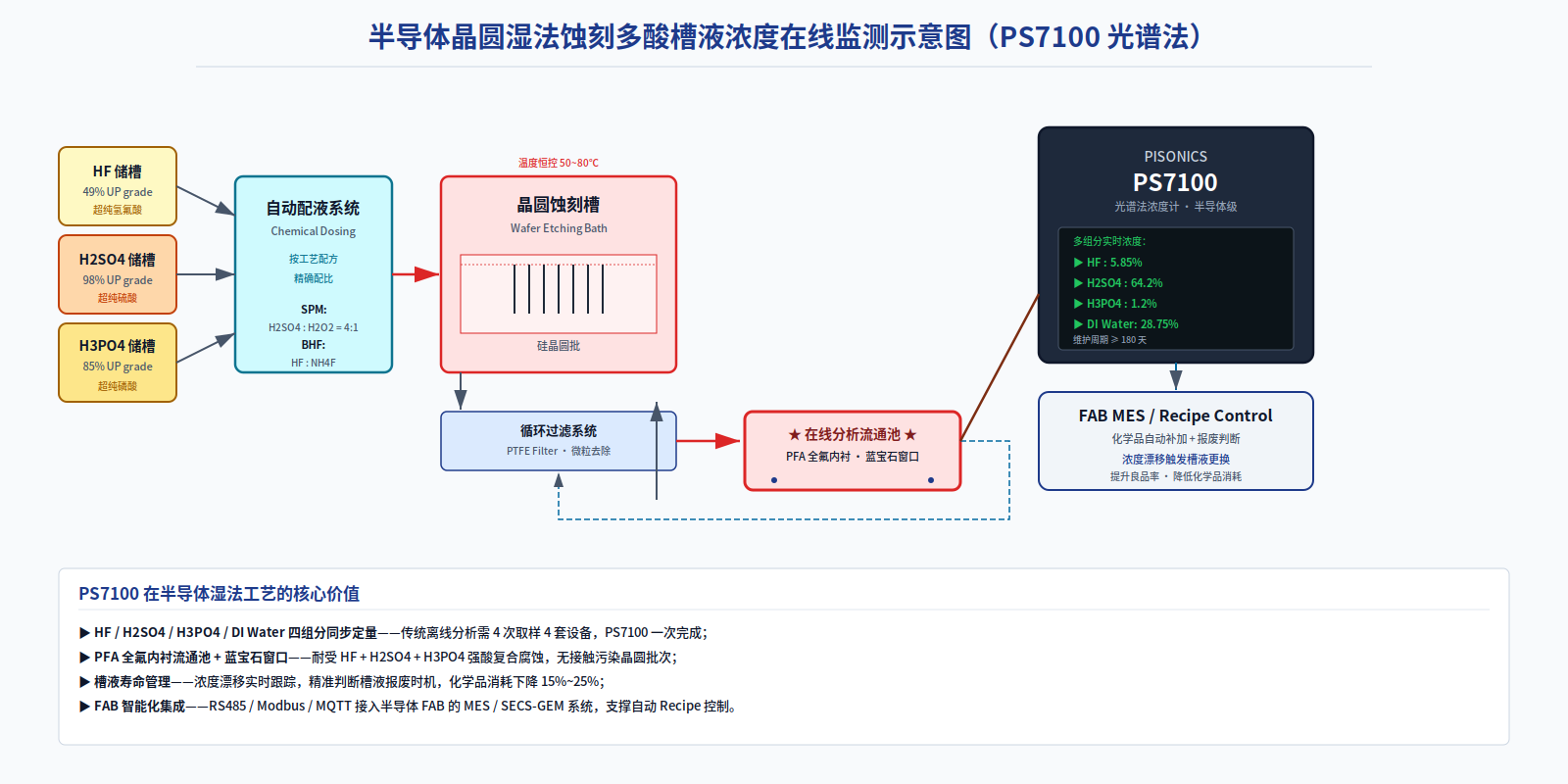
HF + H₂SO₄ + H₃PO₄ + DI Water Simultaneous Monitoring of Multi-Component Tank Solution Concentrations

Semiconductor 12-inch wafer foundries face challenges in BHF and SPM etching tanks: the concentrations of the four components—HF, H₂SO₄, H₃PO₄, and DI water—are prone to drift, making real-time monitoring difficult; manual sampling is both hazardous and time‑lagged; and reliance on empirical judgment for tank‑change timing leads to chemical waste or yield degradation. The PS7100 spectral‑based concentration meter, equipped with a PFA‑lined flow cell and sapphire optical windows, delivers online, synchronous concentration measurements for all four components, enabling sub‑second feedback and precise management of bath life.

View case
Spectroscopic concentration meter · PS7100

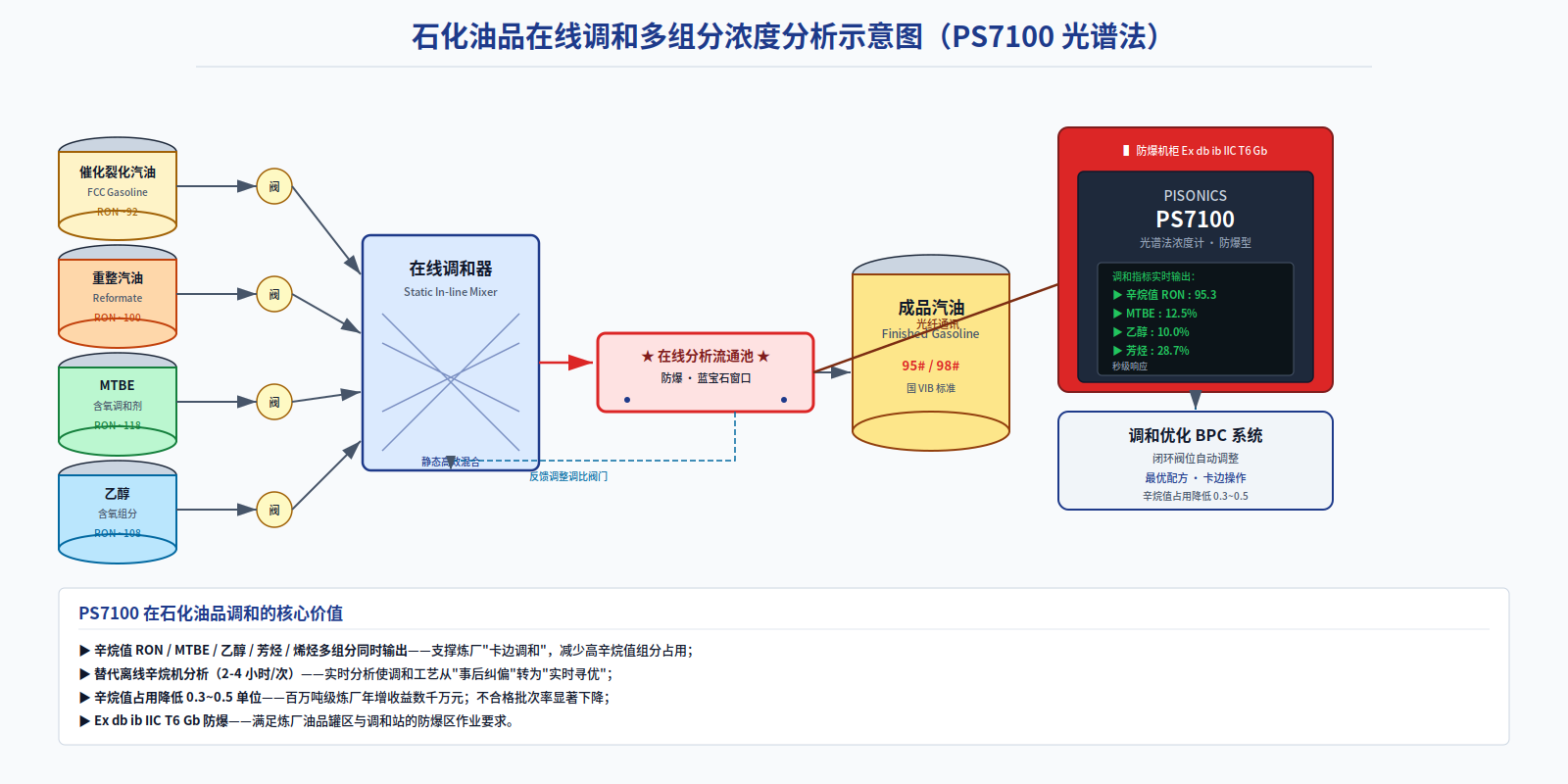
Octane number RON + MTBE + ethanol + aromatic hydrocarbons multi-component real-time blending optimization

At the refinery’s blending station, long-term reliance on offline octane analyzers has resulted in a 2–4 hour analysis lag, making edge‑of‑spec blending challenging, leading to excessive octane reserve usage, and frequent batches failing to meet specifications. The PS7100 explosion‑proof spectral‑based concentration/density meter is installed in a bypass flow cell downstream of the static mixer, providing second‑level, synchronized measurements of RON, MTBE, ethanol, aromatic content, and olefin content, with real‑time feedback to the BPCS for closed‑loop optimization.

View case
Spectroscopic concentration meter · PS7100

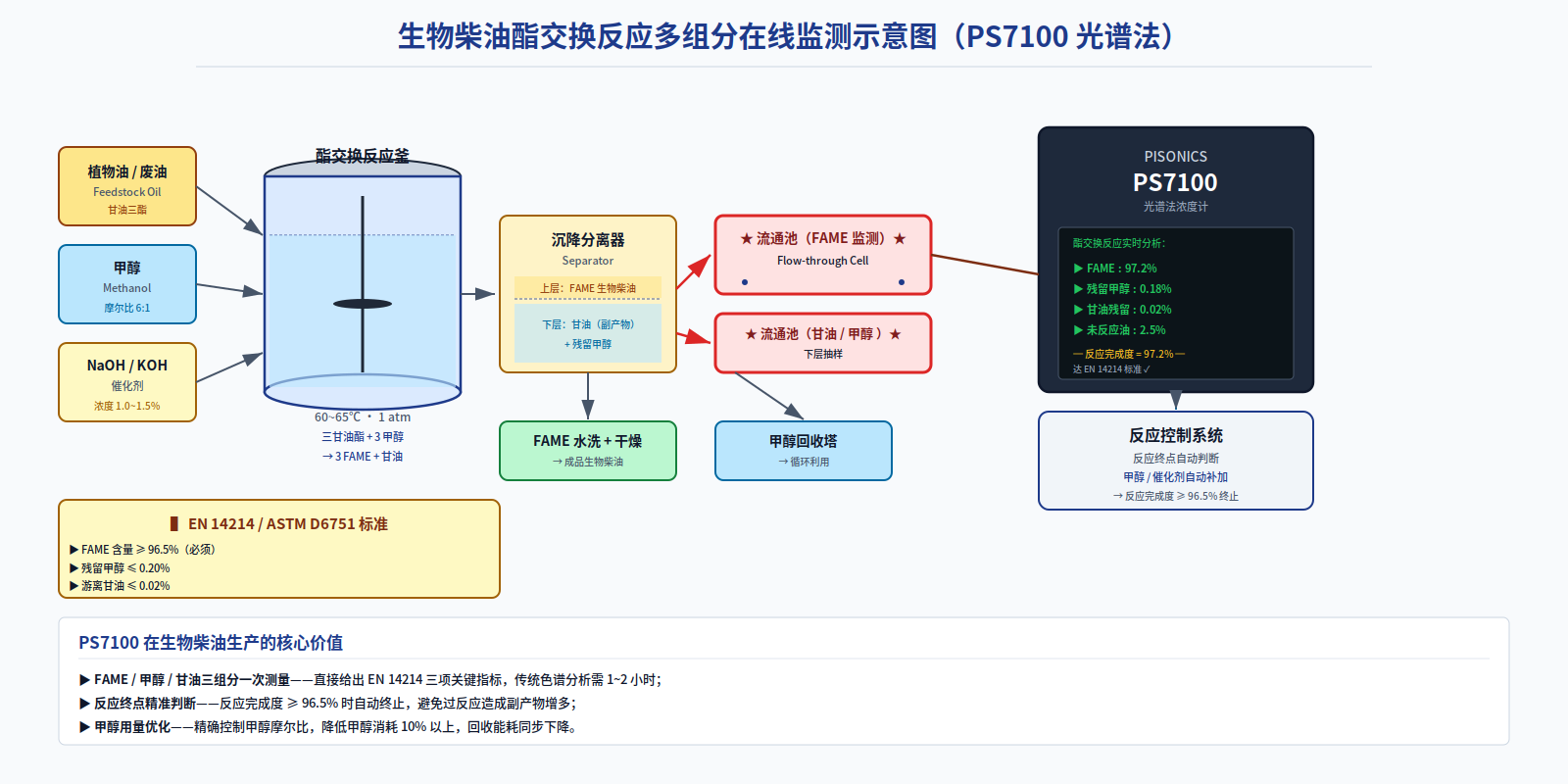
Simultaneous online monitoring of three components: FAME, residual methanol, and free glycerol

In the biodiesel transesterification process, the customer relies on offline gas chromatography to determine the reaction endpoint, which leads to a 1–2 hour data lag, an overuse of methanol by 10%–15%, and fluctuations in the purity of by-products. The PS7100 spectral‑based concentration/density meter has been installed on the discharge line of the reactor and the FAME outlet pipeline of the separator. By acquiring full UV‑Vis‑NIR spectra and employing MLR modeling, it provides real‑time, synchronized measurements of FAME, residual methanol, and free glycerol concentrations. Once the reaction completion exceeds 96.5%, the process is automatically terminated, reducing methanol consumption by 11.3% and stabilizing the FAME content at 97.2%.

View case
Pipeline Differential Pressure Density Meter · PS7300

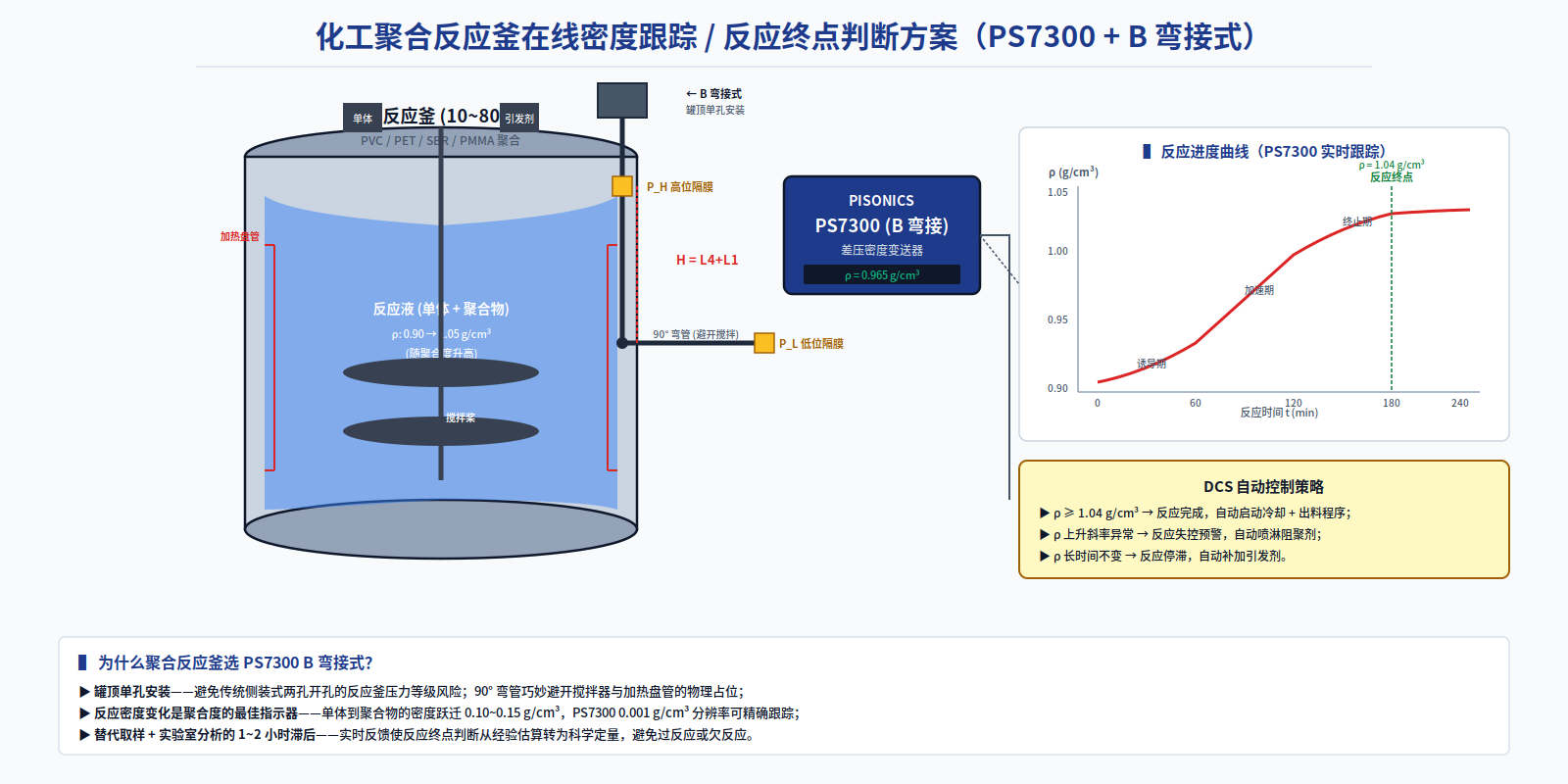
Real-time density tracking of polymerization reactions · Automatic determination of reaction end points

Customers face challenges in large-scale polymerization reactors, including delayed determination of the reaction endpoint, high safety risks associated with manual sampling, and poor batch-to-batch consistency. The PS7300 differential pressure density meter features a B‑bend flange‑mounted, single‑hole installation on the reactor top, bypassing the agitator and heating coils. It tracks real‑time changes in the reaction slurry’s density with a resolution of 0.001 g/cm³, supports DCS‑triggered automatic termination and runaway‑prevention alerts, and enables precise quantitative control of the reaction endpoint.

View case
Pipeline Differential Pressure Density Meter · PS7300

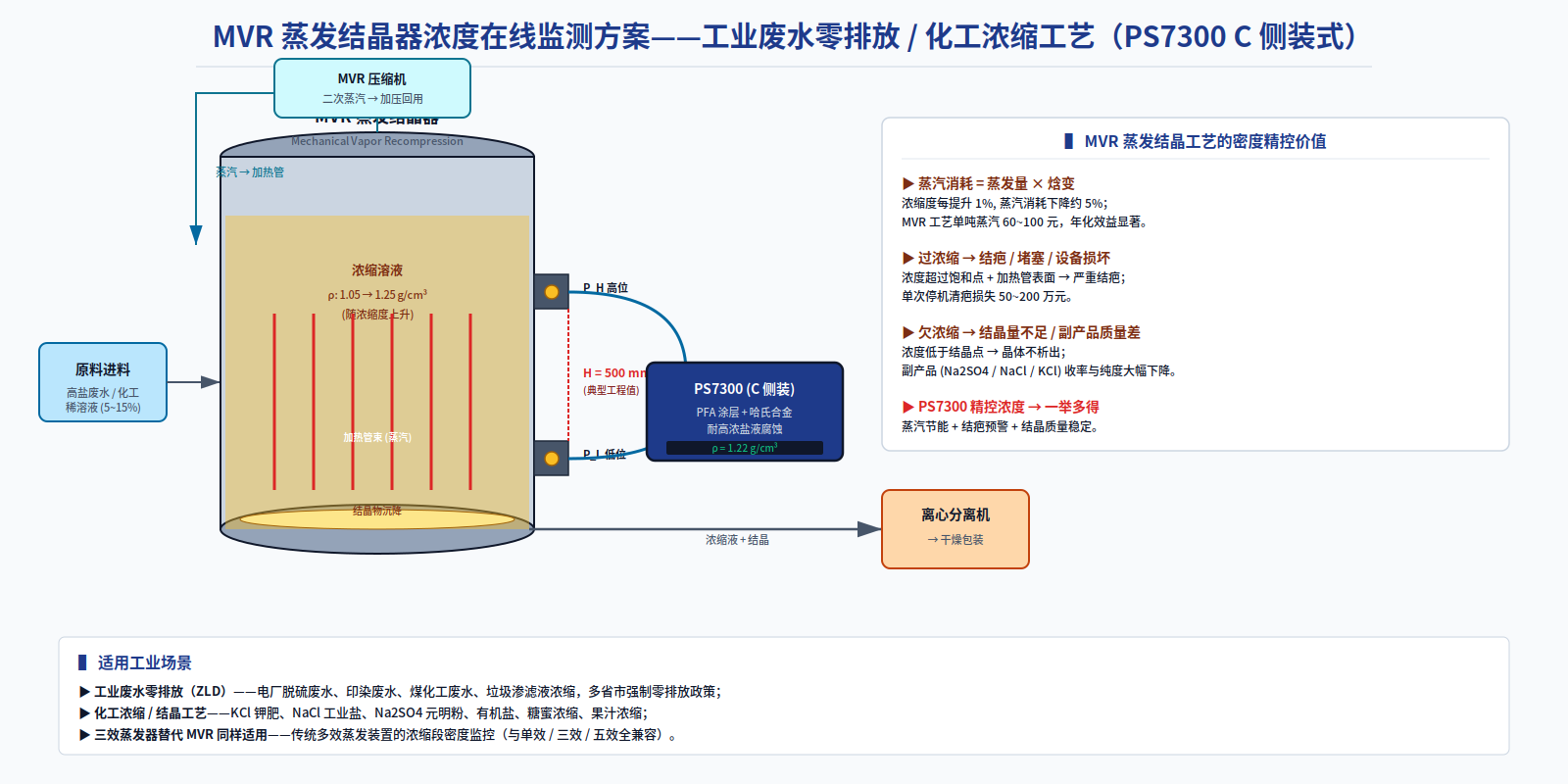
Zero Liquid Discharge (ZLD) for Industrial Wastewater · Precise Concentration Control in Chemical Concentration/Crystallization Processes

In chemical concentration and zero‑liquid‑discharge (ZLD) processes, customers face challenges such as the highly corrosive nature of high‑concentration brines in MVR evaporators, as well as the risk of crystallization leading to jamming of conventional density meters and shutdowns due to scale formation. The PS7300 dual‑flange differential pressure concentration meter features a side‑mount configuration with Hastelloy C‑276 diaphragms and a PFA fluoropolymer coating, offering exceptional corrosion resistance and resistance to crystallization‑induced wear. It enables long‑term, stable online monitoring of density converted to concentration, supporting DCS closed‑loop precision control, preventing scale‑related downtime, and enhancing the purity and recovery rate of by‑product salts.

View case
Pipeline Differential Pressure Density Meter · PS7300

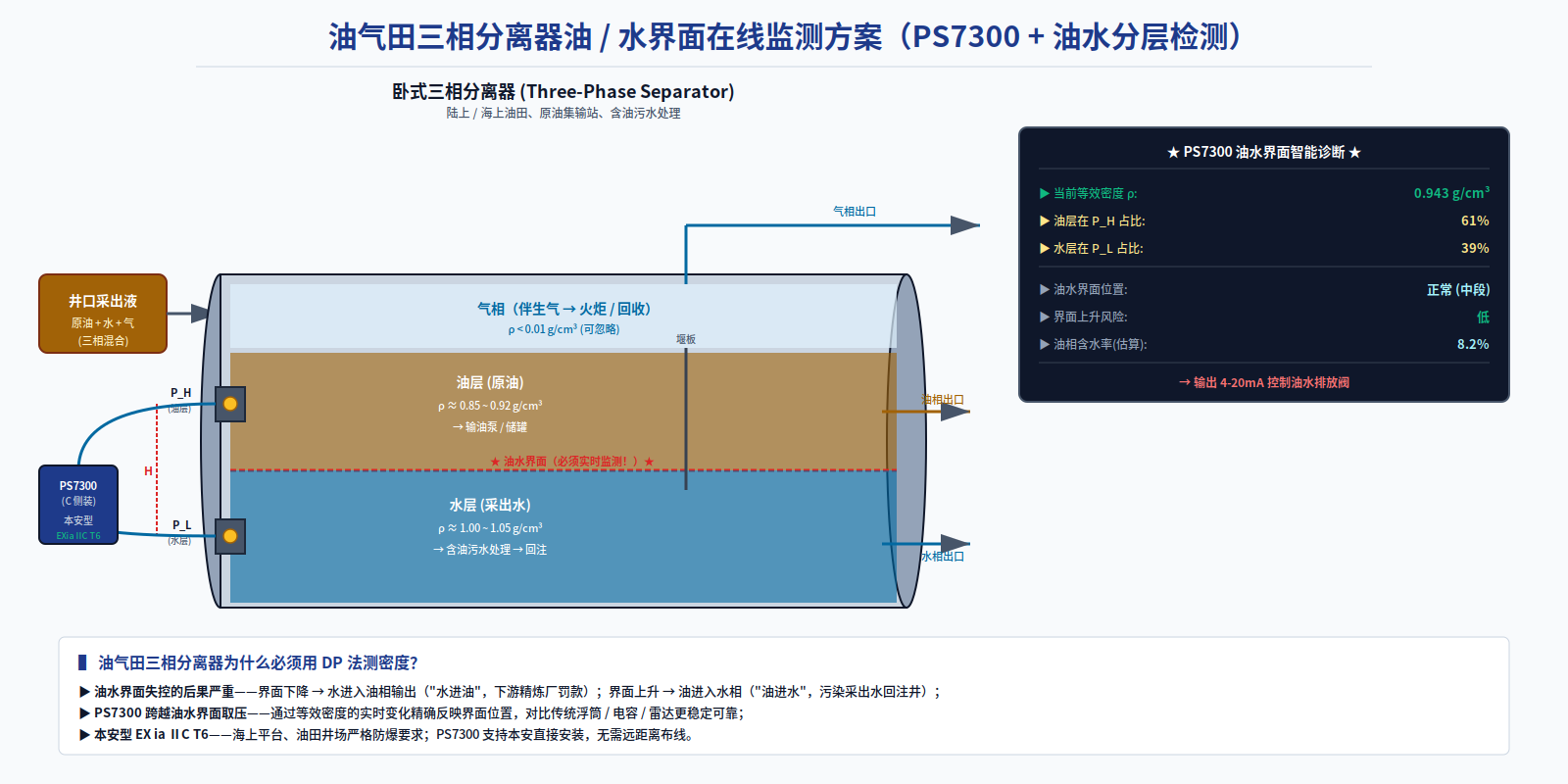
Oil/Water/Gas Interface Online Monitoring · Intelligent Water Cut Estimation

View case
Pipeline Differential Pressure Density Meter · PS7300

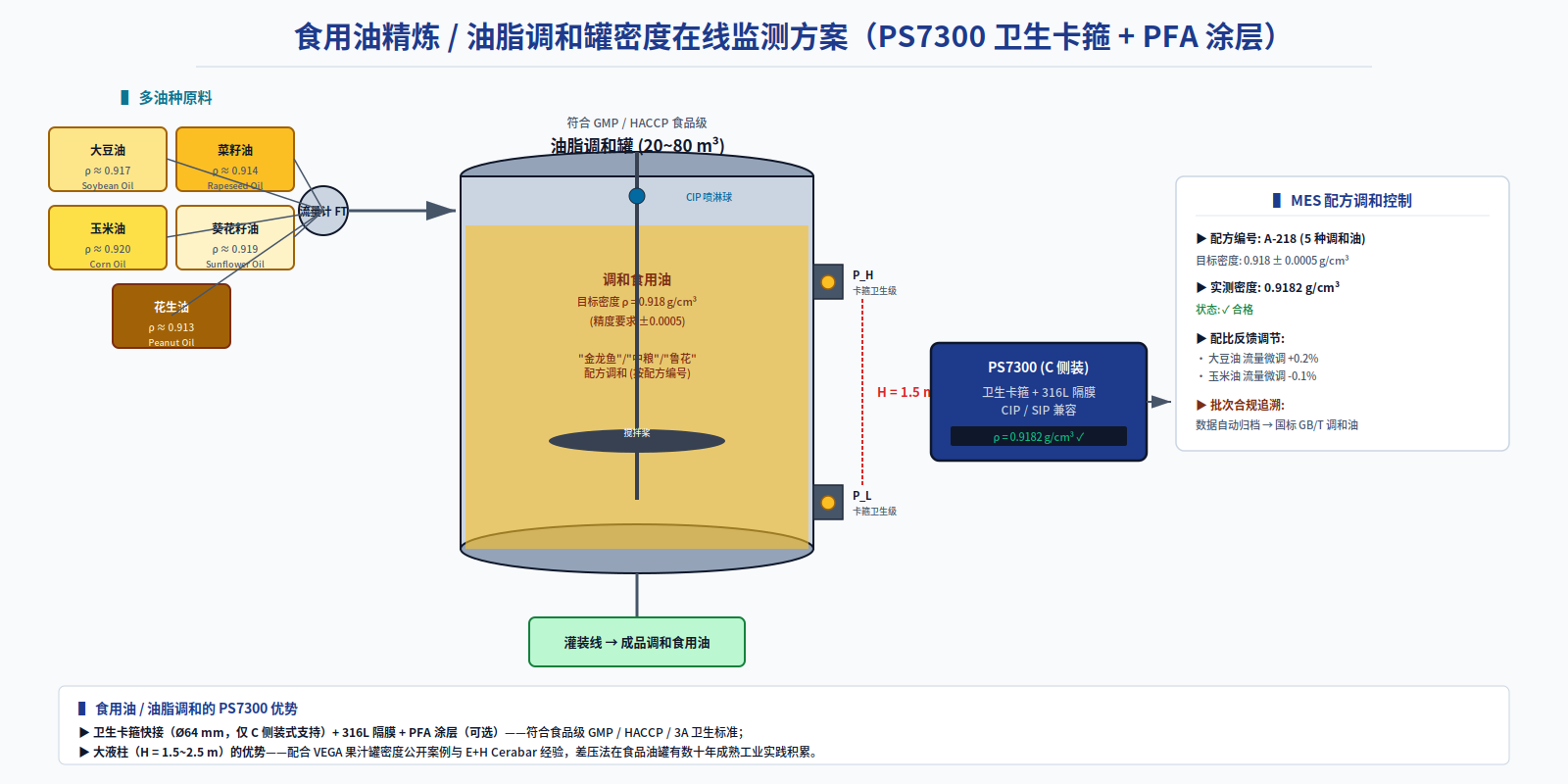
Blended oil recipe control · Sanitary clamp + PFA coating · MES batch traceability

View case
Pipeline Differential Pressure Density Meter · PS7300

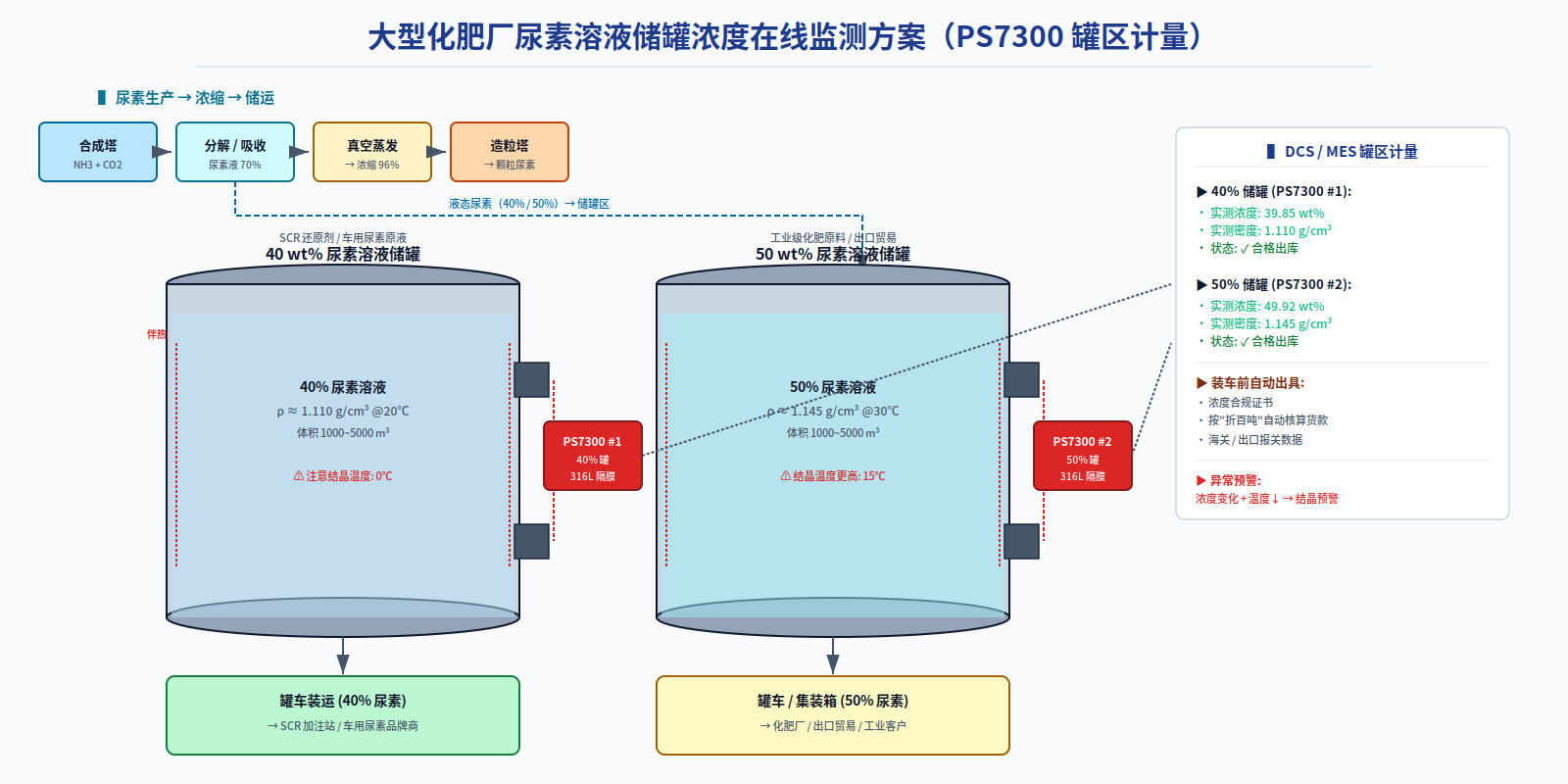
Online Concentration Monitoring of 40% / 50% Urea Solution Storage Tanks

In the urea solution storage tank area of a large fertilizer plant, challenges include lengthy manual sampling and laboratory analysis prior to loading, significant trade‑based discrepancies due to concentration drift when converting to 100% basis, elevated risks of low‑temperature crystallization, and difficulties in verifying automotive urea AdBlue compliance. The Pisonics PS7300 dual‑flange differential pressure density meter is installed side‑mounted on 40% and 50% urea solution storage tanks, providing real‑time density measurements that are converted into weight‑percent concentration. This data supports the DCS/MES systems in enabling five‑minute automated pre‑loading verification, automatic 100%‑basis trade reconciliation, crystallization‑warning‑triggered heat‑trace interlocks, and end‑to‑end compliance monitoring of the AdBlue feedstock.

View case
Online tuning fork density meter · PS7400

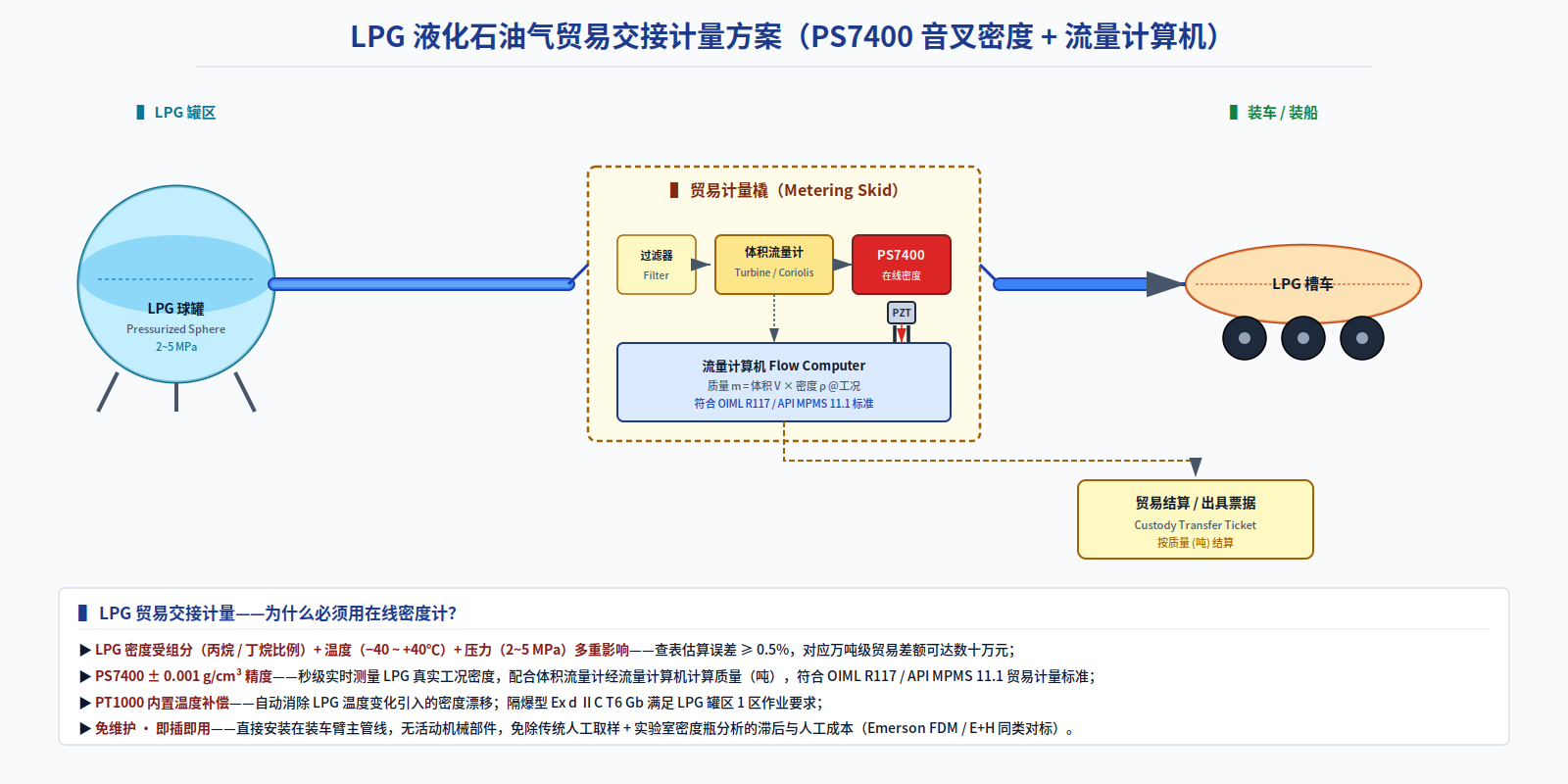
LPG / Liquefied Petroleum Gas Trade Handover

In LPG trade handover, the conventional table‑lookup estimation method and manual sampling result in density measurement errors exceeding 0.5%, leading to commodity‑value discrepancies of hundreds of thousands of yuan for ten‑thousand‑ton‑level loading and unloading operations. The PS7400 explosion‑proof online tuning fork concentration meter is directly installed on the main pipeline for loading onto tank trucks or ships, delivering real‑time process‑condition density within seconds. When paired with a volumetric flowmeter and a flow computer, it enables real‑time mass settlement in compliance with the OIML R117 standard.

View case
Online tuning fork density meter · PS7400

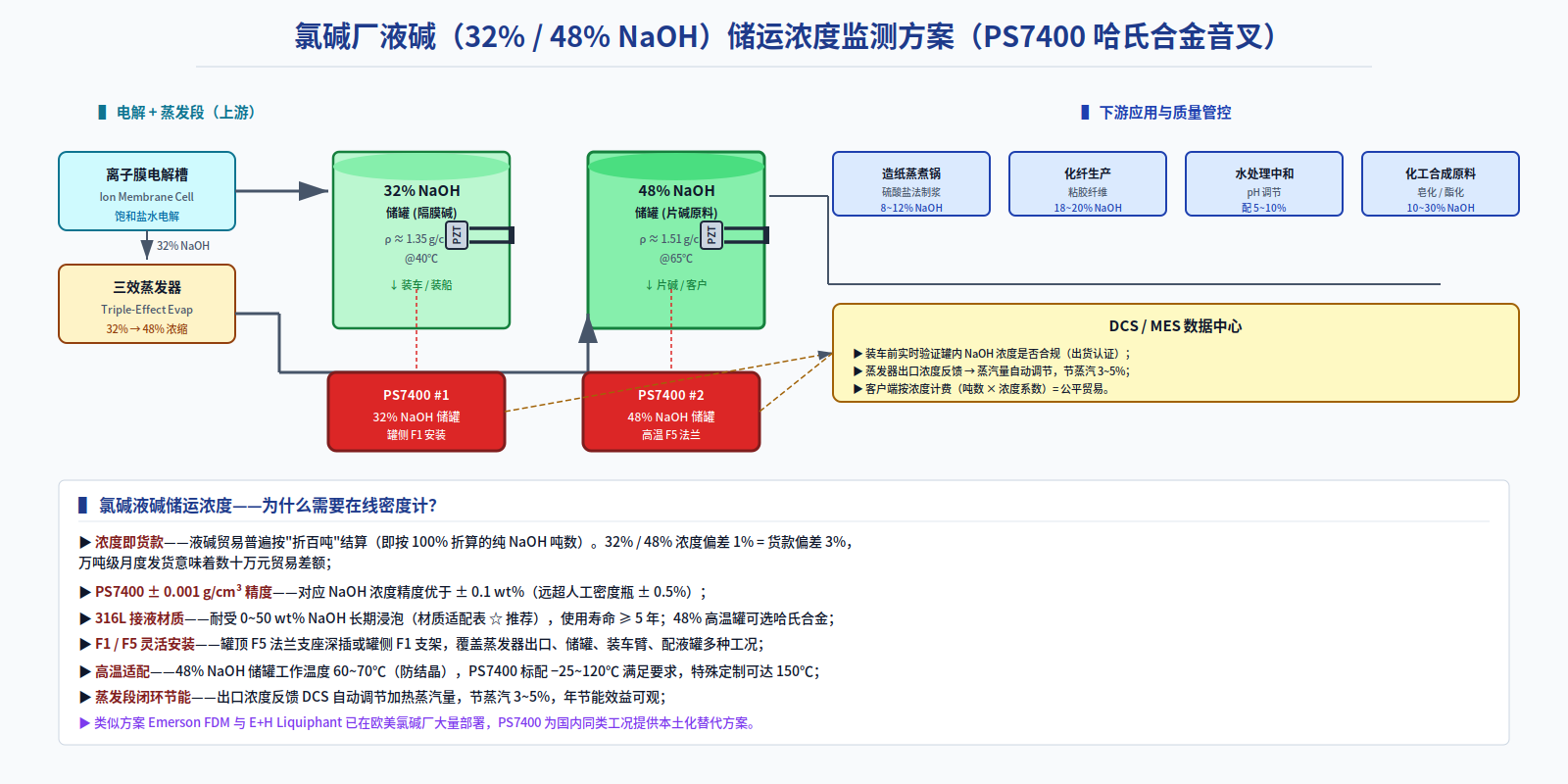
Online Concentration Monitoring of 32% / 48% NaOH Storage Tanks

In the concentration monitoring of 32% and 48% NaOH storage tanks, the customer faced challenges such as delays in manual sampling, short instrument lifetimes due to corrosion by high-temperature strong alkali, control lag in the evaporation section, and significant discrepancies in trade settlement. The PS7400 online tuning fork concentration meter, with wetted parts made of 316L and Hastelloy, delivers a concentration accuracy of ±0.1 wt%, operates reliably at temperatures up to 65°C, and reduces on‑truck verification time to within 5 minutes, thereby enabling DCS‑based closed‑loop energy savings and precise settlement of cargo payments on a 100‑ton basis.

View case
Online tuning fork density meter · PS7400

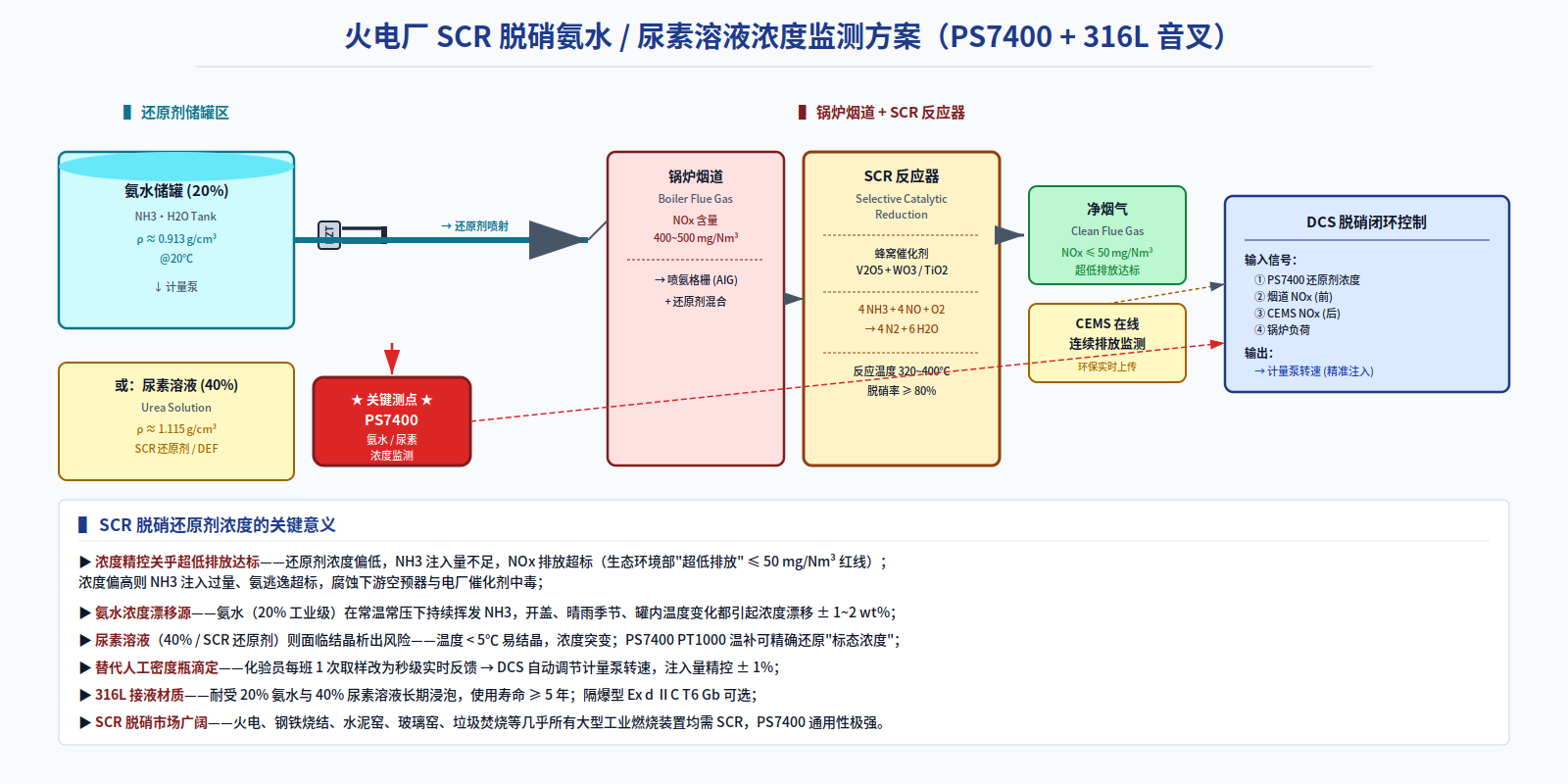
Ammonia Water 20% / Urea Solution 40% Reductant Concentration Online Monitoring

In the SCR denitrification system of a thermal power plant, the concentrations of 20% ammonia solution and 40% urea solution drift due to evaporation or low-temperature crystallization, and the lag in manual sampling leads to fluctuations in NOx emissions and excessive ammonia slip. The PS7400 online tuning fork density/concentration meter is installed on the storage tank’s outlet pipeline to measure concentration in real time and transmit the data to the DCS for closed-loop control, enabling ±1% precision control of the reductant injection rate and ensuring stable compliance with ultra-low emission standards.

View case
Online tuning fork density meter · PS7400

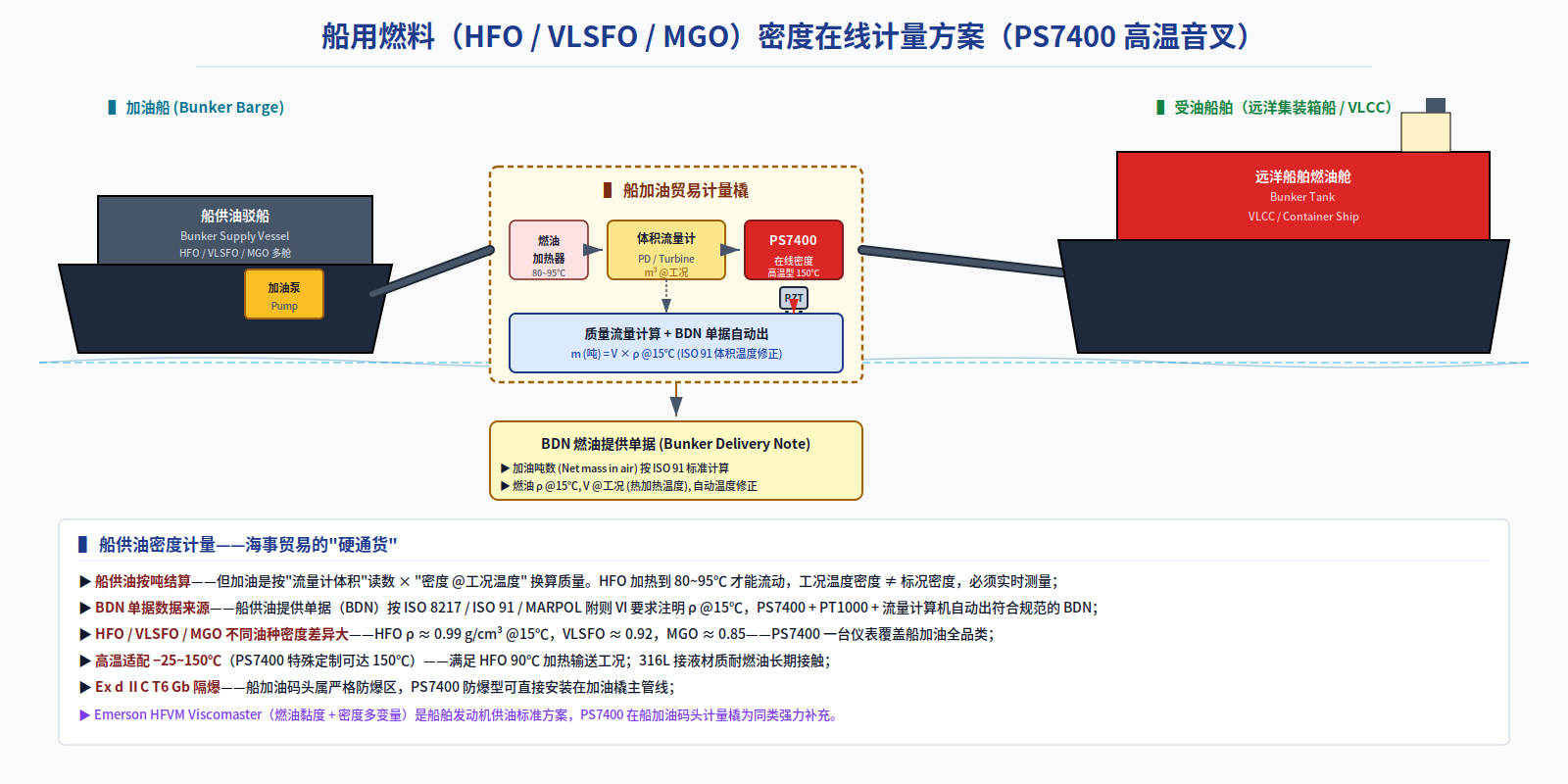
Marine fuel / HFO·VLSFO·MGO refueling measurement

At the ship refueling terminal, during the heated transfer of multiple fuel grades—including HFO, VLSFO, and MGO—real-time density measurement is required under high-temperature conditions of 80–95°C to convert flow rates into tonnage. However, conventional sampling analysis is time‑lagged, and contact-type instruments are prone to thermal drift and seal failure. The PS7400 high‑temperature tuning fork concentration meter is installed directly on the main pipeline downstream of the heater, operating reliably across the full temperature range of −25 to 150°C. Coupled with PT1000 temperature compensation, it delivers real‑time standard density at 15°C in accordance with ISO 91, enabling automatic BDN document generation and MARPOL Annex VI‑compliant settlement.

View case

Selection support for this industry

Guides

All guides →

Comparisons

All comparisons →

Voices from this industry

"Our potash blending tank is a harsh environment — KCl near saturation, 30~40% crystal content, temperature swinging 5~20°C. Traditional density meters can't hold up here. After two weeks of PS7000 service, the deviation from manual lab samples stayed in the 0.5~0.8% range, even during concentration peaks. No anomalies."

Director Xie
Process Engineer
A potash fertilizer plant in Qinghai
All customer voices

Industry FAQ

Strong acids/bases (conc H2SO4 / NaOH / HCl) — which meter?

The primary consideration for measuring strong acids and strong bases is the wetted-material compatibility:

  1. Concentrated sulfuric acid (98%) → PS7400 tuning fork (PTFE coating + titanium tines) or PS7110 refractometer (sapphire prism resistant to acids);
  2. Sodium hydroxide (NaOH 32% / 48%) → PS7400 tuning fork (PTFE coating + 316L stainless steel) or PS7100 spectrometer (fiber-optic separation, with the main unit housed in a safe area);
  3. Hydrochloric acid (HCl) → PS7100 spectrometer (no wetted components) or PS7110 refractometer;
  4. Mixed acids (H2SO4 + HNO3) → PS7100 spectrometer (MLR dual-component simultaneous modeling);
  5. Hydrofluoric acid (HF) → PS7100 spectrometer or PS7110 refractometer (sapphire resistant to HF).
  6. The simultaneous measurement of both effective chlorine and free alkali in chlor-alkali sodium hypochlorite is a signature application case for the PS7100.

All FAQs