PISONICS | 西安派声
PS7021 series
Inline Ultrasonic Phase Separation Detector
Sound velocity + amplitude · integral spool
Solvent / water washing — interface detection on toluene, ethyl acetate and hexane circuits
—— Change the solvent and only the two bands move ——
【Requirement: the phases differ by at least 30 m/s】
The Duty
Fine-chemical, agrochemical and flavour plants share one shape: many products, small batches. The same reactor and the same drain line run a toluene extraction this week, an ethyl-acetate wash next, a hexane recovery after that. The separation task never changes; the physical properties of the two phases do. Any method whose discriminator is tied to one property — colour, turbidity, conductivity, density — has to be re-validated at every changeover.
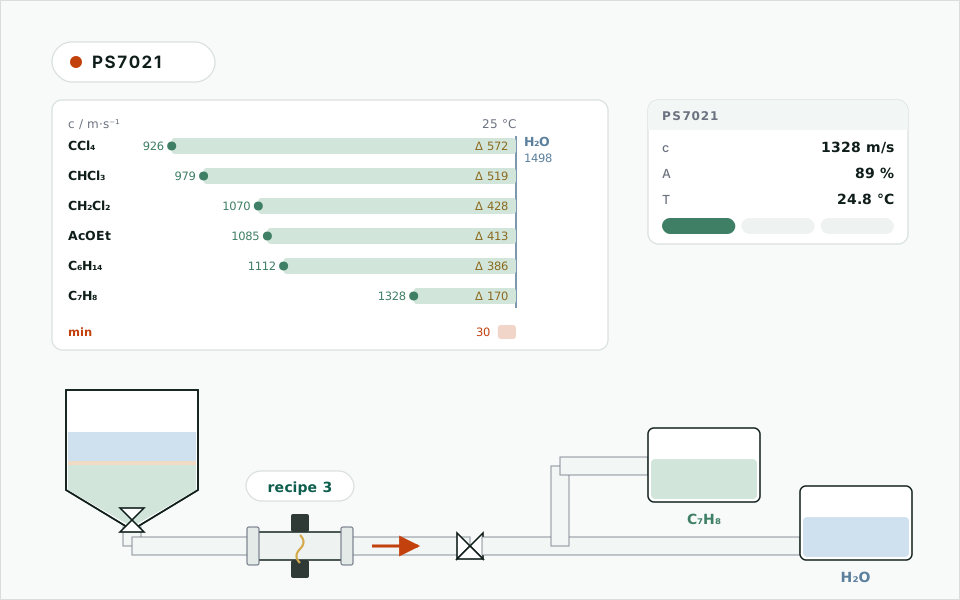
Sound velocity earns its place here precisely: the shape of the discriminator stays put and only the two bands shift. A changeover means one sample of each phase and two readings, five minutes; the band pair is stored as a recipe and recalled when that product comes round again.
How Far Apart the Phases Sit
Handbook values at 25 °C, for judging whether a pair is far enough apart — not calibration data. How much water and product your organic phase carries is something only a measurement knows:
| Organic phase | c at 25 °C, m/s | Δ vs water, m/s | dc/dT, m/s/°C |
|---|---|---|---|
| Carbon tetrachloride | 926 | -571 | -2.48 |
| Chloroform | 979 | -518 | -3.40 |
| Diethyl ether | 985 | -512 | -4.87 |
| Dichloromethane | 1070 | -427 | -3.94 |
| Ethyl acetate | 1085 | -412 | -4.40 |
| n-Hexane | 1112 | -385 | -2.71 |
| n-Heptane | 1180 | -317 | -4.00 |
| Diesel | 1250 | -247 | — |
| Benzene | 1306 | -191 | -4.65 |
| Kerosene | 1324 | -173 | -3.60 |
| Toluene | 1328 | -169 | -4.27 |
| m-Xylene | 1343 | -154 | — |
| Water | 1497 | — | +2.4 |
The closest pair in the table (m-xylene against water) still differs by 155 m/s, five times the 30 m/s floor. For organic-against-water duties the velocity gap is never the constraint; what needs checking is the three effects below, and whether the line can be kept full.
Three Things That Move the Gap
| Variable | How it moves | Effect on the discriminator |
|---|---|---|
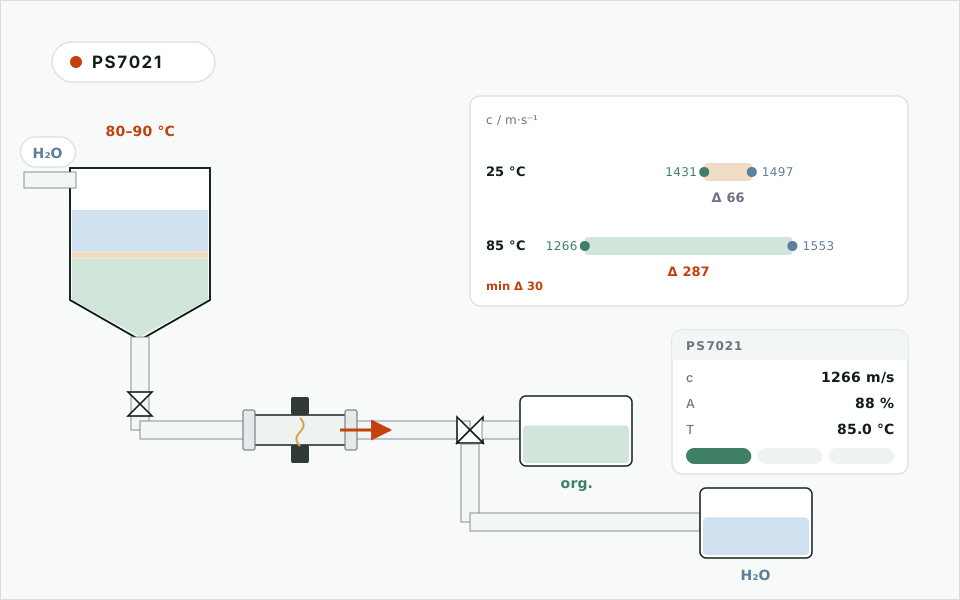
| Temperature | Organics -2.7 to -4.9 m/s per °C; water +2.4 m/s per °C | Opposite signs, so warming widens the gap. Thresholds shift with the temperature band; hot duties need no extra margin |
| Salt in the aqueous phase | About +11 m/s per wt% NaCl (handbook increment) | The aqueous band rises and the gap grows. Back-extraction, acid washes and salting-out stages read more easily than a clean-water wash |
| Mutual solubility | Some water dissolves in the organic phase and vice versa | Both bands move slightly inward — single to low double digits in m/s, far from the 30 m/s floor. What matters is that it varies batch to batch, which is why the thresholds come from site calibration rather than a handbook |
When This Does Not Work
- Miscible pairs: ethanol / water, acetone / water and methanol / water never separate, so there is no interface to find (those loops want a concentration meter — PS7020)
- Hydrocarbon against hydrocarbon: oil / oil or alkane / aromatic pairs may sit only tens of m/s apart; check each pair rather than assuming
- Routine solids or gas: wash water carrying crystals or catalyst fines holds the amplitude down, and three-state discrimination degrades to two
- Three phases: with organic, aqueous and solids present at once the instrument reports what is passing, and cannot do a mass balance for you
- A line that is not full: free-draining runs, falls and siphon breaks make the reading meaningless
Configuring for a Multi-Product Line
- Store each product's two bands as a recipe (eight standard, extensible)
- Two ways to switch: from the panel, or by writing a Modbus register from the DCS — the second follows the batch instruction and removes the chance of forgetting
- Commissioning a new product: two samples, two readings, one stored pair — five minutes, no return-to-factory sampling
- Every recalibration records the time and both velocities, so it is auditable in the batch record — which a GMP plant will ask for
Where It Goes
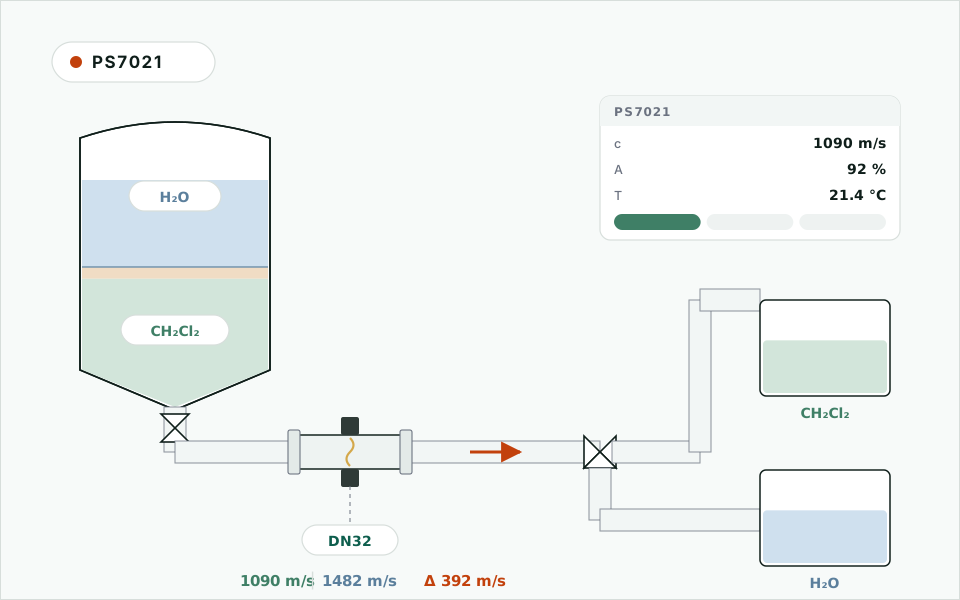
- Downstream of the wash-vessel bottom valve and upstream of the diverter — the same position as extraction; the timing budget is on the dichloromethane / water page
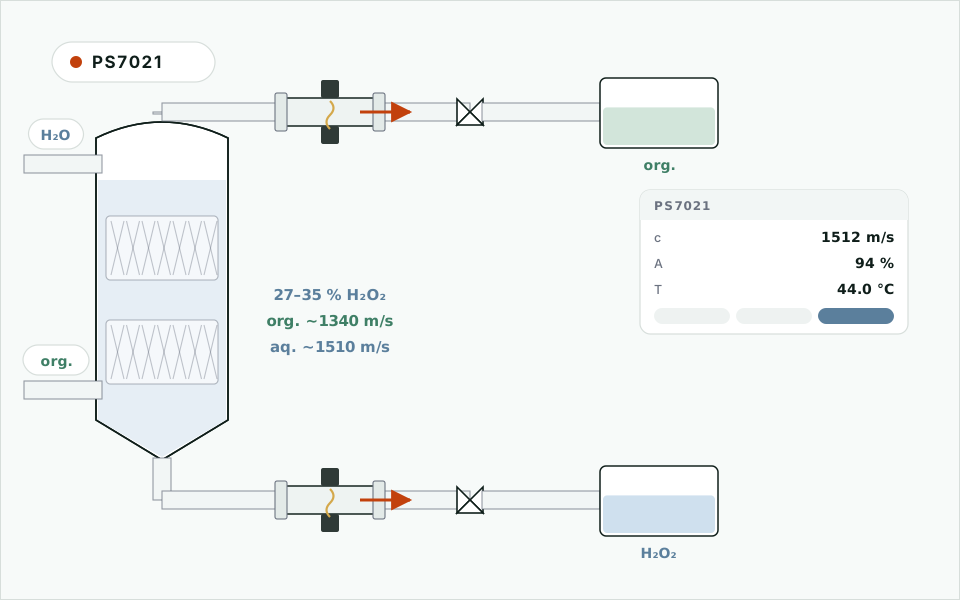
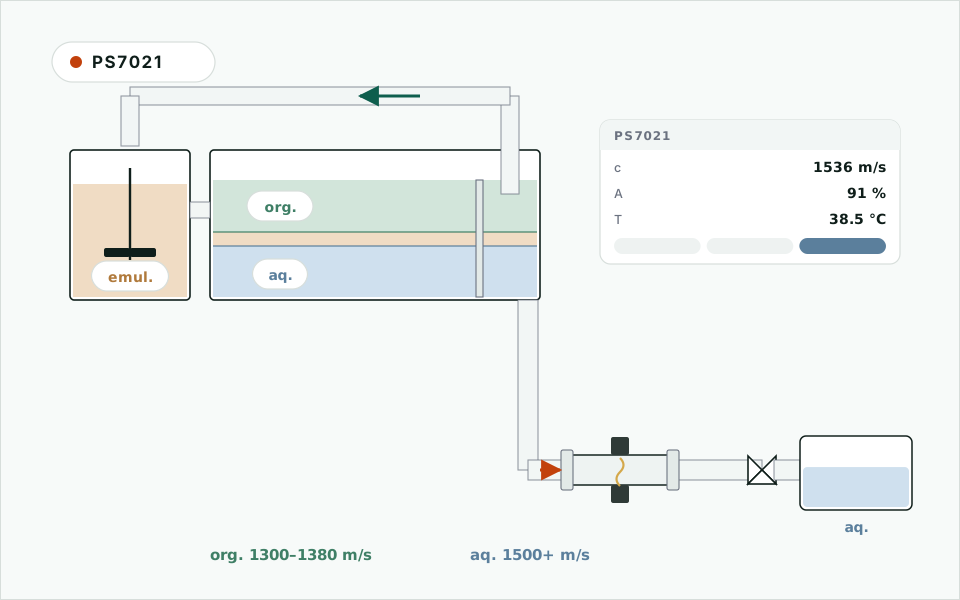
- On the outlet of a settling or separation drum, to see whether the interface has reached it
- After a coalescer, to watch its performance: a rising share of emulsion state is an early sign the element needs replacing
- On the feed line of a solvent recovery loop, so heavy phase never reaches the solvent tank
To select a model we need: the product list (organic phase and aqueous composition for each), the working temperature range, line size and material, lined or not, diverter type and distance, and the area classification. On a long product list, send us the hardest pair for measurement — handbook values carry the rest.