Pisonics PS7000 Enters Service on a DN2000 Salt Evaporator Circulation Pipe
A 2 m-bore circulation pipe and a crystallising salt slurry at 50–62.5 °C: at a salt producer in central China, PS7000 was installed on a weld-in boss on the effect VI evaporator's circulation pipe to measure slurry solids content online — no spool piece, no bypass, no radioactive source.
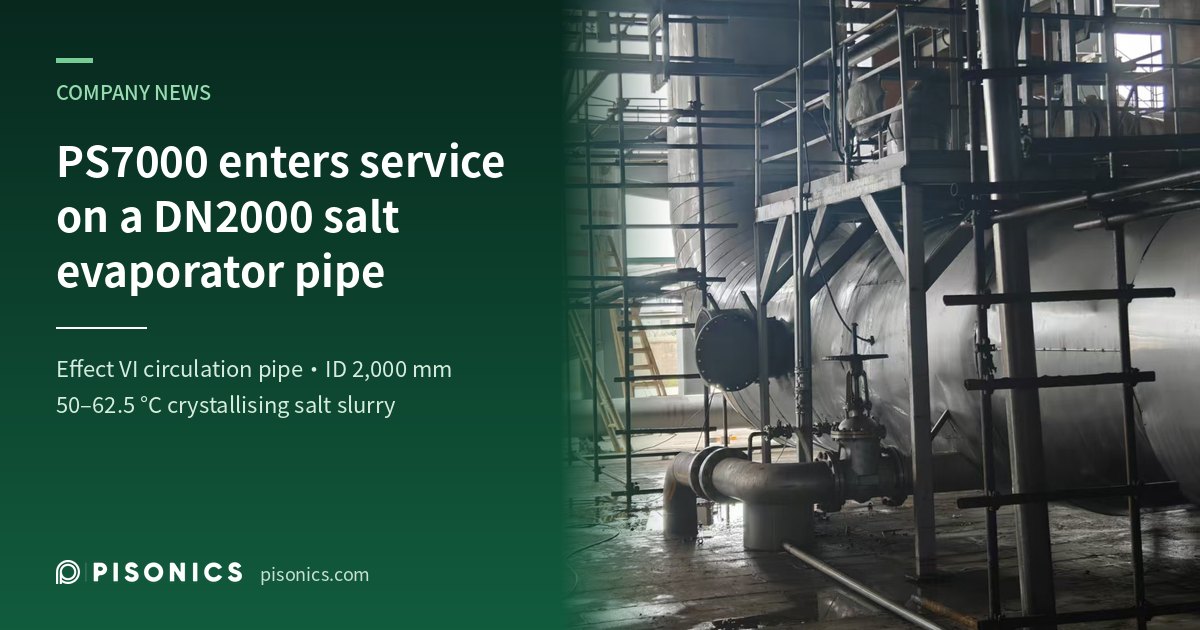
A Pisonics PS7000 ultrasonic slurry density meter has recently entered service at a salt producer in central China. It is installed on the circulation pipe of the effect VI sodium chloride evaporator, where it measures the solids content of the circulating crystal slurry online.
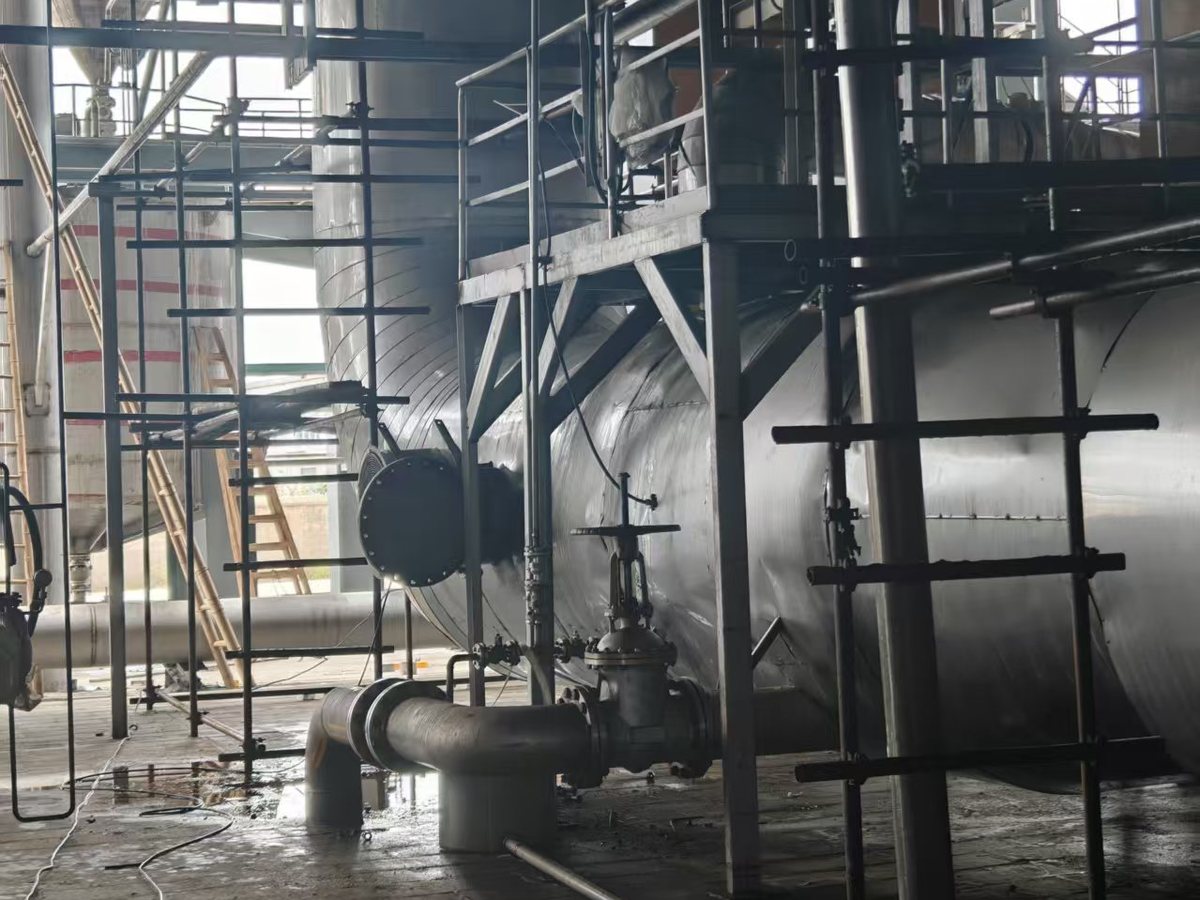
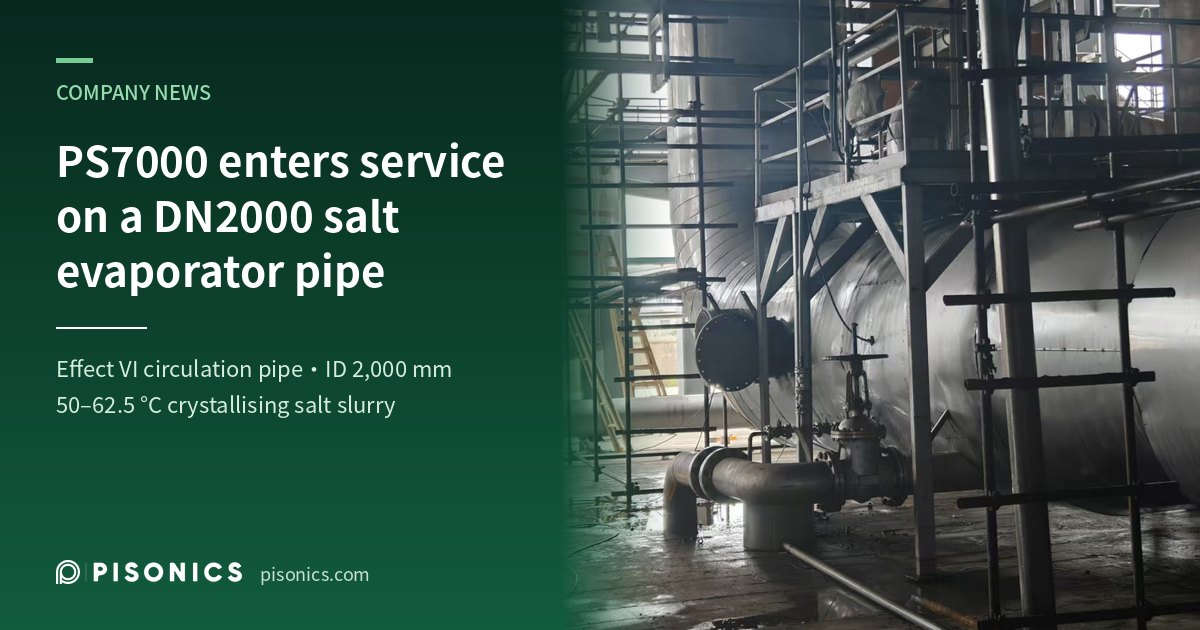
The effect VI evaporator circulation pipe (2,000 mm bore) and the operating platform above it.
Process conditions at the measuring point
Item | Value |
|---|---|
Measuring point | Circulation pipe, effect VI sodium chloride evaporator |
Medium | Crystal slurry: brine with sodium chloride crystals |
Pipe | ID 2,000 mm, OD 2,024 mm, wall 12 mm |
Pressure | −0.1 to 0.17 MPa (gauge), including sub-atmospheric operation |
Temperature | 50–62.5 °C |
Circulation velocity | 2.34 m/s |
Mounting | Weld-in boss; transmitter remote-mounted on the operating platform |
Why slurry solids content matters
Vacuum salt plants generally use multiple-effect evaporation: the evaporators are connected in series on the vapour side, vapour from each effect heats the next, and pressure and temperature fall from one effect to the next. Effect VI is in the low-temperature section, with its vapour body under vacuum.
In a forced-circulation evaporator, the circulation pump drives the slurry through the circulation pipe between the heater and the vapour body. Salt crystals stay in suspension and grow as they circulate. The proportion of crystals in the slurry — its solids content — is one of the key operating variables. Too low, and there is not enough crystal surface to consume the supersaturation: fines increase and the heater tubes scale more readily. Too high, and the slurry thickens, raising the risk of wear and blockage. It is also a reference for salt discharge.
Without an inline instrument, the only source for this number is periodic manual sampling, which lags behind the process and cannot follow continuous changes in operation.
What makes this measuring point difficult
- Pipe size. A measuring spool piece is not a sensible option on a 2 m bore, and a small-bore bypass risks crystal deposition and salt blockage.
- Pressure on both sides of atmospheric. Pressure at this point ranges from −0.1 to 0.17 MPa, so the mounting has to seal against air being drawn in as well as slurry leaking out.
- A crystallising medium. The liquor runs close to saturation and becomes supersaturated as it evaporates, so salt readily deposits on vessel walls and sensor surfaces; crystals in the circulating flow sweep across the measuring face and can wear or coat it.
- Temperature. Between 50 and 62.5 °C, temperature itself shifts the acoustic properties of the slurry, which has to be taken into account in calibration.
How PS7000 handles it
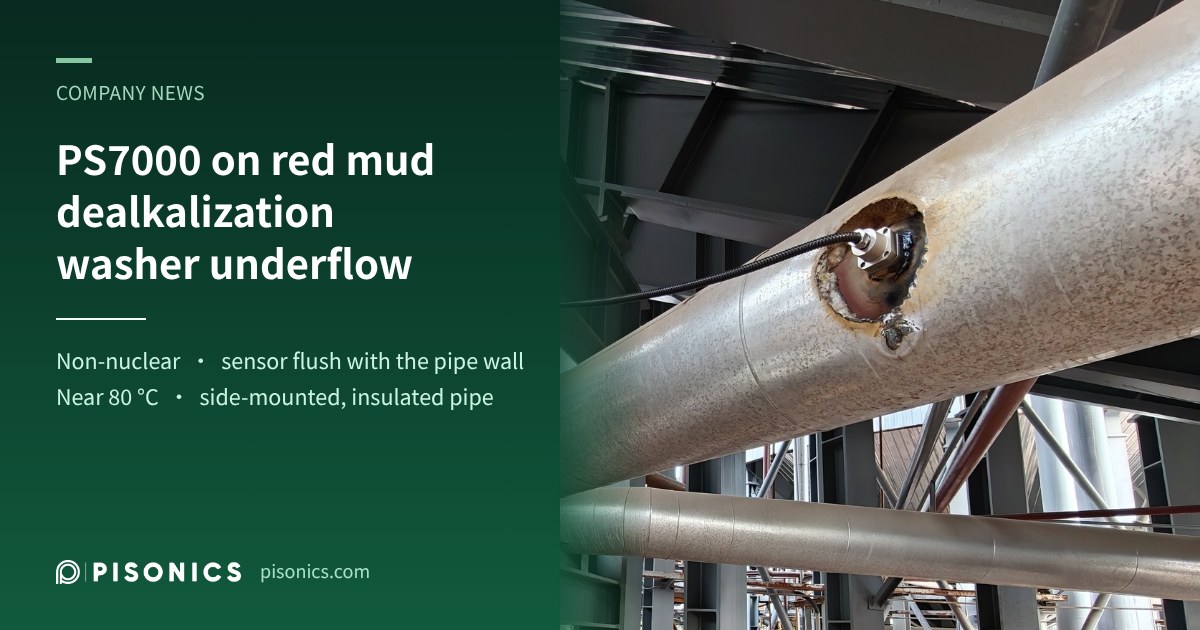
- Weld-in mounting on the existing pipe. A Ø60 mm hole is cut in the circulation pipe and a boss is welded on; the sensor is clamped onto the boss with a flange. No spool piece, no bypass, and the sensor face does not protrude into the flow.
- Single-sensor, reflective measurement. PS7000 uses a linear frequency-modulated (chirp) acoustic impedance method. The measurement takes place at the interface between the sensor face and the slurry, and the sound does not have to cross the pipe, so even a large bore needs no custom measuring section.
- Bubble interference made visible. Circulating slurry in an evaporator may carry bubbles. The wide-band chirp signal helps suppress multiple reflections caused by bubbles, and the meter also outputs an aeration index, so bubble interference can be told apart from a genuine change in solids content.
- No radioactive source. No source licence, and no source handling, inspection or decommissioning burden.
- Temperature measurement and outputs. The sensor has built-in temperature measurement, and temperature compensation can be enabled where needed; two 4–20 mA outputs and RS485 Modbus-RTU are available for connection to a DCS.
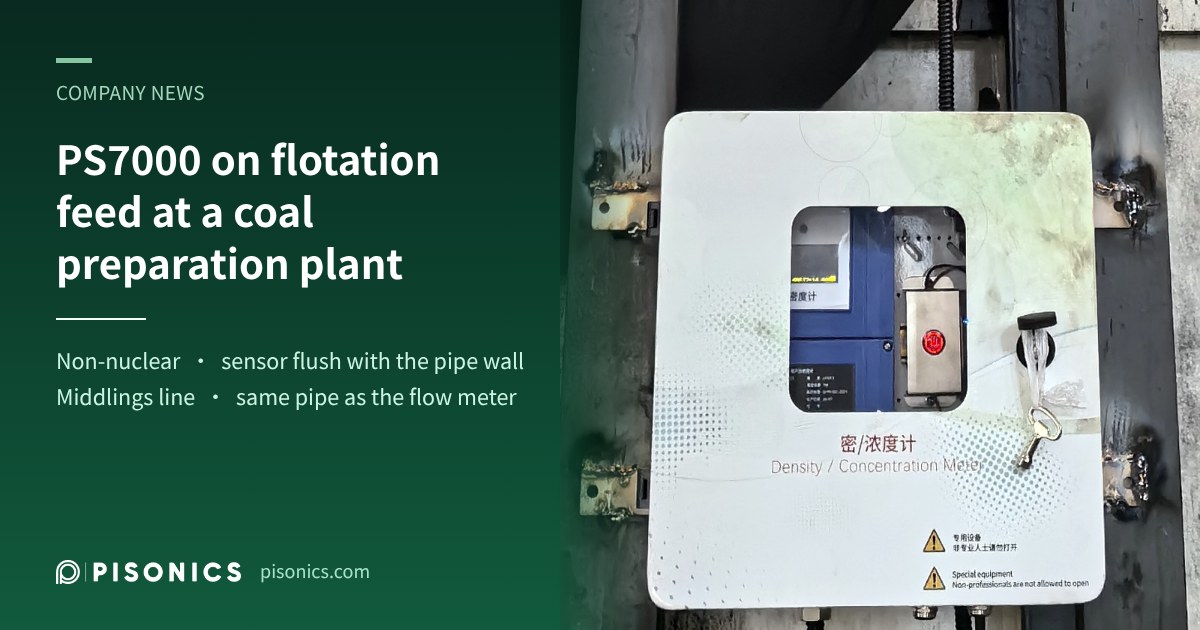
- Remote transmitter. The transmitter sits in a protective enclosure on the operating platform, where it can be read during rounds; only the cable runs to the sensor.
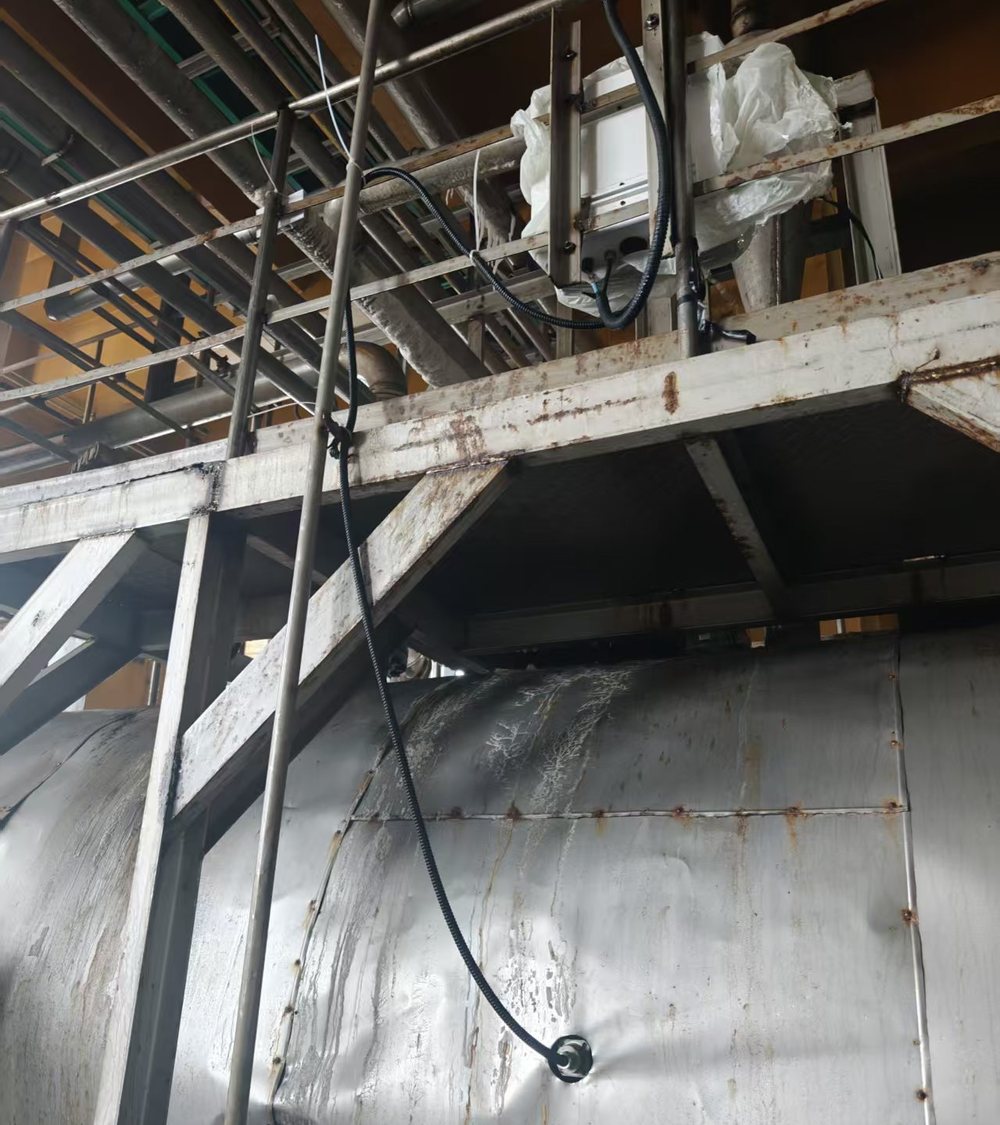
Remote mounting: the transmitter enclosure on the platform, with the cable routed down to the sensor on the circulation pipe.
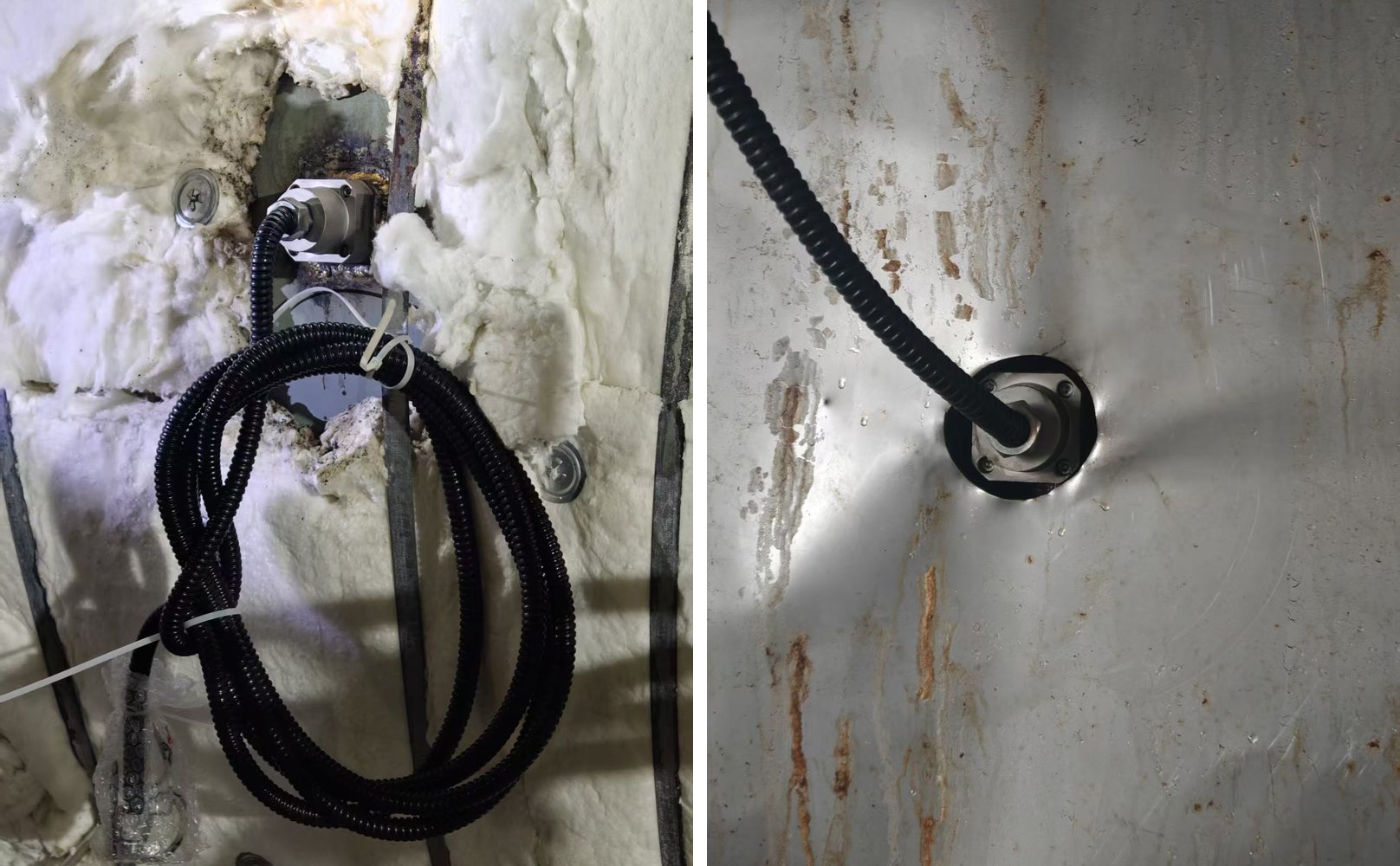
Left: during installation, the sensor clamped onto the welded boss. Right: with insulation and cladding reinstated, only the sensor's rear end and cable conduit remain visible.
Notes for similar evaporators
- Check temperature first. The standard PS7000 covers process temperatures of 0–80 °C. The earlier effects run hotter, so measuring points there need to be checked with Pisonics against the actual operating temperature.
- Confirm the mounting position. A vertical pipe with upward flow is preferred; a horizontal run must be full and have enough straight pipe; flow velocity should be above 1 m/s. For bores above DN1000, confirm the mounting position with Pisonics engineers.
- Calibrate against a nearby sample. Solids readings must be calibrated against on-site samples. Take samples as close to the measuring point as possible and in steady operation — with a distant sample point and a changing process, the deviation you see may not come from the meter (see Low One Day, High the Next — Why Bidirectional Deviation Proves the Meter Right).
- Put the sensor face on the inspection round. A crystallising medium can deposit salt on the sensor face. Include it in routine inspection, and if calibration looks wrong, check and clean the face first.
About Pisonics
Pisonics specializes in industrial-grade online density and concentration measurement, delivering sensor-to-cloud solutions for mining, energy, chemicals, pharmaceuticals, new energy, municipal and other sectors.
Contact: service@pisonics.com
Related reading