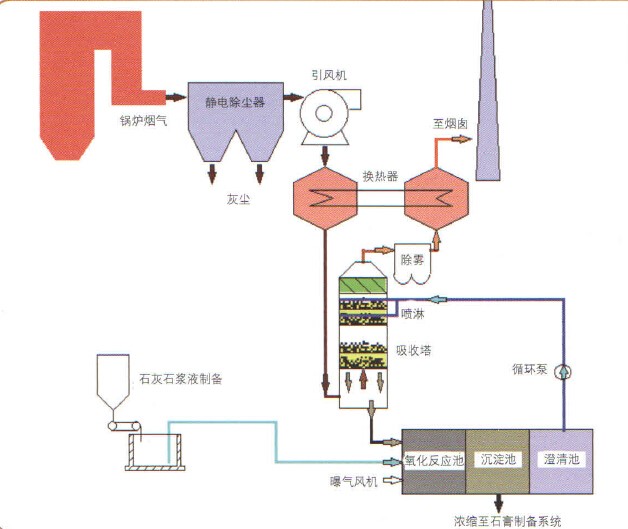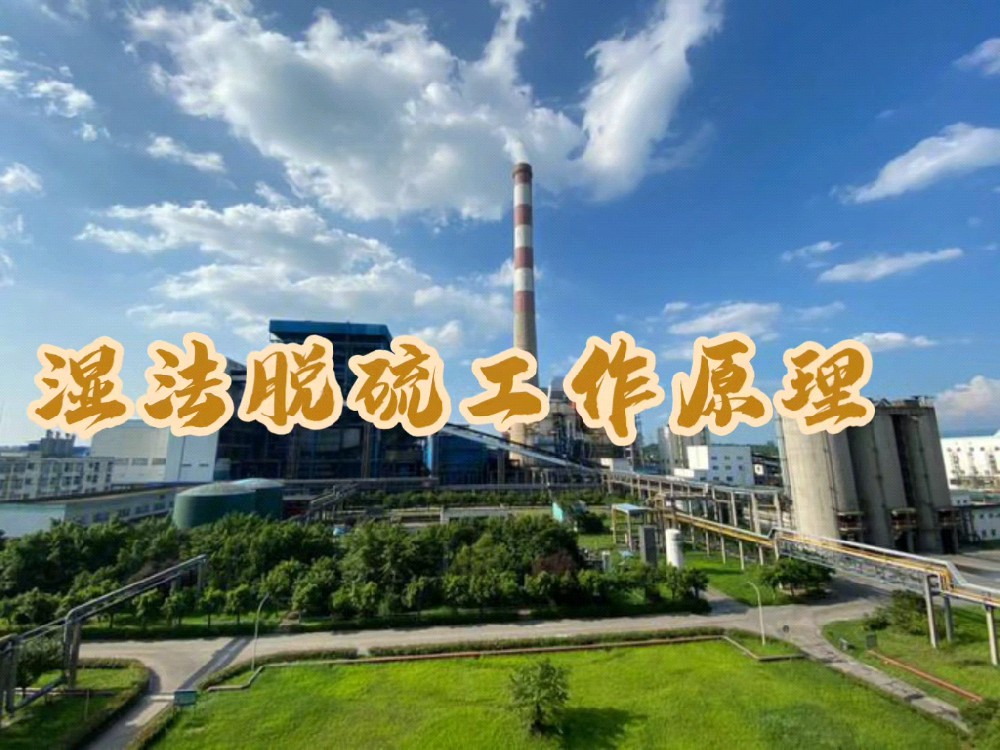
This video explains the working principle of wet flue-gas desulfurization and the process flow of limestone–gypsum wet desulfurization. Wet desulfurization is a widely used method for purifying sulfur dioxide from flue gases, with desulfurization efficiencies exceeding 95%. The limestone–gypsum process includes grinding limestone, pumping it into the absorption tower in a circulating loop, and allowing it to react chemically with the flue gas in a countercurrent flow. Ultimately, the desulfurized flue gas is discharged into the atmosphere, while the gypsum slurry is dewatered, stored in a holding area, and then loaded onto trucks for transport.
This video outlines the principles of wet desulfurization in three parts, addressing sulfur pollution in coal-fired power plants and the application of wet flue-gas desulfurization:
- An introduction to the working principle of wet desulfurization
- The grinding of limestone slurry and the operation of the absorption tower
- The sulfur dioxide absorption process and gypsum dewatering
Density meters, concentration meters, ultrasonic density meters, acoustic impedance density meters, acoustic attenuation density meters, sound‑velocity‑based density meters, tuning‑fork density meters, Coriolis mass flow density meters, optical concentration meters, differential pressure density meters, Na22 density/concentration meters, microwave density meters/moisture analyzers, conductivity‑based density meters, and clamp‑on density meters—please contact Xi’an Pisonics Information Technology Co., Ltd. Our website: https://www.pisonics.cn; our English website: https://www.pisonics.com/
Contact: Manager Cui; Phone: 15902932017; Email: info@pisonics.com