PISONICS | 西安派声
PS7021 series
Inline Ultrasonic Phase Separation Detector
Sound velocity + amplitude · integral spool
Spent emulsions and oily water — phase detection after demulsification
—— On this duty the amplitude channel matters more than the velocity ——
【Discriminators: emulsion share, plus the two velocity bands】
The Duty
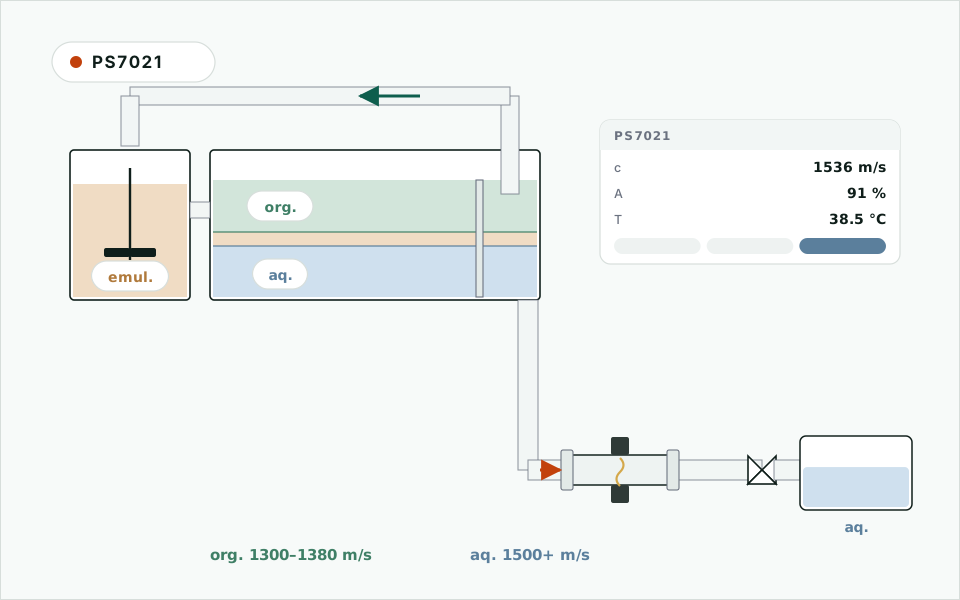
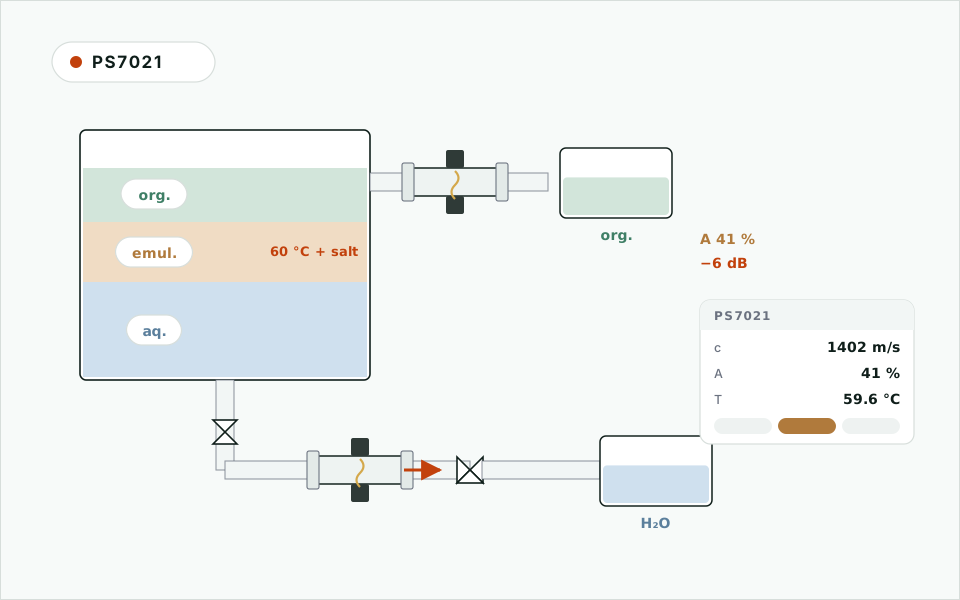
Spent cutting fluid, rolling emulsion and oily wastewater are all treated the same way: acid, salt, reagent or heat to break the emulsion → settle → skim oil, decant water. The questions are whether the skim line is running oil or still running rag, and whether the decant line is carrying oil out with the water.
What separates this duty from the others: the rag layer is the normal state, not an upset. Demulsification is never complete; the middle layer is always there, only thicker or thinner. The useful output here is less "which phase" than "how much rag is left" — which is the amplitude channel.
The Gap Depends on Conditions
This is the duty on this site that most needs a measured sample, and the reason is worth stating plainly:
| Condition | Oil phase | Aqueous phase | Gap |
|---|---|---|---|
| Ambient, light mineral oil, low-salt water | about 1431–1477 m/s (same-order reference) | 1497 m/s | 20–66 m/s, close to the floor |
| As demulsified: 60 °C, acid and salt added | about 1335 m/s | 1551 m/s and up with salt | about 216 m/s or more, comfortable |
So the siting rule is blunt: measure on the hot line after demulsification, not at the outlet of an ambient holding pit. Heat and salt are things the process does anyway, and they are what opens the margin — the oil coefficient is negative (−2.75 to −3.6 m/s per °C), water's is positive, and salt adds roughly +11 m/s per wt% NaCl.
The oil column uses published olive and castor oil values as a same-order reference; the water column is the Marczak equation. A spent emulsion's oil phase (mineral oil plus esters plus additives) can only be measured, not looked up — the table is here to show which way temperature and salt move the margin.
Using the Amplitude Channel
- Skim line: only an amplitude back at the clear-phase baseline means you are skimming oil rather than rag; a persistently low amplitude says the break is incomplete — adjust reagent or settle longer instead of skimming harder
- Decant line: amplitude down while velocity stays in the aqueous band → emulsified oil in the water; recycle, do not discharge
- As a trend: the share of each batch spent in the emulsion state is a direct measure of how well the break worked — a full batch earlier than an oil-in-water lab result
- The default threshold is 6 dB below the clear-phase baseline; on this duty it usually gets retuned to the site's own oil
Maintenance: This Line Will Foul
- Oil and reagent film on the window is certain, and the amplitude baseline follows it down — use that as the trigger for planned cleaning
- Sapphire is dense and smooth; solvent or hot caustic restores it without pulling the sensor
- Avoid points carrying heavy suspended solids (swarf, sludge): scattering holds the amplitude below threshold permanently
Where It Does Not Work
- An emulsion that has not been broken: the whole line is rag and there are no two phases to tell apart — that is a reagent and process problem
- Sludge: high solids, high attenuation; solids measurement is PS7000
- Ambient, low-salt, light-oil combinations: the gap can fall below 30 m/s, so a measured sample comes before any proposal
To quote this duty we need: the waste stream (cutting fluid, rolling emulsion, oily water), how and at what temperature it is broken, salt and pH of the aqueous phase, roughly what the oil phase is, line size and material, suspended solids, and the measuring point. Send 500 mL of each phase as demulsified and we will measure both bands at your break temperature — on this duty we do not quote from handbook values.