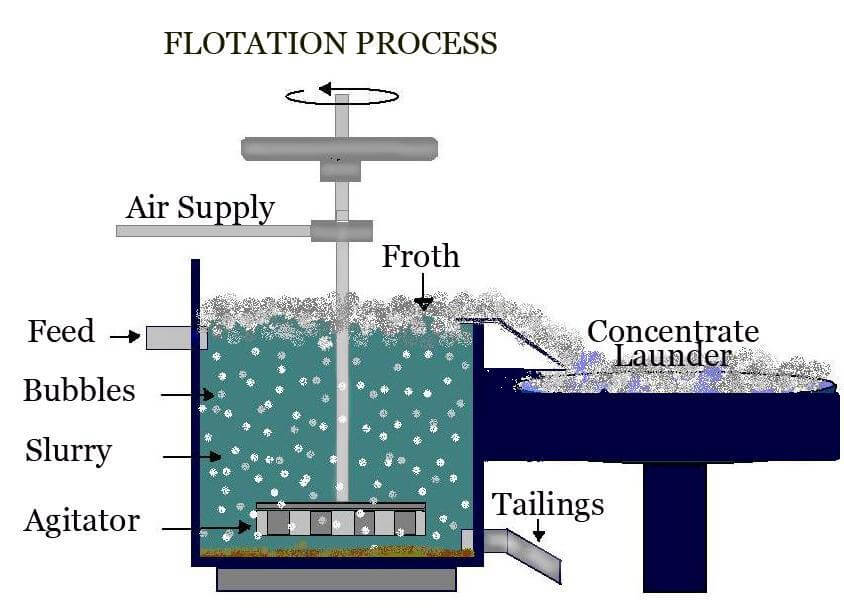
A relatively high slurry concentration is beneficial to the flotation process. However, if the concentration becomes too high, the slurry and bubbles cannot flow freely, impairing aeration and thereby reducing both concentrate grade and recovery. Therefore, for the flotation of various ores, an appropriate slurry concentration must be determined based on ore characteristics and relevant technical requirements.
The typical slurry concentrations for metallic mineral flotation are as follows: rougher flotation, 25%–45%; cleaner flotation, 10%–20%; scavenger flotation, 20%–40%. The maximum slurry concentration in rougher flotation can reach 50%–55%, while the minimum concentration in cleaner flotation is 6%–8%.
The six factors by which slurry concentration affects flotation performance are outlined below:
1. Impact on recovery: At low slurry concentrations, recovery tends to be lower. As the concentration increases, recovery rises; however, beyond a certain limit, recovery begins to decline again (due to excessively high slurry density, which compromises the flotation machine’s aeration conditions).
2. Influence on concentrate quality: Generally, higher concentrate grades are achieved when flotation is conducted in more dilute slurries, whereas in denser slurries, concentrate quality tends to decrease.
3. Effect on reagent consumption: When the slurry is denser, the reagent dosage per tonne of ore is lower; conversely, in more dilute slurries, the reagent consumption per tonne increases.
4. Impact on flotation machine capacity: As slurry density increases, the processing capacity of the flotation machine, expressed in terms of throughput, also rises.
5. Influence on water and electricity consumption: The denser the slurry, the lower the water and electricity costs per tonne of ore processed.
6. Effect on flotation time: In denser slurries, the flotation time is slightly extended.
Common flotation concentrations are shown in the table below:
In mineral processing plants, flotation concentration is closely linked to the overflow depth of classifiers. Typically, the rougher flotation depth aligns with the classifier overflow depth, which in turn depends on the desired grind fineness: finer grinding results in a dilute overflow, while coarser grinding yields a more concentrated overflow. Scavenger flotation concentrations are generally lower than those in rougher flotation. When handling finer particle sizes, the slurry concentration should be correspondingly diluted. The impact of slurry concentration on flotation is primarily reflected in aeration, reagent concentration within the slurry, and production throughput.
1. Effect on aeration
The aeration rate of flotation machines varies with slurry density; both excessively dense and overly dilute slurries lead to deteriorated aeration.
2. Reagent concentration
3. Production throughput
As slurry density increases, and assuming the flotation cell volume and overall productivity remain constant, the residence time of the slurry within the cell can be relatively extended, which helps improve recovery. Conversely, if flotation time is held constant, increasing slurry density can boost the flotation machine’s production rate.
In general, at lower slurry concentrations, recovery is lower but concentrate quality is better; therefore, rougher flotation typically employs denser slurries, while cleaners use more dilute ones. Scavenger concentrations are usually dictated by the rougher stage and left unchanged. Moreover, for coarser or larger-sized feed materials, denser slurries are often preferred; for finer feeds, dilute slurries may suffice.
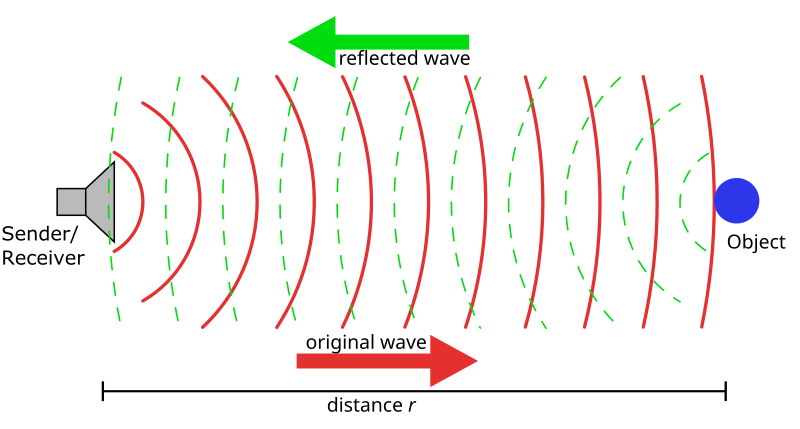
Density meters, concentration meters, ultrasonic density meters, acoustic impedance density meters, acoustic attenuation density meters, sound‑velocity‑based density meters, tuning fork density meters, Coriolis force density meters, optical concentration meters, differential pressure density meters, Na22 density/concentration meters, microwave density meters/moisture analyzers, conductivity‑based density meters, and externally mounted density meters—please contact Xi’an Pisonics Information Technology Co., Ltd. Our website: https://www.pisonics.cn; our English website: https://www.pisonics.com/
Contact: Manager Cui; phone: +86 15902932017; email: info@pisonics.com