The Nature of Bases and Their Industrial Applications
In chemistry, a base is defined as a substance that can accept protons (H⁺) or donate electron pairs. According to the Brønsted–Lowry acid–base theory, bases lower the H⁺ concentration in solution by accepting protons, thereby raising the pH; while under the Lewis theory, bases act as electron-pair donors, further broadening their conceptual scope. Strong bases such as sodium hydroxide (NaOH) and potassium hydroxide (KOH) dissociate completely in water, producing high concentrations of hydroxide ions (OH⁻) and causing a significant increase in solution pH.
In industrial processes, precise control of base concentration and pH is essential, as it directly affects reaction conditions, product quality, and process efficiency. For example, in chemical synthesis, wastewater treatment, and cooling systems, adding bases can neutralize acidic substances, prevent corrosion, or optimize reaction rates. Therefore, accurate measurement of base concentration is crucial for ensuring safety standards, improving production efficiency, and minimizing environmental impact.
Common Types of Bases and Their Industrial Applications
Common industrial bases include strong bases such as NaOH, KOH, and aqueous ammonia (NH₃·H₂O), whose concentrations are typically characterized by the content of OH⁻ or other relevant ions. These bases are widely used in water treatment—such as pH adjustment to control corrosion—as well as in chemical manufacturing and cleaning processes. Precise measurement of base concentration is indispensable for process optimization and quality control, particularly when distinguishing between strong and weak bases in complex matrices.
An Overview of Base Concentration Measurement Techniques
To determine base concentration, several methods are available, each based on different physical or chemical principles and suited to specific application scenarios. The following is a detailed analysis of several common approaches, including their underlying principles, advantages, disadvantages, and evaluations.
1. Ultrasonic Sound Velocity Method
- Principle: Measures the speed of sound waves traveling through a basic solution, which is influenced by the solution’s density, molecular structure, and concentration.
- Advantages: Suitable for online real-time monitoring, with broad applicability and good stability.
- Disadvantages: Requires pre‑calibration, and resolution may be insufficient at high concentrations.
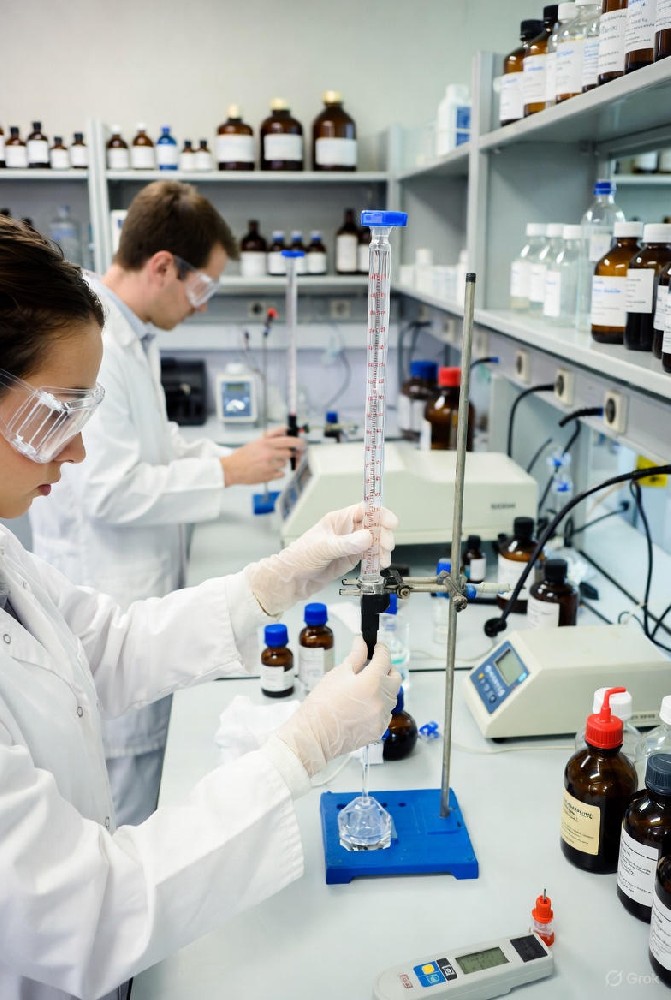
2. Titration Method
- Principle: A known-concentration acid is used to titrate the basic solution until the equivalence point is reached.
- Advantages: Highly accurate and serves as a standard laboratory method.
- Disadvantages: Manual operation is time‑consuming and unsuitable for continuous monitoring.
3. pH Measurement
- Principle: Uses a pH electrode to measure the activity of H⁺ or OH⁻ in the solution.
- Advantages: Fast and convenient, ideal for on‑site measurements.
- Disadvantages: May exhibit “alkaline error” in high‑pH environments.
4. Conductivity Measurement
- Principle: Based on the fact that a solution’s electrical conductivity increases with rising ion concentration.
- Advantages: Rapid and cost‑effective, easily implemented for online monitoring.
- Disadvantages: Non‑specific and heavily influenced by temperature.
5. Spectroscopy (UV‑Vis)
- Principle: Relies on the solution’s absorption characteristics at specific wavelengths.
- Advantages: High sensitivity, capable of multi‑component analysis.
- Disadvantages: Sample pretreatment is complex, and equipment costs are high.
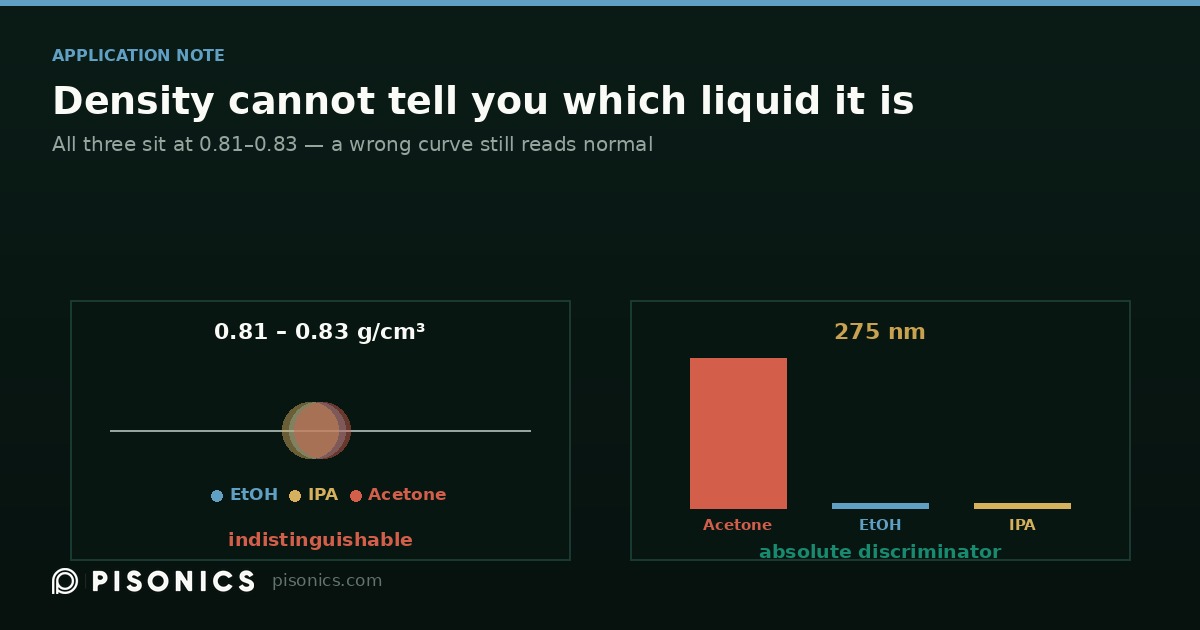
6. Density Measurement
- Principle: Infers concentration by measuring the solution’s density.
- Advantages: Simple and direct, requiring no chemical reagents.
- Disadvantages: Highly sensitive to temperature and pressure, not suitable for complex mixtures.
7. Ion Chromatography
- Principle: Separates and detects specific ions in the solution.
- Advantages: High selectivity and sensitivity.
- Disadvantages: Expensive equipment and complex operation.
Conclusion
Base concentration measurement plays a critical role across numerous industries, from chemical synthesis and wastewater treatment to pharmaceuticals and food‑quality control. By employing appropriate measurement technologies and modern sensors—such as online sound‑velocity or conductivity probes—it is possible not only to monitor and adjust pH and concentration in real time but also to significantly enhance efficiency, reduce energy consumption, and minimize environmental impact. The optimal choice depends on specific application requirements, budget constraints, and ease of operation, among other factors.
Density meters, concentration meters, ultrasonic density meters, acoustic impedance density meters, acoustic attenuation density meters, sound‑velocity density meters, tuning fork density meters, Coriolis force density meters, optical concentration meters, differential pressure density meters, Na22 density/concentration meters, microwave density meters/moisture analyzers, conductivity density meters, clamp‑on density meters—please contact Xi’an Pisonics Information Technology Co., Ltd. Our website: https://www.pisonics.cn; our English website: https://www.pisonics.com/
Contact: Manager Cui; Phone: 15902932017; Email: info@pisonics.com