The Xi’an Pisonics PS7000 Series Density Meter Breaks Through the Challenge of Measuring Potassium Chloride–Saturated Crystalline Solutions: A Revolutionary Technological Innovation for the Potash‑Fertilizer Industry
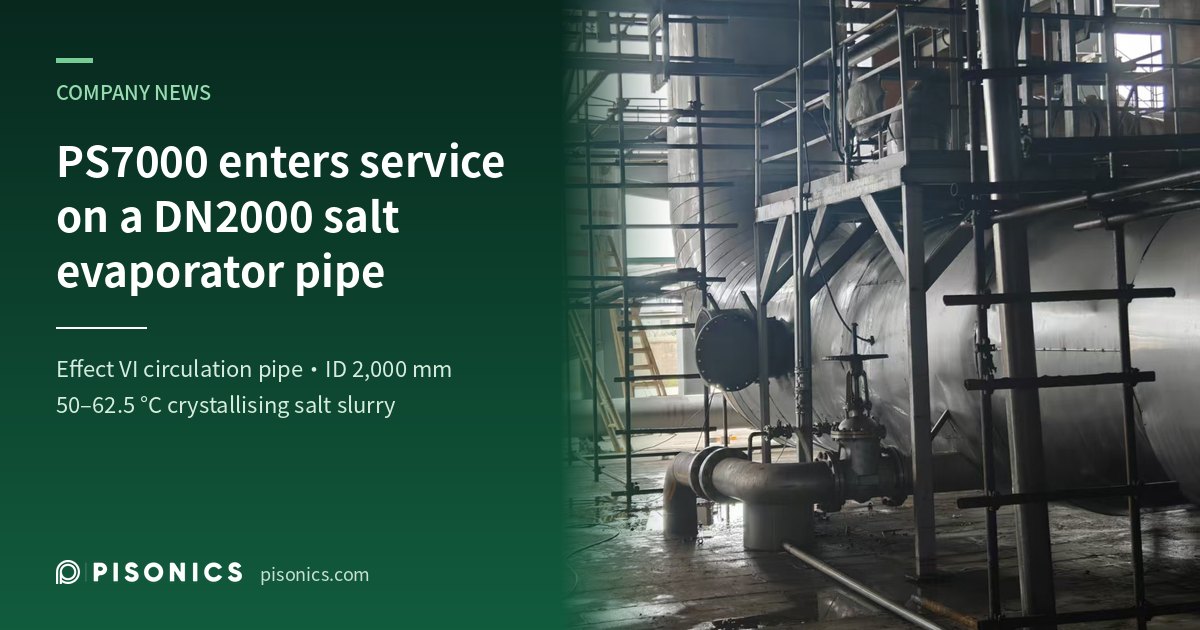
November 14, 2025 – In the global potash‑fertilizer production sector, a long‑standing measurement challenge that has plagued the industry has finally been overcome. At a process point in the blending tank of a major potash‑fertilizer plant, Xi’an Pisonics Information Technology Co., Ltd. (hereinafter referred to as “Xi’an Pisonics”) successfully deployed its PS7000 series density meter to achieve stable, high‑precision measurements of potassium chloride–saturated crystalline solutions. After two consecutive weeks of on‑site testing, and when compared with manually collected reference data, the meter’s measurement accuracy reached an astonishing level of less than 1%. This milestone not only marks a major breakthrough for Xi’an Pisonics in the industrial instrumentation field but also provides a reliable solution for online density measurement of saturated crystalline solutions, thereby resolving this global technical bottleneck.
Potassium chloride (KCl), the primary component of potash fertilizer, plays a crucial role in agricultural production. The global potash‑fertilizer market is vast; according to industry reports, worldwide demand exceeded 60 million tons in 2024, with potassium chloride accounting for more than 70% of that total. As a major consumer of potash fertilizer, China relies heavily on the development of salt‑lake resources in regions such as Qinghai and Xinjiang. In the potash‑fertilizer manufacturing process, density measurement of saturated crystalline solutions is a critical operational step, directly influencing product purity, yield, and quality control. However, due to the unique physicochemical properties of these solutions—high concentrations of salts, abundant crystal particles, high viscosity, a strong tendency to scale, and severe corrosiveness—conventional density meters often struggle to perform reliably, resulting in reduced production efficiency, soaring maintenance costs, and even safety hazards.
For years, potash‑fertilizer companies have experimented with various density–Baume‑degree measurement technologies, all to no avail. Take the plant where this test was conducted: prior to adopting the PS7000, the operator had successively tried tuning‑fork concentration meters, Na22 nuclear‑radiation density meters, Coriolis mass flowmeters, and differential pressure density meters—each based on different principles. While these instruments might perform well under laboratory conditions, they exposed numerous issues in real industrial environments. The tuning‑fork meter’s vibration frequency was disrupted by crystal particles, rendering it inoperable after just a few days and unable to deliver reliable readings; the Na22 nuclear‑radiation meter, though capable of non‑contact measurement, faced complex radiation‑source management and suffered severe signal attenuation in high‑concentration solutions, with data deviations exceeding 30%; the Coriolis mass flowmeter became clogged shortly after installation due to scaling in the pipelines, causing measurement interruptions; and the differential pressure meter produced erroneous readings—and even equipment damage—owing to pressure fluctuations and solution corrosion. These failures are far from isolated cases; they reflect a widespread pain point across the global potash‑fertilizer industry. According to statistics from the International Chemical Association, the failure rate for online density measurement of saturated crystalline solutions reaches as high as 80%, resulting in hundreds of millions of dollars in annual economic losses and hindering the industry’s drive toward automation.
Against this backdrop, Xi’an Pisonics’ PS7000 series density meter emerged like a lifeline, fundamentally transforming the landscape. Featuring an innovative probe design, advanced hardware signal‑processing capabilities, and optimized algorithms, the PS7000 has triumphed over the challenges of measuring potassium chloride–saturated crystalline solutions. Its probe is crafted from highly corrosion‑resistant materials, including titanium alloys and specialized ceramic coatings, ensuring long‑term stability even in aggressively corrosive environments. Meanwhile, its unique fluid‑dynamic design effectively prevents crystal adhesion and scaling, keeping the sensor surface impeccably clean. The hardware signal‑processing module integrates multi‑channel filters and adaptive amplification circuits, enabling real‑time noise suppression and the capture of subtle density‑change signals. Most notably, the PS7000 incorporates a proprietary algorithm—a machine‑learning‑based, fluid‑dynamics‑model‑driven intelligent compensation system—that automatically corrects for the influence of temperature, pressure, and concentration fluctuations, delivering stable results with sub‑1% accuracy.
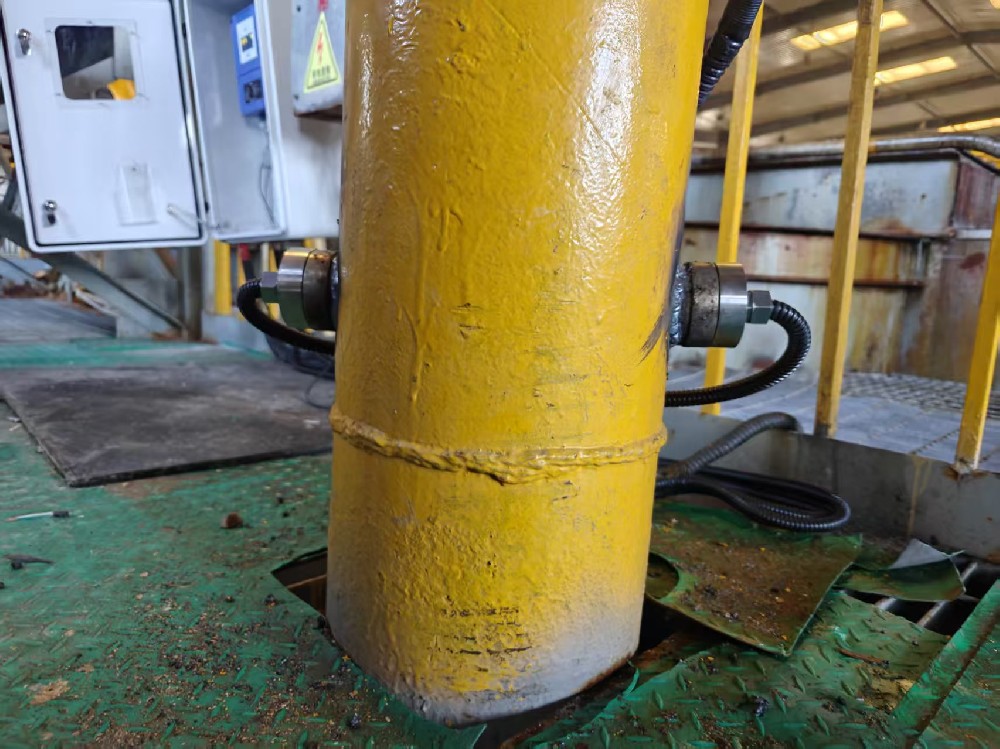
The testing commenced at the end of October 2025 at a blending tank in a potash‑fertilizer plant. The blending tank is a core unit in potash‑fertilizer production, where potassium chloride solution approaches saturation, with crystal content ranging from 30% to 40%, temperatures fluctuating between 5°C and 20°C, and operating conditions extremely demanding. Once installed, the PS7000 entered continuous measurement mode. Plant technicians performed manual sampling every 15 or 30 minutes, using a precision laboratory density meter as the benchmark. Over the two‑week trial, the PS7000’s readings consistently matched the manual samples within a deviation of just 0.5% to 0.8%, showing no anomalies even during periods of peak solution concentration. This stands in stark contrast to previously tested instruments, which typically failed within days due to scaling or signal drift.
“Measuring saturated crystalline solutions has long been the ‘Mount Everest’ of industrial instrumentation. Traditional meters rely on a single physical principle and are easily affected by environmental factors, whereas the PS7000 achieves end‑to‑end optimization—from hardware to software—through multidimensional innovation. We did not simply replicate existing technologies; instead, we began with the microscopic characteristics of potassium chloride solutions and developed a dedicated signal‑processing model. This success not only validates the PS7000’s reliability but also sets a benchmark for digital transformation in the potash‑fertilizer industry,” said a company spokesperson.
The plant’s production manager also spoke highly of the PS7000: “Previously, we depended on manual sampling, which was not only inefficient but also posed safety risks. Workers had to operate in high‑temperature, high‑pressure conditions, with even a minor mishap potentially leading to burns or solution spills. With the PS7000, we’ve achieved real‑time online monitoring, stabilizing the production process and boosting output by about 5%. More importantly, it has reduced downtime for maintenance, saving us hundreds of thousands of yuan each year. This is truly a milestone in potash‑fertilizer measurement.”
From a technical standpoint, the PS7000’s innovations lie primarily in three areas. First is the probe design. Conventional density‑meter probes are typically immersed and susceptible to damage from crystal impacts, whereas the PS7000 employs a side‑wall, non‑contact probe that leverages a composite principle of ultrasonic and electromagnetic induction, eliminating the drawbacks of direct solution contact. This design draws inspiration from sensor technology used in aerospace, ensuring stability even in highly turbulent environments. Second is the hardware signal processing: the PS7000 is equipped with an FPGA (field‑programmable gate array) chip, enabling millisecond‑level signal acquisition and processing—far outpacing the response speed of traditional PLC systems. This allows the instrument to swiftly adjust parameters in response to rapid changes in solution density, such as during peak crystal precipitation, thereby preventing data distortion. Finally, there is algorithmic optimization.
The success of this test extends beyond the technical realm, carrying broad industry implications. The challenge of measuring potassium chloride–saturated crystalline solutions has vexed global potash giants such as PotashCorp, Nutrien, and K+S Group for years. These companies invest heavily in R&D for new instruments, yet see little return. The arrival of the PS7000 could redefine the measurement standards for potash‑fertilizer production. According to projections by the China Fertilizer Industry Association, by 2030, China’s potash‑fertilizer output will reach 15 million tons; if similar online density meters are adopted across the board, overall efficiency could improve by more than 15%. This would not only reduce energy consumption and emissions but also enhance product competitiveness and advance green, sustainable development.
Furthermore, the PS7000’s success offers valuable lessons for other saturated‑solution measurement applications. For example, in lithium‑salt extraction, seawater desalination, and syrup concentration, similar high‑concentration crystalline solutions present comparable challenges. Xi’an Pisonics plans to extend the PS7000’s technology to these fields and launch customized versions tailored to their specific needs.
Xi’an Pisonics will continue to deepen the PS7000 series’ ongoing upgrades. The next generation will integrate AI‑powered predictive maintenance, enabling “zero‑intervention” operation. At the same time, the company intends to collaborate with international standards organizations to promote the establishment of new guidelines for saturated crystalline‑solution measurement, further solidifying the PS7000’s position in the global market.
At a pivotal moment in the potash‑fertilizer industry’s transformation, the PS7000 series density meter’s successful measurement not only solves a global challenge in potassium chloride–saturated crystalline solutions but also illuminates the path of innovation in industrial measurement. It reminds us that technological progress stems from a deep understanding of pressing pain points and an unwavering commitment to overcoming them. With concrete actions, Xi’an Pisonics is helping China’s manufacturing sector move toward the high‑end frontier.